After becoming the protagonist’s inner demon - Reviews

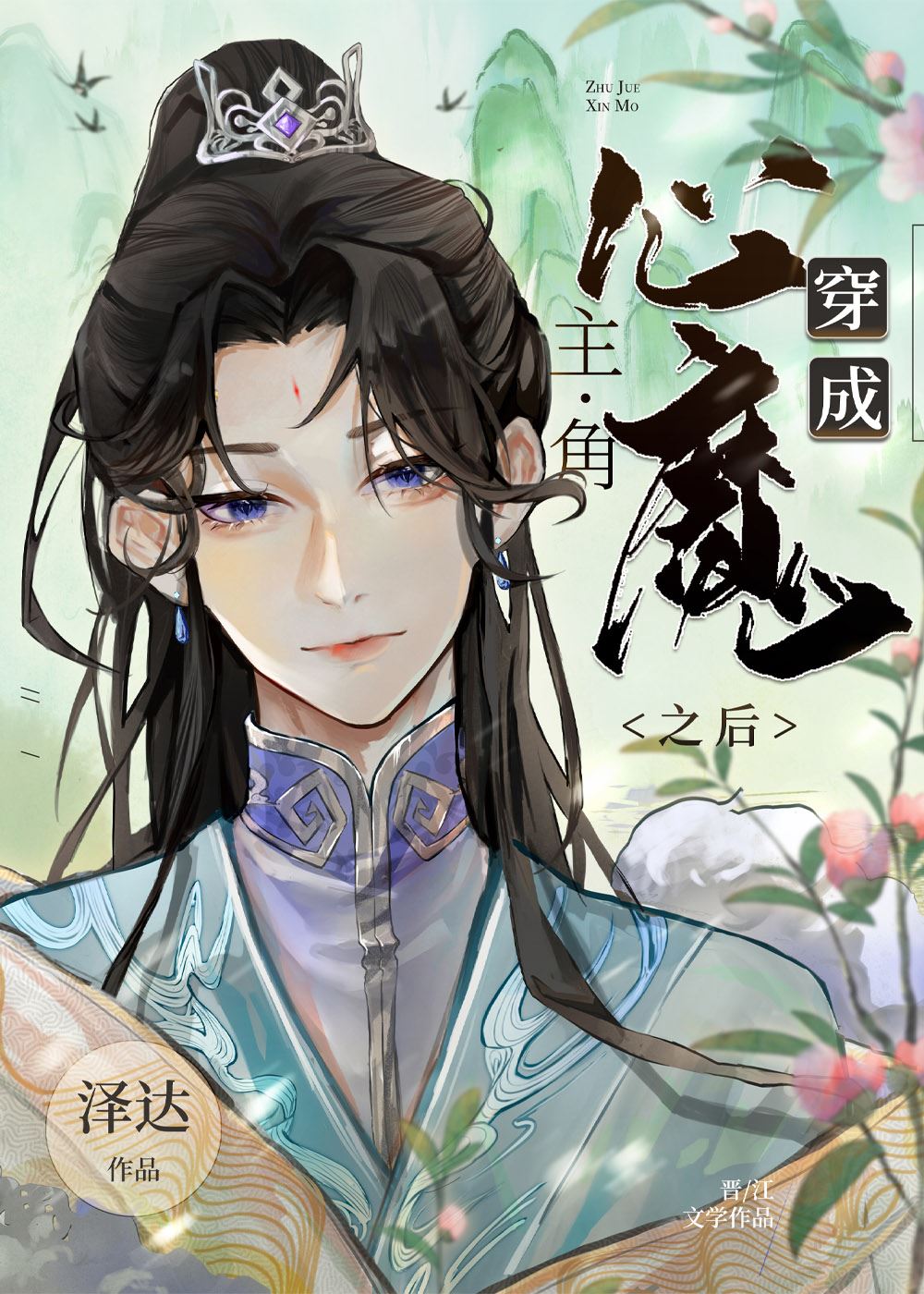
After becoming the protagonist’s inner demon
+Add to Custom List
Sort
Add review
... Read More
I have to talk about the dialogue in this chapter because it is ABSOLUTELY vicious and I love it. The best exchange has to be: "Um, are you feeling down?" Su Baimo: "No." Dai Zisheng: "..." Help, this conversation was going nowhere! This is peak human interaction. Su Baimo literally cannot communicate normally. He sighs (which counts as admission), then drops his entire emotional burden on a barely-conscious stranger. The dialogue feels SO natural because it captures how people actually talk when they're being awkward, indirect, and emotionally unavailable. And Dai Zisheng's internal monologue is comedy gold: "Having just been saved, Dai Zisheng couldn't possibly criticize his savior. He quickly said: 'Of course not! You're kind-hearted, elegant, and flawless!' Su Baimo blushed at his praise, the loneliness disappearing from his face." This man is being used as an emotional sponge and he's COMPLIMENTING HIS ABUSER. The desperation is palpable. Xiao Mo's observational asides are also doing incredible work—like when he notes Su Baimo's inconsistency: "Who was it that just told Chu Jinglan to let Dai Zisheng rest? How quickly he changed his mind. One shouldn't be so inconsistent." The narrative voice itself has personality. It's snarky, observant, and occasionally breaks the fourth wall with its commentary. The author clearly enjoys writing from a perspective that knows more than any single character.
... Read More
I need to take a moment to just applaud the comedic dialogue in this chapter because the author clearly has a sense of humor and isn't afraid to let it run wild. Let's start with the inner demon's most iconic line: "Why couldn't the inner demon just hang himself on that tree?" Written furiously in ink so hard it penetrated the paper. This is the kind of line that lives in your head forever. It tells us everything about Chu Jinglan's internal state without a single narration beat about his frustration. But the real MVP here is the system. The way it congratulates Xiao Mo after Chu Jinglan's revenge: "It shows that your daily harsh words are very effective. See, Chu Jinglan's mentality is improving!" And Xiao Mo's deadpan response: "I do it for the points, not because I care about him." And the system's immediate callback: "Yes, yes, yes"—you can literally hear the system's voice being equally deadpan. This exchange is so good. It's got rhythm, timing, and this beautiful layer of unspoken truth beneath it. The attendant's food description is also worth mentioning—"tender, melt-in-your-mouth meat," "rich flavor lingers in your mouth, leaving a fragrant aftertaste"—it's almost comically elaborate, and that's exactly why it works. It makes Chu Jinglan's deliberate slowdown feel even more agonizing and satisfying at the same time. And Xiao Mo's involuntary "Mmm!" sound breaking through is the perfect comedic punctuation. Chu Jinglan himself barely speaks during this chapter, which is the most powerful choice the author could have made. His silence IS his weapon. When he finally asks "You want to eat?" it lands like a hammer strike precisely because he's been saying almost nothing.
... Read More
The atmosphere in these chapters is immaculate. I could practically feel the damp morning air in that bamboo grove. The author really knows how to paint a scene without overloading it. Take this line: "A green bamboo was cut in half, reluctantly falling down, causing bamboo leaves to rustle as they fell." That's it. That's the whole image. No extra adjectives, no drama, just the sound of leaves hitting the ground after a sword strike goes askew. It tells you everything about Chu Jinglan's precision and how even a distraction breaks his perfect flow. And then there's the inner space where Xiao Mo manifests. The description of him as a small, pitch-black mist that moves like a lazy cat is such a vivid, almost whimsical contrast to the serious cultivation world outside. He's this eerie, ghostly presence that's also kind of adorable in his awkwardness. The system explains the rules — fifty-meter radius, can't hold human form yet, only Chu Jinglan can see him. But it's the sensory details that make the world feel alive. The wind through the bamboo, the silence after the voice fades, the indescible fluctuation in Chu Jinglan's chest when Xiao Mo materializes. This isn't just a generic xianxia backdrop; it's a place with texture and mood. I want to live in this bamboo grove, honestly. Or at least sit in it and watch a grumpy genius practice sword forms while a floating smoke ball judges him silently.
... Read More
I have to talk about this little con job because it is simultaneously one of the most tense and one of the most touching plot devices in the entire arc so far. Xiao Mo is basically a Nascent Soul cultivator with a broken system who has to play a young master whose only skill is surviving on charm and spiritual energy tricks, and he pulls it off so convincingly that even the merchant caravan owner is buying it whole cloth. The plot here does three things at once: it raises the stakes by showing Chu Jinglan genuinely in danger (not just some temporary setback, but actual physical collapse), it gives us a window into Xiao Mo s creative problem-solving under pressure, and it lands this beautiful revelation that the unconscious one has to play the younger sibling because the conscious one is the one holding everything together. The bandit backstory is clearly a cover story, and we know it, the merchant knows it probably knows it, but nobody calls it out because the fever is real and the silver is real and everyone is just going along with it because compassion is its own kind of logic. What I love is that the plot never lets us forget this is dangerous ground, Xiao Mo could be caught in a lie, the caravan guards are qi condensation level but still alert, and yet the whole thing lands with this warm comedy because human beings are basically just desperate to help each other when someone looks bad enough. The internal injury backstory Xiao Mo invents on the fly feels like the kind of half truth that only makes sense after you re read it, and that s the mark of good plot work, lines that click into place retroactively.
... Read More
Okay, so here's what hit me about this batch—it's deceptively small in scope but it shifts SO much. They find a house. That's basically the entire plot. But the way it plays out feels like a tiny earthquake compared to whatever's been happening before. A courtyard house in Lin'an, three rooms, one silver mask, one feather mask... and suddenly everyone has a place to land. I keep thinking about how much narrative weight this carries. They've been drifting, hiding behind masks, surviving on steamed buns. Now they're signing a lease for a full year and paying upfront. That's not just a plot beat, that's a structural shift in the whole story. It means the characters are no longer transient—they're planting roots, and that's always a setup for either comfort before the storm or genuine happiness to be threatened later. Also, the detail about the previous owner having settled elsewhere permanently? That reads like Foreshadowing 101. Someone who left so decisively and never looked back... does that mean this house has history? Or is it just a coincidence? Either way, I'm watching that house like a hawk now. Every time I re-read those paragraphs about them unpacking and deciding who sleeps where, I get this weird sense that something about these new arrangements is going to matter. Xiao Mo offering to give up his room to Chu Jinglan, the kids sharing, the whole domestic choreography—it feels like the author is setting up a map that will become important later. Just a hunch.
... Read More
This chapter wrecked me and I'm not even mad about it. Let me just say it straight: Xiao Mo is profoundly, existentially alone and the author knows exactly how to make you feel it. Xiao Mo: "I don't have a fetish for watching people suffer." He says this with such casual detachment, like he genuinely doesn't care where Chu Jinglan is, like he's perfectly fine not seeing his host body crippled and struggling. But then the narrative immediately undercuts everything he says. "But his mind kept drifting to Chu Jinglan." Of course it did. Of COURSE it did. Seven days of separation, and the first thing his brain keeps returning to is the person he's been attached to since arriving in this world. There's this one moment—small, almost throwaway—that completely destroyed me. He tries to play a leaf like a flute because his actual instrument is trapped back in the sea of consciousness. He plays "Twinkle, Twinkle, Little Star" and the result is described as "a squeaky, sputtering attempt." And then: "only Chu Jinglan could hear the sounds he produced." Who else would be able to hear him? Who else IS he playing for? The system tells him he's boring. "You're quite boring, Xiao Mo." And he laughs self-mockingly. But is he? He's a consciousness trapped in a form smaller than dust, floating in endless darkness, trying desperately to cultivate just to have something to do, to keep his mind from spiraling. He tried meditating three times and each time the voices got louder—"Bastard!" "No parents, just a burden!" "Wouldn't it be better if he died?" These are the voices of people who rejected him, and now they're inside his head during meditation because his mental state is already unstable. The most painful line in this whole passage might be the simplest one: "Without Xiao Mo's activity, silence fell again. But besides Chu Jinglan and cultivation, Xiao Mo seemed to have nothing else to think about." His entire world has shrunk to two things, and one of them is physically out of reach. That's not boring. That's devastating. And then—he rides a second-tier beast just to feel wind, just to touch something alive, just to change his scenery for five seconds. "Isolation can drive one mad." The author writes this like it's a clinical observation, but it reads like a scream. I keep thinking about that image: the tiny black mist figure, small as a speck of dust, clinging to a tree trunk, gasping for air. Alone. Playing a leaf flute that no one can hear. I can't stop seeing it.
... Read More
The sea of consciousness in this story is such a weirdly cozy liminal space. You've got black mist separating territories, a lake in the middle, and these two beings who share one body but live in completely different neighborhoods. Xiao Mo calling his area 'Eastern Villa' and Chu Jinglan's side 'Moon Lake Community' — this is a 21st century internet novel protagonist WHO NAMED THEIR DREAM ESTATE after moving into a spiritual dimension. The absurdity is perfect. What strikes me most is how the worldbuilding serves the emotional distance between them. The black mist isn't described as scary or threatening — it's just... there. A boundary. Xiao Mo has to 'part' it to visit Chu Jinglan's territory, which is such a good visual metaphor. They're in the same head but can't just walk over. They have to make an effort. The food detail is also worldbuilding gold — you can create the appearance of food in the sea of consciousness but it has no taste, no warmth, no substance. It's cold and odorless. This means Xiao Mo CANNOT survive spiritually or emotionally without crossing into the real world at mealtime. The architecture of his existence literally depends on sharing space with Chu Jinglan during dinner. That's not just setting — that's plot device and theme rolled into one gorgeous, devastating detail.
... Read More
The pacing in these chapters is actually so clever I almost didn't notice it. On the surface it reads as a quiet interlude—Chu Jinglan walking through the mansion, greeting an elder, sitting in a pavilion, some kids gossiping below. But if you actually count the timestamps embedded in the narrative, there's this constant low hum of 'three days until the Mu Mountain Secret Realm selection.' Three days. That's it. That's the deadline hovering over every single interaction. And the author uses it masterfully. Every conversation feels slightly off-kilter because everyone knows time is running out. The Grand Elder's casual 'let's talk about the secret realm selection' isn't small talk—it's a power move disguised as mentorship. Chu Jinglan 'quietly lowered his eyes, neither servile nor arrogant' and that description alone tells you he's already three steps ahead of whatever the Elder is proposing. Then you cut to Xiao Mo leaping over walls like an idiot cat and hearing the real conversation. The structure here is basically: public face, private truth, repeat. Each scene layer peels back something the previous one hid. And the worst part? We don't even get a satisfying payoff before the chapter ends. It's just... them talking. And the reader sitting there like 'so what happens NOW?' The author is playing 4D chess with reader expectations and I am HERE FOR IT. This is how you build tension without a single fight scene.
... Read More
I keep coming back to the water imagery in this chapter and I think it's doing a lot more work than just being a plot device. Water is poured. Water is drunk. Water is spilled when Dai Zisheng's hands shake. And then—the engagement announcement hits him like "a bucket of cold water poured over his head." The author literally uses water as a metaphor for emotional devastation. I'm not even sure that's intentional but it IS THERE and I'm not letting it go. But the real theme here is PERFORMANCE. Every single character is playing a role: - Dai Zisheng performs humility and gratitude while secretly nursing a crush - Su Baimo performs warmth while actually using Dai Zisheng for emotional labor - Chu Jinglan performs indifference while secretly monitoring everything - Xiao Mo performs as an inner demon while actually being the most emotionally aware person in the room The novel seems deeply interested in the gap between who people appear to be and who they actually are. Dai Zisheng's inability to refuse Su Baimo—even when it hurts him—speaks to something almost tragic about people-pleasing and the cost of never saying no. And Chu Jinglan's detachment versus Su Baimo's desperate need for connection? That's the central emotional question hanging over everything. Is Chu Jinglan truly indifferent, or is he also performing—performing that he doesn't care, performing that he's in control? The text leaves this beautifully unresolved.
... Read More
There's a moment in these chapters that I keep coming back to, and it's almost nothing at all. Xiao Mo is at the window, he sees Chu Jinglan in the courtyard below, and he tosses the testing stone down. Chu Jinglan spins, catches it on his sword blade, flicks it up, catches it in his hand, and looks up. That's it. That's the whole scene. No grand declaration, no dramatic music, just two people communicating across space with an object. And yet it carries more emotional weight than half the romance scenes I've read in this genre. The way Xiao Mo leans on the windowsill, one hand supporting his chin, the other waving lazily—that's someone who feels safe enough to be completely unguarded around this person. He doesn't need to dress up, doesn't need to perform. 'It's done' is all he says, and Chu Jinglan, who clearly expected it to take longer, just... absorbs it. They exist in a comfortable silence together after that, which I think is the purest form of intimacy in this entire story. Then there's the whole title thing, which I swear is the most romantic subplot this book has ever committed to without technically being a romance plot. Xiao Mo trying 'older brother' and physically recoiling, then landing on 'Shixiong' like it was always meant to fit—that's someone finding the exact frequency where connection doesn't feel forced. And Chu Jinglan's reaction, those curled fingers, that silent pause where he processes everything—he's not used to this kind of casual emotional closeness, and it's disarming him. The three kids watching unfold is the cherry on top. They see their master's walls crack slightly, just enough for Xiao Mo to slip through, and they learn something about him in that moment. Later, when Xiao Mo tells them the sect master has a hard exterior but a soft heart, it's not just humor—it's genuine affection spoken aloud for the first time, even if directed at Chu Jinglan rather than to him directly. The children become witnesses to something tender.
... Read More
Okay so here's the thing that absolutely got me—Xiao Mo, this supposedly ancient and aloof inner demon entity, gets SO EXCITED about the arena decorations that he forgets the distance limit and literally bounces around like a hyperactive puppy before getting yanked back. I literally choked on my tea. The narrative does this gorgeous little pivot from epic cultivation world descriptions to comedic chaos in one sentence. One moment we're getting poetic imagery about "flying swords piercing clouds" and the next it's a rubber-ball-shaped spirit being forcibly teleported back to Chu Jinglan's shoulder. That's not just funny, that's brilliant structural comedy woven into worldbuilding. And then Xiao Mo's first thought upon returning isn't "that was dangerous" but rather "I want those dragon pillars for my house decor, maybe in wooden form, shrunk down"—the juxtaposition of cosmic power with interior design enthusiasm is genuinely hilarious. But beneath the comedy there's actual plot machinery turning. Chu Jinglan starts questioning whether Xiao Mo really has all his memories, which is a seed that could grow into something significant later. The whole scene establishes the tournament as a narrative pressure cooker while simultaneously developing their bond through humor rather than exposition dumps. The pacing within this single passage is remarkably tight. The author gives us wonder, comedy, suspicion, and romantic tension all in the span of a few paragraphs without it feeling crowded.
... Read More
"If I said I wanted to try to prevent him from being crippled?" That line. That single line. I read it three times and each time it hit me harder. Because Xiao Mo KNOWS. He knows what's coming. He knows about the Mu Mountain Secret Realm. He knows Chu Jinglan is going to lose his cultivation, lose his legs, lose everything and become the vengeful inner demon he's essentially destined to become. And despite all of that, despite knowing he's supposed to be the bad guy in this story, he still wants to STOP IT. The scene where he's pacing in his sea of consciousness while the crescent moon above him is gradually filling up — it's so quietly devastating. That moon represents Chu Jinglan's cultivation, and also Xiao Mo's connection to him. Every bit of progress Chu Jinglan makes feeds Xiao Mo. And yet the system basically tells him: you can't change the ending, it doesn't matter what you do, the world will compensate. But Xiao Mo asks anyway. He asks the system if it would stop him, even knowing the answer. That's not logic. That's not calculation. That is genuine, raw, messy HUMAN emotion from a being that isn't even human. He's an inner demon and he's about to break his own heart trying to save someone who will eventually become the very thing he was born from. The tragic irony is absolutely unbearable and I love it so much.

Leave a comment

You must be logged in to leave comments. or
