After Becoming the Black Lotus Emperor’s Imperial Preceptor - Reviews

After Becoming the Black Lotus Emperor’s Imperial Preceptor
+Add to Custom List
Sort
Add review
... Read More
The sensory writing in these chapters is insane. Let me start with the bathtub scene—the steam, the wooden barrel, the smell of red plum blossoms after snow. The author describes it as 'both cool and fragrant, fascinating' and I could literally smell that. It's early spring but Xiao Shen's cheeks are burning. The contrast between the cool plum scent and the hot water and his own internal heat creates this whole atmosphere of simmering tension without saying a single word about it. Then you cut to the hunting grounds—vast royal forests, imperial army preparing months in advance, the massive procession with dragon chariots and sedan chairs. The shift from this intimate, steamy private space to this enormous public spectacle is jarring in the best way. And then the horse scene! The wind whistling in Shen Qingzhuo's ears, the dust, the galloping, Xiao Shen watching from behind with his whip raised. There's a cinematic quality to all of this that I can't stop thinking about. The hunting ground itself feels alive—animals, forest, the royal camp set up like a temporary city. It's such a rich backdrop for all the character drama happening on top of it.
... Read More
Can we just sit with the fact that Xiao Shen has NEVER cried like this before? The narrative itself notes: "No matter if it was the little wolf cub he first met three years ago or the high-spirited youth three years later, he would act like a spoiled child and pretend to be pitiful to gain sympathy, but he had never shed tears so heartbrokenly." There's a difference between performative crying and THIS. This is genuine, visceral, soul-crushing fear. This is someone who has spent his entire life alone in a cold palace, who found one person who mattered, and watched them bleed in front of him. And the author gives us this gorgeous devastating detail — large round tears falling "like a string of pearls that had broken off the string, and hit the ground." Poetic but also so painfully real. You can hear them hitting the dirt. Then the embrace. "He used so much force that it seems if he let go, he would lose the whole world." That's not just attachment. That's survival. Shen Qingzhuo isn't just his master — he's the only person Xiao Shen has ever had in this entire world. And for a split second, it looked like he might lose him. I'm still not over it. The note at the bottom with their banter about nicknames feels almost cruel after that moment of raw emotion. Like the author wanted to give you a punch to the heart and then immediately offer you a tissue and a joke.
... Read More
I need to talk about this one moment. Just one. Xiao Shen, all sweaty and aggressive after training, suddenly wraps his arm around Shen Qingzhuo's thin shoulders and says—in this totally vulnerable, almost desperate voice—"No matter what happens, I can share your burden." And then when Shen Qingzhuo tests him with "Don't you trust Master?" the kid basically loses it: "Of course not! In this world, I only trust Master!" I literally stopped reading. Like, actual stop. My heart did that thing. This is the kind of emotional beat that doesn't come around often in this genre. It's not romantic love, exactly. It's not just gratitude. It's the kind of bond that forms when someone has been alone their whole life and then another person becomes their entire world. Xiao Shen spent the whole chapter pretending to be scared and weak in front of the Emperor, and the second he's alone with Shen Qingzhuo, ALL of it drops. The performance ends. He's just a kid who trusts one person completely in a palace full of predators. And Shen Qingzhuo—cold, calculating Shen Qingzhuo, who just dropped a classical Chinese idiom like it's nothing and smiles calmly about whatever dangerous scheme he's cooking up—pauses. He actually pauses. Then he reaches out and touches Xiao Shen's sweaty cheek. Not pushing him away gently, not ignoring it. TOUCHING his face. That single gesture says everything the dialogue doesn't. He cares. He cares deeply, even if he'll never say it outright.
... Read More
"The minister is just telling the truth." / "What a good way to tell the truth." That exchange alone could power a whole essay on how this author writes dialogue. Two sentences. Zero actual information exchanged. Maximum subtext. I love it. The court scenes in particular are written like verbal fencing matches. Both the Emperor and Shen Qingzhuo are constantly using honorifics and self-deprecation as weapons. Shen says he's inadequate, the Emperor says he's overmodest. Shen refuses the role, the Emperor insists. But neither of them is ever saying what they actually mean. The entire conversation about the Seventh Prince runs on three levels: the polite surface layer, the political maneuvering underneath, and the personal history between them that neither dares name outright. What's fascinating is how distinct each character's voice feels even within this formal court register. The Emperor's lines carry this casual authority—he interrupts himself, he sighs, he drops formalities like "forget it." Shen Qingzhuo is always precise, always measured, never raising his voice or breaking composure. Even his internal monologue is controlled: "Why are you pretending to be a good person, old man?" That's the only crack in the armor, and it's beautifully rendered because it's so brief. The author's note interjection is pure tonal whiplash in the best way. One second we're in full court drama, the next it's a fuzzy little wolf cub pouting. It's like the narrative itself is winking at us.
... Read More
The stakes have never felt higher, and yet they're presented with such casual calm. Xiao Shen is physically broken—feverish, bandaged, weak—all because of a twelve-year vendetta rooted in his mother's death. The Crown Prince isn't just a bully; he's a hypocrite 'good at playing power games' who murdered a concubine and blamed her son. That's generational trauma weaponized into political tyranny. But here's the scary part: Shen Qingzhuo knows all this. He's reading history books, analyzing the fictional dynasty's lore, and he's already being summoned by the very person responsible for his predecessor's misery. The conflict is multi-layered. External: survive the Crown Prince's ‘chat.' Internal: maintain his cover as a transmigrator while navigating palace politics. Interpersonal: protect Xiao Shen without making himself a target. The suspense is suffocating in the best way. Every polite greeting from Xiao Yichen feels like a countdown. 'You are weak, it's freezing cold...' concern that sounds like a threat. I'm holding my breath every time Shen Qingzhuo enters a new room. What are they really plotting? And what happens if Xiao Shen's fragile trust in Shen Qingzhuo shatters when he finds out how deep the palace rot goes?
... Read More
The stakes in this chapter are deceptively simple on the surface—caught visiting a brothel—but they're actually enormous when you think about what's really at play. On the external level, Shen Qingzhuo is facing what can only be described as maximum social death. He's a person of status, a respected young master, and his disciple has just caught him in the most compromising situation imaginable. The author makes you feel every ounce of that embarrassment. When Shen Qingzhuo 'began to think seriously: Could he end this extremely socially deadly dilemma by jumping down directly from the railing on the second floor?'—you know the stakes are personal, immediate, and devastating. But the real stakes are internal. What is Xiao Shen actually angry about? Is it just the brothel? Or is it something deeper—something about trust, about loyalty, about where he stands in Shen Qingzhuo's life? The author deliberately withholds the answer. We get shadows, implications, loaded questions. 'Master came to this place just for these things?' That's not a simple question. That's a man questioning everything he thought he knew about his master. And the suspense—the author doesn't resolve anything. They just grab Xiao Shen's wrist and walk away, leaving Tan Ruizhe behind in a fog of confusion. The chapter ends with a door opening and a girl greeting them, and I literally could not move. The tension is excruciating. The conflict is mounting. And I need to know what happens next immediately.
... Read More
This chapter is set almost entirely in one private room at Zuixiang Fang, and yet it never feels confined. The author does this incredible thing where the setting itself becomes a character — or at least, a really uncomfortable fourth wall. Let me paint the picture for you: hot air puffing out of nostrils, the smell of a brothel pressing against the walls, teacups being pushed across tables like peace offerings, a folded jade fan being used to physically lift someone's chin like it's the most natural thing in the world. The sensory details are so specific and grounded. You can feel the steam, the enclosed space, the awkwardness of having a conversation where everyone is pretending nothing is wrong while everything is wrong. Xiang Lian's presence outside the door adds this wonderful layer — she's leaning against the frame, commenting on the situation with that knowing smirk, completely unbothered by the fact that she's a hostess in a brothel discussing master-disciple relationships like it's gossip at the market. The world feels alive because even the background characters have opinions and attitudes. And the contrast between the opulent, perfumed setting of Zuixiang Fang and the cold, almost clinical way Xiao Shen confronts Shen Qingzhuo creates this incredible visual tension. The brothel should be a place of warmth and indulgence, but in this room it's just... ice. Frozen awkwardness. Two people who want very different things from this situation, sitting across from each other with tea between them like it's a diplomatic negotiation. The Jinyiwei tablet detail also grounds this in a very specific historical world. The palace security checkpoints, the custom-made gold tablet, the old tablet being kept in a pocket — these small details tell you everything about the political landscape without a single exposition dump.
... Read More
The stakes in this chapter are mostly building rather than exploding, which I actually appreciated. We're not at life-or-death moments yet, but there's this undercurrent of danger—Xiao Shen's eye injury from whatever happened with the Feiyu uniform, the mysterious sun totem connecting to some unknown person, and now Shen Qingzhuo having to investigate a brothel which clearly makes him uncomfortable. The humor comes from that discomfort! The scene where Shen Qingzhuo pretends he's been to Zuixiang Fang but clearly hasn't is peak tension-avoidance-comedy. And Xiao Shen's little act of wrapping himself in undergarments like a dumpling—this is conflict in miniature, right? He's trying to get attention, to stay close, but also knowing boundaries are tightening with Kong Shang watching. What's really keeping me engaged is the question of who put that sun totem on someone and why. Is this connected to whatever attacked Shen Qingzhuo today? The stakes feel personal now—not just investigation but protection, loyalty, maybe something deeper about Xiao Shen's mysterious martial arts teacher. That line "who did you learn your sword skills from?" wasn't casual curiosity, was it?
... Read More
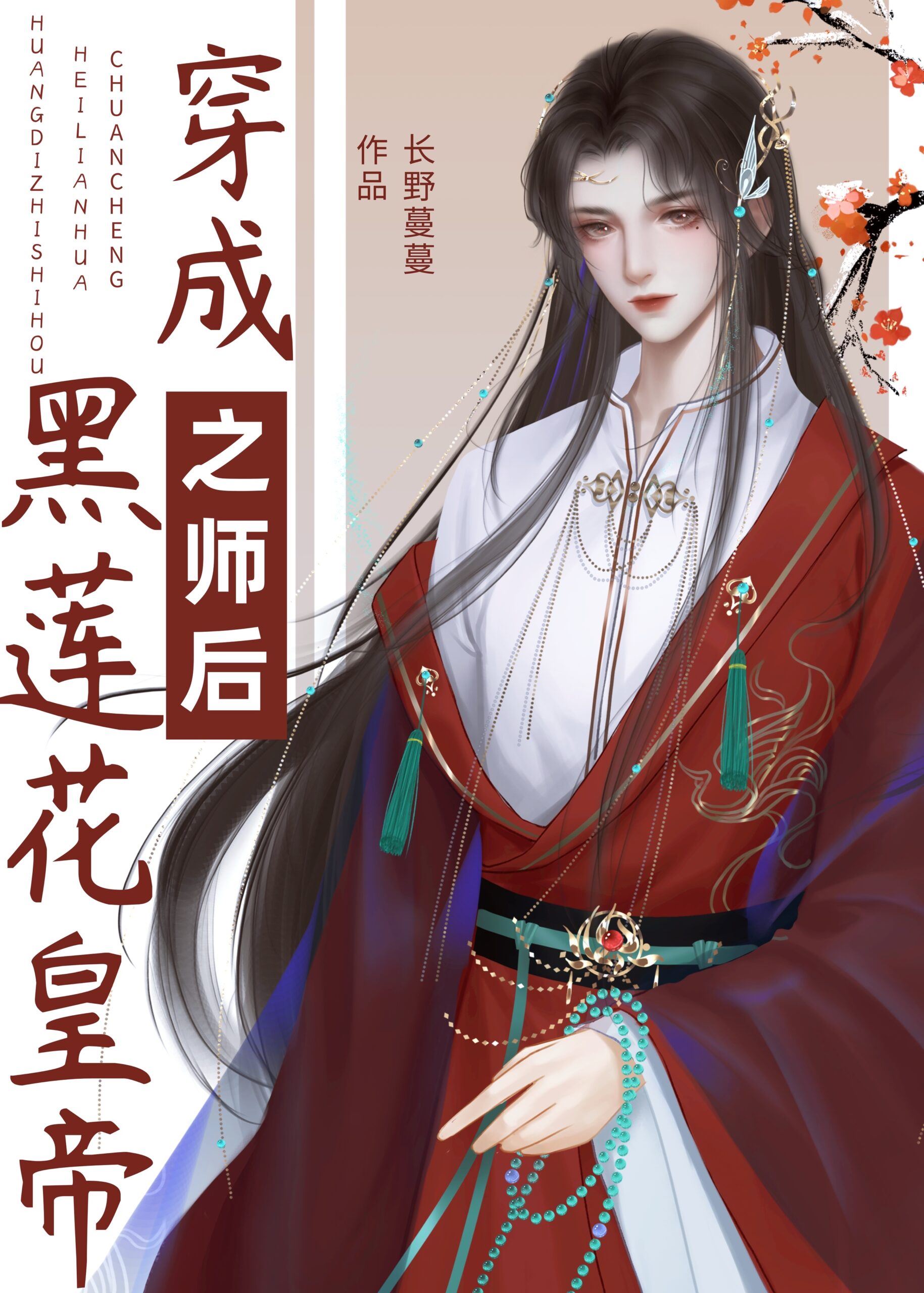
The stakes in this scene are weirdly layered, and I think that's what makes it work so well. On the surface, it's a domestic comedy—guy ruins uniform, gets scolded, tries to fix it. But underneath, there are so many tension points firing at once. First, there's the power dynamic. Xiao Shen is technically the disciple, the subordinate, the one who should show respect. But emotionally, he's the one craving approval, the one who's visibly trembling and apologizing. Meanwhile Shen Qingzhuo holds all the cards—literally and figuratively. He controls the medical box, the ointment, the judgment. And yet, there's something about how Xiao Shen manipulates the situation too. The eye-grabbing act at the end? That's not just clumsiness—that's strategy. He knows exactly how to redirect his master's concern. Then there's the external threat angle. The secret guard is literally watching through the window, and Xiao Shen threatens to dig his eyeballs out. This isn't casual swearing—this is someone who operates in a world where violence is a real option, where "digging out eyeballs" is apparently not even considered torture by his standards. That single line changed everything about how I view this character. He's not just a lovestruck puppy; he's dangerous, and his master somehow sees both sides of him. The uniform itself is a stake worth noting. In this world, losing official clothing means paperwork, explanations, recorded infractions. It's not just fabric—it's bureaucracy, accountability, the weight of institution pressing on personal relationships. And Xiao Shen breaking it while half-conscious is almost symbolic of how his emotions repeatedly disrupt the ordered world around them. I'm genuinely worried for this guy. He's walking a tightrope between devotion and self-preservation, and every chapter he gets closer to falling.
... Read More
There's a recurring visual motif in this passage that I keep coming back to, and I think it's one of the most quietly powerful things in the entire novel. Xiao Shen is sitting by the campfire, surrounded by dancers and music and the noise of the imperial camp, and what is he doing? "trying to find that familiar sky blue color." He's searching for Shen Qingzhuo's presence through his clothing. After everything — the assassination attempt, the blood, the near-death experience — his instinct is still to look for that color. It's become a symbol for safety, for home, for the only person who's ever mattered. And then there's the drinking prohibition. The text reveals that Xiao Shen hasn't drunk alcohol since he choked on New Year's Eve three years ago, and Shen Qingzhuo said "it would not be too late for him to practice his drinking capacity when he grows up." That single sentence carries so much weight. It's not just a rule — it's a promise. A promise that Xiao Shen will grow up. That there will be a future. That his master intends to be there for all of it. The contrast between the cold silent palace and the warm campfire is also doing a lot of thematic work. Xiao Shen has always been alone in cold spaces. Shen Qingzhuo is the warmth he found. When he searches the noisy camp for that sky blue, he's not just looking for his master — he's looking for the only warm thing he's ever known in a world that's been relentlessly cold.
... Read More
The pacing in these chapters is chef's kiss. You've got the high-stakes confrontation at Ying Luo's place—life or death energy, Xiao Shen ready to kill everyone, Shen Qingzhuo holding all the cards—and then you cut to the carriage and it's just... quiet. Night view. Two people talking like normal human beings for once. That contrast is everything. After all that political tension, the author gives us a moment where Shen Qingzhuo is just being soft with his disciple, promising not to lie anymore, getting pinch-earned like a teenager. It's like the chapter takes a deep breath. And then—boom—back to the internal monologue about the Crown Prince's scheme and the web of corruption. I also love that the chapter ends on that cliffhanger note about 'one move will affect everything.' You're left hanging on the precipice, knowing that whatever happens next is going to shake the entire story. The transitions between scenes are seamless too—the move from Zuixiang Fang to the carriage to the carriage interior to Shen Qingzhuo's thoughts flows like water. No jarring cuts, no filler. Every paragraph earns its place.
... Read More
There's this one line that really stuck with me about the lower rooms where eunuchs live being damp and dirty, while Pan Chong has this spacious bright room even while on duty in the palace. It's such a small detail but it tells you everything about how the world works. The eunuchs at the bottom scurry around in filth while the corrupt ones who've learned to please the right people get carved out their own little slice of luxury. And then inside Pan Chong's room there's this sack lying across the bed — which is somehow both mundane and horrifying. A bed meant for rest becomes a container for a kidnapped person. The imagery throughout this passage is so visceral too: the blood flowing along the terrain of the house toward Pan Dongsheng's feet, the sizzling sound of the blade cutting skin, the pink palace dress contrasting with that Shura demon energy Xiao Shen radiates. The author really understands how to use environment to amplify mood. This isn't just a murder scene — it's a claustrophobic, humid, blood-soaked nightmare that feels like it belongs in the most corrupt corners of the palace. Every surface feels alive with the history of violence that happens behind closed doors in places like this.

Leave a comment

You must be logged in to leave comments. or
