After Becoming the Black Lotus Emperor’s Imperial Preceptor - Reviews

After Becoming the Black Lotus Emperor’s Imperial Preceptor
+Add to Custom List
Sort
Add review
... Read More
Can we just talk about Shen Qingzhuo for a second because this man is genuinely some kind of chaotic deity? He's been wanting to dress his disciple in women's clothes for a long time apparently, and he's finally getting his way. The way he teases Xiao Shen, the calculated manipulation, the whole 'you can choose—wear it or stay in the palace' ultimatum is such a perfect display of control and affection tangled together. And Xiao Shen! Poor little Seventh Prince who clearly has feelings he's never voiced, sitting there in the pink dress, looking at his reflection, asking 'why do I feel so strange' when what he probably means is 'why do I feel everything but don't know what to do with it.' Their dynamic is insane. Shen Qingzhuo's narration reveals he used to have these thoughts when Xiao Shen was younger but never acted on them out of fear of hurting him. But now? Now he sees it as a 'godsend opportunity.' Meanwhile Xiao Shen's internal thoughts are going wild—he's imagining himself in the pink dress, thinking about how his master would look in it too, getting all flustered. This is not a healthy power dynamic and I am HERE for it. The secret guard serving as the unwilling accomplice ('It's not him who disguised himself as a woman anyway') is the perfect straight man to both of them.
... Read More
The author really understood the assignment when it came to atmosphere in this scene. Let me paint it for you: it's night, the Crown Prince just kicked open the doors to Shen's private quarters, and Shen is standing there in nothing but a snow-white undergarment that 'fit his thin and soft body curves, making him look indescribably fragile and beautiful.' The contrast between the violent entrance and that image of vulnerability? Chilling. And then there's the spatial comedy of having a fully grown person hiding under the bed while two powerful figures argue above him. Xiao Dezi standing guard outside the door like a nervous sentinel adds this whole extra layer — you know someone could burst out from underneath at any moment. The Jinyiwei taking Lu Zhu's body away, the mention of the Grand Tutor, the Eastern Palace looming in the background like a greek chorus of suspicion — every detail builds this claustrophobic court atmosphere where walls have ears and every sentence has three meanings. The author never describes the room directly but you can see it perfectly.
... Read More
The dialogue here is a masterclass in subtext. Take the exchange where Shen Qingzhuo asks for thanks: 'I took care of you all night and even had breakfast with you. Shouldn't you say thank you?' It sounds almost playful, cheeky even, but it's actually a power play. He's forcing Xiao Shen to acknowledge his debt, to perform gratitude while seething inside. And Xiao Shen's response? Stiff. 'Thank you.' You can hear the reluctance in every syllable. Then there's the Crown Prince's entrance. 'We haven't seen each other for a while. How come Qingzhuo became so unfamiliar... Didn't Gu say that we don't need to be polite in private?' On the surface, it's friendly, nostalgic. But Shen Qingzhuo's reply is a shield: 'The minister has caught a cold recently. Your Highness should stay away... to avoid having passed the cold to Your Highness.' Cold? Literal cold. Metaphorical distance. He's rejecting the intimacy without refusing the invitation. The voices are distinct. Shen Qingzhuo is calm, measured, laced with dry humor ('many people who are not very smart'). Xiao Shen is silent, hoarse, reactive. The Crown Prince is oily, performative. The banter isn't just words; it's a verbal sparring match where everyone is wearing armor.
... Read More
This chapter sequence is a masterclass in tension management and I need to unpack why it works so well. We open with what seems like a cozy mentor-student moment. Shen Qingzhuo telling Xiao Shen not to fall behind in his studies. Cute. Wholesome even. You're settling in for a slow burn. THEN — boom — Xiao Shen's face drops and suddenly we're in a completely different genre. The pivot is SO fast it caught me off guard. That's deliberate misdirection and it's brilliant. Then we get the bureaucratic exposition about the imperial examination system. Now, I'll admit — this part could have dragged. But the author knows exactly how much to give you: poverty's foundation, social mobility, fresh blood for the court, three generations to form new family forces. Four paragraphs and you understand the entire political ecosystem. No filler. After that, three nights of staying up all night investigating — that's the author telling you 'this character is exhausted, feel his fatigue through the prose.' Then WHAM, the letter arrives. Faster than expected. The eunuch hands it over, Shen Qingzhuo reads it, tears it up, and goes to meet the Crown Prince. No wasted words. The garden scene itself is perfectly paced — Xiao Yichen wants information, Shen Qingzhuo makes him wait, builds the suspense with 'you guessed half of it right,' then drops the jade pendant reveal. The pacing here is like a magician's routine: misdirection, anticipation, reveal. And that ending? "I cannot help Your Highness with your worries" — cuts off mid-sentence. Not a cliffhanger, exactly, but a FRAGMENT that hits harder than any dramatic pause. The author trusts you to fill in the silence.
... Read More
This scene. This ONE scene. I have read it five times and it gets worse every time. Let me walk through it slowly because I need to understand what just happened to my heart. Xiao Shen notices something red on Shen's face. 'It's red, here.' He steps closer. Shen GRABS his wrist. 'Master will do it.' Excuse me—what is this cowardice? What is this devastating, aching tenderness? Shen doesn't want Xiao Shen to touch the blood. But 'It's not dirty,' Xiao Shen says, and look at that word choice: not 'it's okay,' not 'it doesn't matter,' but NOT DIRTY. He's saying your blood, your violence, your punishment-wielding hands—none of it changes how I see you. Then the actual wiping happens. 'His thumb touched the jade-smooth skin and he paused slightly. Then he applied a little force with his fingertips and wiped away the drop of dried blood under his eye.' And here's the thing that destroyed me: 'With just this rub, the small area under his eyes turned completely red.' He's pressing too hard. He's distracted. His fingers are shaking or his heart is racing—or maybe it's both, because the next line is 'boom, boom, boom, like a drum beating in his chest.' And Shen—cold, calculating, brutal Shen Qingzhuo—looks up through his 'long raven-feather eyelashes' with 'a little moisture' in his 'peach blossom eyes' and asks if it hurts. Not 'why are you looking at me like that.' Not 'stop.' Just: does it hurt? As if Xiao Shen's touching him is something that could cause pain, not receive it. I'm not okay.
... Read More
The dialogue in these chapters is just so sharp it hurts. Every character speaks in a way that reveals exactly who they are, and the subtext is doing most of the heavy lifting. Let's start with Shen Qingzhuo because his voice is unmatched. When he says to Xiao Shen, 'You should also carry a handkerchief with you,' on the surface it's just practical advice. But the way he says it—calm, unhurried, never doubting his disciple's slightly suspicious request—tells us everything about how he carries himself in the world. He's never rattled. Even his teaching moment with the idiom, the 'bewitching little fox' eyes, that's not just description—that's Shen Qingzhuo being playful with his words the way a predator plays with its food. He knows exactly what he's doing. Xiao Yichen's dialogue is all sharp edges and sudden movements. 'What if Concubine Yuan gives birth to a princess?' 'Isn't this the same as handing over my Xiao family's kingdom to someone else?' 'In this case, no matter whether the baby is a cat or a mouse, Gu will let it die in the womb.' He speaks in declarations and threats. His dialogue doesn't question—it concludes. And that's the tragedy of his character, isn't it? He's so certain he's right about everything that he can't see the traps closing around him. Cao Ren is the real standout though. 'What's impossible?' He stands up and walks out of his seat like he's delivering a verdict. 'Do you know that His Majesty is not the Empress Dowager's biological son?' That line alone—delivered with such casual devastation. And then 'distant water cannot quench a nearby fire'—he's quoting idioms and proverbs the way other people quote poetry. Every sentence he speaks is calculated, layered, and designed to make Xiao Yichen feel both informed and inadequate. The Emperor's fragmented, coughing speech at the end is a masterclass in how dialogue can show physical deterioration while advancing the plot. Three coughs interrupting one sentence—and each cough costs us information, making us lean in harder to catch what's left.
... Read More
This passage is a masterclass in pacing control. It opens with comedy—Shen Qingzhuo laughing until he can't stand straight at Kong Qianhu's horrified face, Xiao Shen's sullen "What are you standing there for?" And we're giggling. Then the carriage ride transitions smoothly, nothing dragging. But watch what happens when they arrive. The physical comedy of Xiao Shen almost falling, the embrace, the gauze mask—this shifts the tone. The laughter dies into something quieter, more charged. And then the actual BUSINESS begins. Secret letters, intermediaries, coded messages. The pacing tightens like a drum. The scene inside the room is where I think the author really earns their keep. It starts with relief—"I'm dying of suffocation"—Xiao Shen finally speaking, complaining, being himself. Then the fan comes out, the master-pupil power dynamic reasserts itself, and we get that incredible drugged-incident tease that hangs in the air like smoke. "Nothing, you just fell asleep after being drugged…" The reader and the disciple both know that's a lie, and the silence after it is deafening. And it ends on Xiang Lian leaning on the couch, looking at Shen Qingzhuo "lovingly" with the words "Now that the work is finished"—trailing off. The chapter doesn't tie a bow on anything. It leaves you wanting the next layer of what was just accomplished and what secrets are still buried. Perfect rhythm. Too perfect honestly.
... Read More
'This little palace maid had a slender figure and was actually a little taller than Lord Shen. However, she looked elegant and appropriate in her pink palace dress. Her face was as white as powder, her lips were as red as rouge, and her facial features were good-looking and neutral.' I literally stopped reading and just stared at my screen. The author built this entire scene with such deliberate care—starting from Kong Shang's confused perspective, making us see the maid through his eyes, describing the elegant posture and the youthfully refined beauty before the reveal. And then—the moment she raises her face and Kong Shang sees his own reflection in those dark cold pupils. The visual of Kong Shang taking steps backward, the summer heat contrasting with the sudden chill running down his spine. And then Shen Qingzhuo laughing, his fair face turning rosy red, trying and failing to compose himself. It's a scene that reads like a film script. Every beat is timed perfectly. The pink palace dress against the pale powder, the red lips, the contrast between the composed exterior and the internally furious Seventh Prince. This is the kind of scene that stays with you because the imagery is so vivid and precise.
... Read More
I am not okay. I repeat, I am NOT okay. The scene where Shen Qingzhuo takes that new snow cape from the carved hanger and walks over to put it on Xiao Shen — that right there is the kind of moment that makes you sit with your phone for twenty minutes just processing. The kid's entire body goes stiff. His thin back is tense. He's not used to tenderness. He DARENS to break free. But also can't bring himself to run. Do you understand what that says about this child's entire existence? That basic human warmth is so foreign to him that his survival instinct kicks in like he's being attacked. And yet — he doesn't run. He just stands there, trembling, letting this man he barely knows drape fabric over his shoulders. And Shen Qingzhuo doesn't overdo it. Doesn't make a big speech. Just puts the cape on him and says "Your Highness doesn't need to come to listen to the lecture these days. Let's talk again after the snow melts." Buffer time for both of them. That's it. That's the whole gesture. But it's everything. I also can't stop thinking about the mirror scene. Shen Qingzhuo looking at himself — the original owner's face, fifteen years old, delicate and handsome with that sad hint between the eyes. Same name, same surname, almost the same face. Is THAT why the system chose him? He can't help but feel something strange about it. There's a melancholy to the whole transmigration setup that nobody discusses enough. This man is living someone else's life, wearing someone else's face, trying to save someone else's future while questioning his own identity. And then the unfinished poem on the desk. "I am far away from home, I have no idea when I will return." The protagonist wrote that. For a character who's been abandoned by his father and brother, walking on thin ice in the palace with no control over anything. The original owner was pitiful, sure. But victim turned perpetrator is no longer innocent. And yet — who is truly innocent in this palace? I'm sitting here emotionally destroyed and I have no regrets.
... Read More
The central symbol of these chapters is absence. Not presence — absence. A charred corpse with no identifying evidence. A maid who died before she could speak. A Crown Prince who is removed from the room before any real questions are asked. The entire investigation is about things that are NOT there. This connects to something deeper about power in the novel: the people who control the narrative are the people who control what is missing. The fire that destroyed evidence. The suicide that prevented testimony. The Emperor's casual dismissal of the Crown Prince as if he were a child who needs time to think. All of these are acts of erasure. And then there's the Seventh Prince — the boy who was least favored, who has been invisible in the family structure, and who is now using that invisibility as a weapon. He knows how to be overlooked. He knows how to speak in ways that sound obedient while carrying hidden meanings. His entire existence in this story is about what the Emperor refuses to see until it's too late. The dream imagery — teeth, biting, licking, a neck being held — that's not just romance or tension. It's consumption. It's the idea that one person literally wants to absorb another. And in a story about who gets to speak and who gets erased, that imagery hits on a frequency that has nothing to do with romance and everything to do with power.
... Read More
The pacing in these chapters is relentless. Starts with quiet discomfort ('It's so hot…'), then escalates to physical struggle, carriage shake, urgent commands, palace gate standoff, confession, hurried carry, chaotic arrival, and sudden intimate fall—all within a few scenes. No breathing room! I loved every second. The cliffhanger ending is perfect: lips on adam's apple, author's note dropping the bomb about pretending. How did the author maintain such tension without dragging? By constantly raising stakes: drug effect worsening, guards blocking, time pressure, fear of discovery. The transition from carriage to palace is seamless, yet the shift in atmosphere—from claustrophobic carriage to imposing palace gates—adds another layer. Sometimes I wanted to skip the gate scene, but it was necessary to show the external obstacles. The author's note at the end breaks the fourth wall, which was playful and surprising. Would have liked a bit more internal reflection from Shen Qingzhuo during the carry, but maybe that's intentional—to keep us in the moment. Overall, excellent control of rhythm. The 'bang' sound when Xiao Shen falls is a great auditory cue that jolts both characters and reader. Kong Shang's loud 'My Lord? What happened?' serves as comic relief but also emphasizes the urgency. The youth's whining 'Master… Master…' is like a ticking clock. I couldn't look away. The structure feels like a single breath held until the final moment—exhausting and thrilling. It's a masterclass in sustained tension, where every beat pushes forward and nothing lingers unnecessarily. The pacing mirrors the characters' panic, making us feel the race against time.
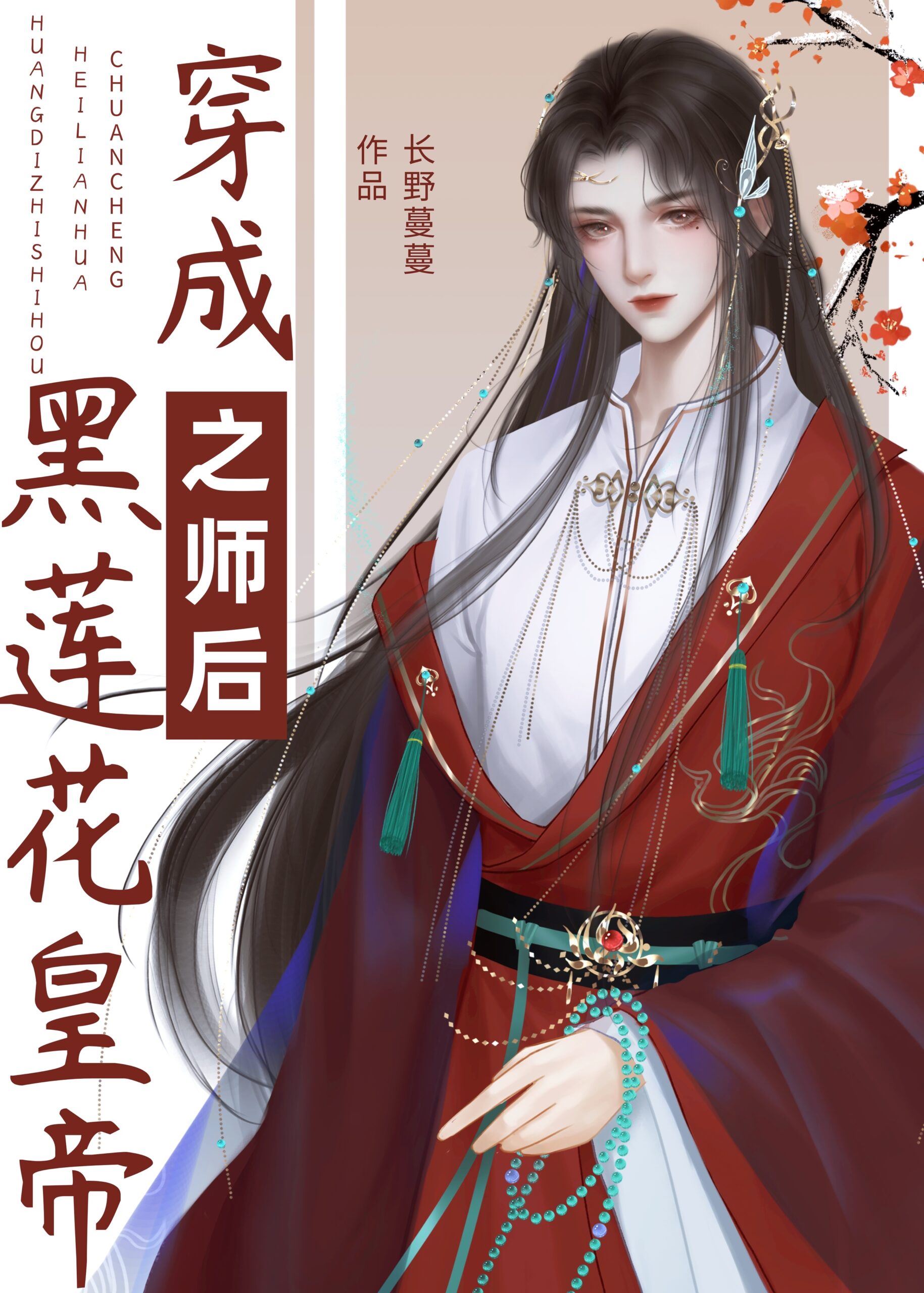
... Read More
The author knows how to pivot. One second you're reading something that reads like a slow-burn romance novel—the ointment application, the leaning in, the breathless moment before a kiss—and the next second your disciple has face-planted onto the bed and torn a Jinyiwei uniform to shreds. I love this kind of whiplash. It keeps you on your toes instead of letting the scene get too precious or self-important. What's clever about the pacing here is that the comedic beats don't undercut the romance; they deepen it. Xiao Shen's clumsiness isn't just funny for laughs—it reveals how desperately he wants to be close to his master, how his body betrays him when he's overwhelmed. The tension doesn't deflate; it transforms. From sexual tension to the tension of "oh no I just ruined three days' worth of official clothing and my master is looking at me like I'm an idiot." And then just when you think the scene is wrapping up with Xiao Shen fake-crying about his eyes, the text cuts off mid-sentence: "I don't know, I just felt a sharp pain…" What happens next? Is he actually hurt? Is this another manipulation tactic? The cliffhanger ending is perfect for a serialized format—you're immediately clicking to the next chapter. The only thing I'd question is whether the transition from the secret guard's internal monologue back to Xiao Shen's perspective flows smoothly enough, but honestly, the chaos works in its favor. It mirrors how a real conversation goes when everyone's half-listening and things keep derailing.

Leave a comment

You must be logged in to leave comments. or
