Advancing to Chen Cang by a Secret Path - Reviews

Advancing to Chen Cang by a Secret Path
+Add to Custom List
Sort
Add review
... Read More
This chapter is a masterclass in breath control. It starts at full sprint—Aray diving at them, cutting through Xie Xihai's body, the curse aftermath still raw—and then just... stops. Not gradually, but like someone cut the music. He's lying there, alive but wrecked, and the narrative lets him just *be* in that space for a long time. No action. Just memory and realization and the slow drip of understanding that his old life is gone. The structure basically has three acts packed into one chapter: Act I: The immediate aftermath. Physical survival. The arachnid attack grazes him but doesn't kill him. Epiphany hits—he's on his own now, the royal protection is over, he's not a kid anymore. Act II: Domestic mundanity. Bathtub. Porridge. Reading Su Wen. Asking for self-defense lessons. This is where most books would rush to the next adventure, but the author forces us to sit in the ordinary. And it's brilliant, because the ordinary is where the real emotional work happens. Act III: The almost-confession. Xie Xihai makes his move—literally grabs Sheng Lin's wrist, locks it, dares him to escape. And then... the chapter cuts off mid-action. "Xie Xihai, wh—" Just ends there. No resolution. No closure. Just the echo of a gesture that meant everything and the reader is left hanging. The pacing between these three movements is what makes the chapter work. It doesn't treat the quiet moments as downtime—it treats them as the main event. The adventure is what happens around them; the story is what happens inside them.
... Read More
'In the desolate wilderness, there was no need to dispose of corpses.' That single line does so much heavy lifting. You don't need a paragraph about the setting—the wasteland tells you everything about this world. People die here, and they stay dead. There's no ceremony, no burial, just consequence. I love how the author layers in worldbuilding through practical details rather than exposition dumps. The Duan Lou assassination market with its tier system—first-tier gets to pick your targets, second-tier takes whatever's left—tells you about the economics of violence in this world without a single infodump. Then you've got Qingchi Town sandwiched between two mountains, the lake marking Prince Ning's territorial boundary, the Guanyin temple famous for fertility prayers. These details feel lived-in, not decorative. The inn scene is especially vivid to me—the cramped driver's seat, the small ground-floor room, the white dove slipping through an open window like it belongs there. That bird is such a perfect image. It carries deadly serious messages from Sheng Lin's master about revenge plots and underworld conspiracies, yet it's also just... a bird. A little creature eating dry food from someone's bag. The contrast between the epic stakes and these mundane, sensory moments is what makes the world feel real rather than staged.
... Read More
Okay, so this whole chapter is basically a masterclass in how Sheng Lin operates. On the surface he's cold, pragmatic, follows other people's plans—but then he drops this line: "I can't sleep well without you." And Xie Xihai, poor guy, completely disarmed. He's been through hell in that room with Sheng Lin, and the second he hears something even remotely tender, he caves instantly. But here's what really gets me—Sheng Lin's entire arrangement with Jixiu shows just how much he's entangled in this web for Xie Xihai's sake. He didn't volunteer. He was pulled in because of Shang Ling, because of his mother's history, because everyone around him is connected to this boy he clearly cares about. And yet he still agrees. Still escorts him. Still cleans him up afterward, even scolds him half-heartedly when he's embarrassed. The most telling moment? When Sheng Lin thinks Xie Xihai fell off the bed. He presses him back without hesitation. That's the kind of instinct that doesn't lie. He pretends not to care, but his hands do all the caring for him. I think Sheng Lin is one of those people who expresses devotion through action rather than words, and honestly? That's why it hits harder. What do you guys think—is Sheng Lin actually in control of his own choices, or is he just a pawn being moved by Jixiu, Shang Ling, and everyone else? Because from where I'm sitting, he looks like someone who keeps saying yes to other people's plans while quietly rearranging his entire life around the person he's protecting.
... Read More
Okay so this whole sequence hits differently because the pacing literally shifts gears. You've got these slow, almost cozy moments—practicing hand-to-hand, the carriage ride, trying to feed Xie Xihai porridge—and then BAM, the poison attacks. It's like the author is saying 'we were having fun now die.' The Hehuan Gu wasn't even foreshadowed in this batch, which means the earlier chapters must have set something up I missed. But honestly? The suddenness works in its favor. One minute he's complaining about dry rations and the next he's vomiting blood on the side of the road. The transition from mundane travel to life-threatening crisis in like three paragraphs is masterful tension-building. And that physician line—"the poison is peculiar"—what does that even mean? Now I'm desperate to know what kind of poison could do this and why it showed up NOW of all times. The story structure here is basically a pressure cooker: you let things simmer, then you crank the heat until everything explodes. Five stars for making me physically turn pages faster.
... Read More
So here I am, just finished this chapter and I need to process what happened. The plot in these chapters is doing something really clever—on the surface it looks like a slice-of-life travel chapter where a prince goes shopping for clothes and gets lost. But under that, there's actual danger. When Xie Xihai is wandering around Qingchi Town at night with no clue where he is, you think this is just comedic incompetence. Then Sheng Lin appears out of nowhere and reveals someone was eavesdropping at their window. That changes everything. Suddenly this isn't just a funny travel chapter—it's a chapter about a prince traveling with a bodyguard in hostile territory, and someone is watching them. I love how the author doesn't announce the danger dramatically. It just slips in during a casual conversation. Xie Xihai asks casually, almost distractedly, if there are places to visit in Lizhou, and Sheng Lin drops this information about Yingchun Lane. The shift from domestic comedy to political intrigue is so seamless you almost miss it. And then there's the purse scene—Xie Xihai hiding the remaining silver coins in his waistband like a street urchin. He thinks he's being sneaky but Sheng Lin notices immediately. For someone who claims to be trying to escape eventually, Xie Xihai is terrible at keeping secrets. The plot also has this great running thread about the promise Xie Xihai made. Every time Sheng Lin brings it up, Xie Xihai's smile freezes. There's something there we haven't been told yet, and I am so curious what that promise actually is. Is it related to why they're traveling together? Is it about Xie Xihai's safety? The author is planting these mystery seeds while keeping the surface narrative light and funny, which is honestly really skilled writing.
... Read More
Let's talk stakes because they keep escalating and I need to process it. On the surface, the conflict is simple: Xie Xihai is sick, they need to reach the physician, the disciples won't let them take the easy route. That's external conflict—clear, straightforward, you root for the protagonists against the obstacles. But the internal conflict is what keeps me up at night. Xie Xihai knows his body is failing him. He felt it coming during the ride, he can't even stand after vomiting blood, and yet he's fighting to keep going because stopping means giving up on whatever hope this journey represents. And Sheng Lin—he's the one carrying the weight literally and figuratively. Remember the flashback? The guy who once hesitated, who broke rules for Xie Xihai, now has zero hesitation. He just picks him up and goes. That's not just love, that's desperation masked as decisiveness. The stakes here aren't just about survival—they're about how much one person will risk for another, and how much suffering is acceptable on the path to saving someone you can't imagine living without. Who blinked first, huh
... Read More
Let me ask you something. What does a prince who has already lost his throne stand to lose? Everything, apparently. The flowers are just the surface stakes. The real stakes are about survival, identity, and the unbearable tightness of depending on someone you can't fully trust. The assassination attempt raises the external stakes to maximum. A silver needle, laced with poison, aimed at Xie Xihai's throat while he's buying dinner. That's not a threat — that's an execution attempt. And Sheng Lin stops it with a sword hilt swing so fast Xie Xihai doesn't even see it happen. He covers his eyes. He doesn't want to watch. That's a specific kind of trauma response — not cowardice, but refusal to accept what's about to happen. But the internal stakes are where this really lives. Xie Xihai signing the behavior contract isn't just about flowers. It's about admitting he needs Sheng Lin to survive. It's about trading pride for protection. Every time he sulks and then crawls back to Sheng Lin, every time he tries to lean into him and gets gently pushed away, the conflict deepens: does he want freedom or does he want safety? Does he want equality or does he want someone to keep him alive? The final line of this section — Xie Xihai seeing a silver shop and stopping in his tracks — feels like a threshold. Mozhou brings merchants, wealth, options. Or traps. Probably both. Because in this world, money and power are just different kinds of cages.
... Read More
I kept coming back to one line: Sheng Lin is basically driftwood in this whole sequence. Xie Xihai is drowning, holding on for dear life, and he knows it—knows it's reckless, knows the shore he left behind might be gone forever if he tries to swim back. The author doesn't spell it out with grand declarations of love; it's all in the subtext, the little touches, the way Xie Xihai *notices* that Sheng Lin's expression has shifted. That's it. That's the whole devastating chapter. And then there's the mother flashback, right? He's half-asleep after the curse-lifting thing, and suddenly we're cut to Shang Ling pinching his face when he was a kid, asking when he'd grow up, and him slamming the table like "I'm the most mature person in the entire prefecture." I actually laughed out loud and then felt terrible because it was so painfully honest. That's the voice of every eldest son who had to pretend he had it together while quietly panicking. And now here he is, alone in a strange place, asking Sheng Lin to teach him self-defense because for the first time he realizes there's no one coming to catch him. The relationship between these two is so layered. On one level it's transactional—he needs Sheng Lin to survive, Sheng Lin helped lift a curse—on another it's something dangerously close to dependency, and on yet another it might be the beginning of genuine care that neither of them wants to name. When Xie Xihai tugs at Sheng Lin's clothes and whispers that pitiful plea about learning to fight, it's not just strategy. It's "don't leave me behind." And Sheng Lin? He almost says yes. Almost. Then he stops himself and offers one move instead. One move. That's how restrained these characters are with everything they feel.
... Read More
There's this one moment that absolutely wrecked me. Xie Xihai crashes into Sheng Lin, his forehead swelling, and his first instinct is to cry out 'Mother, it hurts.' But then he remembers Shang Lingyue isn't in the mansion—she's at Mount Junshan—and he can only let out this tiny, pathetic 'wuh' and lower his head. That single beat of realization, that he's completely alone and his only real protection is hundreds of li away, hit me like a physical blow. He's eighteen years old, he's been spoiled and pampered his whole life, he's never left Hancheng, and now his own father is physically dragging him out the door while lying through his teeth. The most heartbreaking detail isn't the danger of the journey or the fake imperial decree—it's that this boy kept hoping his mother would come back and rescue him. Like a child who thinks if they just wait long enough, the good parent will arrive and everything will be fine. And the worst part? King Ning actually says 'your father is reluctant to let you go' while shoving him onto a horse. The man is performing grief while committing betrayal. Xie Xihai knows something is wrong—he even calls it out directly, 'A few months ago was not just a few days ago, right?'—but he has no power to stop it. The emotional core of this story isn't romance or adventure; it's a son being abandoned by the people who were supposed to protect him, and I am already fiercely on his side.
... Read More
This chapter is a masterclass in pacing control. The author could have opened with the eavesdropper scene—high tension, immediate danger—and that would have been exciting but predictable. Instead, they start with something almost absurdly mundane: a prince who needs new clothes and is trying to communicate his wishes through written notes because he apparently can't just ask normally. The comedic beat of Xie Xihai writing 'Accompany this prince to buy clothes' and Sheng Lin responding with flat indifference is genuinely funny. You settle in, you're smiling, you think this is a lighthearted travel chapter. Then the tone shifts. Xie Xihai leaves the inn, gets lost, and the prose becomes tighter, more anxious. Shorter sentences. Physical descriptions of fear—shaking legs, night falling, no sign of the inn. The pacing accelerates naturally through the structure of the scene itself. The reader's anxiety mirrors Xie Xihai's. And just when you're fully invested in his panic, Sheng Lin appears. But the relief is brief because Sheng Lin reveals the eavesdropper, which introduces a new layer of tension that reframes everything that came before. The mundane became dangerous. What I love most is how the chapter returns to domestic normalcy after that threat. They're back in the room, discussing clothes, money, travel schedules, and entertainment districts. The danger hasn't disappeared—it's just been filed away—but the return to everyday conversation makes the underlying tension more present, not less. The tapping stick scene at the end is perfect pacing punctuation. After all that emotional weight, we get this almost ridiculous image of a prince making noise during meditation to try to break his companion's focus. It's funny, it's light, and it signals that the chapter is winding down without losing the warmth that's built between these two characters. The author knows exactly when to accelerate and when to let the reader breathe.
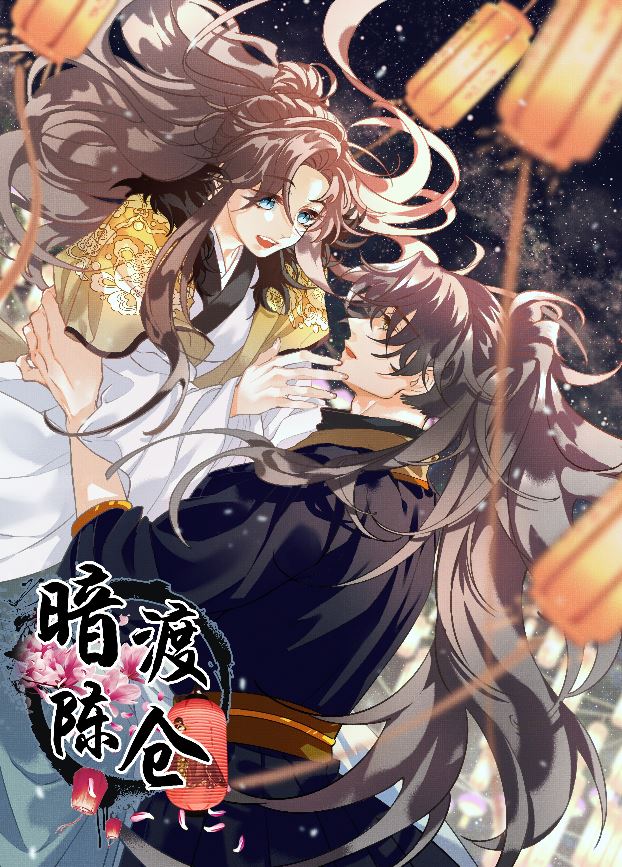
... Read More
'This young master hasn't fully recovered; you might give me a fever again.' And Sheng Lin just... lifts him up anyway. That's the entire emotional architecture of this relationship right there. Every interaction between these two is built on this delicious tension between duty and something that absolutely is not duty. Let me just say this: the bath scene is one of the most intimate things I have ever read and neither character seems to fully understand what's happening. Xie Xihai demanding to be stripped and carried into hot water like some spoiled imperial pet, and Sheng Lin—stoic, impatient Sheng Lin—actually doing it. Actually lowering him into the water, adjusting his position, putting up with 'it's too hot, I'm going to get cooked.' This is care disguised as compliance, and Xie Xihai knows it on some level because he never actually asks anyone else to do this for him. The carriage moment wrecked me though. When Xie Xihai grabs Sheng Lin's arm and his eyes get moist, saying 'truly a chivalrous hero with love and righteousness'—that's not coquettishness anymore. That's genuine gratitude breaking through the Prince's usual performance. He's used to being served by others but this is different. Sheng Lin isn't serving him because he has to; he's serving him because he chose to. And that distinction matters. Then the bargaining—ten days, five days, eight days—and Xie Xihai massaging Sheng Lin's shoulders before getting into the carriage. Who does that? Who physically relaxes the person they're negotiating with like it's nothing? It's like his body knows before his mind admits it: you trust this person. You're safe with this person. Even when the carriage stops and there's blood everywhere, that safety doesn't evaporate—it just changes shape.
... Read More
So I have to talk about the bruise scene. You know the one—Xie Xihai rolls up his sleeves to cool down on the ferry, notices the fading green-yellow mark on his arm, and immediately tries to hide it? But Sheng Lin grabs his wrist and touches it like it's nothing. Like he's mapping out where he can still mark his territory. That tiny moment carries SO much narrative weight. It's not just physical evidence of whatever happened before—it's a reminder of their entire dynamic, of power and control and this weird intimacy that's been building across every chapter. And then there's the Mimosa Curse hanging over all of this like a sword. Xie Xihai literally says 'If it hurts that much again, I'd rather die' and you can feel the author casually dropping these time bombs throughout the chapter. He vomited blood earlier—just a passing mention, no drama about it. He's already been through something horrific and they're still traveling. The fact that the curse isn't resolved yet, that they're heading toward Qingyi Mountain with this looming threat, keeps the whole thing ticking forward even in these quieter moments. I also love how the clothing incident ties into the larger plot. His favorite clothes got blood on them, Sheng Lin threw them away without asking, and Xie Xihai immediately pivots to 'put it on the Shangjian account.' It's such a specific world-building detail—that there's a shared account, that he can just charge things to it—without any exposition dump. The author trusts us to figure things out. Also honestly kind of funny? That this person's biggest concern after nearly dying is his wardrobe. The ferry scene itself functions as a pressure cooker too. They're confined on a boat, crossing a wide river, with waves and rain clouds outside. Classic narrative technique—force your characters into a contained space where they can't avoid each other. And it works. Everything that happens on that ferry feels inevitable because the setting demands it.

Leave a comment

You must be logged in to leave comments. or
