Accidentally Attacked a Great Demon King - Reviews

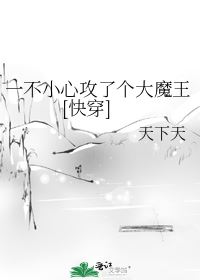
Accidentally Attacked a Great Demon King
+Add to Custom List
Sort
Add review
... Read More
Let's talk about stakes, because this chapter turns the temperature way up. At the start, the conflict is relatively low-key—just two people exploring a relic. But within pages, we've got sage realm experts fighting to the death over a single herb, and suddenly Han Zhiyuan is caught in the middle with something valuable. The external conflict is immediate and visceral: humans versus demons, cultivators versus each other, everyone versus Heidan once they realize what he is. But the internal conflict is where it really gets interesting. Han Zhiyuan knows he's gambling with his life every time he acts, yet he can't help himself—he needs Feng Yu to recover, he needs resources to survive, and he's willing to take risks because the alternative is stagnation. The stakes escalate brilliantly: first it's about the herb, then it's about escaping with it, then it's about Heidan's safety, and finally it's about proving that their bond is stronger than any enemy. When the sage realm experts see a dragon and want to capture it as a mount, the personal threat becomes life-threatening in a way that transcends the original objective. What makes me care so deeply is that Han Zhiyuan isn't just motivated by greed or survival—he's motivated by loyalty to his companions. Every risk he takes is because he believes in Feng Yu and Heidan, and that emotional investment raises the stakes beyond physical danger into something far more compelling. The cliffhanger ending leaves us wondering: what happens now that they've escaped? How much has Feng Yu really recovered? Who else is hunting them? The tension is exquisitely maintained.
... Read More
Okay so let me just... walk through this because WOW. Chapters 14-17 basically do EVERYTHING. We start with Han Zhiyuan and his crew bumping into the PEACOCK KING — the literally legendary figure everyone fears across the continent — and he's ALREADY injured. That's already a crazy hook. Then five arrogant youths show up thinking they can just loot the Peacock King while he's down, which is peak "these people have no survival instincts" energy. The Peacock King takes them all out in one move but immediately collapses from exhaustion. This is where the plot pivots HARD — instead of fighting for the treasure, Han Zhiyuan becomes the accidental protector of the most dangerous creature in the world. And then the gray-clad elders show up! Two new powerful figures who clearly have been hunting the Peacock King, which raises the stakes through the roof. But the REAL plot twist? The black egg hatches overnight into this weird dragon-creature (snake body, fish scales, crocodile head, deer antlers, eagle claws — literally a mashup of every legendary beast), AND the Peacock King transforms into a human. A HUMAN. In Han Zhiyuan's arms. The chapter ends right on that discovery and I am SHOOK. The author basically stacked three separate cliffhangers into one chapter and somehow made me want all four simultaneously.
... Read More
I cannot stop thinking about Zhu You. This guy bursts into a room like 'DID YOU SLEEP WITH HIM?!' and then immediately pivots to 'IT WAS FORCED??? I'll give you five minutes, Han Zhiyuan, you better explain!' and I am deceased. The man has zero filter and I would die for him. But honestly the dialogue throughout this entire passage is just *good*. Every character has such a distinct voice. Han Zhiyuan's shameless energy comes through in lines like 'If you want to win over the iceberg, you can't be afraid of the cold and must have thick skin' — that's such a specific personality type, someone who's confident to the point of being almost annoying but also weirdly self-aware. Tang Yifeng's dialogue is all clipped and cold, which makes perfect sense for his character. 'No reason, just dislike.' 'Impossible.' 'Shameless!' — he barely says more than a few words at a time and when he does, it's defensive. The author is using dialogue economy brilliantly here. And the banter when they're actually negotiating — 'Five days!' 'Five days can work but you have to let me do some other things.' 'A week!' — this reads like a rom-com but with real stakes underneath. The back-and-forth feels natural, like watching two people who actually know how to push each other's buttons play a game neither of them wants to admit they're enjoying. The author's narrative voice is also doing a lot of work — sarcastic, warm, occasionally dramatic in all the right places. When it says 'a man focused on his work is the most handsome,' that's not just narration, that's the author winking at the reader while Han Zhiyuan is clearly thinking exactly that.
... Read More
The pacing in these chapters is absolutely ruthless in the best way. You've got an entire emotional whiplash tour: Peacock King fainting → Han Zhiyuan freaking out about the Demon King → mysterious dragon in the sky → Dragon Father appears and vaporizes a dude → exposition dump about Huang Duan Mountains → restriction reveal → Hei Dan chaos → dad bails → 'Mama' joke → 'Let's go.' And it all happens without a single moment feeling stale. What really works is how the author uses the Dragon Father's presence as both a payoff and a pivot. For fifteen chapters or whatever, Han Zhiyuan has been struggling alone, and then the god-tier ally shows up, solves the immediate crisis, drops the most important exposition of the arc, and then immediately leaves him with the baby dragon. It's like the author said 'here's your power fantasy, now take it away and make it awkward.' The transition from the apocalyptic battle atmosphere to the comedic beats with Hei Dan clinging to everyone like an octopus is sharp but it works because the emotional tone shifts naturally—the threat is gone, the tension releases, and now we're just in this weird found-family setup. And that ending with 'Let's go. Where to?' is a perfect micro-cliffhanger. It's simple, understated, but I NEED to know where they're going next.
... Read More
I need everyone to sit down because the silver-haired man absolutely did NOT earn that treatment. Han Zhiyuan carries him through the deep mountains for HOURS. Hours. His internal organs are probably rearranging themselves and what does he get in return? A soft 'ugh~' and then BAM, launched four or five meters into a tree like a ragdoll. The text describes it perfectly: 'For a moment, Han Zhiyuan felt like his internal organs had shifted, almost fainting from the pain.' And the silver-haired man's response is just standing there with this transcendent, icy expression while Han Zhiyuan is lying in the dirt questioning every life choice that led to this moment. I was FURIOUS for him. Not even in a 'this is dramatic' way—in a 'bro literally just carried you and you threw him' way. But then the scene shifts and suddenly I am a mess because Han Zhiyuan feels bad for HIM. When the silver-haired man clutches his chest and gasps out a single word—'Go!'—Han Zhiyuan's immediate instinct is to support him and run away. Despite everything. Despite being treated like a piece of luggage, he still sees that the other guy is hurt and his first thought is protection. That is not gratitude. That is just genuine human warmth and it makes the betrayal of the throw so much more stinging. And then the egg—THE EGG—bumps into them and pushes them right back into danger. Of course. Because the universe hates him. The chemical potential between these two is absolutely unreal and I am here for it.
... Read More
The pacing in this batch is absolutely relentless, and I mean that in the best possible way. We go from a quiet, tense standoff over a piece of copper to a full-blown celestial disaster in the span of a few paragraphs. It's breathless. The author doesn't waste time. You've got Han Zhiyuan trying to figure out Feng Yu's motives, then BAM—lightning strikes. Then BAM—Elder Qiu attacks. Then BAM—flying debris and spitting blood. It's a whirlwind of action that never lets you catch your breath, which is exactly what you want in a climax like this. The transition from the internal monologue about the 'Dao Law engraved on copper' to the external chaos of the lightning tribulation is seamless. It mirrors Han Zhiyuan's own experience: one moment he's analyzing, the next he's surviving. The structure works because it escalates logically but quickly. We see the buildup (the copper, the enemies gathering), the inciting incident (the lightning), the escalation (Feng Yu vs. Liu Jing and co.), and the crisis point (Han Zhiyuan facing Elder Qiu alone). And just when you think it can't get worse, Han Zhiyuan comes up with that clever verbal gambit to stall Elder Qiu. The cliffhanger ending—where he's challenging the Loshui Holy Land's hypocrisy while bleeding out—is perfect. It leaves you dangling, desperate to know if his bluff will work or if he's about to get turned into paste. It's tight, efficient storytelling that respects the reader's time. No filler, no dragging scenes. Just pure, concentrated drama.
... Read More
"Anyone entering these mountains would be forcibly suppressed to the level of a Great Martial Master, even a Martial Emperor. Those below the level of a Great Martial Master would remain as they are, but normal people wouldn't dare enter this place without being at least a Great Martial Master or possessing powerful artifacts, as it was a place of no return." This description did something to me. Most cultivation novels just name-drop scary locations and move on, but here the author actually explains the RULES of the place. The suppression mechanic is brilliant because it creates a natural power-equalizer that makes every character equally vulnerable regardless of their status outside. That's worldbuilding that serves the plot, not just decoration. And the visual of Hei Dan's father arriving—rolling black clouds, a massive golden dragon body barely visible within, the oppressive pressure that makes the Peacock King vomit blood just from existing near it—this is so cinematic. I could literally see this as a film sequence. The contrast between that apocalyptic sky and the almost comically harmonious image of the two-and-a-half-meter-tall giant man in fluttering green robes holding a tiny green dragon on his arm is exactly the kind of vivid, slightly absurd imagery that makes a fantasy world feel alive. The fact that Han Zhiyuan is mentally panicking about surviving in a place where even Martial Emperors get suppressed while casually navigating this dangerous mountain range tells me the author has built a world where the protagonist is perpetually outmatched but somehow still moving forward. That's good tension.
... Read More
Let me just say: the pacing in this batch is absolutely ruthless and I respect it enormously. We go from an almost domestic scene — Han Zhiyuan cuddling with Feng Yu, stroking his silver hair, asking if he has feelings, getting a deadpan 'No,' and then happily falling asleep — to a full-blown heavenly tribulation crisis within the span of a few paragraphs. That transition is masterful. The author lulls us into a false sense of warmth and intimacy, makes us comfortable with this soft domestic moment, and then BAM — deafening thunder, white flashes, the ground shaking, Feng Yu undergoing another tribulation. The contrast is jarring in the best possible way. It's like being comfortably tucked in bed and then someone opens the window to reveal a storm that could swallow the world. The structure also plays with time beautifully. Han Zhiyuan feels like he slept for a century but it was only a few days. He discovers he's broken through to Martial General realm without even knowing it. This temporal disorientation mirrors the emotional disorientation — nothing is stable, nothing is what it seems. Then there's the information drop about the Holy Flame Body, which comes at the perfect moment of maximum vulnerability. Liu Jing reveals it not as aid but as a weapon, using truth to wound. The pacing of that revelation is surgical — first the term itself, then the explanation of what it means, then Han Zhiyuan's internal processing, all while the external action continues relentlessly. The chapter ends on a literal cliffhanger with Han Zhiyuan bleeding from orifices, on the verge of explosion, watching Feng Yu's blood-red eyes locked onto him. I needed to immediately turn the page. The author knows exactly what they're doing.
... Read More
I need to talk about Han Zhiyuan for a second because something about him really clicked for me in these chapters. First off, his reaction to the five youths attacking the Peacock King — he doesn't try to be a hero. He hides behind the black egg. Smart. Practical. He knows his limits. But then when the Peacock King collapses and says 'Run!' Han Zhiyuan doesn't just run alone. He PICKS UP THE BIRD AND RUNS TOO. That's the thing that got me. This guy just met this legendary being five minutes ago and already he's risking his life for it. It's not calculated — it's instinct. And then there's the scene where he's wrapping the Peacock King in his outer robe to keep it warm, following what turns out to be the black egg's telepathic suggestion. He's so stressed about getting killed at any moment but still thinks about keeping a potentially deadly legendary creature comfortable. That's not plot armor, that's just genuinely good character writing. And the dynamic between Han Zhiyuan and these two NEW companions — the black egg that talks to him telepathically (chaotic energy, loves being patted on the shell) and the Peacock King who can't even speak in bird form but somehow communicates care through thought — this is shaping up to be one of the most interesting found-family setups I've read in a while.
... Read More
Okay can we talk about how perfectly timed the Dragon Father's entrance is? One second Han Zhiyuan is panicking over an unconscious Peacock King with no Demon King response, and suddenly BOOM—heavy artillery arrives. I love how the author uses the rolling black clouds and that vague golden body in the sky to build anticipation before revealing the giant man in green robes. It's like a proper boss-level character introduction. But the real plot meat here is the restriction on the Peacock King's soul. The Restriction of True Emotion! I literally screamed at my phone. This is such a clever mechanism because it immediately raises the stakes for what comes next. The Peacock King has to fall in love to break his seal, and he's apparently someone without heart or emotion—that's delicious dramatic irony waiting to happen. Also the fact that Han Zhiyuan knew about the restriction beforehand and asked about it shows he's not just a passive protagonist, which I appreciate. I also loved the humor beat with Hei Dan calling the Peacock King 'Mama' after his dad abandons him. That is such a sharp character moment for the dragon kid—he clearly sees who's actually taking care of him now. The narrative structure here is doing a lot of work: introduction of a powerful ally, revelation of a key plot mechanism, comedic relief, and a cliffhanger ending all in one chapter sequence. The author doesn't waste a single beat.
... Read More
The atmosphere in these chapters is thick enough to cut with a knife, and the world-building really shines through the chaos. You've got this ancient, relic-strewn setting where power levels are thrown around like currency, but the scene with the lightning tribulation is pure cinematic gold. The way the dark night sky is suddenly illuminated isn't just a weather event; it's a dramatic spotlight on Black Egg's transformation. I love how the author uses the environment to raise the stakes—not just the literal lightning, but the crowd reacting like a swarm of bees. That detail about them retreating dozens of meters instantly tells you everything about the danger level without needing a lecture. It makes the world feel lived-in and dangerous. And then there's Elder Qiu, standing amidst this celestial display, completely unfazed by the lightning but intensely focused on the copper. The contrast between the divine, booming thunder and the cold, calculating gaze of the antagonist creates this wonderful tension. The setting isn't just a backdrop; it's an active participant. The 'saint's relics' theme permeates everything—the ancient artifacts, the holy lands watching from the shadows, the very air crackling with power. It feels like a world where history is heavy and every object has a secret. The visual of four intertwined streams of light clashing in the sky is hauntingly beautiful, a stark reminder that when titans fight, mortals get crushed. It's grim, gritty, and utterly immersive.
... Read More
I need to talk about Han Zhiyuan because this chapter completely destroys my understanding of him. On one hand he's being shamelessly manipulative — threatening to expose Tang Yifeng's naked vulnerability, casually propositioning him to live together for a month like it's a Netflix subscription. But then you look closer and he's actually being kind of genuinely nice? He makes Tang Yifeng's favorite coffee. He says 'feel free to use anything, just like at home.' He's worried Tang Yifeng might've left during his shower. This guy is a walking contradiction and I am HERE for it. Tang Yifeng on the other hand — the iceberg star who apparently has zero social survival skills when someone isn't being openly hostile toward him. His reaction to Han Zhiyuan's kindness is just... discomfort? He doesn't know how to handle someone who isn't attacking him. That's honestly kind of tragic when you think about it. But the moment that got me was Han Zhiyuan walking out in just a towel and asking 'Are you satisfied with my physique?' — that's so aggressively confident but also kind of vulnerable in its own way, like he's testing whether Tang Yifeng sees him as a person or just an enemy. And Tang Yifeng's internal monologue about feeling inadequate because he never exercises — these two are so messed up together and I can't look away. The power dynamic keeps flipping throughout this scene. Han Zhiyuan holds all the cards with the blackmail, but Tang Yifeng holds the moral high ground by refusing to be bought easily. And then Han Zhiyuan does that thing where he says 'We're quite alike' and Tang Yifeng is like 'Excuse me??' — the author is planting seeds about their fundamental similarity that I am convinced will pay off huge later.

Leave a comment

You must be logged in to leave comments. or
