Accidentally Attacked a Great Demon King - Reviews

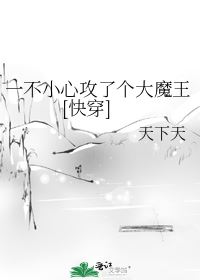
Accidentally Attacked a Great Demon King
+Add to Custom List
Sort
Add review
... Read More
I keep thinking about the Inner Elixir of the Imperial Lake Serpent. Han Zhiyuan plucked it from that giant serpent he killed, ate it absentmindedly, and it blew him up two full cultivation realms in one shot. Two realms. For context, the text literally says even the most talented people on the Nine Heavens Continent couldn't necessarily do that. And what does he do with it? He gets distracted by the Peacock King. That's honestly the most Han Zhiyuan thing ever — handed the kind of power that would make entire sects wage war, and he's over there worrying about whether to apologize to a man he just... you know. But underneath the comedy, I think there's something sharper going on. The whole novel seems obsessed with the idea that power comes wrapped in absurdity. Every time Han Zhiyuan tries to be careful or strategic, the universe hands him something ridiculous and unexpected, and he has to figure out how to use it anyway. The peach Hei Dan brings isn't just a gag — it's another artifact pulling him toward the Holy Relic. The barrier itself feels symbolic too, this glowing dome of judgment and opportunity that all these powerful people are circling around, and Han Zhiyuan, who can barely take care of himself, just walks right through it. Maybe the point is that the people who get the most power are never the ones the world expects to get it.
... Read More
Let me just lay out the stakes because they are MULTILAYERED and I need everyone to understand the sheer density of danger these two are sitting in: Layer 1: The Luoshui Holy Land is coming for Han Zhiyuan because he took their sage's Daoist engraved copper. Feng Yu is implicated because he was with Han Zhiyuan. This is an external threat that could get them both killed. Layer 2: That mysterious person whose deal bound Han Zhiyuan — if he leaves Feng Yu, 'that person will take my life.' So staying is literally a matter of survival, but staying also means facing the Holy Land together. Layer 3: Feng Yu's seal is still broken/incomplete, which means he's operating without his full power. He's a demon emperor playing with one hand tied behind his back. Layer 4: Feng Yu evacuated ALL his birds — every single subordinate, every one of his people — which means Wan Bird Peak is now just him and Han Zhiyuan against whatever the Holy Land sends. The loyalty of his subjects is absolute, but so is the isolation. What makes this section so tense is that the author keeps cutting between the mounting external threat and these incredibly intimate, almost domestic moments between Han Zhiyuan and Feng Yu. They're ordering mass evacuations and then immediately talking about 'enjoying themselves before they arrive.' The juxtaposition isn't just stylistic flair — it's the emotional core of the story. These two know exactly how dangerous this is and they're choosing to steal moments of warmth anyway. That's not just good conflict writing, that's devastating character writing. The question hanging over everything is: what happens when the barrier breaks?
... Read More
There's something really rich going on beneath the surface of these chapters that I want to sit with. The Peacock King — a figure of immense power, feared across continents — is brought so low that he can barely speak, reduced to a fragile bird form that needs to be kept warm. There's a theme here about power being temporary, about even the greatest among us being vulnerable. And Han Zhiyuan, this seemingly ordinary guy, becomes the unlikely guardian of something legendary. It's a classic inversion but it works because the author makes it feel earned through character rather than plot convenience. Then there's the black egg — this mysterious, chaotic entity that communicates through telepathic nonsense and seems to have its own agenda. Eggs are symbols of potential, of things not yet realized. This egg hatches into something that's literally a compilation of every legendary creature (snake, fish, crocodile, deer, eagle) — it's as if the author is saying that new forms of power emerge from old ones. The Peacock King transforms from bird to human; the egg becomes a dragon-creature. Transformation as rebirth. And the forest itself, with its crisscrossing mossy branches blocking all light — it feels like the space between states, the liminal zone where things change. I keep thinking about that final image: Han Zhiyuan holding a former god in his arms, neither fully bird nor fully human, in a forest that swallows all sunlight. Everything is in flux.
... Read More
I need to sit with the symbolism in this batch for a moment because there are layers here that the author is weaving incredibly subtly. The copper carving is the central symbol, and it operates on at least three levels simultaneously. First, it's a literal object — a Daoist tool that Han Zhiyuan modifies and repairs with Feng Yu's blood, creating a golden-green glow that amplifies its power tenfold. Second, it's a symbol of their relationship: broken, repaired, stained with blood, strengthened through violent modification. Third, and most importantly, it represents the theme of intentional vulnerability. Feng Yu left this item with Han Zhiyuan. Whether by design or accident, whether as a tool of manipulation or a token of trust, the copper carving carries Feng Yu's blood and its scorching warmth — and Han Zhiyuan grips it not thinking about what it means but simply hoping to buy a few precious seconds. The Holy Flame Body itself is rich symbolism. It inverts the traditional cultivation metaphor — instead of absorbing yin to replenish yang, it absorbs yang to replenish yin. This isn't just worldbuilding trivia; it's a commentary on power dynamics, on who holds agency in relationships, on the subversion of expected roles. The fact that Liu Jing weaponizes this knowledge shows how information about intimacy becomes ammunition in a patriarchal cultivator's world. Lightning and storms recur as symbols of unavoidable truth. Just as Han Zhiyuan first experienced this sensation during Feng Yu's previous tribulation, now it returns more intense. The storm doesn't care about plans or expectations. It simply arrives. And beneath all the heavenly tribulation spectacle, the real question the text keeps asking is: when the storm hits, who do you run toward, and who runs toward you?
... Read More
That Daoist engraved copper is doing so much symbolic heavy lifting in this chapter and I need to talk about it. On the surface it's a MacGuffin — precious enough that a demon emperor would follow someone across realms for it, powerful enough to resurrect someone from a drop of essence blood. But what's fascinating is what the copper REPRESENTS: connection. Han Zhiyuan keeps trying to give it back, not because he doesn't want it, but because he doesn't want to be the reason Feng Yu gets hurt. And Feng Yu keeps... well, Feng Yu keeps doing complicated things with it. The seal is the other big symbol here. It's been loosening, apparently because of Han Zhiyuan, and Feng Yu is genuinely confused by the unfamiliar feelings this is unleashing in him. The seal isn't just a magical constraint — it's a metaphor for emotional containment. A demon emperor who 'never knows what it means to like someone' is slowly, involuntarily learning exactly that, and the mechanism of his education is this human who keeps returning his treasures and staying anyway. 'Their eyes flicker, and then they seemed a bit brighter' — Feng Yu's eyes literally changing when Han Zhiyuan gives him the copper back and calls him a protector. The image of warmth transferring from the copper to Feng Yu's hand, 'with Han Zhiyuan's warmth still lingering,' is almost sacramental. Objects in this novel are never just objects. They carry intention, they carry relationship, they carry the things these two characters are physically unable to say out loud.
... Read More
There's a moment — and I think this is one of the most beautifully understated scenes in the entire passage — where Han Zhiyuan is lying on his back on green grass, staring at a cloudless sky, and just… processes everything. “How did he end up in this strange place?” That line hits differently because everything before it has been kinetic: lightning, peacock feathers, running, drowning, voices in your head. And then suddenly stillness. The contrast is devastating. But the worldbuilding itself is where this text really shines. The opening scene of the white peacock phantom is cinematic in a way I rarely see — feathers spreading across the sky “as if embracing the heavens,” then forming a giant shield as the final lightning bolt descends. “Golden light radiating from its feathers” against an unstoppable pillar of lightning. I could see this as a film frame. It's mythic scale, almost biblical in its imagery. Then the world expands outward: the Nine Heavens Continent, flying people like airplanes, giant birds, sacred cultivation grounds, sects and holy lands. The power system is clearly laid out — Warriors, Masters, Grandmasters, Generals, Kings, Emperors — and the detail that only Generals and above can fly on swords is the kind of specific rule that makes a fictional world feel lived-in. You can picture it. The forest where Han Zhiyuan ends up after running is equally vivid: “towering trees over a meter in diameter, blocking out the sun, a chilling sensation filled the air.” No matter which direction he looks, it's the same. That symmetry creates a sense of inescapable uniformity — he's not just lost, he's swallowed. And the distant smoke rising from the mountains where the great demons are rampaging? That visual anchor ties the personal survival story to the larger cosmic conflict. The world feels vast, dangerous, and alive. Every location has texture. The grass under his back, the muddy pond, the green long sword in his grip, the dark forest closing in — these aren't generic fantasy backdrops. They're sensory, specific, and they make the danger feel physical rather than abstract.
... Read More
Okay, so let me just say — the first thing that hit me was how efficiently the author establishes the entire world through action rather than exposition. We open mid-tribulation with a white peacock phantom blocking lightning like some kind of feathered fortress. That's chapter four, and we already know: this world has demons, heavenly tribulations, and creatures that can summon shield-wings the size of mountains. Then the peacock loses. Not a clean defeat — it survives, yes, but it's drained, weakened, and its “countless magical tools have scattered everywhere.” That single detail is the plot engine for everything that follows. Every character in this excerpt is now motivated by those scattered treasures: the Patchwork Daoist with his greedy golden eyes, the rampaging great demons, the fleeing cultivators. It's a classic MacGuffin setup, but what makes it work is how quickly the stakes shift. One moment Han Zhiyuan is awestruck; the next he's being thrown into a pond and running for his life. The plot doesn't let you settle. And then — right when you think you understand the rules — the Demon King appears in his head and drops the bomb: you have no choice, or you die. I actually paused here. The whole transmigrator trope usually comes with a cheat system or at least a friendly guide, but this guy gets blackmailed by a scornful entity that calls him an “insect.” That's not a helpful mentor. That's a ticking time bomb wrapped around the protagonist's soul. The plot twist isn't just that he's in a new world — it's that he's conscripted against his will by something far older and more dangerous than the demons outside. And the original body being a mere Warrior-level cultivator? That contrast between Han Zhiyuan's modern skepticism and his utter powerlessness is genuinely satisfying. He went from a single, stable, albeit picky twenty-six-year-old to someone who could be obliterated before lunch. The narrative arc from awe to terror to confusion is remarkably tight for how much ground it covers. One question I keep coming back to: when the Demon King says its soul was “betrayed,” who betrayed it? And why does Han Zhiyuan have to be the one to reassemble it? That's the plot thread I'm following hardest.
... Read More
There's this recurring theme of exposure and concealment running through these chapters that I can't stop thinking about, and it operates on multiple levels simultaneously. Tang Yifeng arrives wrapped up like a zongzi — hat, mask, sunglasses, layers of clothing hiding every visible part of him. He's a public figure whose face is known worldwide but who here is trying to become invisible. Meanwhile, Han Zhiyuan walks out in NOTHING BUT A TOWEL. The irony is brutal and beautiful. One man hides everything; the other reveals everything. And yet the one who's exposed is the one holding power, while the one fully clothed is the one who's actually vulnerable. The phrase 'forced' echoes throughout this section and it means different things at different layers. The initial situation was forced. The living arrangement is technically forced. But the attraction? The growing familiarity? That's something else entirely — and the text keeps asking whether anything between these two is ever truly forced or whether it's just reluctant to admit what it wants. Tang Yifeng's notebook and music represent his authentic self — the thing he's willing to sacrifice pride for. Han Zhiyuan offers him a deal that requires emotional exposure, and Tang Yifeng keeps choosing the music over his own comfort. The apartment itself becomes a liminal space, neither public nor fully private, where these two perform versions of themselves that they'd never show anyone else. The title 'winning over the iceberg' is doing thematic heavy lifting here too. You don't melt an iceberg by attacking it. You do it by being persistent, by showing warmth consistently, by refusing to accept 'just dislike' as a final answer.
... Read More
The dialogue in this section is doing some serious character work, and I want to highlight how distinct these three voices are. The Dragon Father is basically pure id and power. "Hahaha~ A thousand years, trapped in the Huang Duan Mountains for a thousand years, finally free! Hahaha~" He laughs, he sighs dramatically, he speaks in declarations. He doesn't ask questions, he states things. And his quick decision to help Han Zhiyuan and then immediately bail on childcare responsibilities gives him this hilarious absent-minded patriarch energy. He's powerful, ancient, and completely incapable of staying for more than thirty seconds. The Peacock King is ice-cold efficiency. Even after being healed and transformed, he doesn't thank anyone, doesn't explain himself, just says "Let's go." But the moment he hears "Restriction of True Emotion," there's this flicker—"his face showing a rare hint of happiness. His eyes were still cold but now had a touch of joy." That single line of dialogue carries so much subtext. This is a character who doesn't know how to express emotion but clearly feels something. And Han Zhiyuan's internal voice is where the comedy lives. His observation about the golden dragon giving birth to a green dragon, his mental note that he was overthinking it, the way he internally mocks the Peacock King when Hei Dan calls him Mama—this is the kind of witty, self-aware narration that makes reading feel like hanging out with someone funny.
... Read More
Beneath the adventure exterior, this chapter is really exploring themes of lineage, identity, and chosen family. The sage's relic itself functions as a symbol—a space separated from the normal world, where the usual rules don't apply and hidden treasures await those brave enough to enter. It's almost like entering your own subconscious, where valuable but dangerous things lie waiting. The immortal herb represents desire itself: everyone wants it, fights for it, and in the process reveals their true nature. Some fight for power, some for survival, some just for the thrill. But the real symbolism lies with Heidan—the young dragon. Dragons are described as "rare, mysterious, and the most noble and powerful beings among the demon race," and his presence transforms the entire situation. What was a fight over a plant becomes a fight over a creature of royal blood. The demon race's willingness to risk everything to protect him speaks to themes of loyalty to one's own, of standing by your young even when outnumbered. And Han Zhiyuan, a human navigating a demon world, becomes part of that protective circle—not through bloodline but through choice. The recurring imagery of transformation (Feng Yu shifting between forms, Heidan revealing his true nature) reinforces the idea that identity is fluid and that what we appear to be matters less than who we choose to stand with. The final image of them escaping together—a human, a peacock, and a dragon—symbolizes this crossing of boundaries and the strength found in unlikely alliances.
... Read More
Okay, so I need to talk about Han Zhiyuan and Feng Yu because this batch completely destroyed me emotionally. Let me just say it straight: I do not know whether to be furious at Feng Yu for apparently using Han Zhiyuan as a cultivation furnace, or heartbroken because I now suspect the exact opposite. The moment Han Zhiyuan learns about the Holy Flame Body, you could cut the tension with a knife. His entire worldview shatters. All those moments he thought were special — falling asleep in Feng Yu's arms, being held, the silver hair he strokes — it all suddenly feels like a meticulously planned scheme. His internal monologue at that point is gold: "What about sleeping together and enjoying it? What about likes and dislikes? It was all a ploy?" A thousand curse words flashed through his mind. To say he wasn't angry would be a lie. But here's what keeps me up at night: right before the final heavenly thunder strikes, the narration drops this devastating detail — "no one noticed Feng Yu's clenched fists and the panic deep in his eyes for a brief moment." PANIC. Not indifference. Not calculation. PANIC. And then when the lightning hits and we see Feng Yu's blood-red eyes staring straight at Han Zhiyuan, the text says they're filled with "horror, panic, and helplessness." He looked as if he was about to break free from the lightning and rush over! So which is it? Did Feng Yu manipulate Han Zhiyuan, or was he fighting his own emotions while undergoing tribulation and terrified that Han Zhiyuan would get hurt? The text deliberately withholds the answer, and I am HERE FOR IT. The CP chemistry between these two is complicated, painful, and absolutely magnetic. Every time I think I've figured out where my loyalty lies, the author pulls the rug out again.
... Read More
Okay can we just talk about Han Zhiyuan for a second because WOW. This guy throws himself into heavenly lightning without hesitation just to save Feng Yu and honestly I need a minute. The fact that he kicks the black egg aside AND hurls the Daoist copper carving at the tribulation lightning in one breath — that is not someone who is thinking about self-preservation. That is someone who has already made peace with never coming back. And the tragedy of it all hits even harder when you realize this is the FIRST time Feng Yu ever calls him by name. Not some title, not some generic address — it's "Han Zhiyuan" and it comes out as a scream of pure panic and anguish. Think about how much history there must be between them for Feng Yu, someone described as aloof, to finally crack like that. The text says his blood-red eyes go wide with disbelief and panic. Panic. Not grief — panic. Like his whole world just imploded in real time. Then cut to Han Zhiyuan waking up in his own bed, confused, checking his phone like nothing happened — and the reader is left holding all that unresolved emotion while he's just over here like "hey does anyone know what's going on." The contrast is brutal. He went through something transcendent and the world won't even let him process it. What does it say about their bond that the Demon King himself seems genuinely bothered that Han Zhiyuan cares so much about Feng Yu? "Why do you care about him!" — said with actual jealousy from a Demon King. That's not a side character reaction, that's a narrative-level signal. I keep wondering what Feng Yu's fate was after Han Zhiyuan left. Did he succeed in his tribulation? Is he still waiting? The text never tells us and it's driving me insane.

Leave a comment

You must be logged in to leave comments. or
