Summary

... Read More

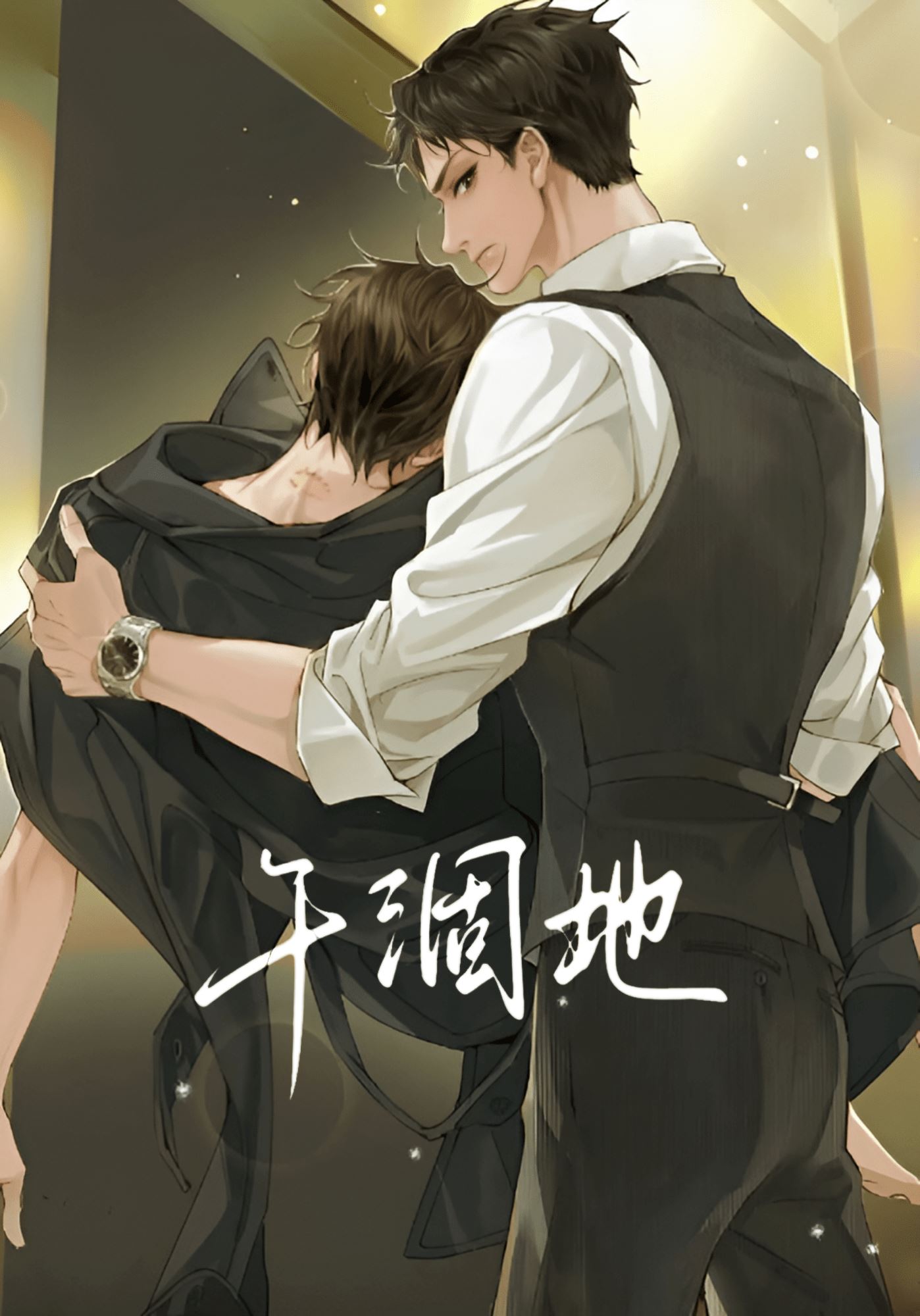
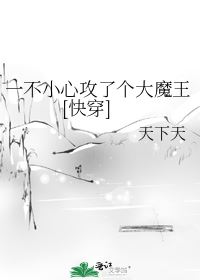
Han Zhiyuan, a twenty-six-year-old man from the modern world, is possessed by a mysterious cold voice that claims to be a Demon King. The Demon King, whose soul was shattered and sealed across multiple realms, forces Han Zhiyuan to help break the seals or face annihilation. Instead of remaining in his original world, Han Zhiyuan is dragged into a vortex and wakes up in the Nine Heavens Continent, an ancient realm where cultivation determines status and the strong rule over the weak. He inhabits the body of a novice cultivator with the same name, who possesses no significant talent or wealth. Han Zhiyuan’s immediate situation is dire, as he must find the scattered soul fragments of the Demon King without any guidance on how to awaken them.

His entry into this new world coincides with a major celestial event: the Peacock King, a demon emperor, undergoes a heavenly tribulation. Han Zhiyuan witnesses the trial from a distance, observing the four great demons of the demon world protecting the floating mountain as lightning strikes. Although the Peacock King survives, he is severely injured, and his soul is damaged. In the aftermath, magical artifacts scatter, drawing贪婪 cultivators from all factions. While fleeing the chaos, Han Zhiyuan encounters a Patchwork Daoist, a cunning and greedy individual who barely helps him before disappearing into the crowd. Han Zhiyuan finds himself lost in a dangerous forest, where he stumbles upon a severely injured silver-haired man. This man is the Peacock King in human form, Feng Yu, who rejects Han Zhiyuan’s attempts to help due to his pride and weakened state.

Just as Han Zhiyuan attempts to care for the unconscious Feng Yu, a giant black egg falls from the sky. The egg exhibits strange behavior, bouncing away from everyone except Han Zhiyuan, who it seems to recognize. When five young martial masters attack to seize the egg and the injured Peacock King, Feng Yu unleashes a burst of divine power, killing the attackers but collapsing from exhaustion. Han Zhiyuan is forced to carry the peacock form of the King and flee, with the black egg following close behind. They are pursued by elders from powerful sects who sense the Peacock King’s value. A golden dragon, the father of the black egg, appears and rescues them, revealing that the egg hatched into a young dragon named Black Egg. The dragon’s father heals Feng Yu and detects a special restriction on his soul, known as the Restriction of True Emotion, which can only be lifted if the Peacock King falls in love.

As Han Zhiyuan travels with Feng Yu and Black Egg, their dynamic shifts. Feng Yu, despite his initial hostility, begins to rely on Han Zhiyuan’s unusual warmth and luck. They enter the Huangduan Mountains, a forbidden zone where cultivation is suppressed, seeking a holy relic to aid Feng Yu’s recovery. There, they encounter a giant Imperial Lake Serpent. During the fight, Han Zhiyuan kills the beast and absorbs its inner elixir, accidentally breaking through two cultivation realms simultaneously. The incident leads to an intimate encounter with Feng Yu, which, while born of accident and herb-induced passion, marks a turning point in their relationship. Feng Yu’s attitude softens, though he remains cold on the surface.

The pair eventually discovers a sage’s relic within the mountains. Inside, they compete for a holy-level spiritual herb capable of repairing Feng Yu’s damaged primordial spirit. Han Zhiyuan devises a plan for Black Egg to steal the herb while distractions are created. The theft succeeds but draws the attention of numerous powerful cultivators and demon beasts. Feng Yu’s true identity as the Peacock King is revealed, prompting a massive pursuit. Demonstrating his regained strength, Feng Yu transforms into his divine peacock form and carries both Han Zhiyuan and Black Egg out of the danger zone. With the immediate threat gone and Feng Yu’s condition stabilized, Han Zhiyuan continues his journey, still tasked with breaking the Demon King’s seals, but now accompanied by a powerful ally who is gradually becoming emotionally attached to him.

Latest Release
DateGroupRelease
2026-09-26knoxt c23
2026-09-26knoxt c22
2026-09-26knoxt c21
2026-09-26knoxt c20
2026-09-26knoxt c19
2026-09-26knoxt c18
2026-09-26knoxt c17
2026-09-26knoxt c16
2026-09-26knoxt c15
2026-09-26knoxt c14
2026-09-26knoxt c13
2026-09-26knoxt c12

Community Reviews

Rating(3.8 / 5.0, 86votes)
5 stars
26(30%)
4 stars
26(30%)
3 stars
27(31%)
2 stars
7(8%)
1 stars
0(0%)

Popular reviews

... Read More
There's this one passage where Han Zhiyuan finally emerges from the central area and reaches this grassy lakeside, and the description is just immaculate. The clear lake surface reflecting the entire sky, creating this impossible blend of above and below, warm sunlight on skin, everything feeling golden and still. It's one of those rare scenes in web novels that actually reads like a painting. And then the author contrasts this with Feng Yu standing stiffly at a distance while the rest of them are just sprawled out being comfortable, which tells us everything we need to know about this character's relationship with vulnerability and rest. The worldbuilding here is doing double duty—establishing the setting while simultaneously mapping the emotional distance between these two characters. Brilliant,
... Read More
There's this one line that keeps circling back in my head: "For the Demon King, the difference between 'ant' and 'Han Zhiyuan' was just a word, but for him, it was a world of difference." That right there is the whole theme of the book wrapped into one sentence. It's about how the universe discounts you — calls you small, calls you temporary, calls you an ant — and how your entire journey is about proving that those labels don't contain you. Han Zhiyuan enters this world as nobody's important person and ends up being the one thing that breaks a thousand-year seal. The peacock whose heart he cracked. The one who stands between heavenly tribulation and the one he loves. The seal mechanism itself is symbolic gold. The Demon King buries a soul-mark deep inside Han Zhiyuan, ties his return to whether Feng Yu falls in love with him. So literally — the entire architecture of his journey depends on emotional vulnerability, on connection. Not strength, not cultivation, not weapons. Love. The most "unnecessary thing" according to the Demon King is the very thing that saves him. And then the loop. He wakes up, thinks it was a dream, but the warmth lingers. He can't deny that part of him wanted to stay. The boundary between the two worlds keeps blurring — is the fantasy real? Is his real life the dream? The text keeps asking this and never fully answers, and I think that's the point. Some experiences change you so fundamentally that the world you came from can never quite feel like home again. "Shameless scoundrel" — the Demon King's parting insult. Is that really about Han Zhiyuan's behavior, or is it about how deeply human he's become?
... Read More
There's this scene where Han Zhiyuan catches his reflection in Feng Yu's gaze—just a flash—and it hits different. Let me unpack why. Throughout this entire chapter, there's this current of tension between them that has nothing to do with survival and everything to do with whatever's building beneath the surface. When Feng Yu transforms back to his peacock form and carries Han Zhiyuan to safety, it's not just practical—it's almost tender, if a peacock carrying can be described as tender. The text notes his eyes are "complicated" and he recalls their earlier intimate contact, and suddenly I'm sitting here like, oh, you're telling me there's HISTORY here? The emotional arc in this chapter moves from excitement (finding the relic) to anxiety (seeing everyone fighting) to exhilaration (Heidan getting the herb) to terror (being chased) to relief (escape) and finally to this strange, charged quiet where Feng Yu is clearly recovering something huge. But what's really landing for me emotionally is that moment when Han Zhiyuan feels guilty after accidentally looking at the Peacock King's... assets. It's funny, yes, but it's also vulnerable—he's acknowledging that he has thoughts and desires, and he knows he shouldn't be having them right now. Meanwhile Feng Yu notices but doesn't call him out on it, which feels like its own kind of intimacy. By the end, when Heidan is clinging to Han Zhiyuan saying "this is fun" while Feng Yu carries them both to safety, I felt this wave of warmth and protectiveness. These three are a found family, and the romance simmering between two of them makes it even better.
... Read More
Can we just appreciate how the author uses the apartment setting to do emotional work here? Because this isn't just a random location — it's a complete reversal of Tang Yifeng's world. For most of the story, Tang Yifeng exists in public spaces: stages, interviews, events, where he's the polished star. But here in Han Zhiyuan's apartment, he's wrapped up like a zongzi with sunglasses and a mask, trying to disappear. The contrast is everything. The description of Tang Yifeng arriving is so vivid — chestnut hair soft against fair skin, casual clothes that make him look like a college student instead of a big star. The author keeps emphasizing how Tang Yifeng's natural sharpness gets softened by this environment, which is basically visual storytelling about how this space changes him. And then Han Zhiyuan's apartment itself — loose tank top, sweatpants, flip-flops, the masculine scent after exercising. This is a man who's completely comfortable in his own space, and that comfort is both attractive and intimidating to Tang Yifeng. The domestic details (coffee, cut fruit, the shower) create this weirdly intimate atmosphere that's completely at odds with the fact that these two are basically strangers forced into proximity. The window light scene where Tang Yifeng is writing in his notebook and his hair looks red — that's almost cinematic. The author is painting this image of domestic normalcy between two people who should absolutely not be having a normal moment together. It's the kind of scene that makes you want to sit with it and just absorb the atmosphere.
... Read More
These four chapters moved SO fast and I mean that in the best way possible. Let me count: chapter starts with a legendary figure reveal → five youths attack → Peacock King obliterates them in one move → Peacock King collapses → Han Zhiyuan grabs bird and runs → two new elders appear as threat → escape to forest → night falls → black egg hatches → Peacock King transforms → cliffhanger. That's six major plot beats in four chapters and not a single one felt rushed or underdeveloped. The author knows exactly when to accelerate and when to pull back. The fight scene with the five youths is quick — one sweep of divine light, done — because the focus isn't on the battle, it's on the consequence (the Peacock King's exhaustion). Then the pacing slows for the forest arrival and the night sequence, giving us room to breathe before the morning revelations hit. The black egg's telepathic interruption — "Gu~" — is a perfect comedic beat that breaks tension right before it gets too heavy. And the overnight transformation is handled with this wonderful restraint: we don't see the Peacock King transform, we only discover it in the morning. The author trusts us to fill in the gaps. This is textbook pacing mastery and I'm taking notes.
... Read More
I need to take a moment for Black Egg, because honestly, the emotional core of this entire mess rests on this gluttonous little dragon. It's easy to get swept up in the martial arts posturing and the lightning strikes, but the relationship between Han Zhiyuan and Black Egg is what keeps him human. Remember the part where Black Egg is in excruciating pain from overeating celestial herbs? That's when Han Zhiyuan's worry truly peaks. He's not thinking about the copper, or the enemies, or his own survival—he's thinking about his companion suffering. And then, right when Han Zhiyuan is getting absolutely wrecked by Elder Qiu's phantom hand, sent flying ten meters and spitting blood, his first coherent thought is to shout at Black Egg to 'hang in there.' It's such a selfless, almost painful moment of prioritization. He's broken, bleeding, and still checking on the kid. That's not just ownership; that's brotherhood. The text mentions Black Egg letting out a 'slightly immature but powerful dragon's roar' while resisting the tribulation. It's a parallel to Han Zhiyuan's own struggle—both of them young, both of them pushed to their limits, both of them refusing to fall. There's a sweetness here that contrasts sharply with the violence around them. It's the kind of bond that says, 'We're in this together, no matter how many Martial Emperors are against us.' It made my heart squeeze a little, honestly. In a story full of power-hungry elders andancient grudges, this simple, fierce loyalty is the anchor.
See all reviews

Custom lists

See all custom Lists