Accidentally Attacked a Great Demon King - Reviews

Accidentally Attacked a Great Demon King
+Add to Custom List
Sort
Add review
... Read More
Okay so this section is actually so cleverly structured because on the surface it looks like a simple blackmail negotiation, but the way the author builds it is *chef's kiss*. First you have Zhu You bursting in with the 'Did you sleep with him?!' question and then the reveal that it was FORCED — that's a massive twist that completely reframes everything the reader thought they knew about Han Zhiyuan and Tang Yifeng's relationship.Enemies turned... not quite lovers but definitely something messy? The pacing here is perfect because after the explosion of Zhu You's drama, everything instantly drops to this weirdly calm silence where Han Zhiyuan is just standing there awkwardly and Tang Yifeng is marching to the bathroom like 'I need air.' Then Han Zhiyuan follows him, and the actual negotiation begins. What I love is how the bargaining scene plays out — five minutes, ten days, a week — it reads like a comedy of errors but underneath there's real stakes. Tang Yifeng is willing to sacrifice his pride for his music career, and Han Zhiyuan is willing to stretch out an olive branch wrapped in blackmail. The fact that Han Zhiyuan offers 'three days' worth of effort but negotiates down to five days, then settles on a week shows he's not as ruthless as he pretends to be. Also the timeline jump to three days later when Tang Yifeng actually arrives at the apartment — that ellipsis is doing so much heavy lifting.
... Read More
Okay, so let me just process what happened in these chapters because my brain is still spinning. Han Zhiyuan gets kicked out of a hundred meters by the Peacock King after an incredibly awkward encounter, then immediately ends up as a accidental father figure to a dragon egg that just hatched. This is not the setup I expected for a cultivation novel, but honestly? I'm here for it. The plot moves like a rollercoaster that someone let go of at the top of the hill. One moment you're dealing with romantic tension between two guys who clearly don't know how to process their feelings, and the next you're being chased by ancient martial artists in a cursed mountain range. The Demon King's residual soul connection to the Peacock King is the kind of reveal that makes you immediately want to go back and re-read everything that came before it. That line — "If he dies, you die!" — hit me like a truck. Suddenly Han Zhiyuan's survival is literally tied to keeping the Peacock King alive, which flips the entire power dynamic on its head. And then the cliffhanger. Those black clouds rolling in, that thunderous roar that made the whole chapter feel like it was holding its breath... I need to know what just woke up. The narrative keeps stacking revelations — the power suppression, the cursed location, the five martial masters, the dragon's thousand-year incubation — and each one opens up new questions faster than the old ones get answered. It's messy, sure, but it's the kind of messy that keeps you reading at 2 AM.
... Read More
'Considering the past two nights, I wasn't forcing you!' Han Zhiyuan says this like he's trying to convince himself more than anyone else. And honestly? It's adorable and tragic and I love it. The emotional layers here are SO rich. On the surface it's this ridiculous situation — he's holding an ancient bird king in his arms after a nighttime escapade that got them both labeled as suspects, and they're discussing whether or not Feng Yu is into men. But underneath all that comedy is this quiet moment where Han Zhiyuan is literally staring at the ceiling after being intimate with someone and Pondering Life. About whether Feng Yu would think of him if he liked someone else. That is not the thought process of someone who's just 'using' this arrangement. That's someone who's catching feelings and is terrified about it. And Feng Yu! Don't get me started. This ancient being who's seen a thousand years of everything has apparently never felt what he felt those two nights, and he's so straightforward about wanting more that it bypasses all of Han Zhiyuan's defenses. The scene where Feng Yu leans into his embrace and says 'It's very comfortable' with total sincerity while Han Zhiyuan is over here having a full philosophical crisis about his roommate's sexuality — the contrast is killing me. The CP energy is OFF THE CHARTS. Every glance, every misunderstanding, every time Han Zhiyuan sighs and runs his fingers through Feng Yu's silver hair, I'm Screaming.
... Read More
I started reading these chapters at 11 PM and it is now 3 AM and I cannot stop. The pacing is absolutely unhinged and I respect it deeply. Chapter after chapter, the author doesn't give you a single breath. You get a comedic moment — Han Zhiyuan getting thrown a hundred meters — and then immediately you're in a serious conversation about seals and Demon Kings. Then a baby dragon interrupts with "Daddy!" and you're laughing again, and two paragraphs later someone is summoning a spear and the Peacock King's eyes turn blood-red. What's brilliant is how the author uses action as a pressure valve. Every time the emotional tension gets too high — the awkward encounter, the vulnerability between Han Zhiyuan and the Peacock King — something explodes and redirects the energy. The dragon hatching, the enemies arriving, the golden net capturing Black Egg, the sky turning dark. None of it feels random though; each escalation raises the stakes organically. The cliffhanger structure is masterful too. Each section ends on a note that forces you to keep going. The Demon King's voice in Han Zhiyuan's mind. The old man's mocking laughter. And then THAT roar. The author understands that the best way to keep readers engaged isn't by stretching things out — it's by constantly renewing the urgency. There's no filler, no breathing room, and somehow it never feels exhausting. It feels like being on a ride that only goes faster.
... Read More
Okay, can we just talk about this triangle of dynamics for a second because it's absolutely delicious. Han Zhiyuan, Feng Yu, and Heidan—their relationship evolution in this chapter is everything. We've got Han Zhiyuan, this guy who keeps getting dragged into trouble but somehow always comes out ahead, relying on his two companions who clearly adore him in their own ways. Feng Yu is fascinating here. On one level, he's this powerful bird king who could probably handle himself, yet he follows Han Zhiyuan around like a loyal subordinate. But there's this undercurrent of something more—it's in the way the text describes him turning around suddenly, the way his eyes flash with complicated emotions, that moment when he recalls their "intimate contact" and goes soft. Whatever happened between them before this chapter clearly left a mark. And then there's Heidan, the dragon who just wants to have fun. "Daddy, this is fun!" he says while carrying an immortal herb and being chased by primordial force swords, and I died. The scene where Feng Yu glares at Han Zhiyuan with silent accusation after everything that just happened? Chef's kiss. It shows this layer of exasperation mixed with fondness—you know he's mad, but he's also relieved they're all alive. The most touching moment for me was when Han Zhiyuan shouts "Here, Heidan, I'm here!" while being pursued, showing he genuinely cares about both his companions and isn't just using them for loot. Their bond feels earned through shared danger and mutual reliance, and I'm completely invested in watching it develop.
... Read More
I keep coming back to this line: 'his name hadn't been used since he became a demon king seven hundred years ago, so long that even he had forgotten it.' This whole story is layered with questions about identity and autonomy, and Feng Yu is the living embodiment of that theme. He's a top demon who was bound by soul restrictions, manipulated by unseen forces, treated as a tool rather than a person. The fact that a simple question from Han Zhiyuan—'do you have a name?'—is what finally gives him back his identity is almost too on the nose, except the execution is so understated that it doesn't feel forced. Meanwhile the soul restriction itself keeps getting mentioned like a ghost haunting every interaction between them. Who placed it? Why? And what does it mean that Han Zhiyuan might be the one to lift it? The story keeps asking whether any of this connection is truly free or if everything's been scripted by forces they can't see. And honestly, that uncertainty makes every tender moment feel both more precious and more terrifying.
... Read More
OK so I need to process what just happened. Han Zhiyuan falls asleep with an unconscious bird in his arms, and WAKES UP to find said bird has turned into a Human who is ALSO NAKED in his arms, and he has to reflexively catch them before they fall, and his hand ends up on their lower back, and then — THE CHAPTER ENDS THERE. I repeat: the CHAPTER ENDS on a romantic comedy setup disguised as an action fantasy and I am emotionally compromised. But seriously, let's talk about WHY this works so well. The entire sequence leading up to it is built on accidental intimacy. He's carrying this magnificent creature through danger. He's keeping it warm against his chest because the egg told him to. He's exhausted and just trying to survive, and somehow this ridiculous situation keeps escalating. And then the ultimate escalation: the being he was protecting transforms into a person right beside him, vulnerable and unconscious, and he's the only one there to catch them. The tension here is multi-layered — there's the immediate shock of the transformation, the physical proximity, the question of whether the Peacock King will be angry or grateful or both when they wake up. This author absolutely understands that the best romantic tension isn't about grand declarations, it's about someone accidentally becoming the only person who sees another person completely defenseless. Also, the Peacock King being male changes everything about the romantic dynamic and I am HERE for it.
... Read More
The author just committed the most audacious tonal pivot I have ever read and I am here for it. One moment we are in full slow-burn romance territory — flushed faces, trembling eyelashes, awkward coughing, a lakeside cleaning scene that is equal parts tender and mortifying — and the next, someone is SCREAMING for their parents while a ten-meter-tall furry hand tears through trees. The shift is so fast it's almost jarring. But here's the thing: it WORKS. It works because this story has never taken itself seriously for more than two pages at a time, and that's its secret weapon. The Holy Relic barrier scene at the end is the cherry on top though. You go from a ridiculously intimate moment to a massive cultivation-world gathering with Martial Kings and beast kings and glowing artifacts behind a lightning barrier, and Han Zhiyuan just STROLLS right in with a white peacock in his arms and a baby dragon at his feet while everyone loses their minds. The author really said "what if we just —" and then did it. Chapters 27 through 30 basically contain an entire emotional arc and a complete action set piece and I don't know how they fit in four chapters but they do.
... Read More
I have to address the dialogue in this passage because it is doing something very specific and very funny. The five young men speak like every generic arrogant cultivator archetype ever written—they sneer, they laugh, they call Han Zhiyuan 'kid' and 'a fool,' they assess his strength at a glance and dismiss him. 'Kid, do you really think this is some treasure? It's just an ugly black egg, useful only for feeding our beasts.' That line. That absolute, unprovoked insult to the egg. The egg, which has demonstrated intelligence, preference, and physical agency, is being called an 'ugly black egg' meant for beast feed. And Han Zhiyuan's response is just internal screaming while he tries to play nice because he is outmatched. The power dynamic in the dialogue is painfully accurate to how these scenes always go—the weak man swallowing his pride because speaking up gets you killed. But the silver-haired man—his dialogue is a masterclass in restraint. Two words: 'Go!' and later 'It wants to be close to you.' That is it. He barely speaks and every word carries weight because he chooses them so sparingly. His voice is described as 'cold as ice' and that consistency makes him feel otherworldly, like someone who has forgotten how to be casual or warm. And Han Zhiyuan's internal monologue is where the real comedy lives. 'Han Zhiyuan: …' appears three times in this passage and each time it lands perfectly. It is the universal expression of someone whose brain has short-circuited from absurdity. The author clearly understands that sometimes the funniest thing a character can do is say absolutely nothing.
... Read More
I have to talk about Han Zhiyuan's dialogue because it completely characterizes him in this batch. The man goes from sweetly affectionate to absolutely feral in about three seconds, and it's glorious. When Liu Jing starts snarking about the Holy Flame Body, Han Zhiyuan's response is: "Old witch, shut your damn mouth! Are you annoyed? Can't beat him, so you resort to verbal attacks? So many people ganging up on someone who's transcending a tribulation. Have some shame for someone over a thousand years old, will you?" Let that sink in. This is a guy who moments ago was having an existential crisis about being potentially used as a cultivation furnace, and his immediate response is to verbally dismantle a thousand-year-old woman in front of an entire battlefield. The voice shift is instant and complete. He doesn't hesitate. He doesn't second-guess. He just... curses with the enthusiasm of someone who has absolutely nothing left to lose. And then the most surprising dialogue moment: Han Zhiyuan leaning close to Hei Dan's ear and whispering, "Hei Dan, let's stall her so your mother can transcend the tribulation?" After everything that just happened — the betrayal revelation, the anger, the confusion — his first instinct is still to protect Feng Yu. The dialogue here is barely above a whisper, almost tender, and it completely undermines everything Liu Jing said about Feng Yu being heartless. Feng Yu's dialogue is notably sparse, which is very much in character. His "No" when asked about feelings, his silence throughout most of the tribulation — the author uses absence of words as powerfully as presence. When Feng Yu finally does something vocal, it's internal, felt rather than spoken, and that's more devastating than any line of dialogue could be.
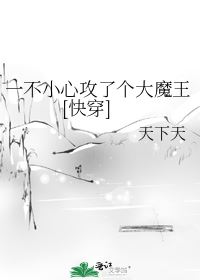
... Read More
this is wonderful
... Read More
I like the novel but mc is just too unbearable sometimes. He's a reincarnation but he acts soo childish.. tbh mc is the only problem in the novel.. hopefully in future chapters he will start to mature as he was supposed to be considering that he is a reincarnator

Leave a comment

You must be logged in to leave comments. or
