Accidentally Added a Wealthy Old Man After Having Insomnia - Reviews

Accidentally Added a Wealthy Old Man After Having Insomnia
+Add to Custom List
Sort
Add review
... Read More
I'm genuinely impressed with how the author controls the rhythm across these four chapters. Let me trace it. Chapter 17-18 basically operate in real-time — midnight arrives, the call connects, three stories unfold, Lu Xingmian falls asleep. This entire sequence plays out slowly, deliberately, almost meditative in its pacing. You can feel the drowsiness creeping in as you read. It's a rare technique: using narrative pace to induce the same feeling in the reader that the character is experiencing. That's skilled writing, plain and simple. Then Chapter 19 jumps forward — next morning, breakfast, bus to school, adapting to the new environment in a few paragraphs. Efficient, functional. It's the calm before the storm. The lunchtime message about the sleep-aid provider being busy for two days creates a tiny pocket of anxiety — what happens when the routine is interrupted? And then Chapter 20 swings into something completely different: the return to the Lu family home. The pacing accelerates sharply. We go from quiet bedroom scenes to a full social gathering with dialogue, tension, and a cut-off ending. The transition is jarring in the best possible way — like when your comfortable evening is interrupted by a phone call you didn't want to receive. What I notice is that the author trusts the reader to handle time jumps without excessive hand-holding. We don't need every detail of Lu Xingmian's bus ride or his adaptation process spelled out. But when it matters — the midnight call, the family dinner confrontation — the author slows down and gives us everything. This is textbook good pacing.
... Read More
I'm not even going to pretend the BBQ dinner scene works on its own merits. It's functional worldbuilding — establish the new classmates, show Lu Xingmian is liked, make us wonder why. But it's Zhou Cheng and Zhu Jinyan who actually make it breathe. "Do you think everyone loves fighting as much as you do?" — Zhu Jinyan pushing up his glasses like a proper snarky intellectual. Then Zhou Cheng's defensive sputtering about the self-criticism incident. This is classic banter and it works because it feels unscripted, like two people who have known each other for years and have established rhythms. The rest of the dialogue is fine but flat. Chen Che is all polite convenience-store friendliness — helpful but forgettable. Xia Zhicheng offers notes and that's basically his entire character presence so far. Even Lu Xingmian's lines are minimalist: "Nothing much, I just wanted a change of environment." "Thank you." "Don't mention it, we're classmates!" These aren't bad lines, they're just... functional. They serve the scene but don't elevate it. Which is actually kind of thematically appropriate if you think about it. Lu Xingmian barely speaks because he's performing, not connecting. Every response is calibrated, every smile measured. The only characters who seem to have actual voices are the ones who aren't trying to survive — Zhou Cheng and Zhu Jinyan, who can afford to be themselves because nothing at school depends on them being careful. I also want to note the narrative voice itself, which is pretty workmanlike. It gets the job done but isn't distinctive. I wouldn't call it invisible exactly, but it's neutral enough that it doesn't draw attention to itself. That's fine for this stage of the story, I guess. The voice can develop later when the plot demands more texture.
... Read More
The opening scene is so simple but so effective. Lu Xingmian is lying on his bed, earphones in, phone in hand, and a voice comes through. The description of his physical reaction is what sells it for me — his ears twitch, his breathing slows, he goes completely still “so as not to disturb the beautiful voice.” It's such an intimate, almost ASMR-like quality to the writing. You can literally feel the warmth of that voice filling the room. Then there's the contrast with Lu Xingmian's reality: he wakes up at five AM in a new bedroom, in a new school, having just been forcibly relocated back to the Lu family after seventeen years apart. The text doesn't over-describe his living space, but the emotional weight of the setting is heavy. He's in a house that isn't really his, surrounded by people who look at him like a guest, while the boy who's lived there his entire life treats him like an invader. And then the second scene — Xiao Youzi's world. A nanny bathing her, playing with her uncle's phone, waiting for stories. The warmth of that scene is so different from the coldness of Lu Xingmian's situation. The text uses these domestic details to ground us: the phone vibrating twice, the cute profile picture, the storybook sitting on the bed. Small sensory details that make both worlds feel lived-in and real. The contrast between the cozy, story-filled bedroom of Xiao Youzi and the isolated, insomnia-ridden bed of Lu Xingmian is just masterful scene construction.
... Read More
There's a symbol running through these chapters that I can't stop thinking about: sleep. Or the lack of it. Lu Xingmian buys a service specifically to coax someone into sleeping. He gets two hours at best. He covers his exhaustion with a smile and pale skin that no one notices. And meanwhile, the person on the other end of that call — whoever they are — is presumably the kind of person who sleeps just fine in a luxurious mansion while a four-year-old plays on their phone. The phone itself is another symbol that keeps coming back. It's Lu Xingmian's connection to something outside his isolation — the sleep-coaxer, the hope of voice, of someone saying "hello" and breaking the silence. For Xiao Youzi, the phone is a toy. For Lu Shiran, it's work and leisure. For Lu Xingmian, it's literally the only thing keeping him from total solitude. He checks it obsessively. He sends another friend request. He waits. He almost deletes the contact and then doesn't. He calls. There's also the recurring motif of warmth that isn't for him. The glowing windows. The warm home language used to describe other people's houses. The BBQ dinner with friends. The uncle-niece bonding at the mansion. All of it radiates outward from a center that excludes Lu Xingmian. He is always on the periphery of warmth, never inside it. But here's what I think the book is really saying: Lu Xingmian's desperation to find sleep — to find someone who can coax him into rest — isn't just about insomnia. It's about finding someone who can make him feel safe enough to let go. And the person who accidentally became his sleep-coaxer, the one who accepted his request and then went silent for half a day... that silence might be the most agonizing part. Because for someone who can't sleep, silence from the one person who could help you sleep is torture. It's the sound of being ignored by the only lifeline you have.
... Read More
I keep coming back to this image of Lu Xingmian eating instant noodles alone, and I think it's the central symbol of this entire passage — maybe the entire novel so far. Let's be honest: a bucket of instant noodles plus a sausage isn't just dinner. It's the meal of someone who is surviving, not thriving. Someone whose life is so consumed by homework and tests and keeping up that cooking is a luxury he can't afford. The author doesn't moralize about it or make it tragic in an obvious way. Lu Xingmian just... eats it. Like it's normal. Like it's fine. But it's not fine, and that's what makes the symbol work. The emptiness of the fridge mirrors the emptiness he feels when his friends leave. The noise of his friends' snoring beside him in bed — he doesn't find it annoying, he says "lately it had been too quiet for him alone." Silence is worse than noise. Solitude is worse than chaos. The VIP pass itself is symbolic too. It represents someone seeing Lu Xingmian's worth and wanting to give him joy without him having to earn it or pay for it. Lu Shiran insisting on covering everything, threatening to cut off the storytelling if money is mentioned — that's love language. It's messy and slightly controlling but undeniably genuine. And then there's the wrong car. Getting into the wrong vehicle, briefly entering someone else's world, then fleeing back to your own — isn't that exactly what Lu Xingmian's life feels like? He visits the theme park, experiences something wonderful, and then returns to his empty apartment and his test papers. The extraordinary is always one mistaken door away.
... Read More
Okay, so this section? This is the moment everything clicked for me. The narrative switches from Lu Xingmian's POV straight into Xiao Youzi's world, and suddenly I understood: she was the one on the phone the whole time. The cute profile picture wasn't some mysterious adult voice actor. It was a CHILD telling bedtime stories. And Lu Shiran? He just found the contact and was like, “Wait, who's this?” The dual timeline structure here is gorgeous. We get the warm, soft voice narrating children's stories, then we cut to this little girl tapping through her phone because her uncle's stories are “so good.” The reveal that she's the storyteller hit me like a truck. It recontextualizes every single line of dialogue from Lu Xingmian's side. When the voice said “Shall we tell the story of ‘Why the Rabbit is Always Late'?” — I now picture a small child enthusiastically reading from a storybook. And Lu Xingmian, suffering from months of insomnia, falling asleep to THAT voice. The irony is just... chef's kiss. Then the backstory dump about the swapped identities, the Lu family dynamics, Lu Sihang's slow-burn villainy building up to that confrontation with Lu Xin — the plot is layering so many threads simultaneously. One moment you're swooning over the voice call romance setup, the next you're deep in family drama territory. The pacing is wild but it works.
... Read More
Okay so can we talk about how genuinely touching the friendship dynamics are in this section? Like, on the surface it seems casual — Lu Xingmian getting VIP tickets, going on a trip with his two buddies — but underneath everything there's this ache of loneliness that just keeps whispering through the pages. The moment that hit me hardest was when his friends said: "Lu Xingmian, remember this, we'll always be your friends, your brothers. We'll always support you." That came right after they had to leave and go back home, and Lu Xingmian was alone again eating instant noodles. The contrast between that group joy at the theme park and him sitting by himself with a bucket of noodles and a sausage... I actually felt my chest tighten a little. And then there's the whole dynamic with Lu Shiran. The way Lu Xingmian relies on those nightly voice calls just to feel less alone — "Being alone was a bit too quiet, and he wanted someone to talk to" — it's so subtly written but it says everything about his emotional state. He doesn't have to ask for help, he doesn't complain, he just... endures it. And Lu Shiran, despite being busy, still shows up every night with a story. That's not obligation, that's care. The theme park sequence is pure sunlight — laughter, no queues, fancy food — and then it cuts back to empty fridge, instant noodles, test papers. The emotional whiplash is brutal but realistic. I loved it. Also the wrong-car scene had me laughing out loud, which was a nice tonal break from all the heavy stuff. Sometimes the universe just makes you stumble into someone famous and then flee in embarrassment, and honestly? Iconic.
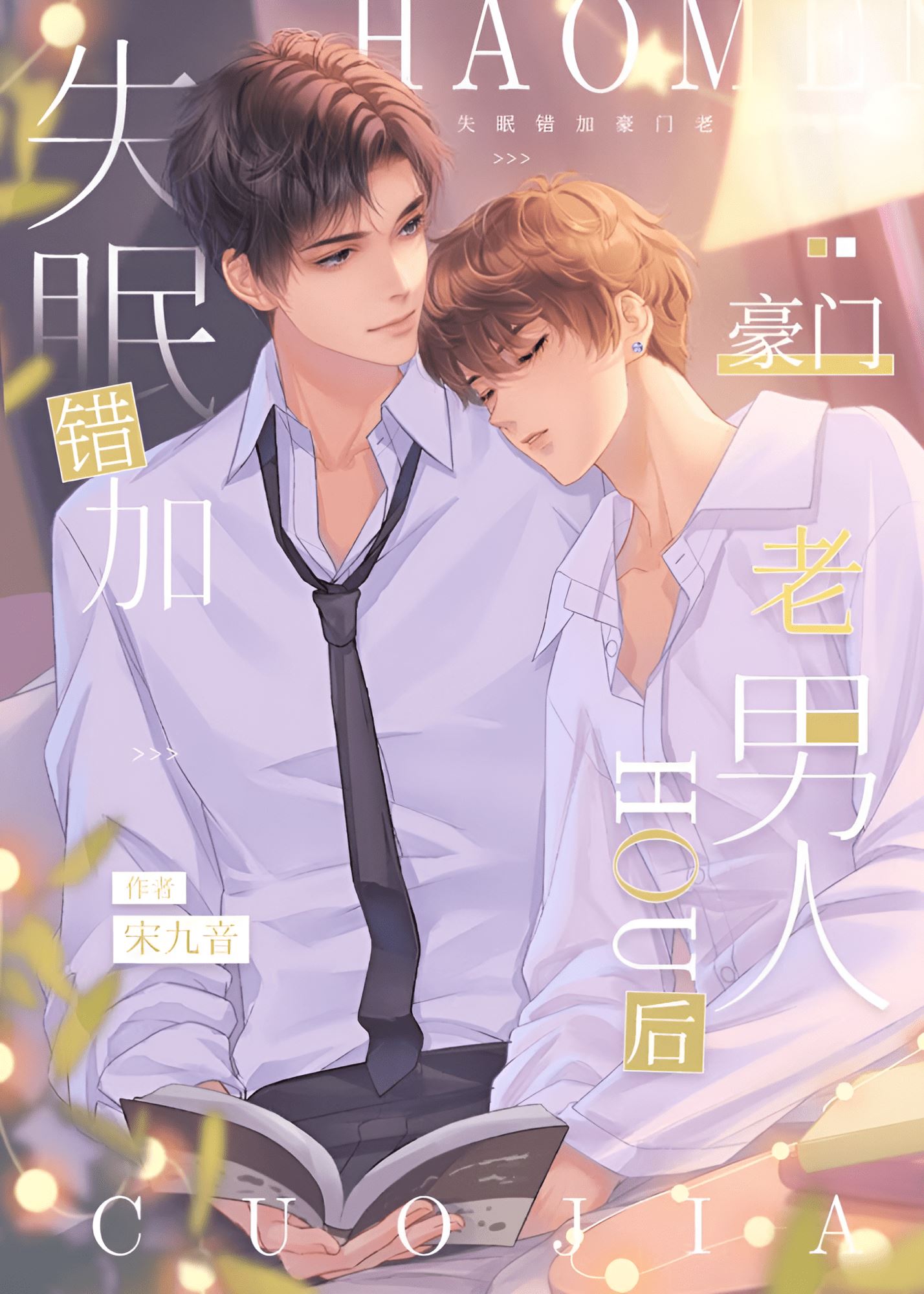
... Read More
I need to talk about Lu Xingmian and Lu Shiran because this relationship is doing SO MUCH work and I am not ready. The moment that hits me every single time is when Lu Xingmian calls him after getting first place. His voice is full of joy, sure, but then he starts talking about how he was worried his grades would drop, how he's transferred twice, how the insomnia made everything feel precarious. And Lu Shiran just… listens. He's this quiet, smoking guy who seems like he carries weight, but when Lu Xingmian opens up, he doesn't dismiss it or give advice. He says “And now?” like he genuinely wants to hear the answer. And Lu Xingmian says he's not nervous anymore, he adapts quickly — but the narration notes “somehow his words carried an inexplicable hint of sadness.” THAT is the sentence that wrecked me. Because adapting quickly isn't a flex when you've had to do it your whole life. Every time he moves, every time things change, he has to restart. And he tells this to a stranger on the phone at midnight because it's safer than telling people who actually know him. Then Lu Shiran does this thing where he says “Today's time doesn't count” — like, I'm giving you extra hours for free because you earned it. It's such a small gesture but it says everything about how he sees Lu Xingmian. Not as a burden, not as a client, but as someone who deserves a celebration. And the smoking thing at the end when Lu Xingmian notices and gets worried “isn't smoking bad for you” — and Lu Shiran pauses like he's been caught doing something he didn't want him to see? That's intimacy. That's the moment where the line between client and something else gets blurry. I'm trembling.
... Read More
I have to address the sheer emotional whiplash of these chapters because the author REALLY knows how to toy with you. One moment you're watching Lu Xingmian get systematically abandoned by every adult in his life, and then — BAM — we cut to Lu Shiran dealing with a kindergarten kid who thought his WeChat contact was Crayon Shin-chan. I literally yelled at my phone. Xiao Youzi looking at a profile picture and saying "this is Crayon Shin-chan and Shiro" because her friend's avatar happens to match a cartoon character she loves. That scene is genuinely funny and so endearing, but it comes RIGHT AFTER Lu Xingmian gets cut off by his adoptive father. The tonal pivot is so sharp it almost feels cruel, honestly. But then the chapter ends with the most understated gut-punch in recent memory. Lu Xingmian messages his "sleep-coaxer" — this mysterious person he's been talking to, someone who maybe represented the one warm thing in his life — and gets a big red exclamation mark. DELETED. Without a word. No explanation. Just... gone. And the way the author writes it — so minimal, so matter-of-fact. "The person on the other end had deleted him." That's it. That's the cliffhanger. No dramatic music, no internal monologue about how devastated he is. Just the cold reality of it. The author basically says: everything you cared about just vanished, and here's a small detail about it so you can sit with that feeling.
... Read More
There's this one scene that I keep coming back to and I think it's one of the most visually striking moments in the whole book. Chen Mei is standing at the back door. It's two minutes into class, the room is noisy because it's the start of senior year and nobody's settled in yet, and through all that chaos she sees Lu Xingmian sitting quietly in his seat. The text says “his back in the school uniform appearing somewhat slender.” Just that one detail — the uniform, the posture, the silence in a noisy room — and suddenly I can SEE it. It's got this film quality, like a slow zoom in on a character who exists slightly apart from everything around him. Then Chen Mei coughs from the back and the classroom “instantly fell silent.” That transition from noise to silence in one beat is masterful. It tells you everything about Chen Mei's authority without her saying a word. And later when Lu Xingmian notices students peeking through the front and back doors during breaks — this image of kids lingering at classroom doorways just to get a look at the new transfer student who somehow became famous overnight — it creates this whole atmosphere of a high school ecosystem. The gossip, the curiosity, the way popularity moves fast in these pressure-cooker environments. You can feel the humidity of it, the teenage energy, the unspoken hierarchy. What I love is how the author doesn't over-describe. There's no paragraph about the school's history or the architecture. Just a uniform back, a cough, some kids at a doorway. The world builds itself through behavior, not exposition. That's the kind of scene writing that makes you feel like you could walk into that classroom yourself.
... Read More
Let's talk about how the author RAMPED UP the stakes in these chapters because honestly it felt like the universe was personally targeting this boy and I couldn't look away. First, there's the physical conflict — Lu Sihang faking being pushed into the pond and then playing the victim. That's the inciting incident. Then the interpersonal conflict explodes when BOTH sets of parents turn on him. The Lu couple's decision to send him to the suburbs is basically exile — they're protecting Lu Sihang while abandoning their own son. But the stakes don't stop there. The author keeps adding layers: the academic pressure (mock exam next week!), the social isolation at a new school, and then the final blow — the sleep-coaxer deleting him. What makes this work so well is that every conflict is INTERNAL as much as external. Lu Xingmian isn't just fighting other people — he's fighting the crushing realization that none of his efforts to belong are working. His academic excellence? Doesn't matter. His explanations? No one listens. His attempts to reach out to people who care about him? Met with silence or hostility. The most terrifying part is how quiet everything is. There are no dramatic fights, no screaming matches — just cold decisions, hung-up phones, and red exclamation marks. The tension builds not through action but through the gradual, methodical stripping away of every single support Lu Xingmian had. And the author leaves us right at the lowest point possible. What could possibly come after THIS?
... Read More
I cannot stop thinking about the wrong-car scene. This has to be one of the funniest moments in the entire book, and it's handled SO well. Let me walk through it because the comedy timing is chef's kiss: Lu Xingmian is waiting for his ride-share, checks his phone, sees a black car, steps forward, opens the door, and just... sits down. Meanwhile, Lu Shiran is in THAT car, reading a message, when this random boy just plops into the back seat. The driver is internally screaming. Lu Xingmian is just vibing in awkward silence. Then the REAL driver calls and everything collapses. The detail about Lu Xingmian only realizing it was a luxury car AFTER he'd already exited and was hurrying away is perfect. He thought 'black car = ride-share' and that was it. No second glance, no suspicion. Just pure, unfiltered "oh no" energy. And Lu Shiran's reaction — "……??" — followed by him recognizing the voice and watching the boy leave, wondering if that was really Lu Xingmian? The dramatic irony here is absolutely delicious. We know exactly what happened, but neither character fully processes it in the moment. The theme park scenes are also great worldbuilding-wise. The fact that they had VIP access and experienced everything — no queues, prime seats, free high-end restaurant food — paints this vivid picture of privilege and generosity without the author having to explain it heavily. It just exists in the world naturally.

Leave a comment

You must be logged in to leave comments. or
