A Cruel Game - Reviews

A Cruel Game
+Add to Custom List
Sort
Add review
... Read More
There's a recurring image in this passage that I can't stop thinking about: the blade. Gayu remembers driving a blade into the warmth Jeha offered her. This isn't just a metaphor for betrayal—it's the physical manifestation of everything wrong between them. She rejected him. She hurt him. And yet he held onto that blade anyway. "Then why? Why had he alone continued to hold onto that cold blade and wager everything he had?" The blade is love that has been weaponized. It cuts both ways. And the fact that Gayu can only admit her love AFTER she's already caused him pain—AFTER he's buried someone bearing her name—that's the cruel irony the author keeps circling back to. Then there's the burial shroud. Jin Gahee's name written on cloth, dug up from dirt, the handwriting "crude and uneven" but still readable. Time refused to erase it. This feels like the book's way of saying: some things cannot be buried. Some truths keep surfacing no matter how deeply you try to hide them. And the name itself—Jin Gahee. Two women sharing one identity. One alive in a pleasure house. One dead in a mass grave. The duality speaks to everything this story is about: identity, substitution, the things we hide from ourselves and each other. Hye-ryeong's definition of love is the thematic keystone: "Love is wanting to hold on, even when you wish to run away. Even when holding on feels as though it might kill you." Every character in this passage is doing exactly this. They're all holding on to something that could destroy them. That's not romantic—that's tragic. And that's what makes this book so brilliant.
... Read More
I'm going to be real with you—the opening of this book is a masterclass in controlled devastation. It doesn't rush. It doesn't need to. You start with gossip, right? Just voices drifting through a doorway about gifts and wealth and a woman who was supposed to be queen. It feels almost casual, like you're eavesdropping on a conversation. And then the camera pans down and we meet Gayu, blank-faced, staring at treasures that are supposed to make her special but actually just mark her as merchandise. Then Yeon-hwa arrives. Perfect. Every single confrontation with a rival in these first chapters escalates naturally—Yeon-hwa goes from mocking smile to outright venom, and Gayu's one-line reply ("No. I won't die.") hits like a physical blow because it comes after such deliberate silence. The pacing here is so patient. The author lets you sit in the discomfort, lets you feel every second of Gayu being handled like an object while she watches herself in the mirror. The real pacing genius though is the entrance of the Master of Garyong. Up until that point, the entire chapter has been building toward THIS moment—we've been told who he is (the man who bought the would-be queen), we've seen the extravagant gifts, we've felt Gayu's dread and confusion. And then he arrives and the entire energy of the scene shifts. The prose gets tighter, the sentences shorter, the silence heavier. When he tells her to undress and she obeys in a daze, the tension is unbearable. The chapter doesn't end on a cliffhanger per se, but it ends on such a deeply uncertain, charged note that I immediately opened chapter two. There's one moment I wish had gotten more space—the kitchen staff gossiping through Juju. It's such a small detail but it world-builds so efficiently. Instead.
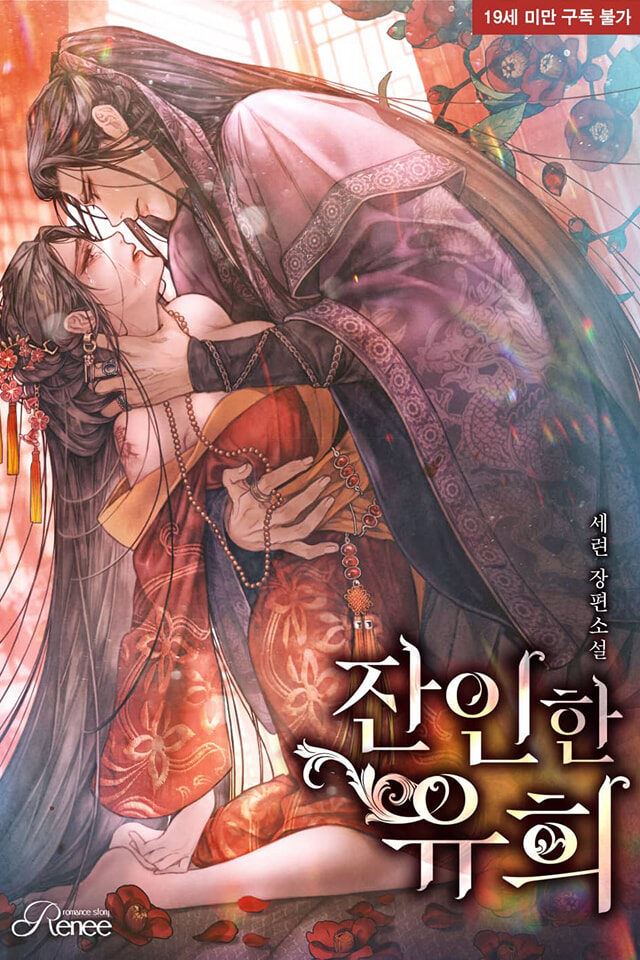
... Read More
There is a scene—just a short one, really—where Gayu sits in complete darkness in her room. No lamp lit. She "could not bear to look at herself" so she hides in the black. This is one of the most visually striking moments in the entire book and I need to talk about it. The author doesn't give us elaborate descriptions of her room or the pleasure house. Instead, they strip everything away until it's just her and the dark. And in that darkness, memories flood back. Jeha's voice. His words. "I love you." The blade she drove into his warmth. And finally—finally—her own confession into the void: "I love you too." It's devastating because it's so intimate. We're not witnessing a grand romantic scene with candlelight and music. We're witnessing a broken woman alone with her thoughts, and somehow that's more powerful than any staged moment could be. Contrast this with the Daeju scene. The command tent. The stench of a freshly dug corpse. The rough straw mat covering a face "beyond recognition." The crude handwriting on the burial shroud—"Jin Gahee"—still visible despite months underground. "It was as though time itself had refused to erase them." That line gave me chills. The world-building here is all about atmosphere and sensory detail. You can smell the grave. You can feel the exhaustion in Jeha's bones—he rode all day and won't even drink water. The tent is full of soldiers, men bowing, but none of it matters to him. His entire world has narrowed to one cloth with one name on it. The two scenes are mirror images in the best way. One is silence and darkness and a woman speaking to nobody. The other is a crowded tent and a dead woman who can no longer speak.
... Read More
I need to talk about HOW this passage is structured because the author is playing with reader psychology like a pianist. The scene between Gayu and Hye-ryeong is a masterclass in tension escalation. It starts calm—Hye-ryeong confessing her feelings, almost gently. Then she drops the first bomb: Jeha saved Gayu's life. Gayu's confusion turns to shock. Then the second bomb: he risked everything. Gayu's relief at being rejected is immediately undercut by Hye-ryeong's offer. The pace quickens. Each exchange lands like a punch. And just when you think it can't get more intense, Gayu refuses the offer and the whole dynamic SHIFTS. And then—BOOM. Chapter end. Cut to Jeha in DAEJU. A completely different location, different tone, different pace. The exhaustion in his steps. The urgency in his voice. The corpse. The name. The familiar face. This dual-narrative structure is genius because it creates two separate emotional experiences that collide in the reader's mind. We finish Gayu's scene feeling the weight of her choice, and then immediately get yanked into Jeha's horror. We know Gayu is alive. He doesn't. And the gap between their knowledge is where all the agony lives. The pacing also controls when we get information. Hye-ryeong reveals things piece by piece—not all at once. First the confession, then the rescue, then the danger, then the offer. Each revelation forces Gayu (and us) to recalculate everything. By the time we reach the Daeju scene, we're already overloaded with questions, and the author PILEs on more: Who is the dead woman? Who is the middle-aged slave? Why does she look familiar? The chapter ends on a cliffhanger that isn't dramatic—it's quiet. The woman approaches. Her eyes widen. And then... nothing. Just the beginning of a question we're desperate to hear answered.

Leave a comment

You must be logged in to leave comments. or
