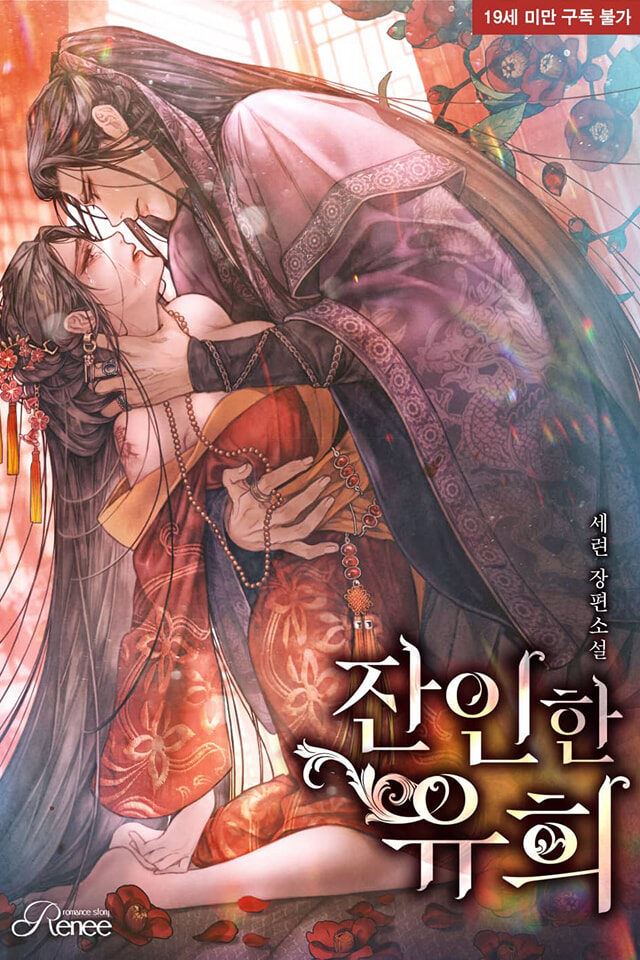
There is a moment in this chapter—right after everything happens—that I cannot get out of my head. Gayu is lying there, completely undone, her mind blank from sensation, and then she opens her eyes and sees him.
He's getting dressed.
Not urgently. Not awkwardly. Calmly. Like a man who just spent hours consuming someone and now he's putting on his clothes with the same composed, controlled energy he uses for everything else. The text says it directly: "The man who had clung to her as though the world were ending only moments before now appeared composed and perfectly in control."
And the contrast—goddamn, the contrast—is so sharp it practically cuts. One moment he's a wildfire, teeth sinking into shoulders, voice dropping to growls, completely overwhelmed by heat and hunger. The next, he's collecting himself like nothing happened, and then he drops this:
"It would be wise not to think about bringing another man in while I'm gone. Unless you want to see him torn apart by my hands."
That shift from fire to ice is terrifying. It's also so beautifully written because the setting amplifies it. They're in a pleasure house—the Hwayeonru, deep in its most private quarters. This is a place designed for transactional encounters, for performance and pretense, and yet what just happened between them was anything but transactional. It was raw. It was real. It was the most vulnerable either of them has probably ever allowed themselves.
And then the narrative cuts away entirely to Juju and the outside world, to Madu guarding doors and Gia sighing and hours passing. The contrast between the intimate heat of that room and the cool, patient waiting of the corridors outside is masterful worldbuilding. The author doesn't need to describe the rooms in elaborate detail—the fact that there are boundaries, guards, layers of separation—tells you everything you need to know about this world.
Also, the scene with the Head Steward's visit has such a distinct atmosphere. Late morning light, the formal greeting, Juju stubbornly refusing to leave even though she's dismissed. The way the door opens and Hye-ryeong steps in, veiled and imposing, changes the entire mood of the story in a single entrance. You can feel the tension shift from intimate to political in one breath.