Diary Of A Knight - Reviews

Diary Of A Knight
+Add to Custom List
Sort
Add review
... Read More
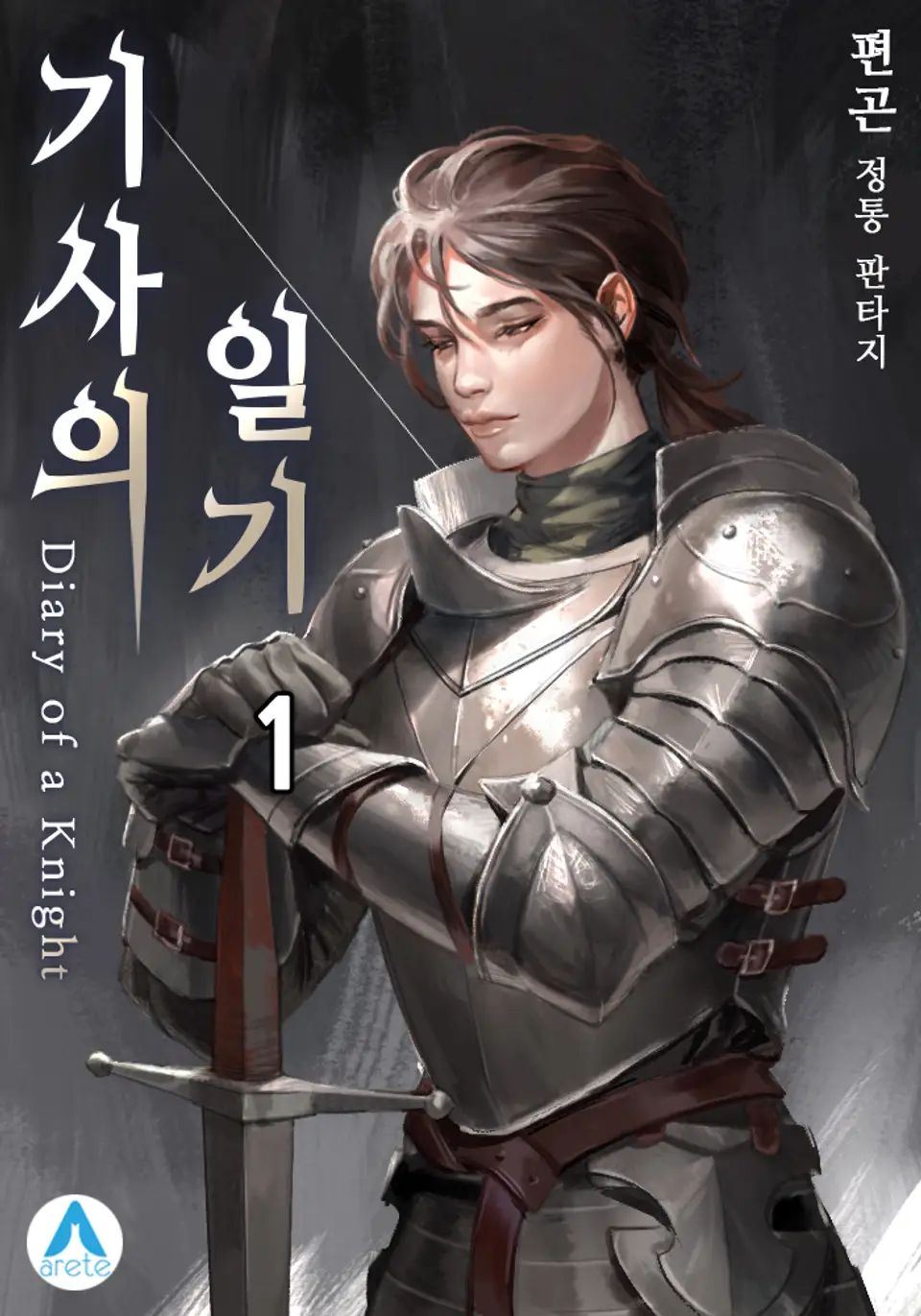
Okay so can we talk about the Young Butler for a second because this chapter had me absolutely losing my mind over him. The scene where Lovell catches him talking trash about her behind her back is EVERYTHING. She literally leans over him while he's sleeping, presses her longsword against his neck, and whisper-threatens him and he's just internally panicking about things like 'I won't nag you about dirty clothes anymore, I won't get mad about expensive clove oil' -- this man has been mentally bartering with himself to avoid future scolding. That is such a specific, relatable kind of fear. Their dynamic is honestly one of the best things in this book. He acts all bossy and nagging, but the night watch arrangement gives it away -- he assigns Circe the first and last shifts, the safest ones, and calls it 'being knightly' while somehow not realizing how transparent he is. And Lovell? She barely acknowledges it. She just sleeps soundly in her iron pajamas like nothing happened. That trust between them -- she knows he's watching, he knows she can handle herself, but he still tries to shield her in his own clumsy way -- it's quietly one of the most grounded relationships in the whole story.
... Read More
This chapter is a masterclass in giving every character a voice that's instantly recognizable. Like, if I covered the character names I could tell who's speaking just from how they talk. Circe is the best -- 'Ahem! Ahem! Step aside, please' before she torches a campfire with a spell called 'Song of the Sun, Dance of Lava, Dragon's Mumbles, Salamander's Sigh' -- this woman commits to the bit every single time and it's absolutely hilarious. The Young Butler has that perfect exasperated-nag energy: 'They're practically threatening us to go hunt meat and offer it to them.' He's always complaining but never actually refuses anything. Lovell's dialogue is famously sparse -- she says like three actual sentences in the entire fight scene -- and that silence speaks volumes. 'I didn't think of it.' That's not just understatement, that's a character trait. And the assassins? 'Wolves... the Knight of the Wolves...' That single fragmented line as he's dying tells us he recognized her reputation before he died. Meanwhile Circe commenting on the night watch arrangement with 'How very knightly of you' and then immediately giggling about it -- she's the only one who sees through the Butler's performance and finds it adorable. The banter between the Butler and Circe about whether she was being 'direct' or 'subtle' had me actually laughing out loud. 'I love it!' she says and honestly same.
... Read More
'He stopped at a distance that was neither awkwardly far nor rudely close. It was exactly one inch outside the range of Lovell's longsword.' I keep coming back to this detail. ONE INCH. This isn't just atmosphere, this is worldbuilding through physical space. Every scene in this batch is anchored in tangible, lived-in detail. The old wooden castle that the Young Butler is desperately trying to make presentable for a visiting COUNT. The weed-overgrown parade ground where 92 conscripts stand with wooden spears like it's some tragic comedy. The Henry Merchant Guild supplying wine they can barely afford to spend. Rodrick Village itself — farmers who count eating meat once a year as the best day of their lives. This world feels HANDS-ON. You can smell the roasting boar at the festival, feel the chill of the north forest where Wale's body was found, see the golden droplets of beer shooting into the air when Lovell smashes that barrel. The author doesn't info-dump politics — we learn about the Duke's Faction vs. the Marquis's Faction through an awkward greeting between two men who can't even shake hands properly because their families chose different sides. That's how you build a world. Through the spaces between people.
... Read More
Let me just say this: the werewolf encounter is genuinely tense. Not because the stakes are life-or-death in some grand sense, but because the author makes you BELIEVE Lovell is in real trouble here. She fights one werewolf with an iron sword — which Circe herself calls out as impressive, since even silver struggles against these beasts. Her wound from that first fight takes seconds to heal. Dutch's axe attack nearly takes half its face off and the thing just gets up angrier. "Th-the number of eyeballs is… ten, eleven, twelve……" "Six of them?" Even one was tough; six was hopeless. Lovell retrieves her sword from the corpse and glances at her warhorse — considering escape. Then the song starts. The stakes shift from physical survival to something more unsettling when Circe appears. The werewolf pack is still out there, still dangerous, but now there's this magical presence singing a lullaby that sends goosebumps down your spine. "Lalala… Wild wind, do not cry. Lest the sleeping flame awakens." But honestly, the deeper conflict here isn't the werewolves at all. It's Lovell's internal question — why does she need a mage? What is she really trying to accomplish? The external quest (sell wolves, find a witch) keeps escalating into something much larger, and neither Lovell nor the reader fully understands where it's headed. That's good tension. The werewolf fight was intense, but the uncertainty about WHY all this is happening is what keeps me turning pages.
... Read More
I need to talk about the Young Butler. Not because he's flashy—because he's the emotional anchor in a story full of blood and steel, and he does it by worrying about everything. Watch how he operates: first he's furious about the wolf cubs not being raised, then he's calculating market rates for hides, then he's threatening One-armed Dutch over how to drive the wagon, then he's whispering warnings about men discovering Lovell's true identity. This isn't anxiety for its own sake. It's a language. Every nag is a vow: you come back alive, you hear this again. And Lovell? She tolerates it. She even smiles at it. When the Butler says "Our Lord may look like that, but she's delicate," Lovell's shoulders slump—not in shame, but in the weary affection of someone who lets herself be cared for. That contrast is everything. Here's a woman who can cut down nineteen soldiers before anyone blinks, yet she lets a servant scold her about shaving in the morning. The mercenaries are part of this ecosystem too. Captain Pulp's loud defenses of Lovell, Dutch's grumbling protection—they're not soldiers; they're a household. And the wolf cubs? The children want them because they're soft. The Butler considers them meat. Lovell sees utility. Nobody sees the same creature. That's how you build a family without saying the word.
... Read More
Let's be real -- this chapter opened with the most politically charged news drop I've read in a while and I barely had time to process it before someone was trying to murder the protagonist. Duke Francis is dead. Eric Francis is summoning vassals. Lovell has an oath of fealty she can't ignore. That's a whole political storyline set in motion in about five paragraphs. And then the assassination attempt raises the stakes from 'political inconvenience' to 'someone specifically wants her dead.' Not bandits. Not random criminals. These guys had crossbows, coordinated attacks, and they KNEW who she was. 'We just need to kill Lovell Rodrick!' -- they weren't even trying to capture her or ransom her. The author does something really smart here by making Lovell slightly vulnerable during the fight. She's not invincible -- she gets hit from behind, her eyes fail her in the dark, she's relying on armor she didn't even consciously decide to trust. The wolves saving her at the critical moment works because the stakes feel genuine: if Aya and Iyaka hadn't shown up, Lovell probably would've been cut down. And the ending really haunts me. They killed five men and Lovell immediately pats down the corpses looking for answers. The Young Butler's suggestion to keep one alive for questioning implies there's a larger conspiracy behind this, and Lovell's dismissive 'I didn't think of it' sounds less like carelessness and more like she's already processing the fact that this might not be the last attempt on her life.
... Read More
The structure of these chapters is doing some really clever work and I want to break it down because the author clearly knows exactly what they're doing with scene transitions. Chapter rhythm goes: COMEDY (tree-pulling celebration) → DOMESTIC WHIMSICAL (wolf-dogs barking at the butler) → QUIET INTIMACY (waking up, bathing in secret, the Young Butler guarding the warehouse) → SURPRISE VISITOR (Merle Brick arrives at dawn) → POLITICAL TENSION (the accusation request, the retainers' debate) → NEW THREAT (wolves howling, everyone searching for Lovell). That's six major beats and none of them feel rushed or dragged out. The author controls pacing by varying emotional temperature—each scene either ramps tension up or lets it breathe, never letting two high-tension scenes pile on top of each other without a comedic or quiet buffer in between. The bathing scene is particularly masterful pacing. It's long, slow, almost meditative. You're watching Lovell wash in secret, dry off, throw on men's clothes because they feel more natural. The Young Butler is fidgeting outside. Time slows down. And then—'I have a bad feeling. Let's go.' The shift from domestic calm to alarm is so sharp it's almost jarring, which is exactly the effect you want right before the cliffhanger. Also worth noting: the rumor about Lovell defeating '1,000 mercenaries with a single lance' is mentioned and then explicitly called out as 'that rumor would return as an echo much later.' The author is planting seeds and telling you they'll grow. That's confident pacing—you don't need to resolve everything now because the story knows where it's going.

Leave a comment

You must be logged in to leave comments. or