Diary Of A Knight - Reviews

Diary Of A Knight
+Add to Custom List
Sort
Add review
... Read More
What struck me about this section is how efficiently the plot moves between intimate domesticity and looming geopolitical crisis. It starts with a rumor—of all things, a rumor about war—and by the end, Lovell is mounting her horse to ride toward actual conflict. That's some tight narrative compression. The Succession War between Eric and Ryut Francis isn't just background; it's the engine driving everything forward. But what I found most interesting is how the author treats the *preparation* phase with as much weight as the combat itself. The five-day journey, the budget discussions (6,880 Pfenning! I counted!), the land expansion, the hiring of mercenaries—it all feels grounded and deliberate. This isn't a story that skips to the battle; it lingers in the muddy, uncertain limbo between peace and war. The 40-day rule for knightly service is a clever plot device. It's the kind of worldbuilding detail that simultaneously advances the plot and raises questions. What happens after forty days? Does Eric just keep paying? Can he even afford to? The author doesn't answer these, which is smart—it lets the tension breathe. My favorite structural beat, though, is how the summons arrives *during* crossbow training. The contrast between "Fire! Thwack!" and the ducal messenger galloping through the gate is cinematic. It's the moment where practice becomes reality, and Lovell has no choice but to step into the role of war leader. Also: the Wolf Mercenary Group naming scene? Chef's kiss. Captain Pulp proposing a name, Lovell glancing at the snow-rolling wolves, and just… "Wolf." It's efficient character work too—shows her quick thinking and ability to command respect while remaining approachable. The chapter closes on departure, which is a classic narrative pivot. We've moved from arrival to preparation to summons to leaving. The cycle isn't complete—war hasn't started yet—but the trajectory is clear. I'm hooked.
... Read More
"Awoooo—" "Awooo—" Those wolf cubs howling at night is one of those moments where the author just drops you straight into the scene and doesn't let go. You can FEEL the shadow closing over the valley. The sunset, the growing dark, the trembling cubs hiding in a corner. And then: "Something large and fierce leaped out from the shadows." The combat writing here is genuinely good. Not just clanging swords, but texture: "It felt like tearing through a tightly packed leather sack. It forcibly cut through muscle and squeezed out blood with difficulty." That line about the wound healing in seconds? Chilling. One-armed Dutch taking a half-face-off werewolf to the chest and the thing just springing back up like a coiled spring with an eyeball dangling — I literally shivered. But then Circe's house? Warm. Cozy. Herbs and mushrooms hanging from the ceiling instead of some bubbling cauldron and an ugly cat. The contrast between the dark, bloody mountain and the warm cottage is really well done. And later, Rodrick Castle itself — described as a "shabby, old wooden castle" with no tower to imprison a princess — it feels small and lived-in, not some grand fantasy seat of power. That autumn description when the harvest finishes, the North Sea wind envying the South Sea sunlight... the author paints this world that feels cold but also strangely gentle. There's something really alive about how the setting shifts from threatening mountain to bustling (well, subjectively bustling) castle home.
... Read More
Okay so I need to talk about the Young Butler because this character is secretly the emotional core of the whole story and I am HERE FOR IT. Like, Lovell's treating her retainers to wine after a hard day's tree-pulling and the FIRST thing the Young Butler does is drape a cloak over her because her wet clothes might... you know... show things. The author doesn't even spell it out but it's so painfully endearing. They're both clueless about basic human stuff—Lovell hiding in the basement to bathe like some kind of feral noble, the Young Butler fidgeting outside wondering why this suddenly feels awkward—and they just keep existing in this bubble of mutual care. And then CIRCE walks in wearing an apron over her witch outfit and deliberately calls Lovell 'Sir Knight' while telling dinner is ready, completely aware that the Young Butler is going to realize they just got dog-called. The Young Butler's reaction—chasing after her yelling 'Don't run away!'—is the most normal emotional response in this entire household and also the funniest thing that happens in these chapters. But here's what really got me: Merle Brick, the young squire, rides all night because he wants to protect his honor by accusing Viscount Dottnum, and Lovell immediately asks 'If you do this, your knighting will be difficult, won't you?' She's considering HIS honor over her own safety. That's who she is. She doesn't do it for glory or politics—she does it because that's what a good person does, even when everyone around her is telling her it's a terrible idea. The vote among her retainers is also peak worldbuilding. One for, one against, two abstentions, one invalid (Dutch picking his nose). This isn't an army, this is a found family trying to survive. And the Young Butler's line 'This is an act that will make an enemy of the family for generations to come!' hits different because they're right AND they're terrified FOR her, not just annoyed.
... Read More
I need to talk about the Young Butler. Seriously. This character is doing *so much* with so little. Every time Lovell mentions money or strategy, the Butler reacts with this mix of exasperation and genuine care. When she asks about surplus funds, his response—"I never thought I'd hear such a word in my lifetime… ahem!"—is hilarious, but underneath it, you can see someone who has been managing this household alone while she's been away. He's stressed, he's tired, and he's still showing up. And then there's Captain Pulp. Thirty-two years of mercenary experience, and yet he's the one scratching his head and saying "I'll give it a try" when asked to recruit more soldiers. The humility here is everything. This isn't a boastful veteran; this is a professional who knows his limits and trusts his lord enough to step outside them. The wolf siblings, Aya and Iyaka, might seem like comic relief, but they're actually crucial to the emotional texture. They're the only ones who can mirror Lovell's wilder impulses—the snow-rolling, the mischief, the joy. When they shoot out like arrows at the word "depart," it's heartbreaking in a quiet way. Even animals understand what's happening. Circe the witch and the Young Butler's growling match is another gem. Two outsiders in this household, both fiercely loyal, both suspicious of each other. It's a microcosm of the larger political tensions—different factions, different backgrounds, forced to coexist under Lovell's leadership. But the moment that got me was Lovell apologizing to Iyaka when she barks instead of speaking. Fifteen humans and two wolves. That line—it's so simple, but it tells us everything about how Lovell sees her household. These aren't just soldiers; they're family. And she's terrified of leaving them. The dynamic between Lovell and the messengers from the Francis Ducal Family is also worth noting. They're formal, efficient, almost cold. But Lovell's response—"Alright. Then I'll be on my way"—shows she's already adapted to this new role. She's not the same girl who arrived at the castle gate five days ago. War changes people, and we're watching that transformation in real time.
... Read More
'From ages 14 to 40, a total of 92 men have been conscripted.' NINETYTWO. With wooden spears. Some with wooden SHIELDS. The author doesn't even dramatize this, just states it flatly like a ledger entry and that's what made me genuinely anxious. Because this isn't a grand army. These are farmers who just celebrated eating meat once a year. And they're being asked to defend a castle against a VISCOUNT's forces. The stakes escalated from " awkward political visit" to "potential war" with brutal efficiency. Lovell offers a duel — the noble way to resolve this — and the Viscount refuses. Which means he's not playing by the rules. He's not interested in honor; he's interested in taking Steel Castle. "A war could break out" — nobody says it out loud but everyone feels it. And Lovell, who just wanted to host a decent festival and keep her people fed, is now suiting up in full composite armor with an army of peasants and a butler who asks "Should we just surrender?" The suspense isn't in cliffhangers, it's in the slow realization that every pleasant moment in this batch was building toward this exact corner. I was gripping my phone and I don't even like steel fantasy.
... Read More
Lovell's dialogue is a weapon and a shield. Short. Precise. Often devastating in its simplicity. "I cannot allow that." "Just kidding." "We came here to hunt wolves, not people." Each line does triple duty: it advances the scene, reveals character, and establishes tone. She threatens a viscount with a joke about honor, then kicks him in the jaw, then offers him advice he won't hear. That's not cruelty; that's clarity. She says exactly what she means, and means exactly what she says. The Butler's voice is all opposite—long, worried, repetitive. "You can't just take off your clothes willy-nilly like you do at the castle. Keep your distance when you sleep. Pretend to shave when you wake up in the morning." This isn't nagging; it's a tactical briefing disguised as maternal fussing. And Dutch? One-armed, monosyllabic, brutally practical: "A skinny little kid like you, it would probably eat you bones and all." He doesn't waste words. Even Captain Pulp's roars have rhythm—he's the percussion section in this ensemble. What I love most is how dialogue reveals power dynamics. When Lovell tells the merchants "By any chance, I..." and trails off, they scatter. She doesn't need to finish the sentence. Her presence speaks. The writer understands that who controls the conversation controls the scene. And Lovell? She rarely competes for airtime. She lets others fill the silence, then drops a single line that recalibrates everything. That's how you write voice—you don't make characters talk more; you make them talk only when it matters.
... Read More
I need to sit with this for a second. So they thought the mercenaries who hit Lovell's camp were just Viscount Dottnum playing revenge — and that felt clean, right? A straightforward grievance. But then One-eyed Volpos drops the bomb: it was Young Lord Ryut, and it wasn't just Lovell. It was multiple knights, all of them loyal to Eric, all high-reputation, all selectively targeted. This isn't a feud. This is triage. Ryut isn't trying to kill Eric outright — he's surgically removing his support network before the oath ceremony even finishes. And the cruel part? The attacked knights stayed quiet. Not because they were cowardly, but because no knight boasts about being set upon by robbers. It's a loss-of-face culture weaponized. So Eric walks into that hall and fewer than half his vassals show up, and he has no idea why. The reader knows. That dramatic irony is vicious. Then the timing — Marquis Satro and Ryut capturing Bertinger City during the banquet. That's not opportunistic; that's choreographed. They knew the ceremony would happen, they knew many lords would already be skeptical, and they struck while everyone's guard was down. Winter is coming, as Lovell notes, and you can't raise an army in a blizzard. This is a Coup without a crown yet. And the chapter ends on 'something terrible has happened' while Lovell is still sitting there with a chicken leg. The contrast between the trivial and the catastrophic is what makes this scene land so hard.
... Read More
I need to talk about how this chapter just completely flips the script on me. It starts SO domestically. We're talking about packing, choosing travel companions, worrying about looking shabby at a funeral. The Young Butler is nagging about wine barrels. There's literal comedic banter about whether wolves count as useful help. And then -- BAM -- an arrow whistles through the night and suddenly we're in a full-on assassination attempt. The transition is so seamless that I genuinely got whiplash. One moment I'm smiling at Circe doing her dramatic fire-making spell, the next Lovell is throwing a war hammer at a guy's windpipe. But here's what's really impressive about the pacing: even in the fight scene itself, the author doesn't just go full action-movie mode. There are these tiny beats where Lovell's disadvantage is clear -- her eyes haven't adjusted to the dark, she's swinging blind, she trusts her armor to the point of almost getting taken out from behind. The wolves arriving as backup at the crucial moment felt earned, not deus ex machina, because we'd already seen them being sassy and demanding food earlier. And that ending? 'You should have kept at least one of them alive.' / 'I didn't think of it.' Two lines. That's it. That's the entire chapter's emotional punchline and it hits so hard because it tells us everything about Lovell in one go.
... Read More
Something about the symbolism in this text has been sitting in my brain like a splinter, and I need to pull it out. Let's start with the crows. These birds appear almost casually—a child boasting about eating crow meat, Lovell's sudden interest, the Butler's suspicion that more were caught than reported. But crows are intelligent, adaptable creatures. They survive where others can't. They scavenge. They're considered unlucky by some, blessed by others. In a territory defined by scarcity, the crow is the perfect symbol: despised, underestimated, but undeniably resilient. And the bread. Barley bread, tasteless, the size of a child's torso. Bread is one of the oldest symbols in literature—sustenance, community, survival. But this isn't communal bread shared in abundance. This is ration bread. Each loaf is a calculated distribution of limited resources. When Lovell breaks the crow meat into tiny pieces and shares it, she's performing the same calculus on a micro scale: how do I make enough last? Who deserves more? The castle itself is a symbol. Built centuries ago from earth and wood. A half-finished stone keep—a project abandoned due to lack of resources. It represents ambition constrained by reality, the gap between what could be and what is. The Young Butler's complaint that it would have been better not to start at all is a philosophical statement about futility versus hope. Then there's Lovell's partial armor. She wears protection only on her left side—heart side, presumably. Not full armor, not unprotected. This is the literal embodiment of her position: vulnerable but prepared, partial commitment as a survival strategy. She's a ruler who cannot afford to be fully armored in a world that wants to take everything from her. The wolf hunt transitions into the confrontation with Viscount Dottnum, and I can't help but see the wolves as metaphor. They're predators driven by hunger, just as the nobles are predators driven by ambition. The wolves come down from the forest because winter starves them. The viscount comes from his enriched territory because strength tempts weakness. Both are natural consequences of imbalance. What's striking is how the text never announces these themes directly. They emerge organically from character actions and setting details. The symbolism serves the story rather than weighing it down. That's craft. I keep wondering what the author will do with these motifs. The crows, the bread, the half-armor, the unfinished castle—they all feel like they're building toward something. I just hope whatever comes next honors the richness already established.
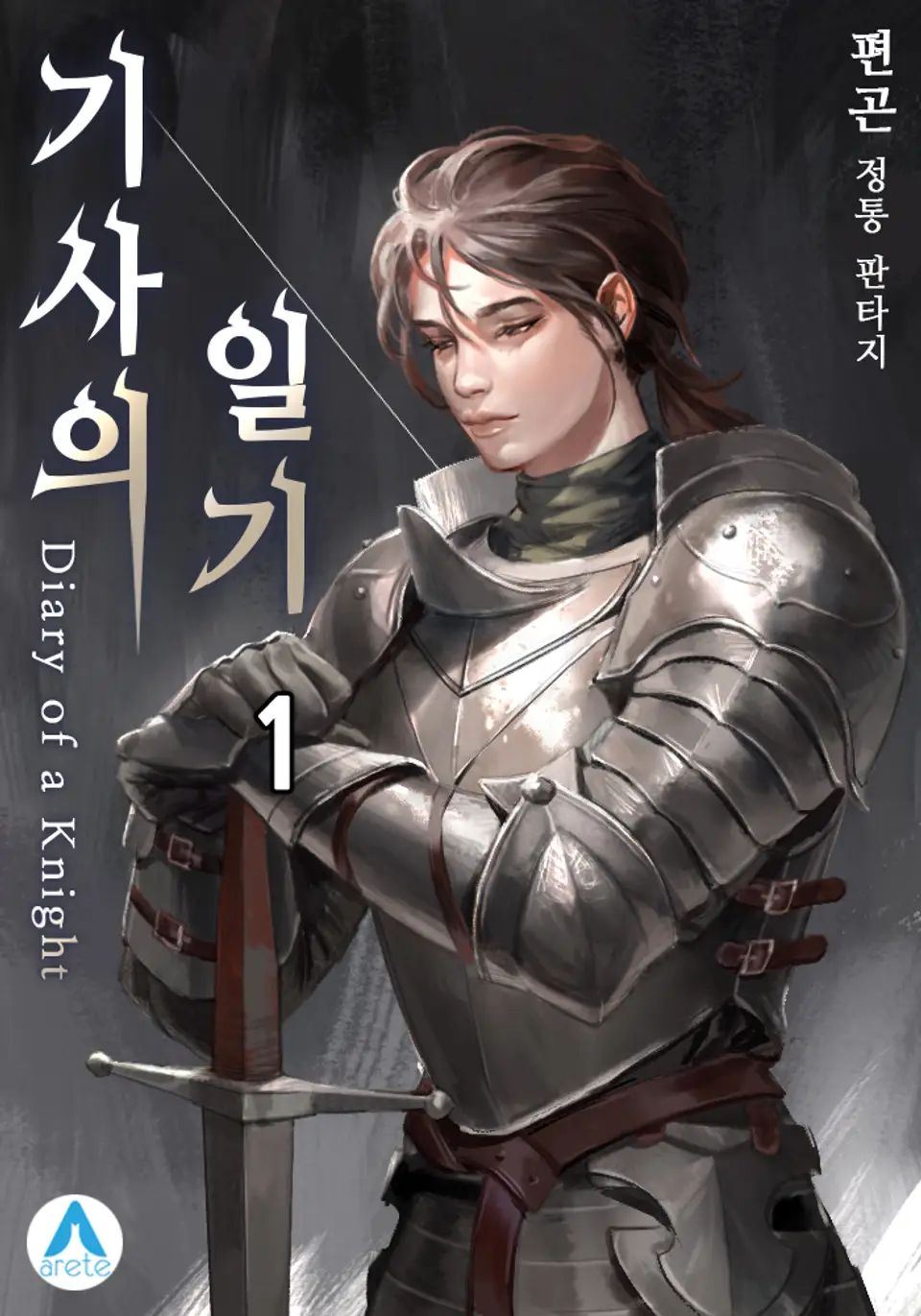
... Read More
This section is a masterclass in sensory worldbuilding. Let me count the ways. First, the armor. A 44-pound armament. Lovell removing it piece by piece—torn cloak, composite armor, chain-lined doublet—and then finally putting on a clean houppelande. The relief is palpable. You can almost smell the sweat after five days in autumn heat. This isn't just description; it's embodied experience. Then there's the castle itself. The audience hall opening despite winter. Chard presenting a deer caught in a trap. The snow piling up to ankle depth overnight. Village kids having snowball fights while the dogs run around barking. It's a world that feels lived-in, not staged. The peddler's footsteps ceasing in winter, the specific details of how people adapt to seasonal change—it all adds up to something tangible. The training scenes are particularly vivid. Twelve crossbowmen, the sound of bowstrings—"Thwack! Thwack! Thwump!"—Jacob missing because he's "originally a pikeman." One-eyed Volpos sighing and correcting him. The mercenary group standing on the parade ground in their mismatched armor, pavises on their backs, weapons at their hips. You can see this. You can hear this. And the snow itself becomes a character. It falls lightly, piles up overnight, soaks ankles, melts into slush. When Lovell says "When this snow melts, it will flow as blood," the image hits differently because we've spent chapters watching the snow accumulate. It's not just weather; it's foreshadowing made physical. The Francis Ducal Family's messenger riding in on a winded horse, spinning it twice to calm it before dismounting—that's the kind of detail that makes a fictional world feel real. Horses get tired. Messengers have long distances to cover. The seal on the letter carries weight because we've seen how seriously everyone treats ducal authority. Even the food matters. Dried fruit from the village, expensive beer that Lovell sips instead of water, the crossbowmen eating well during winter training. These aren't random details; they're economic and social markers that ground the story in a specific material reality. I want to live in this world. Or at least visit for a weekend, assuming the succession war stays contained.
... Read More
'I swear in the name of the old god(s).' 'I swear on my qualification as a lord.' 'I swear on my honor as a knight.' Three oaths, three voices. The ritual dialogue here is doing heavy lifting — it's not just procedure, it's character. Lovell's third oath ('on my honor as a knight') is the only one that sounds like it comes from her bones. The other two are formula. The third is personal. And then the casual dialogue afterward: 'Did someone die again?' — the Young Butler, eating, absolutely deadpan. 'Wow, listen to those harsh words. I should learn from that.' — Circe, delightfully mimicking without understanding the gravity. 'Don't learn from it!' — Lovell, already parental. But the line that defines the entire narrative voice is One-eyed Volpos: 'Because I've spent my whole life cleaning up after nobles.' Thirty words. A lifetime. That's not dialogue — that's a thesis statement wrapped in a sigh. The author never lets anyone sound like the author. Voker brags. Circe plays. The Young Butler eats. Lovell understates. Eric seethes. Volpos observes. Every voice is recognizable without tags. That's rare. That's skill.
... Read More
The pacing here is absolutely manic in the best way. We go from: guild master's advice → travel to North Mountain → night camp → werewolf fight → Circe saves them → cozy cottage scene → wolf cub drama → morning departure → Circe hijacks the journey → arrival at Rodrick Castle → naming the wolves → daily life montage. That's roughly five chapters and the story has completely transformed from a mercenary side-quest into a found-family domestic fantasy. What's clever is how the author controls the tempo. The werewolf fight is written in sharp, staccato bursts — short sentences, onomatopoeia, physical impacts. Then Circe appears and the rhythm completely changes. Her dialogue is rapid-fire, exclamation-heavy, almost breathless. The cottage scene slows down into something domestic and warm. Morning arrives and everything picks up again with her sudden decision to come along. The chapter transitions use those asterisk breaks effectively — they give you just enough space to breathe between tonal shifts without losing momentum. And that final autumn paragraph, with the harvest finished and village life resuming? It's a deliberate deceleration, like the story is settling into a new normal even though we all know something bigger is coming. I stayed up way too late reading this batch. Not because of cliffhangers exactly, but because every scene naturally flows into the next like dominoes. The author knows when to rush and when to linger, and that instinct is what makes this read so smoothly.

Leave a comment

You must be logged in to leave comments. or
