Simple Job of Only Perishing to the Hero - Reviews

Simple Job of Only Perishing to the Hero
+Add to Custom List
Sort
Add review
... Read More
The pacing in these chapters is *insane*. Let's break it down: Chapter 9 starts with political exposition—Vermudol, Orel, Ichika discussing the west. Then Chapter 10 immediately drops us into Meshram's palace, Nino enters, kills him in seconds, and moves on. No linger, no aftermath scene, just *next*. Then Chapter 11 shifts to the Moul Labyrinth, Nino walks through traps like they're nothing, encounters Aulokk, and by the end she's got twelve new subordinates. The transitions are so sharp they're almost jarring, but that's the point. The author's using Nino's relentless momentum to drive the narrative forward—each scene is a beat in a symphony of conquest. Notice how the trap sequence is brief? Nino triggers it, the Beastia comment, she cuts the spears, done. No lengthy fight choreography, just efficiency. And the Aulokk encounter? It's comedic relief but also world-building—showing how Beastia worship strength. The structure's not about suspenseful buildup; it's about *assured dominance*. Every chapter ends with Nino moving closer to her goal, never backtracking. That's how you keep readers turning pages—you make them hungry for the next target, not the next cliffhanger.
... Read More
Okay so I have to talk about the Alva because this subplot is gnawing at me. Shion literally says they're 'Mazoku that didn't exist when Gramfia was alive' but somehow the Humans blame Gramfia for creating them. That is such a convenient narrative. It's like the old argument about who started the war—both sides only remember the parts that make them the victim. The plot twist here isn't flashy but it's quietly devastating: the Demon King before Shion wasn't the aggressor, or at least, we have zero evidence either way. And now these new creatures called Alva keep popping up out of nowhere, beings that 'disappear like mist' when defeated. They don't even fit the ecosystem rules of this world. That alone should be a giant red flag waving in everyone's face. What are they really? Who created them? And why is Shion the only one with enough perspective to question the official story? This mystery feels like the real backbone of the series, way more interesting than goblin subjugation quests or adventurer school speeches. I keep waiting for the other shoe to drop.
... Read More
Okay so I need to talk about how the author built out this whole continent and honestly it's kind of brilliant. You've got four nations literally arranged around a compass—west, east, south, north—each with their own god, their own hero from backstory, and their own vibe. St. Altlis with the Great Altlis Temple, the Canal Kingdom, the Jiol Forest Kingdom with literally a forest in the name, and the Cylas Empire. It's not just map dressing either, because the whole reason these countries aren't at war is the Mazoku threat. That's a smart geopolitical motivator, way more interesting than 'they all swear eternal peace.' And then the Mazoku themselves—they're not even unified under the Demon King! Goblins, Beastia, Amoeba, Ogres, Alva, Majin. The Alva especially creeped me out. They teleport through the air, hate everything, and villages they target basically don't survive. Like, that's a proper horror-level threat. The adventurer's guild scene was also really vivid to me. The reception desk setup with shift systems, the Reveal Crystal that reads magical waves from subjugated monsters—it felt like a real bureaucracy, not just a quest hub. And that guild worker with the twitching dog ears, tiny detail but it made the place feel lived-in.
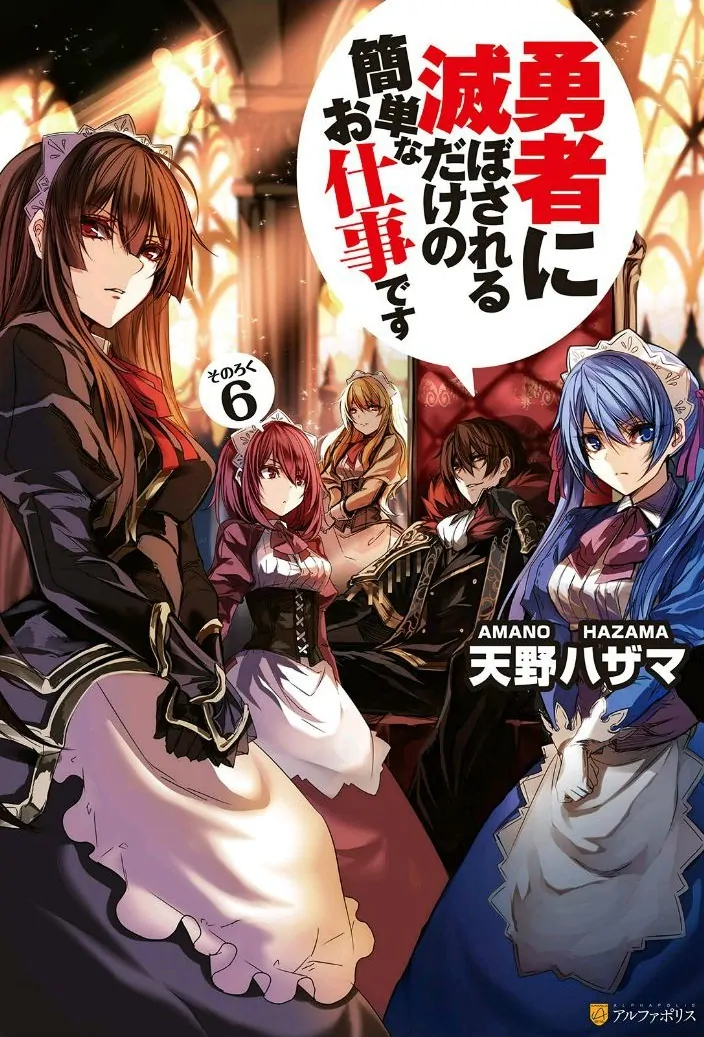
... Read More
Oh man, the situational irony here is just *delicious*. So here we have Shion — the newly minted Demon King Vermudol — being dragged onto stage to give a speech representing the Jiol Forest Kingdom at this whole hero-training academy thing, while the staff member beside him is prattling on about how important it is to fight the demon threat, completely unaware that he's addressing the actual Demon King himself. I literally could not stop grinning. The narrative keeps stacking these layers of dramatic irony. Every time the staff says something like 'Thank goodness you're here, Shion-dono!' I just want to scream at the page because we know exactly who this person really is. And then there's the little detail about Nino kicking the Hero Ryuuya statue — what a casually explosive moment buried in plain sight! But what really hooked me about the plot structure here is the parallel introductions. We get Kain on one side, sizing up Shion as a potential rival or ally, and Nefas on the other side, fixating on Nino like she's some unattainable prize. These are both seeds being planted for future conflict, and I can already feel the tension coiling. The plot isn't just moving forward — it's setting traps. The part where Shion trades his appearance fee for archive access is such a smart narrative move too. It tells us everything about his priorities without any exposition dump. He's not here for glory or money; he's here to gather information. That's the kind of quiet character moment that makes you trust the author's plotting.
... Read More
There's this one line that kept looping in my head after I finished the Orel and Vermudol conversation: "Leadership by means of systematization. The power of a group. That was originally the wisdom of Humans." Think about that for a second. The entire story so far has been building this contrast between the Mazoku's fierce individualism and the Human world's collective structures. The previous Demon King Gramfia didn't just lose to a Hero — he lost because his approach was fundamentally flawed. He raided and conquered but never built. He imported everything instead of developing systems that could sustain his rule. Vermudol changing that isn't just a plot convenience, it's the novel's thesis statement. The creation of the Guild system, the economic reforms, the employer-employee relationships replacing brute-force extraction — these are all acts of civilization-building disguised as worldbuilding. The chapter on Production and Consumption reads like an economics textbook until you realize every paragraph is also about how a Demon King is learning to govern instead of terrorize. And then there's the Demon God in her infinite darkness, dancing alone, saying "I wonder how long it's been since I've had this much fun?" What is that? That's the universe itself acknowledging that the game has changed. Good versus evil doesn't apply to her — she affirms all contradictions. She's not on anyone's team. She's the author's proxy, watching the board shift with delight. The symbolism is thick here: even the divine forces are surprised by what the Mazoku are becoming.

Leave a comment

You must be logged in to leave comments. or
