Simple Job of Only Perishing to the Hero - Reviews

Simple Job of Only Perishing to the Hero
+Add to Custom List
Sort
Add review
... Read More
Can we just take a moment for Nino's dialogue? The girl says things like 'Un. Nino did her best.' and 'Shion-sama, let us go quickly.' and I am OBSESSED. She's this insanely powerful Maid Knight who speaks in this deadpan, almost childlike way and it's so endearing. Versus Vermudol—when he's in disguise as Shion, his dialogue shifts. He's polite, measured, using honorifics and formal phrasing. But you can still sense the king underneath, especially in internal moments. Like when he's thinking about how troublesome being called noble is. That's such a good character beat because it shows he's genuinely humble despite being literally the most powerful person in the room. Raynold's voice was also fun. 'Oi, Shion, you've come at just the right time!' — instant hype man energy. He's the guy who'd be cheering from the sidelines while the actual powerhouses do the work. The crowd scene at the guild was great dialogue too. So many overlapping voices—people begging, flirting, recruiting—all jumbled together. It captured that chaotic adventurer guild energy perfectly. And the guild worker's dog ears twitching while she delivers the numbers deadpan? That's the kind of small comedic beat that makes dialogue feel alive. I also love how Vermudol internally monologues about the false accusations of Demon King revival. His voice when he's thinking is very different from when he's performing as Shion. That duality is his whole thing now and it's written really well.
... Read More
Okay so I just finished these chapters and my brain is still spinning from Nino's absolute murder run through the western dungeons. Like, the way Vermudol casually says he's “taken measures” for the west and then Nino just goes off—no exposition, no dramatic buildup, just pure efficiency—it's terrifying in the best way. The plot's clearly setting up this new world order where the Demon King's power isn't just brute force but *systematic* eradication of those who hide. Remember how Orel sighed about the western Majin staying in their caves? And then Nino shows up like a green-eyed reaper and goes “In the name of Demon King Vermudol, Nino will destroy everyone here.” CHILL. The way she doesn't even rage, doesn't monologue—just cuts, moves on, “too busy”—it's chilling. And that transition from Meshram's throne room to the Moul Labyrinth? Seamless. One minute she's decapitating a self-proclaimed Demon King, next she's walking through ivy-choked tunnels like she's on a Tuesday errand. The author's pacing the revelations so well: we don't get a big battle, we get the *aftermath* of fear already瓦解. The plot's not about whether Nino wins—it's about watching a whole region realize too late what “cleaning” really means.
... Read More
Okay so I need to just sit with this for a minute. The scene where Sancreed puts his consciousness into the Reveal Crystal and it shows his status... Name: Sancreed. Race: Majin. Occupation: Hero. I literally gasped out loud. The previous Demon King Gramfia never even considered this possibility because he was stuck in this rigid way of thinking that Heroes are exclusively Human. But Vermudol, this irregular being sent by the Demon God, was able to break that assumption and actually create a Majin Hero. That is such a clean narrative beat — the story is telling us that the old Demon King's downfall wasn't just about power, it was about his inability to think outside the box. And now we've got this SSS-rank Majin Hero walking around with the Demon God's Divine Protection skill, which is honestly the most chaotic combo possible. The four Cardinal Generals' reactions sell it perfectly too — Vermudol's dark smile while they're visibly shaken. This isn't just a power fantasy flex, it's a statement. The Mazoku's hope has a face now, and it looks nothing like what anyone expected. Also can we talk about how the news spreads and the Dark Continent reacts with genuine joy? That worldbuilding-through-reaction moment hit harder than I expected.
... Read More
The pacing in these chapters is wild. You start with a goblin subjugation quest—small scale, low stakes, six silver coins—and by the end you're sitting with 'what ARE the Alva and who's really responsible for starting the last war?' That is a massive escalation and honestly it works because the author never rushes it. Each revelation comes as a natural tangent from the present moment. Lunch leads to food/culture thoughts, which leads to why the Dark Continent is different, which leads to why their plans aren't working, which leads to the war investigation, which leads to the Alva mystery. It's a chain reaction of curiosity, not a dump of exposition. The entrance ceremony section also does something clever with structure—it cuts from Shion's internal monologue directly into the ceremony itself, and the school staff member's request creates this mini-cliffhanger: 'there were various things had happened and... [cuts off]' We don't get the full reason until later, which keeps you turning pages. The bell tolling at noon is a nice touch too—grounds the epic questions in a simple, human moment. But my only mild complaint? The Zekwell setup felt a little convenient. Famous adventurer from another country who was apparently supposed to give the speech but then... stuff happened? We'll see how that resolves.
... Read More
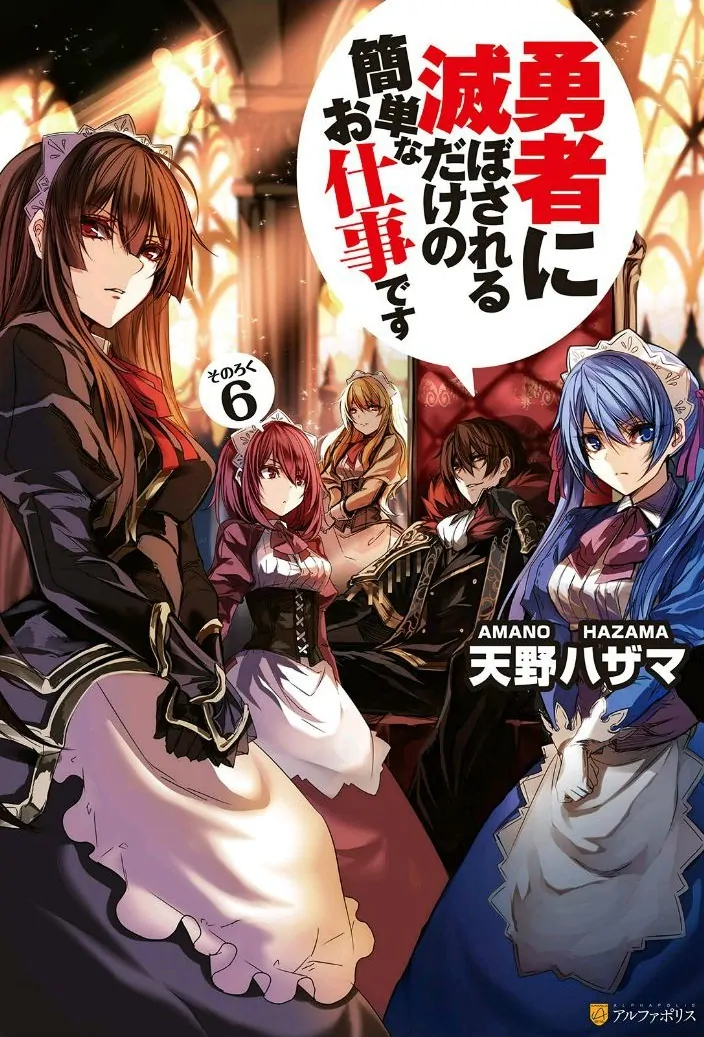
I NEED to talk about Aulokk because WOW. This wolf Beastia goes from bravely confronting Nino to literally crawling at her feet begging to be her ‘acquaintance' and I am SOFT. Like, sure, he's ridiculous—orange juice for his fur?! Who does that?!—but there's something painfully honest about his desperation. He sees her power and instead of fearing her, he wants to *belong*. And Nino? She's so flat-out dismissive it's almost funny. “Don't wanna.” “Won't.” “Don't know.” But then she lets him stay? Just as a servant? It's not romance, obviously, but there's this weird emotional transaction happening—he offers loyalty, she offers non-destruction, and somehow that's enough for him. Meanwhile, the other Beastia just freeze and follow along. It's kind of touching in a broken way. The text says Aulokk “shouted as if he were delirious with fever” and honestly? Same energy. He's not in love, he's in *worship*. And Nino's response—kicking his chin, stepping on him, then finally saying “Well, that's fine”—it's not cruelty, it's just… indifferent acceptance. She's not cruel, she's just done. Done with nonsense, done with weaklings. And Aulokk? He's found his place. Poor, ridiculous, fur-grooming Aulokk. I can't help but feel for him, even as he gets kicked.
... Read More
There are so many symbols layered in these chapters that I want to unpack. Let me start with the stone club—the most important object in this entire passage. Agur receives a weapon carved from building stones, white and hard and heavy, and it transforms him from 'the strong one who boasts' into 'the Village Chief.' But here's the thing: Vermudol gives it to him knowing full well Agur couldn't possibly beat Ichika with it. The club isn't about combat power. It's about STATUS. It's about saying "you matter now." That's the real magic—not the fire dragon, not the magic eyes, but the act of elevating someone through a gift. The castle itself is a symbol that shifts meaning across these chapters. It starts as RUINS, then becomes a home with a throne room and a cellar, then becomes a TARGET. Orel literally kicks through the ceiling because the barrier isn't ready yet. Every layer of defense that's missing represents how young this Demon King's rule actually is. Vermudol sits on a throne that was built by someone else, in a castle that was built by someone else, wearing a title that belongs to someone else. And yet—he claims it. That's the central theme, isn't it? Legitimacy through action, not through bloodline or history. The fire dragon Vermudol creates is particularly loaded. It's described as a "tremendous density" of fire that resembles a DRAGON—a creature of legend, of power, of the Demon King's legacy. He doesn't know the theory behind it. He can't explain it. But he IMAGINES it, and the image becomes real. That's the whole story compressed into one spell: belief precedes understanding, and understanding can come later. Ichika knows this. That's why she said she would guide him. She's not teaching him facts—she's teaching him to TRUST his own imagination.
... Read More
There's something really poignant about a Demon King who has to pretend to be human to save his people from invasion. He's literally wearing a disguise named 'Shion' while the entire continent thinks monsters are the enemy. The irony is thick enough to cut with a knife. And the system itself—levels, ranks, the Reveal Crystal—this whole structure of quantifying power is fascinating. It reduces everything to numbers. SSS rank, SS rank, level 238, level 487. But the story keeps reminding us that numbers don't tell the whole story. Vermudol could crush everyone here if he wanted to, but he chooses restraint. Nino could slaughter that Alva in seconds (which she basically does), but she follows his lead. The guild worker's twitching dog ears as a Beastman—small detail but it represents the whole world where different races coexist uneasily. The four human kingdoms pretend there's perpetual peace, but we know the Mazoku are everywhere, uncontrolled, forming their own ecosystems. This isn't peace, it's a fragile truce held together by mutual fear. Vermudol's entire mission is built on a lie, but the lie produces genuine good results. He's subjugating monsters to protect humans who would kill him on sight. That's... honestly kind of beautiful in a tragic way. He's the hero nobody knows about, saving people who would never thank him.
... Read More
There's a recurring symbol in these early chapters that I can't stop thinking about: the idea of abdication. The Demon God "abdicated its right and responsibility to establish its form." It chose to be nothing so it could be everything. Then Vermudol's soul was described as a porcelain marionette — something that has no will of its own, shaped by hands that aren't its own. And now he's been given a throne, a title, a kingdom that doesn't exist anymore. The parallel is inescapable. Both beings chose (or were forced into) forms they didn't originally have. The Demon God gave up its name to become something beyond naming. Vermudol gave up his humanity to become a Demon King. Neither of them asked for this, and neither of them is sure what to do with it. But then there's the potato. The most mundane, grounding, EARTHLY object in the entire narrative. While the prologue deals with cosmic forces and theological absolution, Ichika is out there tilling soil and growing root vegetables. Salt from the sea. Soup in a stone bowl. These are the rituals of someone building something from nothing — which is, fundamentally, what the Demon King is doing. The theme that's emerging: identity isn't something you inherit or discover. It's something you BUILD. Vermudol wasn't always a Demon King. He was Ryou, a man who lived without choosing anything. Now he's being forced to choose — first whether to invade a goblin village, then what kind of Demon King he wants to be. The porcelain doll is cracking. And inside that crack, something new is growing. Like a potato. Beneath dark soil. In a broken castle. With no budget and no future and absolutely no reason to believe it'll work.
... Read More
The opening scene of the prologue — infinite darkness, a floating throne, a being called the Demon God whose true form is literally described as something that "had abdicated even its name" — this is some Next Level atmosphere building right out of the gate. The prose has this weight to it, like every sentence is pressing down on you. "It wasn't like it had a true form. It became like this after abdicating its right and responsibility to establish its form." I mean... what even IS that sentence. It's describing absolute power through negation. You don't know what it is because it chose not to be defined. That's either really pretentious or really brilliant. I'm leaning toward brilliant. Then you cut to Volume 1 Chapter 1 and the contrast is SLAP YOU IN THE FACE level comedy. The Demon King's throne room is now a crumbling ruin with no ceiling, an overcast sky hanging over broken pillars, and Ichika is farming POTATOES in a corner of what used to be magnificent gardens. "What could be seen from the collapsed wall was, the scenery of the Dark Continent. He could tell that this was a land unsuitable for people to live in." And yet. And YET. There's something oddly poetic about a Demon King who wakes up in a broken castle with no army, no budget, and a maid knight who makes soup from potatoes she grew herself. It's this beautiful juxtaposition of the epic fantasy trappings — status screens, magic, demon lords — against the most brutally mundane reality of starting from absolutely zero. The world feels alive precisely BECAUSE it's allowed to be this ragged and real. This isn't a freshly carved kingdom; it's a corpse that someone's trying to prop back up.
... Read More
Okay the Moroul subplot is deceptively important and I almost skimmed past it but then I went back and reread the whole Holy Silver reveal and wow. So Moroul finds a deposit of Holy Silver — the legendary metal that belongs to the Human side, supposedly impossible to produce in the Dark Continent — and the geological explanation doesn't add up. He surveys a mountain one night, goes to sleep, and wakes up to completely different geological features the next morning. His exact thought: "Is this also Demon King-sama's power?" And then he deliberately dismisses it. "It was most likely pointless to think about it, and probably no one would believe him." That is such a brilliant piece of storytelling because it does three things at once. It hints that Vermudol has abilities beyond what we've seen — possibly reality-warping or world-altering powers tied to his Demon God connection. It shows how the common Mazoku processes extraordinary events: not with awe, but with pragmatic survival instinct. And it raises the stakes for the Human side because if the Dark Continent now produces Holy Silver, the Hero's party loses their material advantage. The chapter then pivots to Vermudol deciding to leave the country because "there are seeds of danger outside" — meaning the Human continent will eventually come knocking now that the Dark Continent is prospering. The plot is threading these small discoveries into a larger warning. The Human side is about to face a Dark Continent that isn't just surviving, it's industrializing, and that changes the entire conflict equation. This is the setup for a war that neither side can avoid anymore.
... Read More
The stakes in these chapters are layered in a way that keeps you tense without ever feeling melodramatic. On the surface level, there's the Hero invasion looming over everything. The previous Demon King lost. The Mazoku are fragmented. Orel himself admits that without the Hero threat, solidarity is impossible, and even WITH the threat, half the faction leaders will hide in their dungeons and refuse to cooperate. The external conflict is clear: survive the Hero or die trying. But the REAL conflict is internal to the Mazoku world. Vermudol is trying to reform a society built on pride and individualism into something that can act collectively. His method is to force them to fight each other until only the worthy remain. That's the conflict—he's pitting every Mazoku lord against every other Mazoku lord, and the casualties are acceptable collateral. Orel recognizes this and accepts it. That's the moral conflict underlying everything. Then there's the personal stakes. Orel spent his whole life being the top dog in his own way, running from Gramfia when things got bad, picking fights because that's who he is. Now he's sitting tied up, listening to a man who could crush him with a thought, and choosing to swear allegiance. What does he stand to lose? His independence. His reputation among his peers—who will see him as a traitor or a fool? What does he stand to gain? A chance to actually matter in a world that's heading toward annihilation. The side conflicts—the battles between Fainell and whoever she's fighting, Altejio piling up corpses in the north, the Ancient Golems clashing in the south—these aren't just action set pieces. They're Vermudol's plan unfolding in real time. Every fight is a pawn moving. The tension comes from knowing that while Orel and Vermudol are having this calm conversation, violence is erupting across the continent because of words spoken in this room.
... Read More
"Agur is Agur. Because Agur is Agur." I cannot stop laughing at this. The author clearly put thought into making the Goblins' dialogue feel authentically non-human, and it's hilarious. They literally don't have first-person pronouns, so when Ichika asks "who is that Agur?" Agur just points at himself going "A, Agur is Agur" like a broken record. Vermudol figuring out that they have no words for "I" or "me" is such a small detail but it immediately tells you everything about their level of development. Ichika's voice is fascinating because it's SO precise. Every line she speaks is calibrated—whether she's commanding Goblins or training Vermudol or crushing Orel. "From here on, the honour of being given Demon King Vermudol-sama's words will be bestowed upon you all." That's not just dialogue, that's PERFORMED authority. She's speaking in a register that commands absolute attention. But then she switches instantly to casual shorthand with Vermudol: "Yosh, in that case…" and her teasing him about the stone club. The code-switching between "formal Demon King's emissary" and "girl who just wants her boss to succeed" is so natural it's invisible. Vermudol's internal voice versus his spoken words is where the comedy lives. He's thinking elaborate philosophical thoughts about magical power while saying things like "……Found it" like he just located his keys. And his fire dragon? "Attack Fire"—he literally just named the spell and it came out. The contrast between how impressive the fire looks and how clueless he is about the mechanics is genuinely funny. Orel's dialogue is the perfect counterpoint. Rough, confident, slightly dismissive: "Fumu?" and "Does you like curses or something?" His broken grammar ("Does you") is a conscious choice that makes him feel like a different species of speaker. By the time he's tied up looking down on Vermudol with that cold assessment, you can hear the disrespect dripping from every word. The author gives each character a distinct linguistic fingerprint and I respect it.

Leave a comment

You must be logged in to leave comments. or
