Summary

... Read More

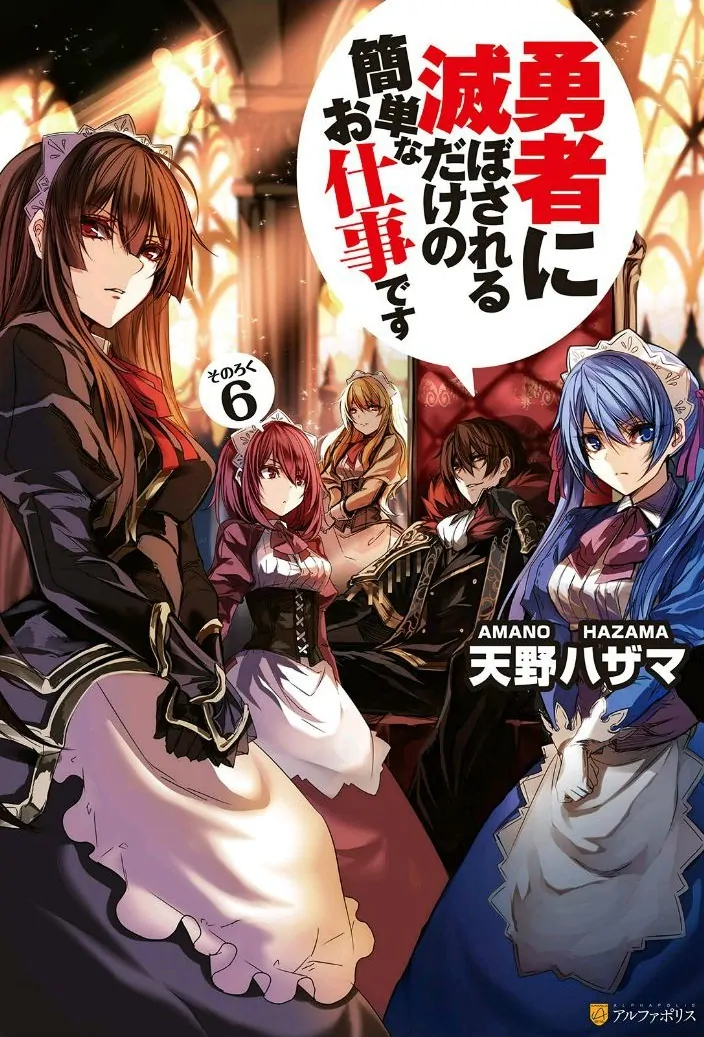
Nakajima Ryou was a twenty-nine-year-old human male who lived a life devoid of ambition or significant impact. After dying from a heart attack, his soul was summoned before the Demon God, an entity existing in infinite darkness who judged Ryou’s existence as worthless due to his passive and indecisive nature. The Demon God informed him of a vacancy for the position of Demon King in another world, a role that traditionally ends with the Demon King’s death at the hands of a Hero. Rather than simply sending a soul, the Demon God shattered Ryou’s spirit and reconstructed him into a new being named Vermudol, granting him a youthful appearance with black hair and red eyes suitable for the rank. This process erased Ryou’s original consciousness, leaving only the memories and knowledge necessary to function as the Demon King.

Vermudol awoke on a throne within the ruins of the Demon King’s Castle in the Dark Continent of the world Remfilia. He was immediately approached by Ichika, a Majin classified as a Maid Knight who served as his sole subordinate. Ichika revealed that the previous Demon King had perished approximately one hundred and twenty years prior, after which the Demon King Army collapsed into infighting. Consequently, the castle was in a state of severe disrepair, the treasury was empty, and all resources had been looted by the Hero party. Ichika managed the meager household finances, which consisted primarily of potatoes she grew in a small garden and salt she collected from the sea. Despite the dire economic and military situation, Ichika maintained unwavering loyalty to Vermudol, whom she recognized as a unique existence created directly by the Demon God.

Recognizing the immediate threat posed by the Hero, Vermudol understood that he needed to build an army quickly. Ichika proposed seizing a nearby Goblin colony as a starting point. Vermudol and Ichika traveled to the colony, where Ichika effortlessly defeated the Goblin Chief using her 【Magic Eyes of Coercion】 and overwhelming physical strength. Vermudol then appointed Agur, a strong but unintelligent Goblin, as the new chief and ordered him to bring the colony under the Demon King’s direct control. This action established the foundation of Vermudol’s rule, though he soon realized that Goblins lacked the intelligence and capability to serve as effective military units. He required stronger subordinates and began training in magic under Ichika’s guidance, discovering an innate ability to create Mazoku through magical formations in the castle’s basement.

News of the Demon King’s revival spread through rumors carried by the Goblins, attracting the attention of various Mazoku. Orel, a Rank B Majin and Magic Warrior, arrived at the castle to investigate. Upon learning of Vermudol’s plan to divide the Dark Continent into four regions ruled by commanders, Orel expressed concern that the prideful Mazoku would engage in civil war. Vermudol, however, intended to use this conflict to cull the weak and unify the continent under his authority. Orel, recognizing the strategic brilliance behind the chaos, swore his allegiance to Vermudol. Simultaneously, the rumor provoked Fainell, a Rank AA Majin known as the Thunder Blade, who attacked Orel, believing he had stolen her position. Vermudol’s plan successfully manipulated the rivalries among the Mazoku, forcing them into battles that weakened potential threats while consolidating his influence.

In the western region, where self-proclaimed Demon Kings had taken refuge in their dungeons, Vermudol deployed Nino, another Maid Knight created by the Demon God. Nino systematically eliminated the false rulers, including Meshram and Moul, using her dual curved swords and superior 【Magic Eyes of Greenery】. During her campaign, she encountered Aulokk, a Black Wolf Beastia who, after failing to win her affection, pledged loyalty to her and recruited twelve other Beastia to serve the Demon King. Nino’s actions secured the west for Vermudol, removing rivals and adding capable troops to his army. The competitive dynamic between Ichika and Nino further highlighted the distinct roles each Maid Knight played in supporting Vermudol’s rise.

As the eastern, southern, and northern representatives arrived at the ruined castle, Vermudol faced a test of his legitimacy. Altejio, a Rank S Magic Swordsman, demanded proof that Vermudol possessed the inherent marks of a true Demon King. Using a Reveal Crystal, Altejio sought to verify Vermudol’s status. Vermudol’s ability to confirm Status without artifacts, combined with his growing military power and the submission of key Mazoku leaders, began to solidify his position. The narrative sets the stage for a new era in the Dark Continent, where Vermudol must navigate the political fragmentation of the Mazoku and prepare for the inevitable confrontation with the Hero, all while managing the complex dynamics of his newly formed court.

Latest Release
DateGroupRelease
2026-10-01light novels translations c375
2026-10-01light novels translations c374
2026-10-01light novels translations c373
2026-10-01light novels translations c372
2026-10-01light novels translations c371
2026-10-01light novels translations c370
2026-10-01light novels translations c369
2026-10-01light novels translations c368
2026-10-01light novels translations c367
2026-10-01light novels translations c366
2026-10-01light novels translations c365
2026-10-01light novels translations c364

Community Reviews

Rating(4.1 / 5.0, 41votes)
5 stars
19(46%)
4 stars
7(17%)
3 stars
15(37%)
2 stars
0(0%)
1 stars
0(0%)

Popular reviews

... Read More
You know that moment when a piece of dialogue is so perfectly in character that it just lives in your head forever? For me, it's Nino saying 'You are, just a Human. Bye bye.' I have replayed this scene approximately forty-seven times since finishing it. The way she constructs that sentence is pure Nino — the deliberate grammatical simplicity, the flat affect, the casual dismissal wrapped in what should be an insult but lands as something far more devastating because she genuinely doesn't see him as worth the effort of escalation. It's not angry. It's not dramatic. It's just... true. From her perspective, anyway. She's the Demon King's close aide. Humans are literally the enemy species. Calling him 'just a human' isn't an insult to her — it's a factual observation delivered with zero malice, which somehow makes it infinitely more insulting. And the narrative voice around the dialogue is doing such clever work too. Look at how Shion's internal monologue contrasts with his spoken words. Out loud, he's the humble adventuring hero giving a modest speech. In his head? 'I wonder what would happen if I were to say "I am the Demon King Vermudol, you know~" right here.' That little tilde at the end? The theatrical flourish? That is SO him. The gap between what he says and what he thinks is where the entire comedy of this scene lives. Even minor characters have distinct voices. The staff member's nervous patter ('Th, that's right, there isn't anymore time!') vs. Nefas's clipped aristocratic commands vs. Kain's measured, analytical observations — you could identify any of them blind. The author also uses silence as dialogue. Nino's 'Bye bye' twice — once dismissing Nefas, once ending the whole exchange. No explanation, no justification, just... walk away. That's character development through what's NOT said.
... Read More
The pacing in these chapters is something I can't stop thinking about. It starts slow and intimate—Orel tied up, Vermudol looking down at him, a conversation that could happen between any two people in any genre. Then it EXPLODES outward. Chapter 7 is basically one long scene, grounded in a single room. The Demon King's Castle. Vermudol eating potato soup. Orel getting kicked by a Magic Operated Armor. The dialogue carries it. We learn everything we need to about Vermudol's plan, Orel's character, and the state of the world through conversation. It's remarkably efficient. The chapter ends with Orel swearing allegiance—a huge moment—and then we CUT. Chapter 8 immediately widens the lens. North. East. South. We get vignettes of Vermudol's plan in action across the Dark Continent. Altejio on his mountain of corpses. Fainell celebrating a victory she thinks is hers. Ancient Golems fighting. This structural choice is genius because it shows the CONSEQUENCES of the conversation we just read without a single line of exposition. The pacing accelerates from intimate dialogue to sweeping montage, and it works because the first chapter earned it. The transitions are sharp but logical. We go from 'this day Orel swore allegiance' to 'several weeks later a rumor spread'—time skip that feels natural because the story has already established its scope. Then we cut to three different locations simultaneously, each with its own mini-conflict, and the reader understands: this is what Vermudol's world-building looks like from the outside. People are dying, fighting, believing the rumor, and none of them know it's a trap. What I love most is that the author never rushes the emotional beats. Orel's decision to swear allegiance gets its own moment, its own weight. But the external plot keeps moving. The pacing alternates between concentrated intensity and broad chaos, and that rhythm itself mirrors Vermudol's strategy—control the narrative, then let the world burn around you.
... Read More
I need to geek out about the writing voice here because it's genuinely distinctive. The dialogue feels SO natural like these are actual people talking, not characters serving the plot. Vermudol's voice is my favorite. He says things like '…It'd be nice if it's something that I can answer though' and 'For the time being, I was thinking of trying to unify the Dark Continent. Would you have any good ideas for that?' This is a DEMON KING asking for advice like he's brainstorming with a colleague. The casualness is deliberate and it defines his entire character. He's not performing majesty—he genuinely doesn't see why he needs to. That's what makes him imposing. Orel's voice is completely different. 'So it was you guys' doing dammittttt!' 'Demon King-sama, can I punch you in the face?' 'That's not the problem, Demon King-sama.' He's chaotic, emotional, loud, and brutally honest. His dialogue crackles. You can hear him stomping his foot, you can see the bloodlust in his eyes. And the fact that Vermudol just sits there drinking hot water like 'If it's about tea, I won't put any out. We don't have tea leaves after all'—that contrast is COMEDY GOLD. The narrative voice also deserves mention. It's third-person but deeply embedded in Orel's perspective most of the time, which means we get his internal commentary mixed with external observation. Lines like 'This day—the Majin Orel, swore his allegiance to Demon King Vermudol' have this almost mythic weight to them, like the narrator is stepping back to mark a historical moment. The tone shifts between intimate and epic in ways that feel earned, not forced.
... Read More
I need to stop and just appreciate one moment. When Shion and Nino walk out of the Adventurer's Guild and Shion looks up at the sky—'A sky that couldn't be seen in the always overcast Dark Continent. Even bluer than the one he should have seen even in his previous world.' That right there. That is cinema. You can literally see the camera tilt up, hear the ambient street noise fade slightly, just this one beat of wonder from a character who has spent his entire existence under grey skies. And then immediately after—Nino's stomach growls. Perfect tonal whiplash. The worldbuilding around food is also incredible. The whole Sora Bird explanation—livestock that doesn't exist in the Dark Continent because the weakest animals there can knee-cap goblins without blinking—tells you everything about why their ecosystem and culture diverged. No draft animals, no animal husbandry, no carriages. Then there's Ole, this fruit-milk drink that's monopolized by some big company because of spoilage issues. The world just keeps layering. And the school entrance ceremony description—nobles showing off, commoners hoping to climb up, the statue of Hero Ryuuya at the gate, the king potentially attending—all of it paints this living, breathing kingdom where every brick has history. I'm genuinely obsessed with how tactile this place feels.
... Read More
I came for the goblin quests and stayed for the fact that these two people just... eat skewers together under a blue sky and it's somehow the most tender thing I've read all year. There's no confessional dialogue, no dramatic hand-holding, just Nino complaining about potato soup and Shion thinking about whether livestock farming could work back home. That's intimacy. That's two people who have built something real between them, and the author trusts us to feel it without announcing 'this is a sweet moment.' But then there's the loneliness underneath it all. Shion is technically the Demon King, ruler of the Dark Continent, and he's walking around Human territory buying apple juice from street carts and trying to figure out how to access a library. He has no connections, no allies, no trust established anywhere. The whole weight of his peoples' future rests on his shoulders and he can barely get past a front desk. The scene where Nino drags him out of the guild while he's being hit on by the staff member—it's funny, yes, but it's also heartbreaking when you think about it. Shion can't just... have normal relationships. Every interaction is calculated, monitored, dangerous. So Nino doing the social maneuvering for him isn't just comedic relief, it's survival. And the fact that she does it without making it a big deal? That's love in this story's language. Simple, practical, protective. End of discussion.
... Read More
So the pacing here is honestly really interesting and I want to talk about it because it does something I didn't expect. Chapter 4 is basically a slow burn political-building episode—goblins submit, Vermudol gives Agur a club, they appoint a new Village Chief, discuss the problem of not having enough subordinates. It feels almost cozy, right? Like you're settling into a slice-of-life demon lord sim game. And then BOOM, Chapter 5 drops a B-rank Majin through the roof like a red-headed missile. The fireball Vermudol creates is actually a perfect pacing hinge. It's beautiful, it's powerful, and then Ichika explicitly says "there are too many gaps in the current Demon King's Castle" and immediately Orel shows up. The author is telling us: congratulations, you've been building an empire, now someone who actually cares about these things has noticed. That transition from "let's make loyal subordinates" to "someone is attacking us during lunchtime" is chef's kiss. What really works is how the Orel fight is brief but devastating. He leaps in with maximum momentum, Ichika blocks it like it's nothing, and sends him flying with a shield bash. No drawn-out battle, no escalation—just pure dominance established in seconds. Then she steps on him. The fight doesn't drag. It's over before you can wonder if he might win. The chapter ending with Orel tied up, looking up at Vermudol and essentially judging him as unreliable? That's a cliffhanger that works on TWO levels. Physically, we're waiting to see what happens next. Emotionally, we're worried about Vermudol's confidence—Ichika won the fight but Orel saw Vermudol doing NOTHING. The tension between those two threads is what makes me want to immediately open Chapter 6.
See all reviews

Custom lists

See all custom Lists