When Two Alphas Meet, One’s an Omega - Reviews

When Two Alphas Meet, One’s an Omega
+Add to Custom List
Sort
Add review
... Read More
Okay, I need to talk about this scene because it absolutely wrecked me in the best way. Bai Han drops that line — "You are not qualified to take a stand in front of me" — and it's so cold, so condescending, and honestly? Perfect. Bai Han is this entire vibe: ageless, powerful, intimidating, looks thirty but clearly carries decades of authority on his shoulders. And Jian Songyi? He's right there across the table, a young Omega trying not to visibly sweat through his shirt. But then Jian Songyi does THIS. He literally says "I'll take care of him. I'll be his master." And Bai Huai — oh my god, Bai Huai just SMILES and says "Okay then I'll have to eat more." This is the most chaotic, beautiful moment of protectiveness I've ever read. Jian Songyi isn't doing it for drama. He's doing it because watching Bai Han reduce his boyfriend to a financial footnote broke something in him, and he's choosing to reframe the entire power dynamic in one sentence. What's fascinating is that Bai Han is actually HAPPENED by this. "Made the soft rice extra delicious" — the narration literally says this. Bai Han wanted to see if Jian Songyi would stand by Bai Huai, and he did. Not just stand by him, but throw down a gauntlet so audacious it's almost funny. This is the beginning of a genuinely complex father-in-law dynamic and I am HERE for it. Also, the whole thing about Jian Songyi's past — the illegal Omega testing organized by his mother's friend — that's such a rich layer. His entire life trajectory was altered by garbage adults making decisions for him, and yet here he is, making his own choice to protect someone else. There's a beautiful symmetry there that I think the author is building toward.
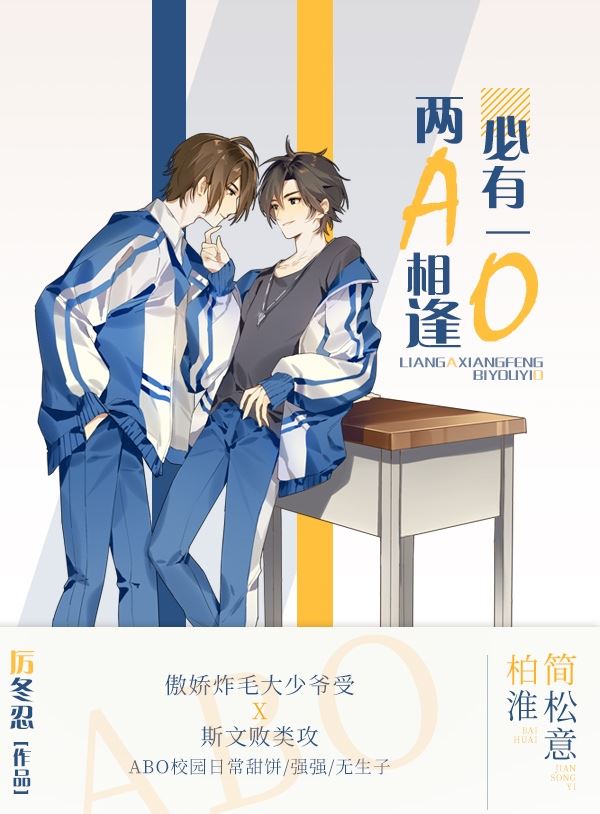
... Read More
Let's talk about the contract between these two. It's written in glances and withheld words. Jian Songyi's panic is the most revealing character moment here. He doesn't just apologize; he offers his own body as a bargaining chip ('Why don't you bite me?'). This isn't flirtation—it's desperation. He'd rather be physically marked than emotionally severed. And Bai Huai's response? Dismissive on the surface, but the detail about showering first reveals a mind already racing ahead. He's not rejecting the offer; he's postponing it. That's the core of their dynamic: a perpetual, careful negotiation where both are afraid to be the first to name what they want. Their relationship exists in a third space, somewhere between 'brothers' and something else. Watch how they interact with others. Jian Songyi softens for Xu Jiaxing, allowing himself to be teased, showing a warmth he denies Bai Huai. Bai Huai, meanwhile, engages in playful cruelty with Jian Songyi ('abdominal muscles are just painted') that's clearly a proxy for more intimate banter. The true depth of their bond is measured by what they don't do: they never touch, never definitively label anything. Yet every action is a conversation. When Jian Songyi disassembles the lunchbox layer by layer, it's a physical manifestation of his attempt to understand their situation. And when Bai Huai imagines a future kiss, then imagines comforting a flustered Jian Songyi, it's not just romantic wish-fulfillment; it's a blueprint for how he believes their relationship *should* work—gentle, patient, born from mutual care rather than panic. They are each other's most important witness.
... Read More
That line. Just. fucking. line. 'Just so you know, I am only teasing you. Passwords such as 0101, 0000, and 1111 are commonly used in international practice.' Read it again. READ IT. This is a man who just got caught setting his phone password to his crush's birthday and he is standing there in the classroom, deadpan, explaining it away like some kind of tech support bot. But then the chapter cuts to him leaning against a wall, left hand pressed to his chest, heart hammering like he just ran a marathon. He blurts out the excuse so easily and then immediately regrets it because his body won't stop reacting. The physical description of his panic is almost comical—he wasn't sure why he was so nervous, he forgot to breathe, he felt like he'd died and been resurrected. Meanwhile Jian Songyi is standing there confused and angry and the reader is just sitting here screaming because BOTH OF THEM ARE OBVIOUSLY IN LOVE AND THEY JUST NEED TO FIGURE IT OUT. The emotional whiplash in these four chapters is insane.
... Read More
That bathroom partition—the thin wall between two stalls—is the most important symbol in this entire chapter. It separates Jian Songyi and Bai Huai physically but not emotionally. They communicate THROUGH it, reach UNDER it, pass inhibitor bottles over it. The partition represents everything about their relationship: close yet divided, connected yet hidden, touching yet separated by the expectations of their world. And then Bai Huai breaks that partition entirely by stepping INTO Jian Songyi's space once Li Ting leaves, locking the door from the inside—a literal and figurative closing off of the outside world. The pheromones themselves are symbolic too. They're invisible forces that dictate behavior, create hierarchy, trigger instinct. Li Ting's inducement pheromone represents violation—the Alpha world's assumption that Omegas exist to be诱引, to be claimed, to respond whether they want to or not. But Jian Songyi RESISTS it. His body reacts (flushed, weak legs), but his will holds. That resistance is the chapter's thematic heartbeat: an omega asserting autonomy in a world designed to strip it away. Even the exam outside—the structured, graded, controlled environment—mirrors the social controls placed on differentiated beings. Bai Huai rejecting the exam ('It's too hard') mirrors his rejection of the rules that say he should hide his connection to Jian Songyi. The 'king's excrement' joke? A subversion of hierarchy—who says an omega's waste is worthless?
... Read More
That scene where Jian Songyi remembers twelve years ago. Twelve YEARS ago when Bai Huai was just a kid and had to pretend to be an adult on the phone with his father. 'It doesn't matter if you don't come back. Little Huai can eat cake alone.' AND THEN when his dad says he's coming home, he can't hold it together anymore and just spins around in triumphant circles holding onto Songyi. I literally had to pause the book. The fact that the dad never made it back — left the kid to protect other children — that hits different. It's not just tragic, it's heroic in the worst possible way. And then Songyi's response as a kid: 'I'll be your father from now on. Feel free to call me that whenever.' Okay that's either the sweetest thing ever or deeply inconvenient depending on how you look at it but either way it shows exactly what their bond is built on. Twelve years of unspoken promises. And now here they are, approaching the 18th birthday, the anniversary, all these weighty moments converging. My heart is NOT okay.
... Read More
You know what's wild about this chapter? The worldbuilding isn't in some exposition dump. It's in Mrs. Tang's kitchen. Think about it. She cooks this elaborate meal, sets the table with flowers and candles like they're at a fancy restaurant, takes hundreds of photos, curates exactly nine for social media, and then Jian Songyi has to quietly untangle the emotional minefield of his mother's WeChat moments. This is such a rich, specific cultural detail—the Chinese parent using food as love language while also being completely invested in performing family happiness online. The author doesn't need to explain the ABO hierarchy when they can show us a mother crying about her son's biology and then immediately pivoting to 'let me cook you dinner and take aesthetic photos.' The Scandinavian pheromone blocker is another worldbuilding gem dropped casually into dialogue. It tells us so much: there's international trade in Omega-suppressing products, there's a domestic market that doesn't have access to premium goods, and Jian Songyi's father had to go through significant effort to obtain it. That single detail builds an entire economic and social system around this biological classification. And the visual of Mrs. Tang fixing her makeup before taking photos? The performative aspect of her grief and joy? It's so specific, so real, so deeply observed. The author clearly understands that worldbuilding isn't about constructing fictional governments—it's about capturing the texture of daily life in a world that happens to operate on ABO dynamics. Every time someone mentions pheromones or blockers or 'registering' their second gender, it's a window into a society where biology determines destiny, and the characters are either complying with or rebelling against that system.
... Read More
The dialogue in this section is everything. Let me just start with the teacher conversation at the beginning—it's so naturally rambling that it feels like eavesdropping on actual people. The way they transition from talking about the blank paper to 'both of us are older single Alphas that should not eat young dog food' is SO genuinely funny. It establishes their voice instantly: these are middle-aged men who've given up but still appreciate drama. But the real gold is between Bai Huai and Jian Songyi. Their exchanges are so sharp and character-revealing. Take this: Jian Songyi says 'This is my first time as an Omega. I have no experience.' And Bai Huai fires back 'Is this the second time I've been an Alpha?' Not defensive, not gentle—just dry, almost mocking. And then the whole 'good wife and mother' bit? Jian Songyi asking about Bai Huai's fantasies when he thought he was an Omega is such a specific kind of desperate deflection. He's changing the subject because he can't handle that HIS question is the embarrassing one. And Bai Huai's reply? 'Now that you know you are an Omega, do you want to be a good wife and mother?' Turned it around so cleanly. Jian Songyi's 'You are sexist. I despise you' is the verbal equivalent of him throwing a pillow at someone's head. The dialogue here does triple duty: it advances the plot, reveals character, and creates comedy. The narrative voice is equally distinctive—Bai Huai's internal monologue ('I am still too cautious and meticulous... Looking at Jian Songyi's reaction, it seems that he is not so resistant about me marking him') is so dryly self-aware it's almost painfully funny. The author's voice throughout is witty without being pretentious, and the tone swings between tender and ridiculous without ever feeling forced.
... Read More
"The single wild rose know nothing so he came to show him the forest full of snow." This metaphor is everywhere in these chapters and I can't stop thinking about it. Jian Songyi describes himself as this naive wild rose — isolated, unprotected, unaware — while Bai Huai is the entire pine forest, cold and vast and scheming. The forest doesn't destroy the rose; it envelops it. It surrounds it. It makes the rose part of its ecosystem whether the rose wants to admit it or not. And the question of possession runs through everything like a live wire. Jian Songyi refuses to be marked because marking equals possession, and possession equals losing himself. But then he imagines Bai Huai possessed by a future wife and realizes how much that thought hurts. Which means he's already being possessed — not by a bite mark, but by presence. Bai Huai is already inside him, already woven into his sense of self, already irreplaceable. The dream murmurs add another layer. "I'll come back" implies absence. Implies leaving. But Bai Huai hasn't left — he's right THERE in the bed. So who is he missing? Who has he left? Or is this about something deeper — a version of their relationship that exists in some other timeline, some other life where things were simpler, where he could just say what he means without the omegaverse complications? The vagueness is intentional. We don't know what Bai Huai dreams about, and that mystery is part of the tragedy. There's also the recurring image of restraint — Jian Songyi restraining himself from reacting, from admitting feelings, from crossing any line. And Bai Huai restraining himself from taking advantage, from pushing further than the bite. Both of them are holding back with everything they have. But the body doesn't lie. The bite happened anyway. The sleep words slipped out anyway. Restraint is just delayed honesty.
... Read More
The stakes in this chapter are deceptively simple on paper—finish a training exercise, don't break discipline, maintain team cohesion. But the real conflict is internal, and it's eating Jian Songyi alive. He's lying to himself so hard I'm surprised he doesn't pass out. The moment with Bai Huai wasn't just awkward; it was a crisis of identity. His body reacted, his mind went blank, and instead of processing it, he immediately starts cataloging every reason why it shouldn't count. The self-condemnation is what gets me. He's not mad at Bai Huai. He's mad at himself—for feeling something he can't control, for being caught off guard, for surviving a situation that should have been embarrassing but felt like everything. And then he weaponizes discipline against himself, volunteering to have their results invalidated because he thinks he doesn't deserve success when he's this broken inside. But here's the thing that keeps me up at night: Bai Huai noticed. The text says 'Bai Huai faintly looked at their backs walking away from him with no emotions in his eyes'—but that's not no emotion, that's controlled emotion. That's someone watching the person they want walk away with someone else and choosing not to say anything. The unspoken tension between these two is thicker than the actual plot. They could tie themselves up for another ten years and still wouldn't have to talk about this.
... Read More
What I love about this chapter is how the conflict operates on multiple levels simultaneously. On the surface, it's just two guys with clashing tempers and awkward teenage feelings. But underneath? Jian Songyi's whole identity is at stake here. He's the eldest son, the popular one, the one who knows how to navigate family expectations. And Bai Huai sees right through it. When Jian Songyi gets dismissed by his own grandfather's family dynamics, when he's told he doesn't have common sense—that cuts deeper than any insult could. But the real stakes are emotional. Jian Songyi can't afford to care this much. He's not good at reading situations, he's not differentiated yet, and every moment with Bai Huai pulls him further into territory he doesn't understand. The pheromone revelation at the end—that someone is about to enter differentiation—changes everything. It's not just attraction anymore, it's biological, unavoidable, destined. The tension between wanting to pull away and being physically drawn closer is agonizing to watch unfold. And Bai Huai? His stakes are different. He's used to silence, used to letting Jian Songyi exhaust himself until he tires. But that WeChat exchange shatters his composure. [It smelled good. Be confident.] Three messages that turn his whole world sideways. He's the one who's supposed to be in control, the one with the bigger temper, the aristocratic bearing. And yet here he is, squinting at wobbly figures on curtains, wondering if someone is about to change in ways he's not ready for.
... Read More
Okay so let me just talk about the plot twist here because I literally sat up in bed when I read this part. Bai Huai is NOT an Alpha. He's an Omega of high degree. The whole setup — him staying up all night, him having blockers, him saying he's Jian Songyi's "temporary guardian angel" — it all recontextualizes so perfectly once you get to that final revelation. The author planted clues everywhere. The "porcelain blue under the eyes," the fact that he was the one managing Jian Songyi's heat symptoms without any scent backlash, the whole "who told you to call me Brother Huai" tease — it all clicks into place. What initially reads as a protective Alpha dynamic is actually something way more complicated: two Omegas navigating a world where their biology should make them incompatible partners, yet somehow their pheromones are over 90% compatible. That literary test report mention? That's not just worldbuilding flavor — it's a character assassination tool. The fact that Jian Songyi's whole worldview shifted because the test said he'd need to partner with an Alpha says SO much about the society this story exists in. And then BAM, the guy who just kept him alive through the night is the same type. The plot doesn't just surprise you — it makes you want to immediately flip back and re-read everything with new eyes.
... Read More
This is the kind of pacing that makes you close the book and just sit there for a minute. The author understands that not every scene needs fireworks. Sometimes the most devastating moments are the ones where nothing happens outwardly at all. The structure moves like this: quiet dinner → wandering alone → convenience store → cigarette attempt → bench scene → Bai Huai's speech → a flashback to Beicheng → back to the present with that line about coming to him → then abruptly cutting to the next chapter's spiky banter. It's deliberately uneven. The Beicheng flashback is brief, almost fragmentary—"There were times that he could not even sleep a blink at all"—and that's the point. Trauma doesn't come in neat paragraphs. What's brilliant is how the author controls tension through subtraction. Jian Songyi's internal crisis could have been a monologue page after page. Instead, we get a few fragments—"He must be strong, calm, and optimistic"—and then the scene pivots to something else entirely. The pacing mirrors emotional survival: you don't dwell, you deflect, you walk, you buy cigarettes you don't know how to smoke. And that ending cut—"If he has time to be hurt from spring all the way to autumn, then he might as well just go back a"—the sentence literally breaks off mid-thought. That cliffhanger isn't dramatic; it's honest. Grief doesn't finish its sentences.

Leave a comment

You must be logged in to leave comments. or
