When Two Alphas Meet, One’s an Omega - Reviews

When Two Alphas Meet, One’s an Omega
+Add to Custom List
Sort
Add review
... Read More
The relationship between Jian Songyi and Bai Huai is the emotional anchor of this chapter, and watching their dynamic unfold is genuinely moving. Three years of ice walls between them have finally melted, not through dramatic confrontation but through shared experience during winter military training. Bai Huai's appearance at Jian Songyi's door—catching him hiding under a pillow while discussing the very moneyboy scheme he opposed—is perfectly calibrated. There is vulnerability in that moment. Jian Songyi pretends to be asleep, pretends to be naked, pretends anything to avoid the embarrassment of his friend group's grotesque humor. But Bai Huai sees through it. His gentle teasing—"So you still have this hobby at home?"—is affectionate, not mocking. Meanwhile, the friend group itself is a character. Xu Dashuai's enthusiastic support of the moneyboy idea, Lu Qi Feng's pragmatic approach, Yu Ziguo's fortune-telling delusions, Yang Yue's sharp tongue—they create a chorus of chaotic masculinity that Jian Songyi both suffers and belongs to. Xu Jiaxing's sudden departure due to diarrhea after eating too much meat is brutal friendship humor at its finest. The father-son moment between Lao Bai and Jian Songyi in the classroom reveals another relationship layer: parental pride mixed with gentle disappointment. Lao Bai waited years for his son to care about Chinese, and now that Jian Songyi is studying, the father is overwhelmed with emotion. It is touching precisely because it is understated.
... Read More
What I love about this section is how the domestic setting does so much heavy lifting. We're in the Jian household — tea being poured, family members gathered, casual conversations that somehow carry the weight of entire lifetimes. Bai Yun sipping tea calmly while dropping life-altering revelations is such a specific kind of character moment. It tells you everything about her composure, her position in the family, the kind of woman who can discuss a son's entire life trajectory over afternoon tea like it's perfectly normal. And then the contrast with Mrs. Tang's almost comically lavish response — the eight million monthly quota black card — adds this layer of class and wealth to the world that doesn't need explicit exposition. You feel the wealth in how casually money is discussed. The storage box in the corner of Songyi's room where he keeps mementos from twelve years ago? That small domestic detail grounds the whole emotional weight of the chapter. These aren't opulent descriptions but they paint a world that feels lived-in and real.
... Read More
Okay so this whole sequence is brilliantly misdirecting, right? It starts with this wild bet—someone promises milk tea if Jian Songyi isn't top of the class. Arrogant? Absolutely. But then it spirals into this enormous misunderstanding cloud and I am HERE for it. Xu Jiaxing walks in, sees Jian Songyi caught mid-embrace by Bai Huai after the chair falls, and immediately treats it like a gladiator match waiting to happen. The speculation escalates so fast: 'fight between the two Alphas,' 'smashing tables,' 'stolen love.' It reads like a Greek chorus of teenagers completely missing the point. And then the narrator drops the knife: "a fight for a certain Omega's life who has managed to escape earlier and had the news spreading like butter on a toast." I literally laughed out loud. Heroes fight for beauty—yes, but not the way ANYONE thinks. Zhou Luo basically fled the scene and the rumor has already mutated into something unrecognizable. What's clever is the parallel plotting: on one thread you have Jian Songyi casually acing his exam (top scores, ensemble never below 290), and on the other, the entire school is preparing for World War III over a hug that lasted three seconds. The tension isn't in the actual conflict—it's in the gap between what's happening and what everyone THINKS is happening. That's some solid dramatic irony right there. The real drama is already in motion and nobody except us (and maybe Zhou Luo) knows it.
... Read More
Let me just sit with this for a second. "His score is the same as that of Bai Huai, except that Bai Huai is a 'Bai', so he is on top." A tiebreaker reduced to the first letter of a name. The entire academic hierarchy of this world, the source of so much anxiety and competition, comes down to something as arbitrary as alphabetical order. And the crowd accepts it without question. But the deeper symbolism here is about what counts as 'talent' versus 'work.' Jian Songyi is hardworking, brilliant through effort. Bai Huai is... different. The text explicitly says "it takes talent to get above 290 points. The more difficult the problem is, the more obvious the talent gap is." This isn't just about grades—it's about two fundamentally different ways of being smart, two different philosophies of approaching the world. Hard work versus raw ability. Discipline versus instinct. And the book keeps asking: which one is actually better? Or is that even the right question? Bai Huai switching from liberal arts to science is another layer—he's deliberately crossing categories, refusing to be confined to one box. The whole narrative seems obsessed with categories and the violence they do to people who don't fit neatly inside them.
... Read More
let's talk about what everyone in this story is running from and what they're terrified of losing, because the stakes are layered in ways that go way beyond a typical high school setting. on the surface level, we have the obvious: jian songyi is the undifferentiated anomaly. in an ABO world, not differentiating by seventeen makes you unusual, possibly problematic, and definitely a target for attention. zhou luo mentions this casually but it's clearly a source of anxiety. the whole school culture revolves around the differentiation hierarchy, and jian songyi existing outside of it puts him in a strange liminal space — powerful enough to command respect (that fan club name alone is terrifying), but vulnerable because his true status remains unknown. then there's bai huai, and this is where it gets spicy. the text drops hints like landmines. zhou luo remembers bai huai's name from brother song's weekly diary. lu qifeng is shocked that bai huai "unexpectedly came back" and thought he "wouldn't go back to nancheng all his life." all of this points to a history that ended badly enough that one person left town permanently and the other was writing about them every single week. the fact that bai huai returns and immediately sits beside jian songyi suggests he came back for a reason — and that reason is almost certainly the other person. the internal conflict is equally compelling. jian songyi clearly wants something from bai huai but expresses it through hostility. bai huai clearly wants something from jian songyi but expresses it through avoidance — wiping the desk, reading physics, refusing to engage. they're both playing a game where the rules are invisible to everyone except each other. and the external stakes? the mapping test tomorrow, the pressure of third year, the unspoken school politics around omegas and alphas and what happens when the strongest omega in school finally reveals what he is. the author is stacking conflicts like dominos and i am here for it.
... Read More
"It is cheap to pick up the right to serve for nothing, but Huang Fuyi wants to be cheap" — this line broke me. The meta-awareness of it, the deliberate absurdity. Jian Songyi is basically narrating his own joke setup and then undercutting it. That's such a specific comedic voice. Then his response to Huang Fuyi pushing back: "I am a good student and considerate of the disabled." Said lazily, said with a soft voice, delivered like he's doing some grand charitable act by letting them serve first. The humor is in the gap between his gentle delivery and the absolutely devastating insult. And Huang Fuyi CLENCHES his jaw. Perfect. But the Lu Qi Feng dialogue is where the writing truly shines. "They only have big gong heads, but they do not know how to calculate." That's such a Lu Qi Feng thing to say — blunt, slightly crude, analytically sharp. And Jian Songyi's response: "Don't be so mean. They don't want to grow into broken gong heads. You have to be compassionate." He's teasing back, matching energy, but wrapping it in faux concern. Their rhythm together is effortless. Bai Huai's entire dialogue footprint is just "No." One word. Cold tone. No enthusiasm. But it's perfect for his character — he doesn't perform politeness, he doesn't engage in small talk, and the narrative immediately acknowledges that Lu Qi Feng's greeting was just "out of politeness" and he wasn't sure how to coordinate. The silence between characters speaks volumes here. The narrative voice itself is wonderfully observant without being pretentious. Things like "Jian Songyi snickered to himself" and "His team members have quick reaction time" — simple, efficient, always in service of the moment.
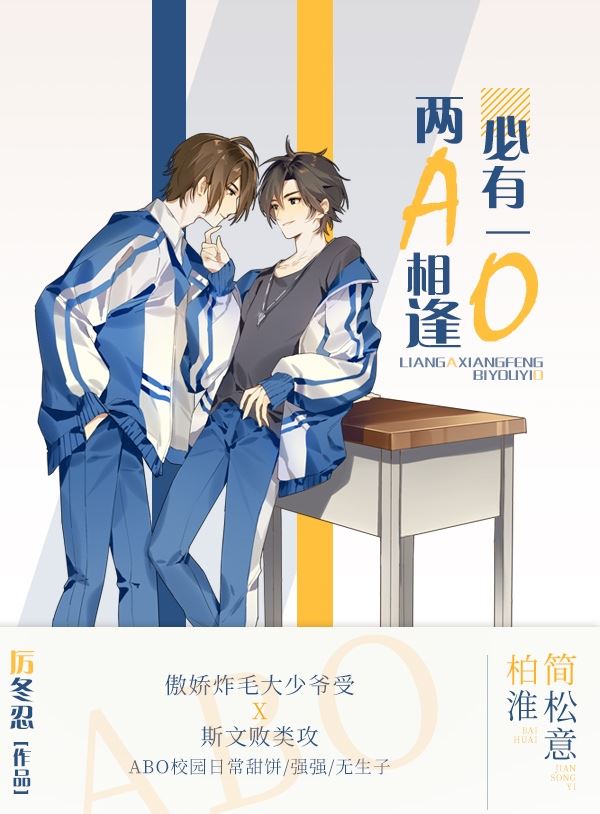
... Read More
Let me just say — the description of that photo is EVERYTHING. "The dim street lamp's light is falling among them through the branches and leaves, circling a stage for the two that night." Do you understand what the author just did here? They turned a crappy phone photo into a cinematic moment just through wording. The street lamp doesn't just shine — it CIRUCLES them, creates a stage. Bai Huai's head tilted, holding a bear. Jian Songyi looking back with pursed lips. Both of them apparently smiling at each other. And the irony! The narration explicitly tells us this is a terrible photo — "taken from Yu Ziguo's mobile phone worth only several hundred yuan due to bad quality, making the photo vague." But the vagueness is what makes it work. It's blurry enough that viewers project their own fantasies onto it. Bai Huai's "dead expression became gentle to prove his point." His point being what exactly, though? That he's happy? That he's tolerating this? That he doesn't care anymore? The setting of this whole sequence — the library, the charging phone, the casual towel-throwing — creates this domestic intimacy that the characters seem oblivious to. They're living a rom-com background scene without knowing they're in one.
... Read More
'It is no secret to himself already that if he happens to be alone with Bai Huai, he will eventually remember what transpired this morning and his reaction to it.' This sentence—so understated, so cruel—summarizes an entire emotional catastrophe. Jian Songyi is not running from Bai Huai because he doesn't care. He's running because he cares too much and doesn't know how to hold that feeling without it becoming something dangerous. The morning's events (whatever they were—clearly a scene of physical closeness or public vulnerability) have rewired something in him, and every subsequent interaction is now filtered through the memory of his own inability to respond naturally. Bai Huai, on the other hand, seems to be operating on a different emotional frequency entirely. He notices the red tips of Jian Songyi's ears under moonlight. He reads the softness in Jian Songyi's face. He watches the boy who has always been sharp and decisive now hesitate over words that stick to the roof of his mouth. And what does he do? He asks 'Why?'—softly, gently, giving Jian Songyi every opportunity to either tell the truth or retreat further into the safety of obligation. When Jian Songyi finally articulates his fear—that their intimacy is inappropriate given his new Omega status—Bai Huai's response is a laugh that sounds almost broken. 'On some early autumn night, under the stars, in the scent of cinnamon, a cute straw bug evolved slightly before being sprayed to death with salt soda.' The metaphor is brutal in its simplicity: something small and delicate grew for a moment, and then it was destroyed. Not by malice. Not by cruelty. By the casual application of social order. The sweetness of osmanthus and cinnamon surrounds them even as their understanding dissolves. This is the emotional architecture of the scene—beauty framing loss, silence replacing everything that could have been said.
... Read More
The structure of this passage is a masterclass in escalating tension, and I want to break down exactly how the author does it because it's genuinely impressive. It starts almost casually—a basketball game, some trash talk, Lu Qi Feng snapping at a defender. The conflict is low-grade, sporting. Then Huang Fuyi escalates with physical contact (the elbow to the chest), and the pace tightens. The crowd goes silent. That's Movement One: the trigger. Movement Two hits with Zhuo Luo's outburst. He throws a water bottle. He screams. Huang Fuyi retaliates with verbal abuse about Omegas being cheap, then physically grabs Zhuo Luo. The stakes have shifted from competitive to personal. Jian Songyi intervenes with that ice-cold line about dirty hands. The onlookers are now leaning in instead of dispersing. Movement Three is where it gets dangerous. Huang Fuyi remembers his original plan—to play easy and steal points—but his body moves faster than his brain. His fist is already aimed at Jian Songyi's face before he consciously decides to throw it. And just like that, the basketball game is over. What replaces it is the sacred men's room scene being "perfectly replicated"—two Alphas about to collide, teammates rolling up sleeves, pheromones spiking. The author never lets the reader breathe between these movements. Each escalation comes faster than the last, and by the time the passage ends, we're mid-climax with no resolution in sight. That's not just good pacing—that's addiction engineering. I immediately wanted to read the next chapter.
... Read More
This chapter is dripping with symbolism about transition, about becoming something you weren't before. The whole concept of differentiation—whether it's biological or emotional—is woven through every interaction. Jian Songyi smelling something that isn't there, or maybe sensing something Bai Huai hasn't admitted yet. The pheromones, the periods, the physical changes looming on the horizon. It's all metaphor for the shift in their relationship. The pine forest scent under snow—that's not accidental. It's cold, distant, beautiful, but underneath that freeze there's something alive waiting to emerge. Just like Bai Huai. Just like how Jian Songyi keeps finding reasons to get closer even when he's being pushed away. The wrist as a point of contact, the neck as a zone of vulnerability, the neck being where pheromones would theoretically be strongest. Every physical gesture is loaded with meaning neither character can fully articulate yet. And the lunch box. Think about it. Bai Huai bringing food, taking up space in Jian Songyi's car, using his grandfather's health as an excuse to skip morning routines. These aren't just plot devices—they're acts of care disguised as convenience. The old family dynamics, the wealthy setting, the pressure of expectation—all of it frames this quieter story about two people learning how to want things they've never allowed themselves to want before.
... Read More
Okay so let me just — the backstory about Wang Shan jumping off that sixth floor is absolutely brutal and I need to talk about how the author dropped it casually in the middle of what seemed like a normal hangout scene. Lu Qi Feng just casually brings up that Wang Shan and Wang Hai are blind twin brothers, right? And suddenly you learn that Wang Shan was bullied so badly he jumped, and Bai Huai — our cold, sharp protagonist — was the ONLY person who stood by him. But then here's the twist that wrecked me: when Wang Shan survived and Bai Huai went to visit him in the hospital, Wang Shan told him he HATED him. Like, what the actual fuck? Bai Huai risked everything for this kid and he called him ungrateful? That scene where Lu Qi Feng recounts it — he literally says if he were in Bai Huai's shoes he wouldn't have been able to graduate, let alone act normal after watching a boy jump in front of him. This backstory about the twins and the bullying connects to everything happening now. Song Yi and Bai Huai are supposed to be enemies, ranked first and second in everything, locked in this blood feud, but you keep seeing glimpses of how deeply they care. The Wang Shan subplot isn't just backstory — it's a mirror reflecting what happens when loyalty gets twisted into resentment. And Zhuo Luo's revelation about Song Yi's weekly note titled Remembering My Friend Bai Huai? That plot twist made me drop my phone. I didn't expect Song Yi to have written something so tender. The fact that Bai Huai transferred schools after that whole mess and then appeared right in front of Song Yi again — the author is weaving these past and present timelines together so skillfully. Every conversation between these characters is layered with everything unsaid. And that ending where they're walking toward the sunset together? After everything? I'm still not over it.
... Read More
This chapter is a masterclass in dramatic irony and layered revelation. The plot structure here is almost surgical in how it peels back decades of misunderstanding. We start with Xu Jiaxing's casual mention—"someone was looking for Bai Huai outside the school premises"—and the narrative immediately pivots to Jian Songyi's internal deduction that it must be Wang Hai. But the real plot genius is the flashback sequence embedded within Jian Songyi's journey. The author doesn't just tell us about Wang Shan's death; they force us to walk through the same moral labyrinth that trapped all those students. What struck me most is how the confrontation at the school gate operates on two levels: the immediate physical threat between Jian Songyi and Wang Hai, and the deeper revelation about what happened that fateful day. When Wang Hai demands two thousand yuan, claiming Bai Huai gave his brother a "go sign signal," the tension spikes—but then the author pulls the rug out. Bai Huai was at the hospital with acute gastroenteritis. The tragedy wasn't premeditated; it was a cruel twist of timing that turned grief into accusation. The pacing here is relentless. We move from Xu Jiaxing's hospital visit, to Jian Songyi's decision to intercept, to the full backstory of Wang Shan, to the physical confrontation, to the twist reveal—all within a few thousand characters. And that ending line about the shoes? Brilliant. It shows Wang Hai is still playing games even after being physically dominated. The plot doesn't resolve cleanly; it leaves us wondering what Wang Shan actually stole, what drove him to jump, and whether this grudge will ever truly die.

Leave a comment

You must be logged in to leave comments. or
