When Two Alphas Meet, One’s an Omega - Reviews

When Two Alphas Meet, One’s an Omega
+Add to Custom List
Sort
Add review
... Read More
I literally had to put the phone down after reading this chapter. Not because it was sad — because it was the exact opposite, and that hit me harder. "As my best brother, can't you do the adult ceremony for me?" Bai Huai said this. SAID IT. Like it was nothing. Like he wasn't basically telling Jian Songyi that he wants him there for the most important moment of his life, and that Jian Songyi is the only person he trusts enough to ask. And Jian Songyi's reaction? Just a question mark. Because of COURSE he doesn't know what to do. This guy sneaks his favorite toys into Bai Huai's room when they were kids, drags them like they weigh a ton, and now he can't handle a single flirty comment from his best friend. But here's what really got me — Bai Huai KNOWS he's being annoying. He thinks it's 'so adorable' to watch Jian Songyi's confused face. He pushes his glasses up and smiles. He says "Sometimes, it feels good to be annoying." This isn't just banter, people. This is a person who has been through something terrible and found someone who makes him feel SAFE enough to be himself again. And Jian Songyi? He carried Bai Huai's secret for years. He remembers his mother's rules about alcohol. He defends him to the group chat like a wounded animal. He rolls five sixes while his best friend rolls five ones and still feels BAD about it. "You don't have to be a thoughtful human being all the time." That line broke me. Bai Huai spent so long being careful, being perfect, being isolated — and Jian Songyi is the one who gives him permission to just BE. To tease. To be messy. To be lucky or unlucky, it doesn't matter. This CP? This FRIENDSHIP? I am NOT okay.
... Read More
Okay so I need to talk about this scene where Jian Songyi leans over and whispers in Bai Huai's ear after beating up three Alphas. Like. The tension here is absolutely *chef's kiss*. Jian Songyi says something like "I can definitely finish the job faster after I differentiated" and the way Bai Huai reacts? I nearly fell out of my chair. Bai Huai literally gets stunned by that wisp of heavenly fragrance, his amber eyes showing this strange light where "ice metaphorically starts melting." The text says it was "the sign of spring and joy, warmth, and everything nice." And he just sits there helpless while Jian Songyi walks away like nothing happened. BRO. He's sitting at the corner of the classroom deep sighing and tapping his fingers because he's clearly affected. This is the kind of subtle, achy stuff I live for. And then the next morning when Bai Huai walks in and immediately sniffs out pheromone residue on Jian Songyi's clothes? Of COURSE he did. Of course an Alpha would be hypersensitive to another Alpha's scent, but come on, we all know what's really going on there. Jian Songyi doesn't even notice at first, playing dumb with that relaxed "Is there?" bit while casually unbuttoning his collar. The oblivious Alpha energy is so strong it's painful. Their whole dynamic of competitive banter masking something deeper? I'm weak. Every exchange feels loaded. When Bai Huai says "You shouldn't be an Alpha" and Jian Songyi fires back with that threat about keeping him out of class with his pheromones — it reads like flirting in a language only they understand.
... Read More
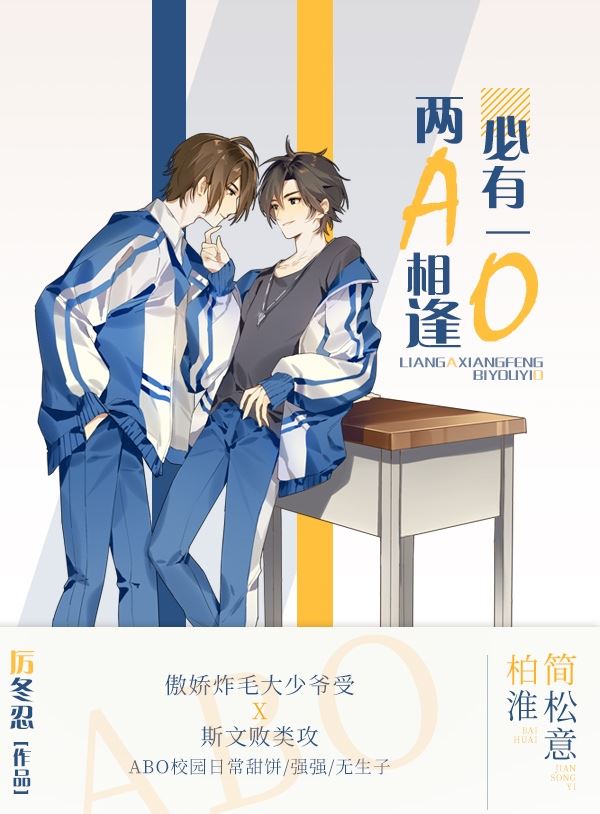
There's a whole layer of meaning packed into something as simple as military uniforms, and I think the author knows exactly what they're doing. The camouflage suit is supposed to make everyone equal — same drab green, same stiff fabric, same bootlaces. But it doesn't work that way. Yu Ziguo disappears into his like a sack. Jian Songyi, despite his insecurities about his frame, actually fills it out. The uniform becomes a mirror for how each character relates to their own body and their place in the world. And the belt — god, the belt. It keeps coming back. Yu Ziguo's belt is so loose his ''underwear doesn't have a sense of security.'' Jian Songyi fiddles with his own belt, loosening and tightening it, unable to get it right. A belt holds things together. It's literal support. But when it's loose, everything else falls apart. The metaphor is almost too on-the-nose, except the author isn't being heavy-handed about it — they're just showing us characters grappling with things they can't quite secure. Jian Songyi's uniform fits him 'perfectly' in a way that contradicts his own self-image. He sees himself as fragile, as someone whose body isn't quite right. But Bai Huai sees him differently — 'capable and valiant.' The uniform doesn't lie, even if the wearer thinks it does. There's a theme here about perception versus reality, about who gets to define another person's strength. Then there's the ABO hierarchy itself as a kind of uniform — an invisible structure that dictates how people move through space, who shares rooms, who is expected to suppress their heats, who gets to be vulnerable and who doesn't. Bai Huai rearranging the dorm assignments is a small act of rebellion against that system. He's not letting the hierarchy decide who sleeps next to whom. He's choosing. And that final image — Bai Huai watching Jian Songyi adjust his belt, knowing what it means, smiling to himself — it's about intimacy as recognition. He sees Jian Songyi's insecurity and doesn't look away. That's the real theme hiding under all the military training setup.
... Read More
"Brother Song is good." This line. This absolutely devastating line. Jian Songyi is standing there after being completely wrecked by Bai Huai's 40% pheromones, barely able to stay upright, and he still manages to sound arrogant. He still has his pride. That's the kind of character consistency that makes me respect Jian Songyi so much. And Bai Huai — oh my god, Bai Huai. The man says all this nonsense about "after-training service" and pheromone scarring, but the narrative literally tells us: "Bai Huai smiles slyly to himself at his triumphant shot." He is FULLY aware of what he's doing. He knows he's taking advantage. And he rationalizes it like: "He should be forgiven for doing this to the innocent Jian Songyi, who has no clue of what he is trying to do." I cannot unsee this internal monologue. This man is a menace. But also? He notices the candy jar. He remembers being lonely. He kept his feelings secret for years and showed affection through notes and sweets. The tenderness underneath all that scheming is what makes their dynamic work. He's not cruel; he's just desperately, incompetently charming about how he expresses himself. The father moment is peak relationship comedy. Mr. Jian knocking on the door, seeing his son in pajamas all disheveled with the perfectly dressed Bai Huai, and immediately concluding puppy love. The parents' conversation afterward — "our son can be given away already" / "the condition of picking up trash is not bad" — is the funniest parental commentary I've read. They're completely aware, completely ship them, and completely messing with their son's dignity. Their dynamic is: Jian Songyi thinks he's being played, Bai Huai is absolutely playing him, and everyone around them knows exactly what's happening except the protagonist. Classic, but executed with such warmth.
... Read More
What's really striking about this passage is how much it's implicitly about who gets to belong and who doesn't. The international class literally exists outside the normal system — not included in enrollment rates, different management, promoted with extra marks. They're first-class Alphas by status but not by merit. Huang Fuyi embodies this tension perfectly. He HAS to prove himself aggressively because his position is inherently questioned. Then there's Jian Songyi, who actually earned everything — he's the only one in the whole year level who solved the admissions competition problem. He doesn't need the extra marks or the special status. His legitimacy is unimpeachable. And that's what makes Huang Fuyi so threatened. The physical descriptions carry weight too. That dunk sequence — slender arms, muscle lines, the waist revealed, hands clinging to the rim. There's something deeply symbolic about someone so physically slight yet absolutely dominant in that moment. The strength isn't in bulk, it's in precision and skill. And Bai Huai noticing the waist, thinking it's too thin for an Alpha... that tension between appearance and capability runs through the whole chapter. The red pen on Bai Huai's paper is another symbol I can't shake. Correct answers written in red ink while Jian Songyi watches — it mirrors the theme of visible proof vs. assumed status. The ink is undeniable. The marks on the international class transcript are equally undeniable but mean something completely different.
... Read More
The structural movement in these chapters is incredibly deliberate. Let me break down how it works. It starts in intimacy — just two people, quiet conversation, a gift exchange. The pacing is slow, almost meditative. Jian Songyi explaining his bracelet, Bai Huai processing it internally. Then — BAM — giants attacking, everyone yelling, the scene violently disrupted. This is a classic tonal whiplash move and it works because the author lets the quiet moment BREATHE first. We're invested in the calm before the storm, which makes the storm feel more urgent. After the action beat, the chapter pivots again into the gift-giving scene, which is faster-paced, more chaotic, almost sitcom-like. Yu Ziguo's peach blossom reveal slows things down one more time, giving us a second emotional anchor. Then it ends on that single line — "No." Jian Songyi — and cuts off mid-sentence. That cutoff is doing so much work. It's not a cliffhanger in the traditional sense — there's no explicit danger or revelation — but it's an emotional cliffhanger. Bai Huai is about to respond to Jian Songyi's rejection of whatever Yu Ziguo implied, and we don't get to hear it. The chapter doesn't resolve; it悬ends. The rhythm across all four chapters feels like: slow intimacy → sudden action → comedic relief → emotional warmth → abrupt interruption. It's a rollercoaster disguised as a casual slice-of-life, and the author never lets you settle into one mode for too long. By the time you get comfortable with the warm gift-exchange scene, something snaps you back to reality. This is how you keep someone reading past midnight.
... Read More
The dialogue in this chapter is genuinely excellent because each character sounds completely distinct and you never forget who's speaking. Bai Yun's lines are measured and warm but there's always something calculated underneath — 'I am here to ask if you can take care of Little Huai' sounds like a favor but reads like a negotiation. Mrs. Tang is straight-up chaotic energy: 'The people in your family are too ruthless. If you are an adult, you should go to the sky and pick the stars for him.' What a line. That is a mom who does not mince words and somehow it's hilarious. And then Mr. Jian comes in with his gentle but pragmatic voice — 'If your mother is giving it then you should just take it' — this man's entire personality seems to be 'whatever my wife says.' But the best dialogue is actually the remembered dialogue from twelve years ago. The kid Bai Huai trying to sound grown on the phone, and then Songyi's earnest 'I'll be your father from now on.' Simple words but they carry seventeen years of history. The author knows exactly how to make dialogue do double duty.
... Read More
This chapter opens with flowers on a grave and I was immediately hit with the imagery. White daisies from 'his son yearning for him' and white Platycodon Grandiflorum as a compliment to a flawless life. Those specific flower choices aren't random — they carry meaning, and the author uses them to set the entire emotional tone before we even meet the characters at the tombstone. Then there's this line about the tombstone inscription: "When I was born, I'd like to love the world; When I die, I wish the world would no longer love me – Wen Zhimian." That's devastating. Someone who loved too much and ended up wanting the world to stop loving them back. It's such a specific, poetic sadness. The scene transitions from the cemetery to Ling'an Mountain and Dajue Temple, and the atmosphere shifts completely — from heavy grief to something lighter, almost playful, but still carrying that undercurrent of longing. The wishing tree is described as "famous for its placement in the whole south," and Mrs. Tang's philosophy about belief making wishes come true gives the location this almost magical quality without being fantasy. It feels real, grounded in Chinese culture. And then there's the image of both boys trekking back down the mountain with their little secrets in their trouser pockets. Neither interested in Buddhism, both carrying hidden wishes. That's such a strong visual — two figures walking down a mountain path, each holding something precious they'll never speak of. The worldbuilding here isn't about grand descriptions of castles or magic systems. It's about temples, wishing trees, red cloth, old monks — small details that make the setting feel lived-in and culturally specific.
... Read More
The stakes in this chapter are absolutely sky-high and yet nobody will literally SAY what's at stake. That's what makes it so tense. On the surface, it's just a drinking game in a KTV room. But peel it back and there are so many conflicts colliding. Jian Songyi's internal conflict is brutal—he's convinced his best brother has kept a secret from him, potentially found someone else, and is going to abandon their plans to go to Beicheng together. But is it really about the friendship? Or is it about the fact that the thought of Bai Huai being with someone else physically pains him? Then there's the external conflict of the drinking game itself—every roll of the dice forces someone closer to vulnerability. Yu Ziguo is weaponizing curiosity, using the game as cover to ask the inappropriate questions. Zhuo Luo is somehow both vulnerable and calculating in that exchange about the first kiss. And Bai Huai—god, Bai Huai is the most conflicted character here. He admitted to liking someone (external pressure), but then deflected the identity question (internal protection). He whispered something dangerously close to a confession to Jian Songyi (desire) but immediately covered it with authority and alcohol (fear). The stakes keep rising because every character is playing with fire and they all know it. Jian Songyi walking away to the bathroom wasn't escape—it was desperation. And when he came back and said "betrayed twice in one night," he was naming the conflict without naming the real fear. What happens when the truth finally comes out? That's the question keeping me up at night.
... Read More
The conflict in these chapters is layered like an onion and I'm already crying. On the surface, it's this banter-heavy rivalry between two guys who clearly have history — the height insult, the umbrella power play, the fake friendliness at the family dinner. But underneath ALL of that is the massive unresolved conflict that the entire school forum is circling around like vultures: WHAT HAPPENED THREE YEARS AGO? Every character in this story is standing on the edge of something. Jian Songyi is an Alpha (revealed at the end, which changes EVERYTHING we thought we knew about the power dynamics). Bai Huai is back with reasons we don't understand yet. The forum comments show a community that's simultaneously obsessed with and traumatized by whatever happened. The question “Why didn't Bai Huai return to No.1 Middle School?” causing hundreds of stories to “come to an abrupt end” — that's the sound of a collective trauma response. Someone got hurt. Badly. And the silence around it is deafening. What makes the stakes so high is that none of these conflicts are easily resolvable. Even the mundane ones — who tutors whom, which house do they use — carry the weight of three years of absence. When Bai Huai says “your house or my house?” with that chin tilt, he's not just choosing a study location. He's claiming territory, asserting presence, rewriting the geography of their relationship on his terms. And Jian Songyi, who internally despises the whole idea but outwardly agrees, is playing a dangerous game where every interaction could either heal or reignite whatever broke between them. The suspense isn't just “what happened” — it's “will they survive each other's return?”
... Read More
Let me just say this: the pacing in these chapters is INSANE. The author starts with a sharp, almost comedic exchange under the rain — quick dialogue, physical comedy with the umbrella height thing, then BAM you're pulled into a car ride that transitions into a WeChat group chat that opens into a full internet forum explosion. That's like four different narrative modes packed into what feels like twenty pages and I was turning them faster than I should have been. Then the shift to the family backstory is where I almost worried the pacing would drag — you know how it goes, exposition dumps can kill momentum — but the author handled it by weaving it through Jian Songyi's observations as he's sitting in the car watching leaves get knocked off trees. The melancholy of the rainy city matches the melancholy of the回忆 perfectly. Every piece of backstory is filtered through mood. And then the scene cut to the tutor setup at Bai Huai's house — quick, sharp, almost comedic with Jian Songyi's fake smile vs internal screaming — and then the final scene where they're sitting in silence across from each other with just a book between them? That's a masterful structural choice. After all that noise (the forum, the backstory, the family gathering), dropping us into uncomfortable silence forces us to feel the weight of everything unsaid. The chapter ends mid-thought with “Is” — that fragment is everything. It's not a cliffhanger in the traditional sense but it's infinitely more unsettling because it leaves Jian Songyi's internal monologue literally incomplete.
... Read More
Okay so let's talk about Bai Huai leaning in and whispering to Jian Songyi, right? Because WOW. The text literally says "I told you before, children can't smoke nor drink. Why are you being naughty and disobedient?" and I just— what?? That is so DOMINANT and CARETAKING at the same time and I'm deceased. But here's the thing that really got me: Jian Songyi looks away. He doesn't explain why he does it, but the narration says "only his instinct hidden in his heart knew that he could not watch it anymore" because he felt like he'd be "eaten alive." That's not just romantic tension, bestie. That is someone who is DYING inside and pretending it's fine. And then Bai Huai just chugs eight glasses of wine like nothing happened while looking "majestic." Meanwhile Jian Songyi is over here having an emotional meltdown about his best brother apparently having a secret Omega girlfriend and now THIS. The fact that both of them are clearly feeling something but neither will SAY IT— I can't. The unspoken stuff is what makes this CP hit so hard. Also side note: Zhuo Luo and Yu Ziguo's whole "is kissing feet a first kiss" exchange?? I SCREAMED. Yu Ziguo literally pressed closer and Zhuo Luo blushed and stumbled into that answer like it was deliberate sabotage. These two are cooking something too and I am HERE for it.

Leave a comment

You must be logged in to leave comments. or
