When the Grand Duke's Lips Touch Her - Reviews

When the Grand Duke's Lips Touch Her
+Add to Custom List
Sort
Add review
... Read More
I need to process what just happened because Greg Rufus—ex-Greg Sanders—is one of the most disturbing characters I've encountered in this series and I literally cannot stop thinking about him. The first time we see Greg at this banquet, he's wearing that smug look, raising his shoulders high like he's become part of the imperial family. He's surrounded by sycophants calling him 'Your Grace' and talking about how his uniform matches his eyes. And here's the thing that makes him so terrifying: he seems genuinely happy. Not pretending. Not masking. He actually enjoys this. 'He was visibly clear that he genuinely liked it. He was truly happy.' That line hit me like a truck. But then on the terrace, the mask doesn't just slip—it shatters into something worse. Greg reveals he killed their parents because 'they killed my mother' and 'your mother tore my mother to pieces. So I just did the same to her.' The casual brutality of it. The symmetry of it. And the fact that he tells Caleb this knowing it will destroy him, and then immediately follows up with 'do you know that Rud wants to become my aide?' as if dropping a second bomb while Caleb is still bleeding from the first. Caleb's reaction is what broke me though. He could have killed Greg. He physically could not have been stopped from striking. But Greg mentions Rud, and Caleb's hands go slack. He brushes the hand away instead of crushing it. He loses. He always loses to Greg because Greg knows exactly where to strike. And then—then—he mocks Greg's wet pants and says 'Seeing you in that state, I worry it might end before we even begin... How boring.' I SCREAMED. Caleb found his weapon and it wasn't violence, it was contempt. He left Greg standing there with wine soaking his trousers while the entire banquet could hear. And Rudbeckia? She memorized the door and stood guard. She knew exactly what Caleb needed. She waited in the dark hallway like a sentinel. These three—Caleb, Rud, Zeno, Elfleda—they're the only ones who see each other truly, and the world is trying to tear them apart.
... Read More
So the chapter opens with them on a bed. Just… sitting. Talking about tomorrow. And then it gets INTIMATE. Like, really intimate. And I'm sitting here like 'wait, is this the quiet before the storm?' because obviously it is. The author doesn't even hint that we're about to pivot into a full-on tournament scene. One second you're reading about Caleb worshipping acacia-scented skin and the next it's WHOOSH Lance against lance, bone-crushing impacts, ribbons flying. But here's what's actually brilliant about the pacing—the fight scenes are SHORT. Like, Caleb wins his first match in three sentences. Swoosh. Boom. CRASH BANG. Done. Second match? Another three sentences. WHACK. CRASH BANG. Done. The author isn't wasting time on elaborate combat choreography because this isn't a battle shonen. This is a character drama wrapped in armor, and the fights exist to show us Caleb's skill while keeping our eyes on the PEOPLE watching. Rudbeckia's internal monologue during the matches is where the real tension lives. That moment when she sees the helmeted opponent and her gut says 'this one's different'? That's masterful subtlety. No exposition, no foreshadowing dumps—just intuition. And then the ribbon distribution? Perfect structural beat. It slows everything down, gives us that emotional landing after the violence, and sets up her jealousy arc without any fanfare. I did want to yank at the transition into the library scene though. We go from tournament jubilation to 'actually I need to research the Glimm Kingdom' and it felt a tiny bit rushed. Like, give me one more paragraph of celebration before sending them into spy mode, you monster.
... Read More
Can we just talk about Caleb for a moment because THIS BOY. From the very first scene where he appears — a little kid pressing his lips to Rudbeckia's forehead and accidentally stopping her memory surges — he's positioned as the most important person in her life besides her deceased mother. And the way their relationship develops is just… devastatingly tender. When he gives her that sunflower bouquet on her twelfth birthday and fixes her hair with her master's lethal hairpin? That's not just sibling energy. That's someone who has memorized every detail about the person they care about. He knows she values that hairpin. He knows how to present it to her. He's learning this language of care because his own mother told him to, but he's also clearly invested in a way that goes beyond duty. And then at sixteen, he's BLUSHING. Covering his mouth with his fist like his lips are sacred territory he's afraid someone might steal. Running away after every kiss. "Wh-who's red?! It's just hot!!" — Caleb, my friend, you are not fooling anyone. Not Rud, not the readers, definitely not the text itself which devotes an entire paragraph to describing his face turning "apple-red." But here's what gets me — Caleb doesn't just provide emotional support. He's actively involved in the war effort. He's being discussed as a potential heir alongside his older brother Greg. He's the one who whispers to Rudbeckia during those panic moments at dinner, who takes her hand and rubs her reddened palm. He's building a parallel track of care alongside the military strategy. The relationship between Rudbeckia and Greg is where things get genuinely dark. He was trained at Pergos' most prestigious academy and somehow missed the war coming? Now he's the Grand Duke and he's blaming Rudbeckia for his parents' deaths instead of grappling with his own failures. That's not just poor leadership — that's the psychological collapse of someone who can't face his own inadequacy. "Greg, who became Grand Duke, blamed Rudbeckia for his parents' deaths and never included her in strategy meetings after they died" — this is a betrayal more intimate than any political maneuver. He's not just wrong; he's choosing to destroy the one person who actually helped them win. And Rudbeckia? She still tries. She still volunteers to take the vanguard and execute her own strategies. After being locked out. After being blamed. This isn't loyalty — this is someone who would rather fight alone than accept that the people she loved have become enemies. "I'll take the vanguard. Give me troops who can execute Rud's strategy exactly." — That line broke me. She's not asking to be included. She's asking for her strategies to be followed. She's already accepted that she doesn't belong at the table, so she'll just do the work from the front lines instead.
... Read More
Everything in this section points toward one inevitable collision: Rudbeckia vs. Adam Perron. Let's talk stakes because they've been climbing since chapter one and they did NOT flatten after the Fabio victory. Sure, the war is won. Fabio acknowledged defeat. But the author makes it crystal clear that winning this battle doesn't mean safety—it means the next phase begins. Rudbeckia's personal stake: Adam Perron ordered the invasion that killed her parents. She joined the army partly for revenge, partly because she had no other option. Now she has to stand before him, perform loyalty, and presumably continue her mission of... well, the text implies she intends to kill him. "I won't feel any guilt when I cut off your breath." That's not a casual thought. Caleb's stake is more complicated. His brother Greg represents everything wrong with the system—climbing over siblings, ignoring suffering, wearing muted purple like it's normal. Caleb's cold gaze says he sees through it all. And then there's Elfleda—one year until she's married to a man described as immersed in blood and primitive cruelty. Her stakes are immediate and personal, not abstract political maneuvering. The Natural Shield walls prove Pergos has military superiority, but they also guarantee Fabio will find another way. Anesio's invention is brilliant but temporary—until the stones turn to dust. The author is building toward something massive and I am TERRIFIED for everyone involved.
... Read More
Let me just sit with this ending for a second. The chapter starts SO calm. Getting dressed. Picking accessories. Light banter. Rudbeckia being nervous in a funny way, Elfleda being the hype woman, Caleb being delightfully flustered. It's almost cozy. I was smiling. I was genuinely enjoying the preparation scenes. Then the fireworks. Then the carriage ride. Then the ballroom. The Emperor speaks. The map appears. Greg gets his title. Everyone claps. And then — the pivot. Everything goes from celebration to execution in three sentences. Caleb asks to keep the Sanders name. Just the name. Not land, not power, not revenge — just the word his family carried. And the Emperor's response? "Denied." Not even a debate. Not even cruelty for its own sake. Just cold, bureaucratic erasure. "The Sanders family no longer exists! Sanders is the name of a defeated country!" And then the line that broke me: "You were able to remain a Sanders because the Minister of Military, as the head of the family, paid the life price to maintain that name." Greg sold out his family and lived. Caleb held onto his name and barely survived. And the empire rewards the traitor with a dukedom while stripping the loyalist of his very identity. The structural injustice is so perfectly designed it makes my teeth ache. The pacing here is masterful because the author lets you breathe between disasters. First Greg's betrayal (internal, personal). Then Caleb's name being stripped (external, institutional). Two nails in the coffin, delivered one after the other, with barely a chapter break between them. And Rudbeckia watches all of it. She's the only one who saw Greg's face and understood immediately. She's the one who knows what Caleb is feeling because she's felt that same erasure herself. While everyone else is cheering, she's counting seconds until this blows up. The final lines cut off mid-sentence — "You seem f" — which is either a chapter break or an unfinished thought. Either way, it's devastating cliffhander energy. The Emperor is mid-rant, Caleb is broken, Greg is triumphant, and the reader is left hanging like a sword over a thread. I need the next chapter immediately.
... Read More
'From a room where light leaked through the shutters, the intimate sounds of a man and woman flowed softly.' That's how the entire novel opens. Not with a battle. Not with a political intrigue setup. Just light leaking through shutters and moaning. And somehow it works because the author immediately pivots from erotic tension to absolute horror in what, like, three sentences. You are SO not prepared for what happens next. Let me talk about the room itself for a second because the author really built a space that does double duty. Golden candlesticks matching her hair color, mirrors framed in gold, a room 'made entirely for her.' On one level it's a seduction chamber — Noah wanted to cage her in beauty. But read it again and it's a prison. The gold isn't romantic, it's gilded captivity. And the mirrors — mirrors everywhere, reflecting his urgent movements, reflecting her calm calculation. She's watching herself watch him, and that dissociation is chilling. The luxury IS the trap, and she turns it into her weapon. Then there's the harbor scene. Moonlight on water, a small boat fueled by magic stones, the soldier with a blue tail on the stern. The transition from the golden, claustrophobic bedroom to the cold open water is masterful. And the sensory shift — from the heat of passion to the heat of fever, from whispered words to auditory hallucinations tearing through her mind. The author layers physical and psychological temperature so skillfully that by the time Rudbeckia tears her dress open on the boat, I physically felt overheated. But the scene that really sticks with me is the tent. Part of the Pergos Empire's army camped by the seaside. A medic rushing in with a bottle. Caleb's hand trembling. The contrast between the grandiosity of continental unification wars and this tiny, fragile moment where a powerful commander is reduced to pressing his lips to an unconscious woman's forehead like a child seeking a miracle. The worldbuilding here is invisible but omnipresent — we know there are magic knights, barrier magic, healing priests, imperial armies, cursed bloodlines, and yet the most powerful image is just two people in a tent by the sea. The scale of the world makes the intimacy hit harder, not softer.
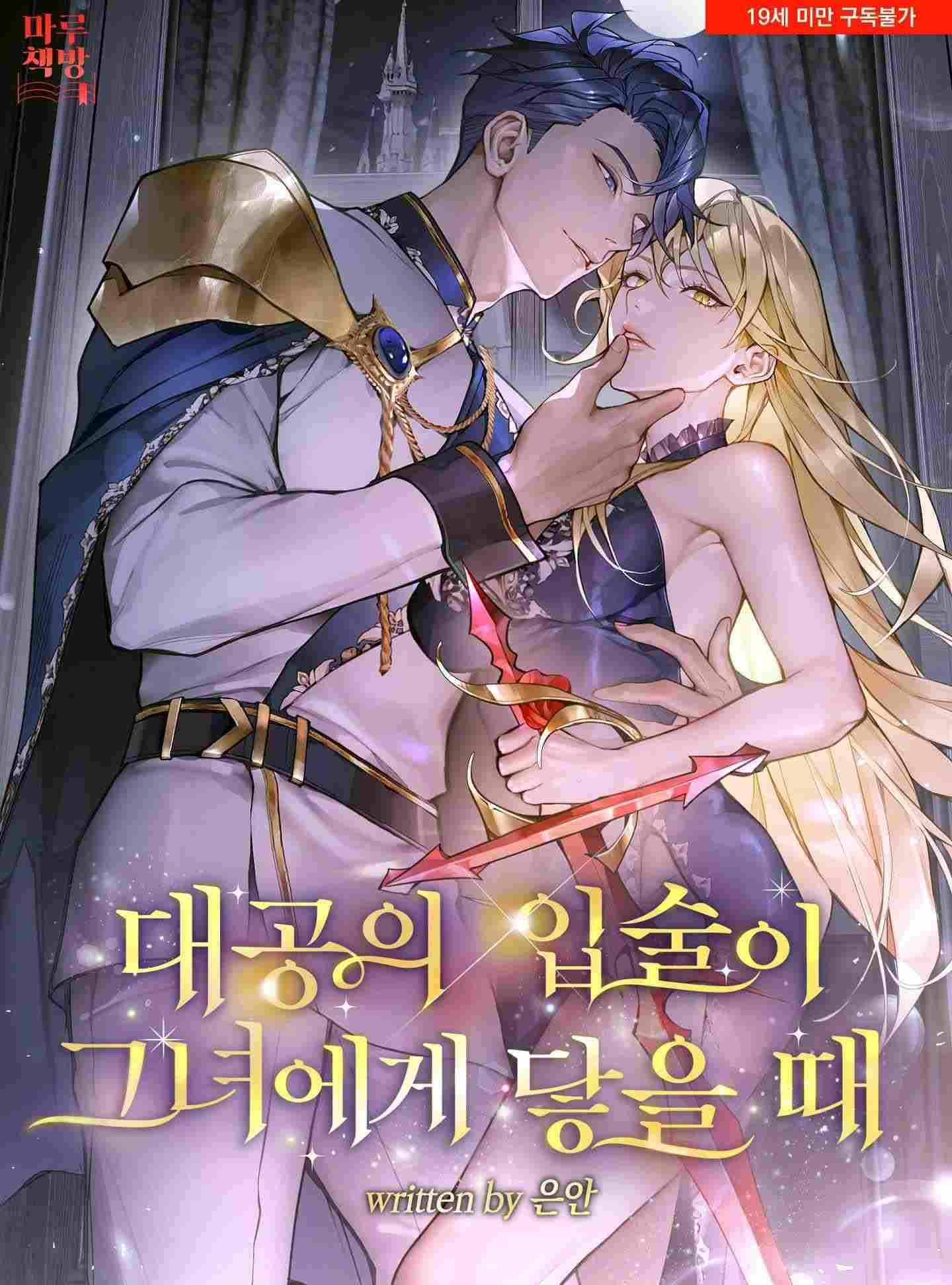
... Read More
There are two scenes in this passage that I can see in my mind like film frames and I need to document them before they fade. The first is the banquet hall itself. The author describes the air turning 'icy cold, to the point where even breathing had to be suppressed' when the imperial guards draw their swords. Then immediately after—'With the exquisite melody that flowed out right on cue, the atmosphere in the banquet hall instantly ignited with anticipation.' One moment you're suffocating under the weight of political execution, the next there's music and dancing and carpets with 'clean, ornate patterned carpets' and nobles pouring onto the floor. The whiplash IS the worldbuilding. This is a society where power operates through theater, where violence is performed and then covered up with celebration in the span of seconds. Adam Perron doesn't just rule—he stages. The lance tournament announcement, the sudden shift to music, the applause that erupts like clockwork. Everyone is performing loyalty and no one is exempt. Then the terrace. The door closing. The wind. Greg's wet pants. The contrast between the warm, music-filled banquet inside and the cold, dark terrace outside where the truth gets spoken. And then returning to find Zeno and Elfleda 'snickering' at Greg's plight while Rudbeckia 'smiled brightly' at Caleb. The architecture of this scene—the door as a boundary between performance and reality, the wind blowing in when Caleb flings it open—every detail serves the emotional truth of what just happened. The final image of Rudbeckia in the deep night, 'relying only on starlight,' knocking on Caleb's door because she couldn't sleep, tossing and turning, thinking about his face as he emerged from that terrace—that's the scene that haunts me. Intimate, quiet, devastating.
... Read More
Okay so this entire chapter practically explodes around Greg, doesn't it? I need to talk about this because honestly my heart literally stopped when Rudbeckia recognized Greg's expression. Let's rewind. Greg is Caleb's older brother. The guy who supposedly led the war to victory. Everyone in the hall is cheering, receiving titles like it's some kind of fairy tale. But then Rudbeckia — with her perfect memory, the one thing she's always relied on — looks at Greg and sees something. "It was identical to the expression her birth father had shown when opening the city gates to welcome the Pergos army and when he loudly shouted the direction she and Adele were fleeing." That hit me like a truck. Greg didn't just betray Sanders — he literally sold out his own people the same way Diego did. The parallel is too sharp, too brutal. And Caleb? Poor Caleb had no idea. He's standing right there next to his own brother, probably thinking they're finally going to be a family again, and the reader is screaming at him to run. What makes this even worse is that Greg doesn't even hide it. His face is "filled with joy" when he receives his dukedom. He wanted this. He planned this. Meanwhile Caleb is trembling behind him, veins popping, realizing his blood relative chose Pergos over Sanders. The sibling dynamic here is absolutely devastating. Greg went from being someone Caleb might have looked up to to the embodiment of everything wrong with the empire. And the worst part? Caleb can't even do anything about it right now. He's trapped in the same room, having to watch his brother celebrate while his own world crumbles. Also side note — the fact that Rudbeckia noticed this FIRST while Caleb was still oblivious says everything about their dynamic. She's always the one seeing the truth he's too hopeful to face. Again.
... Read More
I need to talk about the stakes here because wow. On the surface, this is a revenge story. Rudbeckia wants to kill Greg. Simple, right? But the author keeps raising the stakes in ways that make my heart actually hurt. First, there's the external conflict: war, assassination, survival in a enemy empire. Then there's the internal conflict, which is SO much worse. Rudbeckia has to sleep with a stranger, endure his touch, fake intimacy—all in service of killing the man who destroyed her family. And the honey trap wasn't just emotionally devastating, it was physically violating. She 'cooked and boiled the Noah' but the text makes it clear that what Noah did to her body went far beyond what she expected. That scene where she asks Caleb to blow on her wounds like her mother used to do? That's not just trauma dumping. That's a person trying to reclaim a moment of tenderness from a life that was stolen from them. And Caleb—oh god, Caleb. His entire arc in this passage is watching the person he loves use their body as a weapon and feeling powerless to stop it. He kicks the dirt floor like a child when he thinks no one's watching. The stakes aren't just 'will she succeed'—they're 'will she survive this without losing herself completely?'
... Read More
I need to talk about the ONE paragraph that absolutely wrecked me. Right after the whole passionate moment, after the purification ritual speech, after they're basically giddy and making promises... Caleb has this internal thought: 'If the memory surge disappears, would Rudbeckia have any reason to stay by my side?' And then immediately flips it: 'Would I have any reason to stay by HER side?!' His heart literally SHRINKS. This man has won every battle, outsmarted every opponent, played every political game perfectly—and the one thing that undoes him is the possibility that his wife might not NEED him anymore. That his entire reason for staying close to her could vanish if whatever's wrong with her gets fixed. And his response isn't to ask her directly. No. He panics and SHOUTS 'please ask only me for the purification ritual!' Like a child. Like someone who'd rather negotiate terms of service than admit he's terrified of being unwanted. And Rudbeckia just laughs and says of COURSE it's only him. And THEN Caleb remembers that first night—the hand-kissing ritual, the forehead touch, the 'drop of rose-colored dew falling into clear water.' He was already in love. He just didn't know it yet. Meanwhile she's been by his side through war and revenge and trauma, and he's over here having an existential crisis about whether she'll stay when she's healed. The asymmetry of their devotion is KILLING me.
... Read More
The dialogue in this section is layered like an onion and I'm not okay. Greg Sanders is possibly the most fascinatingly disgusting character introduced yet. He shows up after abandoning his siblings, barely acknowledges Caleb's greeting, and immediately starts touching Rudbeckia's clothes while complimenting her appearance. "Rud. I worried the harsh desert winds would damage your skin, but you're still beautiful." That's not concern, that's possession wrapped in false affection. And Rudbeckia's response? Perfect. She gently lowers his hands. Quotes Yuli Sanders' teaching about honey traps. Lets him smile foolishly while she gathers information. The exchange is so natural because it's layered—on the surface it's polite conversation, underneath it's warfare. Caleb's voice is wonderfully understated. "Would you like to examine outside?" when Greg cuts him off—he just quietly shakes his head and obeys. The description of his gaze locked on Greg: "That cold gaze held no trace of emotion—not even the bitterness of love or hate." That's not dialogue but it might be the most powerful line about Caleb's relationship with his brother. And the banter between Rudbeckia, Caleb, and Elfleda at the banquet table? Natural, witty, revealing character without feeling expository. When Elfleda blocks Rudbeckia's view of her uniform with flushed hands—that's genuine personality shining through. Each character has a distinct voice and the author trusts the reader to pick up subtext.
... Read More
There are two symbols in this passage that are absolutely carrying the entire emotional weight of the story, and I think the author is doing something brilliant by placing them side by side. First: the rose-colored dew. 'Like a single drop of rose-colored dew falling into clear water, the whole world—his entire heart—became filled with Rudbeckia.' This is Caleb's origin story of love, and it's framed as something gentle, almost accidental. A drop of color in clarity. It's romantic in the most classical sense. But then you have the second symbol: the purification ritual. Which is supposed to be about cleansing, about removing dirt and shame. Rudbeckia's entire existence is built on the concept of being 'dirty'—her mother died violently, she was used as a tool, she had to become something she wasn't to survive. The 'ritual' is her way of saying: you make me clean. Your lips absolve me. Here's what kills me: Caleb's love starts as something pure (rose-colored dew) but becomes entangled with something DIRTY (revenge, treason, murder). They're planning to kill the emperor. They've admitted it to each other. Zeno jokes about taking the throne but he means it. And yet—the most tender moment in the entire passage is them lying in bed, whispering promises, talking about rituals and purification. The author is showing us that love and violence aren't opposites here. They're the SAME THING. Both require total surrender. Both demand everything. Both are acts of faith. The blood on their hands and the rose water in their hearts—they're not separate stories. They're one story.

Leave a comment

You must be logged in to leave comments. or
