When the Delicate Beauty Joined the Army, the Cold General Turned Possessive - Reviews

When the Delicate Beauty Joined the Army, the Cold General Turned Possessive
+Add to Custom List
Sort
Add review
... Read More
The pacing of this novel is what I would call aggressively efficient. In the span of seven chapters, we move from a chance encounter in a department store — where Lu Yunzheng catches a thief and returns Lin Tingwan's wallet — to a blind date arranged by their elders, to a meal at a state-owned hotel, to a marriage proposal delivered in the back seat of a military jeep. That is not a slow burn. That is a forest fire. And yet it works, because the author understands that tension does not require time — it requires intensity. Each chapter ends on a note that propels the reader forward. Chapter 4 ends with the two of them recognizing each other at the restaurant. Chapter 5 ends with Lu Yunzheng laying out his entire life story — his salary, his family, his children, his willingness to share everything. Chapter 6 ends with the proposal itself, delivered with such urgency that even Wen Chuan is nearly knocked over. The structure follows a classic romantic comedy arc but compresses it into a military-era framework. The meet-cute is the department store. The first date is the state-owned hotel. The turning point is the car ride home, where Lu Yunzheng and Lin's parents bond so effectively that Wen Chuan becomes redundant. The climax is the proposal, and the cliffhanger is the parents' hesitation. What I appreciate most is how the author uses Wen Chuan as a pacing device. He is the comic relief, the nagging friend, the observer who comments on the action and helps the reader understand what is happening emotionally. When he sees Lu Yunzheng's hands stroking his knees under the table, he clenches his fists and thinks, It seems like there's hope this time! This external validation of the internal emotional shift gives the reader permission to feel invested. The pacing is not lazy — it is deliberate. The author knows that in a transmigration romance set in the 1970s, the stakes are already high. Every day could be different. Every decision could have consequences. So the romance moves quickly, not because the characters are impulsive, but because the world they inhabit does not allow for leisurely courtship.
... Read More
The central conflict of this novel is not romantic — it is existential. Lin Tingwan knows what is coming. She knows that in the years ahead, her father will be demoted, labeled, possibly sent down to the countryside. She knows that this will create obstacles for Lu Yunzheng, who has built his career on merit and political reliability. And she knows that in this era, a marriage to a tainted family can be a death sentence for a military career. This is why her question to Lu Yunzheng carries so much weight. If my parents are demoted, it may affect your work. The stakes are not abstract — they are literal, political, and immediate. Professor Lin's response is equally telling: Don't worry, if I really do get demoted, I will immediately publish an announcement in the newspaper to sever ties with you and will never implicate my daughter. This is a man who has already accepted the worst-case scenario and is trying to protect his daughter from the consequences. Lu Yunzheng's response to all of this is remarkable. He does not flinch. He does not hesitate. He has already thought it through. His parents were martyrs. His grandfather made contributions to the army. Even if something unexpected happens to the Lin family, he will not be implicated. This is not blind optimism — it is informed confidence, built on a lifetime of understanding how the system works. But the real conflict is internal. Lin Tingwan wants to believe in Lu Yunzheng, but she also wants to protect him. She has transmigration experience — she knows how the future unfolds — and she is wrestling with the moral question of whether to warn him, to change the future, or to accept the path that has already been set. The romantic tension is inseparable from this larger existential tension. The stakes are raised even higher by the presence of Lu Yunzheng's three nieces and nephews. He is already responsible for children who are not his own, and adding a wife and potentially more children to that responsibility is a enormous leap. Yet he makes it anyway, in a state-owned restaurant, with braised pork and a question that changes everything.
... Read More
I need to talk about Lu Zixin for a moment because THIS CHILD is carrying so much trauma and I am not emotionally prepared. She's four or five years old and her first instinct when meeting her new 'aunt' is to beg: 'Please don't chase Xinxin away, okay?' Don't you dare cry about this. Don't you dare. The text says she looked 'so skinny that he didn't look like a child of four or five years old' and had 'two big watery eyes.' She's literally starving for affection and security and all she can think about is not being abandoned. And then the candy scene—she takes the candy but immediately shares it with her brother, who pretends he's not greedy but is clearly starving for something other than food. Lu Zizhou is the oldest and he's already playing the role of protector, watching this 'aunt' like she's a predator waiting to strike. His internal monologue about exposing her 'true face' broke my heart because he's a CHILD doing this calculus. But here's what got me: Lin Tingwan doesn't flinch. She doesn't get offended. She just squats down, hugs the kid, and says 'How could a family chase Xinxin away?' The text says 'This aunt looked so beautiful when she smiled, and her body was fragrant and soft, just like her mother.' That comparison to their mother—God. That's the moment the ice cracked, even if just a little.
... Read More
Let me be clear: this isn't a fluffy transmigration romance where everything works out because the universe loves the protagonist. The stakes here are genuinely high. Lin Tingwan's family is marked for countryside re-education. That's not a minor inconvenience—it's life-destroying. Her parents describe it explicitly: "people sent down to the countryside get humiliated, forced to kneel for criticism, and work themselves to death." This is historical reality, not fictional drama. The original Lin Tingwan DIED of fright at the prospect. That's how terrifying this situation was. But the external conflict isn't the only thing at play. There's also the immediate danger of being watched. In Chapter 2, Lin Tingwan notices someone watching her family as they leave the house. She says to her father: "Dad, if there is someone monitoring them, then our whereabouts will be exposed, believe me." This isn't paranoia—it's survival instinct. The Red Guards are actively looking for reasons to raid homes, and her family's books could be used as 'evidence' of counter-revolutionary activity. Then there's the personal stake: Lin Tingwan has to marry a man she hasn't met, become a stepmother to three children, and navigate an era where her beauty—which is already noted as extraordinary—could make her a target. She's a 21st-century woman with modern values in a time and place where those values could get her in serious trouble. And yet—she has the space. She has the spring. She has her wits. The question isn't whether she'll survive. The question is how much of herself she'll have to sacrifice to do it, and what kind of life she'll build on the other side. I'm invested.
... Read More
I'm going to be honest with you—the middle section where they go furniture shopping is where I almost skimmed. And I don't say that lightly because I was genuinely invested in the kids' storyline. But the author makes a smart choice here: instead of rushing into the Ye Shuwei confrontation, we get this domestic interlude that actually serves a purpose. The shopping trip does three things simultaneously. First, it establishes Lin Tingwan as a practical woman who immediately starts assessing what the house needs—wardrobe size, kitchen supplies, bedding. Second, it shows their dynamic in action: she picks, he carries. Third, and this is the genius part, it creates dramatic irony. We KNOW something is about to happen at the house, and the author lets us sit in that tension while they're obliviously buying low cabinets. Then—cut to the kids. Ye Shuwei arrives. The manipulation begins. And just when we're fully invested in that horror, the cars pull into the compound and we get the confrontation. The pacing here is almost cinematic. The author could have rushed straight to the Ye Shuwei scene, but instead chose to let us breathe before the storm hits. Smart. The chapter ending on 'Why is there a woman in her house?!' with Lin Tingwan's internal panic is a solid cliffhanger. Not overdone, not melodramatic—just the right amount of 'what happens next.'
... Read More
The first time Lin Tingwan steps into a state-owned restaurant, the author does not simply describe a location — they build a world. The dark green double-opening wooden door. Glass panels with the word Welcome painted in large letters. Four red characters on the wall above reading State-owned Hotel. On either side of the entrance, inscribed on the walls, Independence and Self-reliance. These are not set decorations. They are the ideological backbone of an entire era, carved into the very architecture. Lin Tingwan is fascinated. And the reader is fascinated through her eyes, because she is experiencing this world for the first time — or rather, she has experienced it before in fiction, but never in the raw, unvarnished reality of a place that exists outside of a TV drama set. Inside, the restaurant is busy. It is almost dinner time, and the space is filled with the hum of people going about their lives in a society where a meal at a state-owned hotel is an occasion, not a casual affair. The military green jeep parked outside is not a prop — it is a symbol of the power and privilege that comes with rank, and also a vehicle that will carry Lin Tingwan and her parents home while Lu Yunzheng drives with military precision. What strikes me about the worldbuilding is how seamlessly the political and the personal are woven together. The characters do not discuss ideology as an abstract concept — it is embedded in the walls, in the language they use (revolutionary partner, comrade), in the expectations placed upon them. Lin Tingwan's mother pulls her aside and says, I don't want you to be sent down with us and suffer. The fear of political persecution is not a backdrop — it is a living, breathing threat that shapes every decision. The state-owned hotel becomes a liminal space where two worlds collide: the military world of Lu Yunzheng and the intellectual world of Professor Lin. It is in this hybrid space, surrounded by the symbols of the era, that a marriage proposal happens not with flowers or poetry but with braised pork and a question asked in front of witnesses.
... Read More
Ye Shuwei's dialogue is so bad it's good. Like, the author wrote her as this character who thinks she's being subtle but is absolutely not, and I couldn't stop reading her lines. Her greasy 'You're back' when she sees Lu Yunzheng? The text literally says Lin Tingwan got goosebumps and thought 'Oh my goodness, can this damn guy say hello before speaking?' And then Ye Shuwei continues with 'I am Zizhou and Zihang's teacher, Captain Lu, don't you remember me?' while lowering her eyes and biting her lip like she's in some cheap drama. She's performing femininity the way someone performs surgery—with terrible technique and zero self-awareness. But the real dialogue masterpiece is Lu Zihang crying 'Teacher Ye, will uncle abandon us?' while holding a lunch box of dumplings. This child is six years old and he's already been programmed to fear abandonment. And Ye Shuwei's response? 'Your uncle naturally wouldn't, but...' She doesn't even finish the sentence. She just lets the poison hang in the air and watches the kid fall apart. Meanwhile Lu Yunzheng's dialogue is barely three words most of the time. 'Who are you? Why are you in my house?!' That's it. No fancy rhetoric, no dramatic speech. Just cold, direct dismissal. The contrast between his minimalism and her performative sweetness is the author's way of telling us everything we need to know about who these people are.
... Read More
There is a scene in this novel that will make any reader who has ever loved someone feel something ache in their chest. Lu Yunzheng, a man who has survived battles and commanded troops, places a piece of braised pork into Lin Tingwan's bowl and says, Eat more. Then he looks at her with those sharp black eyes, and when she meets his gaze, he looks away so quickly she catches the red at the tips of his ears. That is the entire romance in miniature. He does not know how to be soft. He does not know the language of courtship. But he knows how to feed her. He knows how to stand up and fetch bowls and chopsticks and hand them to her one by one. He knows how to drive her parents home in his military jeep and sit rigidly in the passenger seat while she watches his profile — the smooth features, the clear jawline, the controlled sharpness that occasionally breaks through his words. And then he asks her to be his revolutionary partner. The word revolutionary is period-appropriate, yes, but the urgency behind it is deeply personal. He has spent his life preparing for war, for duty, for sacrifice. He has three children to raise who are not his own. He has a salary of 141 yuan to manage. And yet when Lin Tingwan sits across from him, all of that structure collapses into a single, desperate question. What moves me most is Lin Tingwan's response — not in words, but in the way she watches him. She is not swept away by romance novels or dramatic declarations. She is calculating, practical, aware of the political risks her family's potential demotion poses. But she also feels something real when he looks at her, when he speaks with such earnest honesty about his life, his family, his salary, his willingness to hand over his earnings and let her keep her own job if she wants it. The emotional arc here is not about grand gestures. It is about a man who has never learned to express anything other than duty learning, in one afternoon, that he wants to spend his life with someone. And a woman who has crossed time itself to arrive in this era finding that the person she was meant to meet was the one who caught a thief for her in a department store.
... Read More
I need to talk about Lin Tingwan's parents because WOW. These two are already my favorite characters and they've only been on page for, what, three chapters? Let me just quote this moment: "Wanwan is my daughter too! That Lu Yunzheng may have three kids, but at least he's a regiment commander. It's better for our daughter to follow him than to suffer in the cowshed with us!" And then immediately after: "But Lu Yunzheng can't have children anymore! Our innocent daughter becoming a stepmother just like that… my heart can't take it…" This is the most realistic parent reaction I've ever read in a transmigration novel. They're torn between wanting to save their daughter and hating the compromise they have to make. They're not cold calculators—they're desperate parents who love their only child. And when Father Lin says "If we had the choice, we'd keep you by our side and take care of you for life. But things have changed." I actually felt something in my chest. Lin Tingwan being an orphan in her past life makes this hit even harder. She gets to experience having parents who genuinely adore her, and she treasures it. That's why her response—"I'll go on the blind date. But if Lu Yunzheng isn't someone I like, I'd rather go to the countryside and suffer with you"—is such a powerful character moment. She's not blindly obedient. She's negotiating. She's thinking strategically. And she's giving them an out. Also, Lu Yunzheng's first appearance? He catches a thief, scolds him like "Do you want to go to my place?!" and Lin Tingwan's internal reaction is basically "if my blind date looks like this, it's worth being a stepmother." The chemistry is already sparking and they've barely spoken to each other. I'm obsessed.
... Read More
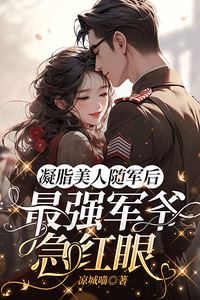
Lu Yunzheng is one of those characters who walks into a room and the atmosphere shifts. Twenty-seven, regiment commander, youngest in the entire military region — and yet the moment Lin Tingwan sits across from him, this man who has faced life-and-death battles without flinching starts stroking his knees under the table like a nervous schoolboy. Wen Chuan notices it immediately. Even the political commissar, who has seen his friend through every kind of crisis, is caught off guard by this version of Lu Yunzheng. What makes him fascinating is the contradiction. He is trained to be composed, to project authority, to speak in measured tones. But when Lin Tingwan catches his ear turning red, when their eyes meet and he looks away, the mask cracks. And then — the most telling moment — he stands up and asks her, in front of her parents, to be his revolutionary partner. Not after a week of courtship. Not after getting to know her. Right there, in a state-owned restaurant, with her father and mother watching. Wen Chuan's reaction says everything: this thousand-year-old iron tree has blossomed, but too hastily. The friend who has nagged him about marriage before now realizes that something has genuinely shifted. Lu Yunzheng, who previously wanted to scare the blind date away to avoid future complications, is now the one driving the jeep, fetching bowls, placing braised pork in her bowl, and asking the question that will define the rest of his life. Lin Tingwan's perspective on him is equally revealing. She has clearly experienced something beyond this era — the text hints at transmigration, at dissatisfaction with being sent to the 1970s — and yet when Lu Yunzheng appears, she finds herself thinking that perhaps God thought it unfair and sent a handsome man to compensate. Her internal monologue is sharp, observant, and quietly amused. She notices his red ears. She chuckles. She is not intimidated by his rank or his reputation. The relationship between them is built on a foundation of mutual recognition — he sees her as someone worth pursuing with unusual urgency, and she sees through his military exterior to the man underneath who is awkward, sincere, and surprisingly young in his emotional expression.
... Read More
There's something really profound happening in Chapter 2 that I need to sit with. Lin Tingwan's parents are frantically trying to hide their books and research materials from the Red Guards. They're moving them in the middle of the night to a dilapidated house with a cellar. And Lin Tingwan—having discovered her space—uses it to secretly preserve these books. The books aren't just plot devices. They represent knowledge, intellect, and everything the political chaos is trying to destroy. Her father's research materials are tied to a military weapons project—his life's work, his identity, his contribution to the world. The fact that people are digging up walls and floors to find 'evidence' shows how paranoid and destructive the era was. But Lin Tingwan's space becomes a sanctuary for these books. It's almost like a metaphorical ark—preserving knowledge from the flood. And the spiritual spring? It accelerates growth. It beautifies. It heals. In an era defined by destruction, decay, and suffering, this spring is a symbol of renewal and life. It's ironic that a woman who was a skincare business owner ends up with a magical spring that can literally transform her appearance and health. The universe has a sense of humor. The dilapidated house where they pretend to hide the books is also symbolic—it looks abandoned and worthless on the surface, but it's actually protecting something precious. That's basically the Lin family's situation too. They appear to be falling from grace, but Lin Tingwan is about to turn everything around from the inside.
... Read More
Okay so let me just say this part with Ye Shuwei showing up at the house? Chef's kiss. Absolute perfection. The author set this up so smoothly—first you've got the military wives gossiping about whether Lin Tingwan knows about the three kids, then the kids being hostile from the jump, and then BAM, Ye Shuwei just waltzes in while the couple is out shopping. It's like all these tiny threads were being woven and suddenly they snap together into this explosive confrontation scene. What I love most is how Lu Yunzheng completely shuts her down. He asks 'Who are you? Why are you in my house?!' like she's some random intruder. The text literally says 'puff! Lin Tingwan almost laughed out loud.' I did the same thing reading it. And the fact that he genuinely doesn't seem to remember her beyond a passing school interaction? That's not even pretending—it's him actually not caring. Meanwhile Ye Shuwei followed them ALL THE WAY HOME with dumplings like some unhinged stalker. The plot armor on this guy is real, and I am here for it. Also the subplot with the kids being manipulated is terrifying in its realism. Ye Shuwei literally tells Lu Zihang 'your uncle will naturally pamper her' and 'that bad woman will chase us away, right?' while the kid is crying. This isn't just a romance novel obstacle—this is psychological manipulation of children and the author isn't softening it at all.

Leave a comment

You must be logged in to leave comments. or
