When the Delicate Beauty Joined the Army, the Cold General Turned Possessive - Reviews

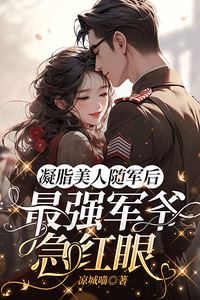
When the Delicate Beauty Joined the Army, the Cold General Turned Possessive
+Add to Custom List
Sort
Add review
... Read More
Okay so let me just say—this opening chapter situation is DELICIOUS. A woman dies in a car explosion in the 21st century and wakes up in 1975 China as a 20-year-old girl whose family is about to be sent to the countryside? That's already a solid transmigration hook. But then—BAM—she discovers a magical space with a spiritual spring that can accelerate plant growth AND beautify skin AND heal wounds?! I literally gasped. Most transmigrators get a system or a shop, but she gets a literal garden dimension? That's next-level God's favorite daughter energy. The plot structure here is tight. Chapter 1 establishes the crisis (family downfall, forced marriage), Chapter 2 reveals the golden finger (space + spring), and Chapter 3 already has her using it while also running into the male lead. The pacing of reveals is smart—she doesn't get the space immediately after waking up, there's a moment of despair where she laments having no cheat, and THEN it appears. That emotional low point makes the payoff so much better. One thing I'm already curious about: the blind date with Lu Yunzheng is set up for tomorrow, but Chapter 3 ends with her literally staring into his peach blossom eyes while he catches a thief. The author is clearly setting up their first real encounter as a dramatic moment, not some awkward formal meeting. I love that. The plot is moving fast but not confusingly fast.
... Read More
I kept expecting some grand romantic gesture and instead got something so much more powerful. Lu Yunzheng hands Lin Tingwan a box with ten thousand yuan and a passbook. TEN THOUSAND YUAN. The text explicitly notes that her own parents spent most of their lives saving just over that amount. In an era where the average salary is 40-50 yuan a month, this is essentially handing her the keys to their entire future. And he does it without fanfare—just opens the box, explains that from now on she controls the money, and says 'I will earn money for you in the future. You can spend it however you want.' Not 'you can spend it however you want' as a flirtatious line. Just... stated as fact. Like it's the most normal thing in the world. And Lin Tingwan's reaction? She doesn't swoon. She doesn't perform gratitude. She just thinks 'It would be strange if she is not happy' and then immediately starts mentally listing all the household items they need to buy. The man gives her his life savings and she's already planning wardrobes and kitchen supplies. That's not romance—that's partnership. That's two people who are building something real. The quietest moment though? When he watches her walk away and 'the smile in Lu Yunzheng's eyes became softer.' He's thinking about having a home of his own. After being alone with three kids for six months, he's finally not alone anymore.
... Read More
The dialogue in this novel is deceptively simple. On the surface, the characters speak in the formal, politically charged language of 1970s China — revolutionary partner, comrade, uncle and aunt. But beneath that surface, there is a rich subtext of emotion that the characters cannot express directly. Lu Yunzheng is the best example. He is a man of few words, and when he does speak, he tends toward bluntness. I can't pretend with her forever, can I? It's better to scare her away now than to get a divorce certificate later! This is not cruelty — it is self-protection. He has been hurt before, or at least he has watched those he loves die, and he does not want to risk another loss. But when he meets Lin Tingwan, his language shifts. He becomes more detailed, more explanatory, more vulnerable. He tells her his salary. He tells her about his children. He tells her she can keep her own job if she wants. Lin Tingwan's dialogue is equally revealing. She is sharp, observant, and unafraid to speak truth to power. If my parents are demoted, it may affect your work and even create some obstacles for your future. Marriage is not a joke, but your future is not a joke either. This is not the language of a woman who is easily intimidated. This is a woman who is assessing her partner with the same precision she would apply to any survival decision. Wen Chuan provides the comic relief, but his dialogue is also purposeful. He nags, he explains, he translates Lu Yunzheng's emotional inarticulacy into language that the Lin family can understand. When he says, We don't have to sever our relationship yet, he is doing more than comforting Professor Lin — he is acknowledging the real political fears that underpin the entire conversation. The narrative voice is omniscient but leans heavily toward Lin Tingwan's perspective, which gives the dialogue a particular flavor. We hear her internal thoughts — the amused observations, the strategic calculations, the moments of genuine warmth — and these thoughts color how we interpret every line of dialogue.
... Read More
Let me just say this about the narrative voice: Lin Tingwan sounds like a real person, not a novel character. Her internal monologue is sharp, slightly sarcastic, and full of modern sensibility without being jarring. When she first discovers she has no golden finger, she thinks: "Others are God's own daughters, but she is just a poor little one who was picked up!" That's hilarious and self-deprecating in a way that makes me want to read more of her thoughts. And her dialogue with her parents? Natural. Not stiff or overly formal. When she tells them her condition for agreeing to the blind date—"But if Lu Yunzheng isn't someone I like, I'd rather go to the countryside and suffer with you than stay behind and be someone's stepmother and servant"—it's direct, honest, and completely in character for a woman who's used to being independent. The thief scene in Chapter 3 is where the dialogue really shines. Lin Tingwan's shout of "There's a thief out front, everyone help me catch the thief!" is perfectly timed and perfectly her—she's not going to sit still while someone steals from her family. And Lu Yunzheng's line to the thief: "I've caught you more than once! Is it because the police station didn't reflect enough? Do you want to go to my place?!" is cold, authoritative, and has this weirdly funny threat that makes me wonder what kind of person this guy really is. The narrative voice also has this great balance of humor and gravity. When Lin Tingwan is thinking about her skincare business back in the 21st century and then realizes she has a space with beauty-enhancing spring water, the author lets us have a moment of pure delight before pivoting back to the serious situation. That tonal flexibility is rare.
... Read More
I started reading this at like 11 PM and now it's past midnight and I'm here writing notes because I CANNOT STOP. The pacing is absolutely ruthless in the best way. Chapter 1: transmigrates, processes the situation, agrees to the blind date. That's it. One chapter to go from 'I'm dead' to 'okay let's marry a stranger.' But it works because the author doesn't linger on the confusion for too long. Lin Tingwan is a 21st-century successful woman—she adapts quickly. Her internal monologue is efficient: assess the situation, make a plan, move forward. No wallowing. Chapter 2: discovers the space. The chapter is structured around a mini arc—despair (no golden finger?) → discovery (wait, there IS one) → experimentation (things can go in and out) → application (hiding the books). By the end of this chapter, she's already using her cheat to solve the immediate problem of saving her parents' books from the Red Guards. That's efficient storytelling. Chapter 3: goes to the department store, gets pickpocketed, meets the male lead. The chapter ends on a cliffhanger of sorts—not a life-or-death one, but an emotional one. She's looking at Lu Yunzheng and thinking about how handsome he is. The author is basically saying 'you thought the blind date was going to be tomorrow? Nope, here they are today.' What I appreciate most is that the author doesn't slow down for exposition dumps. The historical context is woven into Lin Tingwan's observations and her parents' conversations. We learn about the Gang of Four, the countryside re-education, the political climate—all through character interaction, not narration. That's how you keep momentum.

Leave a comment

You must be logged in to leave comments. or
