We Have Broken Up - Reviews

We Have Broken Up
+Add to Custom List
Sort
Add review
... Read More
Okay so I need to talk about this one moment because my heart literally hurt reading it. Chen Qian is sitting on that stone bench, phone in hand, about to call his mom after all these years of no contact, and Liu Fan is beside him nervous as hell even though he's not the one making the call. And then when his mom's voice comes through — gentle, saying let bygones be bygones — Liu Fan just... quietly hugs him. No dramatic speech, no big declaration, just that simple physical gesture of being there. I keep coming back to this scene because it tells you everything about their relationship. Liu Fan has been the steady one since chapter one, the guy who shows up, peels garlic, cracks terrible jokes to defuse tension, and stands beside Chen Qian when he needs to face his father. But here, Chen Qian is the one who has to make the call. He has to be the brave one. And Liu Fan's only contribution is an arm around his shoulder. It's not the most romantic moment you'd see in a novel — no flowers, no grand confessions — but it's the kind of love that actually lasts. You don't need fireworks when you have someone who will sit with you on a bench in a residential garden and hold you while you say sorry to your mom after years of silence. "Let bygones be bygones. Don't say that." Zhao Rou's line hit me hard too, honestly. The fact that she's willing to turn the page already, while Chen Qian is still gathering courage to dial — that contrast made me want to shake him gently and also cry at the same time.
... Read More
I need to talk about Liu Fan because this man is something else. Look at him—he's serving dragon fruit and toast to his boyfriend's stressed-out mother like he's been doing it his whole life, and then five minutes later he's texting Chen Qian like 'hey your parents are playing psychological warfare and I think we might actually win.' The contrast is hilarious and deeply endearing. He's not subtle by design. When Zhao Rou drops that loaded line 'I think you two can be together for a lifetime,' Liu Fan literally sits up straight. He doesn't dodge it. He doesn't play it cool. He gives her this sincere, almost painfully honest response about never giving up. And THEN he immediately pivots to asking directly whether something happened with Shushu. This man has the emotional radar of a golden retriever—warm, direct, occasionally embarrassing everyone around him, but fundamentally trustworthy. Zhao Rou is equally fascinating. She's clearly been carrying this weight alone, and the way she tests Liu Fan—offering him that dragon fruit half, watching him move around the house, evaluating whether he's reliable enough to be an ally—is so quietly intelligent. She's not just a worried mom; she's a strategist who just realized her son's partner might actually be on her side. The moment she says 'As long as I'm here, you two just need to live your lives well'—that's not just permission. That's a maternal declaration of war against whatever her husband is planning. And Chen Qian, miles away in City S, trusting Liu Fan to read between the lines? That's relationship gold right there.
... Read More
There's this subtle layering of domestic imagery throughout these chapters that I think the author is using deliberately. Sun Yiyi is peeling garlic. Chen Qian steps in to help. They're cooking together in her kitchen, a space that should feel warm and welcoming, and yet underneath all the cheerful chatter about insurance and matchmaking, there's this undercurrent of everything unsaid. The stewed chicken with chestnuts gets placed furthest from Liu Xing — Sun Yiyi's passive-aggressive maneuver against the dad who stayed up all night watching games instead of being present. And Liu Xing, completely oblivious, happily drinks with Chen Qian. Like father, like son — both unreliable in their own ways. Then Chen Qian describes his family as an unfinished book: "If a family was like a book, it seemed everyone around had fulfilled their wishes and completed their tasks, while Chen Qian was still stuck in an unfinished story." That metaphor is devastating in its simplicity. Everyone else has chapters that are closed and tied up neatly — Zheng Nian is sorted, Li Yu is getting his parents back, Liu Fan has his happy family — but Chen Qian's story is still hanging in mid-air, waiting for a ending he doesn't know how to write. The chicken stew, the garlic, the phone call — these are all rituals of connection, attempts to build something warm and lasting. But they're fragile things, especially when the foundation is built on years of running away.
... Read More
Okay I need to talk about the turtle. I keep thinking about it and I can't shake the feeling that it means something bigger than just "Liu Fan wanted to make soup." A turtle. Living in a plastic bucket in the bathroom. Huddled and indifferently retracting its head when poked with chopsticks. Then stepped on and ended in three seconds by someone who came out of bed half-asleep and did it without hesitation. There's something almost mythological about this sequence. The turtle is vulnerable, slow, withdrawn — it huddles and ignores the world around it. Liu Fan tries to approach it carefully, awkwardly, not knowing what he's doing. And Chen Qian, who has survived far worse than a kitchen chore, handles it with brutal efficiency. But it's the soup that matters. Turtle soup, made with free-range chicken, simmering for hours. This is food meant to nourish, to restore strength, to heal. Chen Qian is exhausted — physically, emotionally, financially — and Liu Fan is trying to feed him something that will make him better. Not with words, not with grand gestures, but with a pot on the stove at home. And Chen Qian lies in bed afterward, eyes closed, frowning, unable to rest. The soup is cooking but he can't come down. Because what feeds the body doesn't always feed the soul. That gap between the domestic tenderness of making soup and the hollow exhaustion of lying in bed — that's where the real story lives. It's about trying to care for someone when you're barely surviving yourself.
... Read More
The atmospheric writing in these chapters is so specific I can literally feel the humidity. You've got the sticky residue of summer barbecue, the clatter of soy milk being set down, the damp shirt clinging to Chen Qian's back after those skewers—and then this sudden shift into the quiet, dimly lit bedroom with just a floor lamp buzzing away. It's such a grounded, tactile world. The author doesn't just describe a place; they describe a vibe. That cooling blanket draped over Chen Qian's thighs isn't set dressing; it's a temperature gauge for their intimacy. It's practical, domestic, slightly absurd, and somehow more erotic than any silk sheets scene I've read. And the bathroom scene—ugh, the sound of running water while Liu Fan is stranded answering phones? It creates this wall of sound that separates the private from the intruding. When Liu Fan finally gets to bed, still damp from his own shower, the contrast between the sweaty public meal and the quiet private space feels earned. The world here breathes. You smell the charcoal, you feel the stickiness, you notice how Chen Qian's borrowed underwear is visibly too tight. That's not just physical description; it's emotional cartography. Every object in that two-room apartment tells you something about their lives: the mismatched sizes, the shared space, the way Chen Qian rummages for fresh sheets without being asked. The setting isn't a backdrop—it's a participant. It holds them. I keep thinking about how the entire emotional重量 of this chapter is carried not by dialogue but by environment. The dim light, the damp skin, the abandoned blanket on the floor… it all builds a world where love isn't a concept, it's a climate. How many more mundane objects will the author weaponize for romance?
... Read More
What I love about the dialogue here is how each character's voice is immediately distinguishable, even in the most mundane exchanges. Chen Qian: direct, slightly impatient, but the softness always leaks through. "Hurry up. We'll go out for breakfast, and then I'll drop you off at work." — command, but he's already planning the next four hours around Liu Fan's schedule. "I'll eat at the office." — when Liu Fan asks if he ate, and Chen Qian bought him congee and steamed buns but didn't get anything for himself. That's a whole personality in three words. Liu Fan: slower, more playful, deliberately teasing. "Can you hurry up?" "What's the rush?" "Being late is fine." He's the chaos to Chen Qian's structure, and it works. His deadpan delivery of "A boy" to his own mother is chef's kiss — completely unbothered in a way that probably drives Chen Qian crazy (affectionately). The banter between them is effortless: "You're just lazy. You think I don't know that?" / "I'm not an idiot." This is a relationship that has deep shorthand. They don't need to explain themselves. But the real dialogue gem is Chen Qian's panic about meeting the parents: "It's precisely because your mom knows me that I'm nervous. How does a son's good friend turn into a boyfriend? What kind of thing is that?" That raw, almost childlike honesty. He's not performing. He's genuinely trying to articulate a fear that has no logical framework. And Liu Fan's internal narration about his mom's likely reaction — "The worst part would be if Sun Yiyi thought Chen Qian had led Liu Fan astray. Her reaction would be unpredictable." — this is the author's voice slipping in, and it's sharp. Observant. Protective. The mother's dialogue is pure chaos energy: multiple people talking over the phone, exclamation points flying, her voice going from market-normal to full meltdown in one sentence. It's hilarious and also deeply real. Every family has that one phone call where everything changes and nobody knows how to handle it.
... Read More
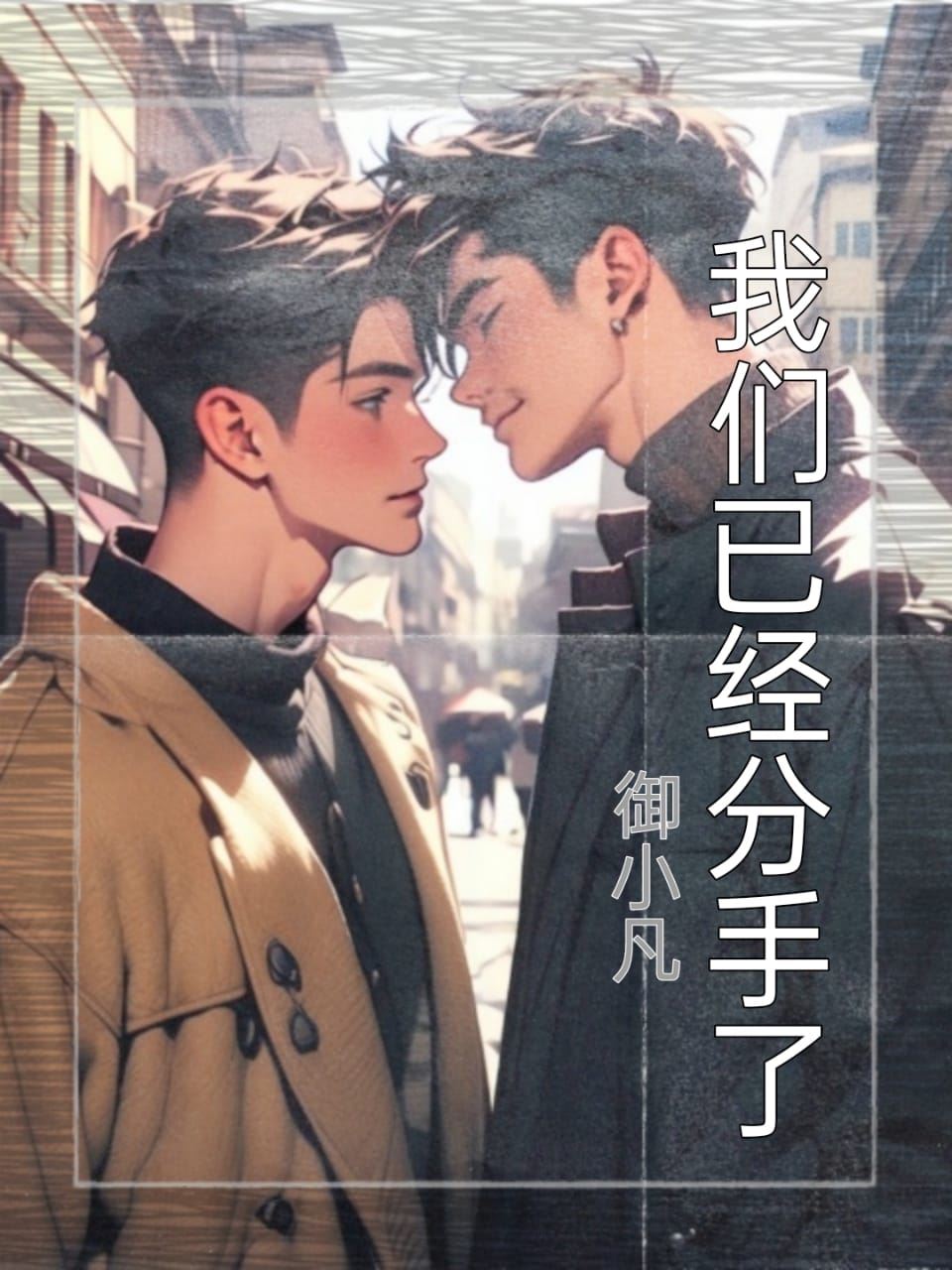
The chapter title is 'No 'What Ifs'' and I think that's the key to everything. Their entire relationship has been built on what-ifs — what if Chen Qian had come looking for Liu Fan that summer, what if Liu Fan had gone out, what if someone had just said the thing instead of waiting for the other person to read their mind. The twisted ankle is obviously symbolic. Liu Fan is physically unable to move freely, and emotionally he's been limping since whatever happened between them. Chen Qian carries him — literally, half-lifting him, supporting his weight — which is the perfect metaphor for their dynamic. One is always stumbling; the other is always catching him, even when he's pretending not to care. The desktop organization is another symbol I can't shake. Chen Qian imposing order on Liu Fan's chaos — this is what he's always done, this is how he shows love. Not with words but with action. Folders named 'TOEFL 100 Days' — he knew about Liu Fan's exams, his goals, his struggles. He was watching. He always watched. And the GV video as symbol... it's raw desire, yes, but also vulnerability. Liu Fan's most private self, laid out in randomly named files. Chen Qian clicking on it, seeing it, and then CLOSING IT because he can't handle seeing Liu Fan like that. Or maybe because HE's the one who can't handle himself. The caption from the author says Chen Qian is like a 'grumpy old cat' — and that's exactly what this is. A cat that purrs while pretending to swat. The sun imagery throughout is also significant. Liu Fan's heart 'like a can under the scorching sun, stuffy and restless.' That summer heat wasn't just weather — it was the pressure of unexpressed feelings, of waiting someone out, of brewing in silence. And now, months later, Chen Qian is back in the same heat, same apartment, same unresolved tension. Only now the wound is visible — literally, on Liu Fan's ankle.
... Read More
There's a moment in this chapter that I kept coming back to and honestly I don't even know why but I do. Liu Fan is lying on his sofa, injured, phone in his left hand, chatting with his friend about his cat's shedding problem like nothing is wrong. Normal life continuing. And then Tuan Tuan starts being weirdly caring—"Did you apply a cold compress? Did you use any medicine?"—and Liu Fan finds himself oscillating between "why is this person being nice to me" and "this is actually really sweet." The line that got me was when he laughed at her message about his ankle swelling "like a steamed bun for breakfast." For someone who describes himself as reclusive, who doesn't attend social gatherings, who can't even bring himself to ask for help—this small moment of genuine connection through a phone screen matters more than the text lets on. And then Chen Qian calls. And Chen Qian comes over. And the whole chapter ends with Chen Qian looking at his swollen ankle with an expression the narrator describes as something unspoken. I keep thinking about what that look meant. Was it concern? Amusement? Something else entirely? I need to know what happens next.
... Read More
Okay, let me just say this right off the bat — the way this chapter handles the ex-reveal is absolutely BRUTAL and I am NOT okay. "Did you run into someone you used to have a crush on? But they are already grocery shopping with their kids?" — Liu Mengjiao has no filter and I love her for it. But then the real gut punch hits when Liu Fan finally cracks and admits it was his ROOMMATE. The last few words were mouthed silently. A nod. That's it. No dramatic breakdown, just this quiet devastation that says everything. And then there's the subtext about Chen Qian. Oh man. The phone call from Li Yu at Fanyu Company — Liu Fan's immediate thought is "It better not be Chen Qian's order..." and of course it is. The author doesn't need to show us the breakup, doesn't need to tell us what happened — we already KNOW Chen Qian broke his promises to Liu Fan, but he ALWAYS fulfilled every promise he made to him in the past. So what changed? What happened between them? The line that absolutely wrecked me: "Even though they were roommates, living with six people together didn't allow for them to do much. However, the cautiousness hidden from everyone's view always carried a hint of uncontrollable feelings that belonged to that time. It was filled with nervous excitement." — THIS is the kind of nostalgic yearning that hits different when you're already sad about the current situation. Two losses, one chapter. Also, can we talk about Liu Mengjiao being absolutely perfect? She immediately pivots when she realizes Liu Fan is hurting: "A good horse doesn't turn back to graze on old pastures." She's reading the room. She's a good friend. Meanwhile she's wrapped in a blanket under the AC because she's cold, and Liu Fan calls her out: "Escape the heat? You're wrapped in a blanket with the air conditioning on, what heat are you escaping from? Are you a mouse?" — COMEDY RELIEF AT ITS FINEST. The contrast between her lightheartedness and his pain is so well done. And that ending with the QQ chat from Tuan Tuan — Liu Fan thinks it's a "soft girl" with the panda avatar, completely oblivious to the fact that he's about to be thrown back into Chen Qian's orbit. The dramatic irony here is SUFFOCATING in the best way.
... Read More
I have never related to a piece of fruit so deeply in my entire reading life. Let me explain: Liu Fan handing Zhao Rou half a dragon fruit with a small spoon is one of the most tender, loaded domestic moments I've ever encountered. It's just... fruit. But it's also him saying 'I see you're uncomfortable, let me make this easier for you without making it a thing.' That's the language of someone who's learned to love Chen Qian's mother the way you love someone your partner loves—through small acts of service, through peeling apples and heating up leftovers and remembering she likes the red dragon fruit because it's sweeter. And then there's Zhao Rou's line: 'I think you two can be together for a lifetime.' Read it again. That's not a compliment. That's a mother who has spent years worrying about her son's happiness, who finally sees someone who might actually be good for him, and she's essentially praying out loud. The sadness that flickers across her face when she talks about Chen Qian being like his father? That's the grief of a woman who lost her husband's warmth and is now watching her son navigate a world that didn't make space for people like him. Liu Fan's response—'no matter what happens, I will never easily give up on our relationship'—is the kind of vow that doesn't need grand gestures. It's quiet. It's real. It's the kind of thing that makes you want to text your partner immediately after reading it. The author doesn't melodramatize any of this. No tears, no dramatic music. Just a mother and her son's partner sitting in a living room, eating dragon fruit, building an alliance one polite conversation at a time.
... Read More
So the author makes a really interesting structural choice here. You have THREE scenes that seem totally disconnected but are actually weaving together like a triptych: Scene one: Hospital. Cold. Bright. Chen Qian delivering emotional devastation to Li Yu with surgical precision. Every line is short, clipped, almost too controlled. Scene two: The parking lot. Single paragraph. Chen Qian alone in his car, cigarette smoke, and then—the whole emotional core of the novel is revealed in like four sentences. This is the pivot point of the entire arc and the author hides it in what looks like a throwaway moment. Scene three: Liu Fan's apartment. Warm, domestic, mundane. Liu Mengjiao talking about housing prices and hot pot discounts. A complete tonal shift that makes the reader go 'wait, what?' right before Chen Qian shows up wearing THAT ring and messes up a name. The pacing here is masterful because the author lets you BREATHE between the high-tension hospital scene and the parking lot confession drop. If both had happened back-to-back without the Liu Mengjiao interlude, it would have been too much. Instead, the mundane realism of apartment-hunting acts as emotional pressure relief—and then BOOM, the ring detail lands like a sledgehammer. Also love how the chapter title 'You Should Have Told Me Earlier' works on two levels: it's Chen Qian speaking to Li Yu about the confession, but it's ALSO Chen Qian speaking to himself about Liu Fan. The irony is delicious.
... Read More
Can we discuss how these two actually sound? Because the dialogue here is a masterclass in what characters withhold. Chen Qian's voice is all clipped sentences and deferred decisions. “Nothing much. Just talked about recent happenings.” That's it. After potentially the most important conversation of his life, and he reduces it to small talk. But Liu Fan hears him—he notes the tension easing, decodes the subtext instantly. Their communication isn't in grand declarations; it's in the space between lines. Liu Fan, meanwhile, uses humor as a buffer. “I'll just have a bowl of beef noodles tonight.” “I had nothing to do at home anyway.” He deflects, jokes, makes himself small so others don't have to manage his anxiety. Even his care-taking is verbalized indirectly: “I should probably make him some soup to help him recover.” Not “I worry about you,” but “I will perform an act of service.” Zhao Rou's voice is the most articulated, which makes sense—she's the mediator, the translator between worlds. “Instead of trying to change an unchangeable fact, it's better to find ways to understand it, which makes it more acceptable.” That's not just maternal wisdom; that's a philosophy of survival. And Chen Chong? We barely hear him, but his absence is a voice. Every carefully worded message from his son, every softened tone, is a direct response to the ghost of his temper. The narrative voice itself is interesting too—close third, but it leans into Liu Fan's perspective without fully entering his head. We get his observations, his guesses (“maybe he was beaten to death at home…”), but never his raw interiority. It creates this distance that mirrors how Liu Fan holds back even from himself. The dialogue and narration together build a world where love is something you orbit, never quite touch.

Leave a comment

You must be logged in to leave comments. or
