We Have Broken Up - Reviews

We Have Broken Up
+Add to Custom List
Sort
Add review
... Read More
The chapter is called 'Nostalgia' and yet nostalgia is never really discussed. It's implied everywhere. The gardenias are the obvious symbol here — they're described as 'giving off a sweet scent like melting sugar' and filling the midsummer night. But think about what gardenias actually represent: they bloom in summer, they're intensely fragrant, and their scent is almost cloying, impossible to ignore once you catch it. These are flowers that announce themselves. And Liu Fan's neighborhood is full of them. Is this accidental? I don't think so. Then there's the wallet. Liu Fan forgets it — again. This isn't just comedic fluff. He forgets things. He's scattered. He's a person who moves through life slightly off-balance, and Chen Qian, who is controlled and precise and never seems to forget anything, is always the one catching him. Paying his meals. Driving him home. Telling him to stop being ridiculous. This dynamic hasn't changed in seven years. The roles are the same. Only the labels have shifted from 'boyfriend' to 'client.' And the unfinished invitation — "I..." — that trailing off. What is it symbolizing? That neither of them knows how to finish this sentence? That the word they're both reaching for doesn't exist in the language they're allowed to use anymore? Or maybe it's simpler than that: maybe it's the moment where the past and the present collide and neither person has a script for what comes next.
... Read More
The way this author builds atmosphere through setting is so effortlessly immersive. That opening description of the school entrance—'bustling with people,' 'young and fresh-faced high school students'—immediately drops you into this bittersweet sensory world. But the real magic is in the details that anchor memory to place. The sycamore-lined road that 'looked just the same as before' despite ten years passing. Gardenias blooming in the flowerbed along the wall, small bursts of white in mid-April. The thin iron fence separating them from the sports field, creating this visual barrier that mirrors their emotional distance. I loved the contrast between the public celebration (the anniversary, the crowd, the basketball game) and their private, almost invisible moment between the two teaching buildings. There's this one shot where Liu Fan feels a 'cool sensation on his face' from Yan Yi's water bottle—a tiny, intimate gesture in the middle of a noisy crowd. The world feels lived-in and specific, not generic. You can smell the early summer air, hear the squeak of sneakers on the court, feel the weight of exhaustion after hours of playing. The school isn't just a backdrop; it's an emotional landscape. Every tree, every pathway, every fragment of architecture holds memory. And the way the author uses these spaces to reflect internal states—Chen Qian's tightness mirrored in the narrow fence view, Liu Fan's restlessness in the crowded gates—makes the setting itself a kind of character. This isn't worldbuilding for its own sake; it's worldbuilding as emotional resonance.
... Read More
I'm not okay. I am genuinely not okay right now. The way Li Yu clutches that blanket like he's cold, even though he's literally pouring his heart out to the person he's loved for six years—the fact that when Chen Qian correctly guesses his feelings, Li Yu doesn't feel nervousness or warmth but just... hollow laughter. That moment where he says 'You knew?' and Chen Qian says 'I only found out these past few days'—I felt like someone punched me in the chest. And Chen Qian's reaction is so... Chen Qian. He's not cruel, exactly. He says 'Focus on getting better. Stop worrying your parents and don't dwell on unnecessary things. You don't know how lucky you are.' Which is both incredibly caring and completely missing the point. He's treating Li Yu's confession like a medical symptom rather than what it actually is. But then in the car, alone, cigarette in hand, the mask completely drops. 'Liu Fan didn't need to do anything.' That's the most romantic thing I have ever read in my entire life and it's destroying me. This man has been carrying this feeling for YEARS and he would rather choke on it than speak it aloud. Six years of silence and this is the most honest sentence he's ever spoken about love. Meanwhile Liu Fan is sitting there wearing an engagement ring and Chen Qian calls his friend the WRONG NAME. My emotional state cannot sustain this level of torment.
... Read More
Let's talk about how each character sounds in this chapter because the dialogue work is *chef's kiss*. Chen Chong's voice is razor wire. Every sentence comes out like a verdict: "Ridiculous." "You are not welcome here. Please leave." "Do you think I can't handle you anymore?" Not one of these lines has warmth or even the pretense of it. He's not even yelling—he's barely above a whisper and it's MORE terrifying for it. The author knows this guy doesn't need to raise his voice to dominate a room. Chen Qian is different. His dialogue here is reactive, defensive, but there's a shift when he's talking to Liu Fan. Notice how he softens? "Alright" when Liu Fan suggests getting food. Feeding Liu Fan without being asked. The dialogue between them is almost entirely actions, not words—and that's the point. They don't need to speak to each other to communicate. Liu Fan's voice is the quietest but also the most observant. He notices things. "He bought an extra portion" even though he knows Chen Chong won't appreciate it. His internal narration is gentle, almost painfully so, and it creates this really interesting contrast with the sharp external dialogue. And the narrator's voice? Deadpan gold. "Chen Chong, silent and stern, stood stiffly like a stone"—that description of him just standing there while everyone else is in chaos is so vivid. And "the atmosphere in the room had become extremely tense with the three of them standing there" after the nurse leaves? I can literally feel the silence. The author's dialogue style here proves you don't need flowery prose to make a scene unforgettable. Sometimes a father saying 'you are not welcome here' and a son picking out his partner's vegetables says everything.
... Read More
"In just four years, it was hard to believe that the impulsive and irritable boy had transformed into such a responsible and capable man." This line hit me in the chest. Four years. They were inseparable before 18, and then just... cut off. No explanation, no fight, no closure — just silence that turned into a professional assignment. Liu Fan looking through Chen Qian's personal photos like he's trying to memorize someone he used to know is basically the visual of grief without permission to grieve. And then his coworker Liu Mengjiao asks if he's single and Liu Fan just blurts 'Gay' like it's the most casual thing ever. Is he deflecting? Is he protective? Or is he still processing his own feelings while pretending this is all just business? The fact that he has no psychological barriers about seeing Chen Qian again but is visibly uncomfortable with Liu Mengjiao's teasing tells you everything. He's fine with the ex-best-friend-turned-boss scenario but can't handle having to explain WHY it matters.
... Read More
The chapter ends with Liu Fan in full Munch's 'The Scream' pose trying to dodge a blind date his mom arranged for Saturday — THE SAME SATURDAY he's meeting Chen Qian. This isn't just comedic relief, this is the author setting up a collision course. The external conflict is clear: professional obligation vs. family pressure. But the INTERNAL conflict? He's about to see the person he never properly left behind, dressed up in a suit as his client, while his mother thinks he needs to find someone new. The stakes aren't just 'will he get the job done' — it's 'what happens when he looks Chen Qian in the eye after four years of silence and realizes he still feels something?' And Liu Mengjiao asking 'Is he THE one?' with eyes shining like she's already solved the mystery? She's not wrong, and Liu Fan knows it, which is why he puts on his headphones and hides behind 'It's work hours.' The suspense isn't whether they'll meet — it's whether either of them will survive the meeting intact.
... Read More
I need to talk about this one scene because it destroyed me in the best way. Chen Qian comes home drunk, and what does he bring back? A banana dessert from Xuanhe Ju. He was carrying it carefully in a bag the whole time despite being this wreck of a man. Liu Fan just puts it in the fridge without even thinking about it, like it's the most normal thing in the world. That's the thing about their relationship now—it's not grand gestures, it's just... banana desserts at midnight and falling asleep watching Bilibili together. But then the real gut punch hits. Chen Qian keeps saying "Nothing has changed" under his breath. And Liu Fan immediately pushes back: "How can you say nothing has changed? This time, you're brave enough to take me home." I swear to god. Liu Fan seeing the growth where Chen Qian himself can't see it. That line about trusting Chen Qian more now AND trusting himself more—that's the whole emotional journey of this story crystallized into two sentences. And the morning-after domesticity—Chen Qian driving him to work every day, Liu Fan pretending to dissuade him while secretly being happy about it. Liu Fan staying over during weekdays now instead of just weekends. These tiny shifts in routine that show how much closer they've gotten. The author doesn't need dramatic confessions or tearful declarations. Just a guy bringing his partner a banana dessert when he's stressed and drunk. Who are we kidding, that's more romantic than anything in those cheesy romance novels.
... Read More
The atmosphere in this chapter is absolutely suffocating in the best way. It's nighttime, they're in bed, separated by darkness and seven years of silence. The author sets this up like a confessional booth but makes it feel way more intimate because they're actually lying next to each other now. I keep coming back to the sensory details—the cold trembling hand, the laboured breathing, the familiar scent that makes Liu Fan drowsy. These aren't just decorative; they ground the emotional revelation in physical reality. The scorching sun imagery for Chen Qian's past as a struggling salesman really paints the contrast too. While Liu Fan was doing the privilege thing of being able to sit in a library and daydream, Chen Qian was out there in the heat, getting rejected, networking at dinner tables, swallowing his pride for a shot at this. And the ending—oh god, the ending. The physical escalation from whispered confessions to biting and blood is so perfectly chaotic. It's not romantic in a traditional sense; it's desperate and messy and real. The transition from tears to arousal to that violent tenderness of mouths colliding... the author doesn't flinch from showing how trauma and desire can occupy the same body at the same time. That image of Chen Qian's gaze 'focusing like a paintbrush' right after everything unravels is cinematographic perfection.
... Read More
Let me talk about the structure of this chapter because the author really knows how to manipulate energy. Chapter 97 starts SO CALM — Chen Qian driving, smiling, Liu Fan making observations about how handsome he looks. There's this warm, almost lazy opening where Liu Fan brings up that other guy's hostility and Chen Qian just LAUGHS at him. It's sweet. It's easy. We're cruising. Then BAM — they arrive at the Liu residence and the energy shifts completely. The scene becomes this tightly wound domestic drama with three generations navigating an uncomfortable conversation. Liu Xing's awkwardness, Sun Yiyi's theatrical seriousness about contraception, Chen Qian performing perfect hospitality while clearly internalizing everything. The pacing here is deliberate — we linger on details (the food, the seating arrangements, the silent exchanges) which makes the tension accumulate slowly. But then the author does something really smart. After the visit, instead of resolving anything, they just... cut to silence. 'After leaving the Liu family home, the two maintained a tacit silence.' One line. That's it. The entire emotional fallout of the dinner gets compressed into two words and a car ride. And then the chapter essentially dissolves into this series of small friction points — the gifts, the lifting, the 'you don't need to treat me like a girl' moment — each one escalating slightly until Chen Qian's final exasperated outburst. The chapter ends on what feels like a cliffhanger emotionally rather than narratively. We don't know if they'll resolve this or if it'll fester. And honestly? That's brilliant pacing. The author trusts us to sit with the discomfort instead of wrapping it up neatly. The story breathes.
... Read More
The pacing in this chapter is masterful. It starts slow — almost comically slow — with Zhang Zhou delivering his proposal like a business presentation. Annual salary: 200,000 yuan. Property: owned, mortgage in ten years. Future plans: adoption via collateral relative. Dog preference: golden retriever. By the third point, Liu Fan is already speechless, and the reader is too. The author lets this absurd thoroughness breathe, letting us sit with the awkwardness. Then — boom — Chen Qian appears. Just like that, the entire emotional temperature shifts. One moment it's a practical discussion about financial security, the next it's a collision with the past that rewrites everything. The transition from Zhang Zhou's lemon-water calm to Chen Qian's composed-but-shaken 'What are you doing here?' happens in a single beat, and it's devastating. What's brilliant is how the author controls the reveal. We don't get backstory about Liu Fan and Chen Qian. We don't get explanation for why Chen Qian is in City M. Instead, we get fragments: 'He has pretty low emotional intelligence,' and 'You're in an unstable headspace.' These shards of information hover between the characters like ghosts, and the reader is forced to fill in the blanks. The cliffhanger ending — Liu Fan turning back, Li Yu smiling, Chen Qian silent — leaves everything suspended. No resolution, no clear path forward. Just two people who should be able to talk but can't, separated by exactly two steps on a restaurant staircase.
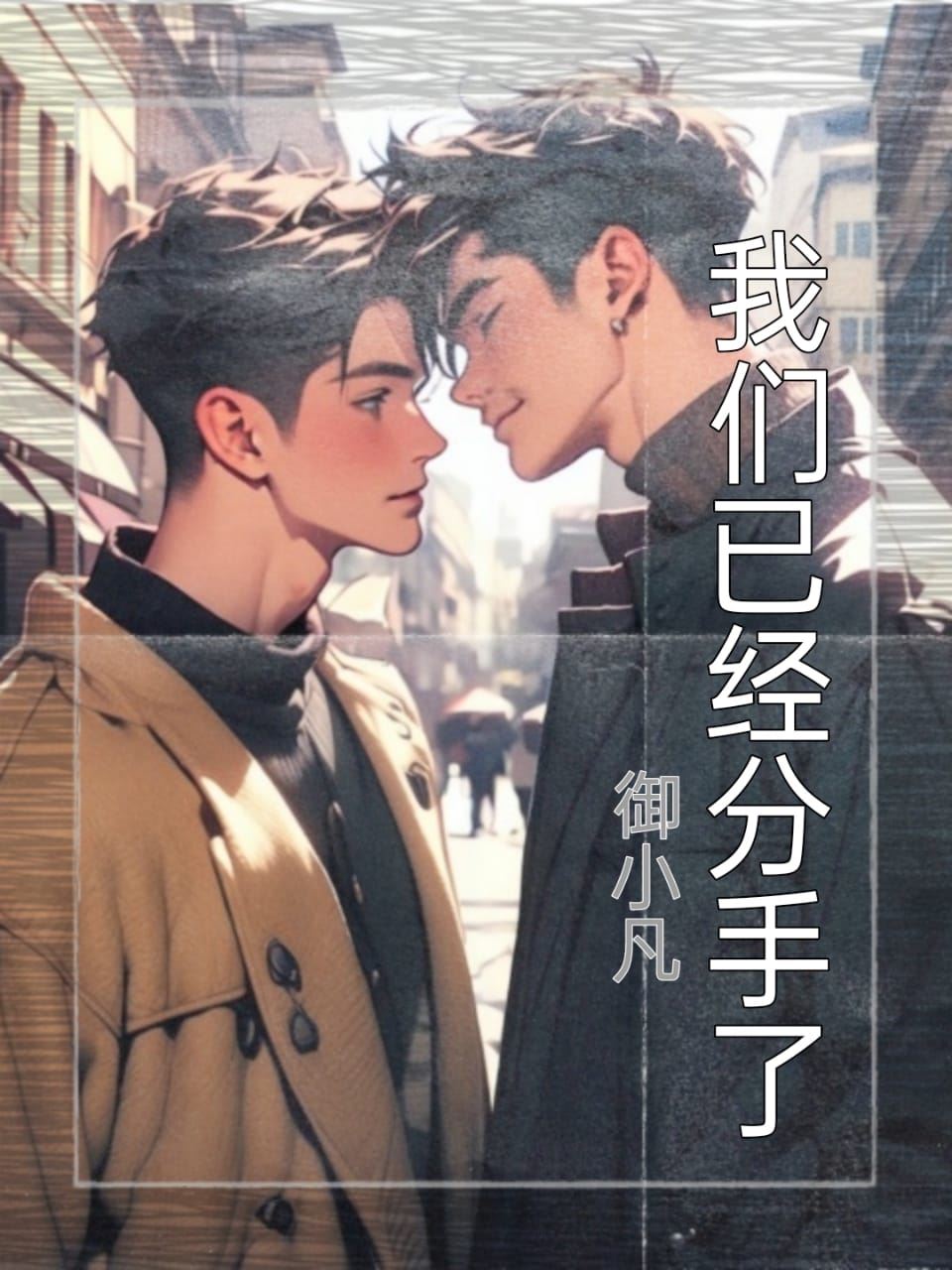
... Read More
I've read this chapter three times now and each time I notice something different about how the author structures it. Let me break it down because honestly the pacing here is *chef's kiss*. It opens with what feels like a standalone scene—Guo Yan's coming out moment. On its own, it's a solid character beat. But then the author doesn't let it land and immediately pivots to Li Yu's hospitalization. Two emotional threads running in parallel, and they CRASH into each other at the lunch table. That's when the real tension starts. Liu Mengjiao leaves early because the atmosphere is 'suffocating'—she's the canary in the coal mine, sensing the drama before Liu Fan even names it. What I love is that the author doesn't resolve anything. Guo Yan's confession just... hangs there. Li Yu's feelings for Chen Qian are exposed but not confronted. Liu Fan and Chen Qian's argument is simmering but neither addresses the real issue. The chapter ends on Liu Fan chuckling while Chen Qian asks 'what are you laughing at'—and then it cuts off mid-sentence. That cliffhanger is everything. It's not a dramatic 'I'm leaving you' moment, it's just... life. An unfinished sentence that mirrors how these characters never actually finish their conversations. The chapter transitions are also smooth. Office scene → car ride → restaurant → internal reflection. No jarring jumps. Every scene feeds the next one like dominoes. I stayed up way too late finishing this batch because I couldn't stop.
... Read More
Can we just talk about the ending of this chapter for a moment because IT KILLED ME. After the entire emotional whiplash — the shouting, the shattering glass, the threats, the laughter, the sweeping — Liu Fan gets into bed and just... lies there. And Chen Qian stands at the doorway. Neither moves. Neither speaks. The translator even noted this: 'CQ is still traumatised with LF leaving. It's cute but also sad at the same time. *sighs*' And yeah, that's exactly the vibe. It's not romantic in a fluffy way. It's romantic in the way that two people who are deeply, complicatedly in love with each other sit in the wreckage of their own history and don't know how to touch without hurting. The line that got me was: 'For some reason, Liu Fan suddenly felt like crying. It wasn't sadness or grievance. He had already been angry and laughed it off. Now he just felt suddenly calm and inexplicably tired.' Not sad. Not angry. Just... tired. The kind of tired that comes from loving someone who also loves you but neither of you know how to be close to anymore. And then Chen Qian finally gets into bed — 'the bed dipped, showing that Chen Qian had come over' — but they lie on opposite sides with 'a large empty space between them.' That empty space in the bed is probably the loneliest thing in this entire novel. They physically chose an extra-large bed to prevent Liu Fan from falling off, and now that same choice means they can't even bridge the gap. I swear I felt physically sad for them.

Leave a comment

You must be logged in to leave comments. or
