Warm Spring in the Brocade Palace - Reviews

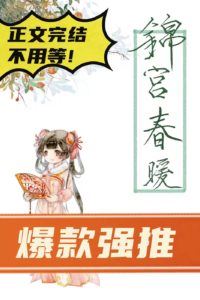
Warm Spring in the Brocade Palace
+Add to Custom List
Sort
Add review
... Read More
Let's talk about stakes, because this novel is quietly building some serious dramatic tension and I need to process it. On the surface level, the conflict is simple: Xijin doesn't trust her husband because he won't let her see his pendant. But that's not really the conflict, is it? The pendant is just the symptom. The disease is that this marriage was built on a foundation of compromise, not choice. Xijin wanted Huo Erlang. She got A Chou because her parents arranged it. A Chou is a Male Matrilineal Marriage—someone who entered this family out of necessity, not desire. He was starving, Father saved him, and now he's expected to play the role of husband to a woman who never chose him. What are the stakes if this secret comes out? I'm guessing more than just marital discord. The pendant has engravings. A Chou has treasured it since before he met Xijin. He was poor, scrawny, on the verge of starvation when the Nings took him in. Whatever that pendant represents—it could be his only connection to a life before the Ning family, a family he may have abandoned or been forced away from. If Xijin discovers what it is, what it means, who it belonged to—does that threaten the legitimacy of their marriage? Does it threaten his position in the household? Does it threaten Mang Er's standing as the heir? And what about Xijin's stakes? She's a spoiled daughter of a wealthy merchant family who got whatever she wanted—until she didn't. She wanted Huo Erlang and couldn't have him. She wants to understand her husband and can't. She wants to feel secure in her marriage and can't, because there's this one small object that represents everything she can't have. The stakes for her aren't just emotional—they're existential. In a society where a woman's identity is tied to her marriage, not knowing your husband is a kind of death. The external conflicts are equally pressurized. Sun Momo is watching, waiting, ready to challenge A Chou's authority at any moment. The ancestral hall rituals remind us that every action is being measured against tradition. The Ning family's wealth and status mean that any scandal would have consequences far beyond the couple themselves. But the real tension—the thing that keeps me turning pages—is the internal conflict. Xijin doesn't just want to know about the pendant. She wants to know if A Chou has ever truly chosen her. The pendant is the physical proof that he has a private self, a history, a set of values that exist entirely outside of this marriage. And that terrifies her more than any scandal ever could. How long can this hold together? Not long. I can feel it. The longer the secret stays hidden, the more it corrodes everything else. And when it finally comes out, it's going to change everything.
... Read More
Let me just say this: the pacing in these first seven chapters is absolutely ruthless and I respect it so much. Chapter 1 opens with firecrackers and a bed scene that's warm, slow, almost sleepy. The prose moves at the pace of someone waking up—lingering on details, on textures, on the way light comes through brocade curtains. Xijin doesn't want to get up. A Chou feeds her lychee. There's this lazy, domestic rhythm that makes you feel like you're lying in that bed with them. It's deliberate. It's comfortable. And then Chapter 2 starts and the pace shifts. Breakfast. The nursemaid brings Mang Er. The conversation about silk clothes versus old clothes—tradition versus modernity, which is a theme the author keeps circling back to. And then: the pendant. In the middle of what should be a tender family moment, the author drops this revelation like a stone into still water. Xijin remembers being humiliated. She's nursed resentment for three years. And A Chou just… acts normal. He coaxes the child. He promises the pendant to Mang Er. He paints Xijin's eyebrows. The scene continues as if nothing happened, which is somehow more disturbing than if he'd snapped at her. What I love about this pacing is that the author never stops to explain. There's no internal monologue where Xijin analyzes her feelings about the pendant. She just feels them—irritation, curiosity, hurt—and the reader feels them too because we're given no context, no backstory, no resolution. We're left in the same position as Xijin: knowing something is wrong but unable to name it. The Sun Momo interlude is also a masterclass in pacing. Right after the tension of the pendant scene, we get this almost comedic beat of an elderly maid nattering about ancestral hall etiquette. It's a breath, a release of tension—but it's also a reminder that the social pressures around Xijin and A Chou's marriage are constant and inescapable. Even in their private moments, there are people watching, judging, managing. And then the chapter ends with Xijin demanding pearl powder from Yanjing City, which is both a genuine desire and a test—a way of reaching for control in a situation where she feels powerless. The author closes on this note of restless dissatisfaction, and I immediately want to turn the page. The structure here is doing so much work: establishing intimacy, disrupting it, showing the social context, and ending on emotional tension. All in two chapters. No wasted movement.
... Read More
I need to sit with this chapter for a minute because the stakes just shifted from 'oh this is a domestic story' to 'oh this is a story about survival and dignity' and I am NOT OK. Let me trace the conflict ladder here. On the surface, it's a couple dealing with intimacy issues and a pendant. But underneath? Xijin is having this whole conversation about what it MEANS to be a woman in their society, and the rice wine incident is the crack in the dam. The Hu family gave wine to the east and west families, PROMISED them some, then left the Nings out. Not even a phone call. Just silence. And Xijin's reaction isn't 'oh that's rude'—it's 'it means we don't even register in their eyes—they don't take us seriously at all!' This is about SOCIAL SURVIVAL. In their world, being ignored by other prominent families isn't an inconvenience—it's a threat to their entire position. And then she goes deeper: 'As a woman, I doubt much of the family fortune will come to me.' THIS is the real conflict. She's a woman in a merchant family where the inheritance won't be hers. She has to work through her husband, navigate the Male Matrilineal Marriage system, build wealth that technically isn't hers, all to secure their son's future. The stakes are literally her child's survival and dignity. A Chou's response is where it gets interesting. He doesn't dismiss her. He doesn't get defensive. He says 'It's my fault. I didn't consider this.' And then he commits: 'I'll put my heart into managing the family shops.' This is a MALE character acknowledging his failure and choosing to do better—not with grand speeches but with specific, practical commitment. The business opportunity with the Crown Prince's wedding procurement? That's the author raising the external stakes while the internal stakes are about marriage, gender, and family survival. Both layers are happening simultaneously and they feed each other. And the chapter ends with Xijin going back to her mother's Silk Book? That's not escapism—that's her seeking the tools she needs to survive in a system that wasn't designed for her. The conflict isn't resolved. It's just... acknowledged. And that's more honest than any neat ending.
... Read More
Okay so I need to talk about THIS scene. The one where everything falls apart in the most devastating way possible. You know how the intimacy is building, they're tangled up together, and then—BAM—he pulls away because of the pendant. I literally gasped out loud. Xijin pushes him off and flips away like a fish on shore, and I was SO THERE. She felt something cold. That one detail—the pendant—went from background prop to emotional landmine in a single sentence. What killed me was the contrast. Right before that, they were this vulnerable, raw version of themselves. He was holding her, they were basking in warmth, and then the pendant appeared like some cursed artifact. It wasn't just physical discomfort—it was a symbol of everything that makes their relationship complicated. The Male Matrilineal Marriage system, the power dynamics, the fact that he's literally wearing something that separates them even in their most intimate moment. And then the aftermath? She's lying there, turned away from him, and the text says 'almost imperceptibly—she felt something cold.' That word 'almost' is doing SO much work. She didn't immediately recoil—she felt it, registered it, and THEN she pushed. The delay made it worse. It meant there was a split second where she was still in it, still connected, and then reality crashed back in. I keep thinking about how A Chou reacts too. He just... rises. Gets up. Goes to the door. His voice is hoarse. He doesn't try to pull her back. There's this quiet devastation in the way he just accepts it and walks away, and I found myself wanting to shake both of them. "She'd just have to quit! Let's see who gives in first!" — this line earlier in the scene shows Xijin's stubborn pride, and the pendant moment is the universe saying 'nope, you don't get to win here.' She can't outmaneuver biology or tradition or whatever the hell that pendant represents. It's the most Xijin thing that could happen—she's fighting a power struggle and literally gets interrupted by her own body's reaction. I love her so much and it hurts.
... Read More
First of all—Xi Yu trying to set up Xijin and getting absolutely dismantled in under twenty lines of dialogue is one of the funniest things I've read all year. Let me walk through this: Xi Yu: *tries to gossip about courtesans* → Xijin: "My husband conducts business outside. Such things are unavoidable." → Xi Yu: *backpedals immediately* → Xijin: "But you? An unmarried young lady, you actually went there?" The pivot! The SPEED at which Xijin turns this from defending her husband to interrogating Xi Yu's reputation! And then Xi Yu's internal monologue: "Xijin's tongue is truly sharp. How does A Chou even put up with her?" BROTHER. SHE'S YOUR WIFE. SHE JUST DEFENDED YOU. And the dialogue between Xijin and A Chou about the chestnut cake—so simple, so sparse, but each line carries so much weight. "I still remember the taste of that chestnut cake—sweet, fragrant, and soft. I'd never had anything so delicious in my life." And her response: "So you'd never had chestnut cake before then!" She misses the profundity entirely and lands on "we need to earn more money!" Which is SO Xijin. The fact that he finds this endearing rather than frustrating tells us everything about their dynamic. Every character has a distinct voice. You could tell who was speaking without name tags.
... Read More
Okay so I need to talk about this jade pendant because honestly it is the single most explosive detail in these first seven chapters and I am already emotionally compromised. Let me set the scene: Xijin and A Chou have been married for three years. On the surface, they seem fine—actually, they seem pretty sweet in a weird, domestic way. He helps her dress, he paints her eyebrows, he plays with their son. But then Mang Er grabs that pendant, and everything shifts. Xijin remembers the first time she ever tried to look at it. She felt the engravings by candlelight and A Chou snatched it away abruptly. After that, he never let her see it again. And her reaction? She called it a "worthless trinket" out loud but nursed quiet resentment for years. That is such a specific, human contradiction, right? She tells herself she doesn't care, but she clearly does. And now three years later, her son is holding it and A Chou is making promises about leaving it to Mang Er, and I am SCREAMING. What does the pendant represent? Obviously something from before he came to the Ning family. Before Father saved him from starvation. The fact that he treasured it even in bed, even pressed against Xijin's skin, and yet she was never allowed to see what was carved on it—that's not just secrecy, that's a wall he built between them from day one. And here's what really gets me: the plot is structured so that every tender moment between Xijin and A Chou is undercut by this one hidden object. The morning scene is warm, almost cozy. He tucks her in, feeds her lychee, eats the tangerines she won't touch. It's domestic bliss. But then the pendant appears and the whole mood curdles. That's masterful plotting—the author doesn't need a dramatic confrontation to create tension, they just need one small, silent object that neither character will acknowledge directly. I also love how the Huo Erlang backstory is woven in. Xijin wanted to marry him, chose A Chou only because her parents insisted. This isn't just about a pendant—it's about a woman who never got what she wanted, married to a man she doesn't fully trust, and the pendant is the physical manifestation of everything she's missing. Every time A Chou is sweet to her, there's this tiny voice in the back of my head going: but what is he hiding? The plot is building this slow-burn mystery that's completely integrated into the relationship drama. It's not a separate "mystery subplot"—it IS the relationship. And I am so here for it.
... Read More
I need to talk about the Ghost Market. "That place sells clothing, calligraphy, paintings, rare curios, and jade—all traded at midnight and packed up at dawn." JUST THAT ONE SENTENCE AND I WAS TRANSPORTED. I could smell the damp night air, see the lanterns flickering, hear the hushed negotiations. It's such a perfect detail that tells us SO much about this world without any exposition dump. And the business scenes! The Ning family pooling their resources, the Field Affairs Offices weighing cargo with scales that could go either way depending on the official's mood, the grading system where "Six-layered Brocade worth six hundred coins could be taxed at four hundred fifty coins" versus "eight hundred coins" if you didn't have connections. This isn't just flavor text—this is the entire economic ecosystem of their world laid bare. The author doesn't explain it like a textbook; it just comes out naturally in conversation, and somehow it's MORE immersive because of it. The bathing chamber description though—"The bathing chamber had only one small, high window, allowing just a sliver of light inside. A Chou lit the oil lamp in the wall niche, casting a hazy glow over the room." I felt the humidity. I felt the warmth. The way the light catches the steam, the fragrant powders laid out like a ritual... this is worldbuilding through atmosphere, not through information. The author trusts us to feel the world without being told everything.
... Read More
Can we talk about how A Chou speaks in this chapter? Because his dialogue is SO carefully calibrated and I think the author is using his voice as this quiet instrument of character development. Let me just lay out some of his lines because they're doing SO much work: "I'm in pain." — three words, delivered while pinning her down, and it's both a genuine complaint and a power move. The ambiguity is delicious. "You did that on purpose." — he's reading her. He knows she pulled his hair to test him, and he's calling it out without anger. This man is observant. "Last time I helped you eat, you cried like crazy. I thought you didn't like it." — OH MY GOD. He brings up PAST intimacy with this casual, almost innocent phrasing, and Xijin's entire face burns. The contrast between how he says it and what he's saying is everything. "I don't know what I should be thinking, Xijin. Tell me." — This line wrecked me. It's the first time I've seen him genuinely vulnerable in dialogue. Not weak—just... honest. He's asking her to lead because he trusts her judgment. That's huge for a character who's been stoic this whole time. "From now on, I'll put my heart into managing the family shops and build a better fortune for Mang Er. And I won't let you suffer over rice wine again." — The rice wine callback. The author planted that detail earlier (the Hu family leaving them out) and now A Chou is connecting it to his commitment. This is dialogue doing thematic work. What I love most is how his voice contrasts with Xijin's. She's rapid-fire, emotional, sometimes impatient ('Must I always remind you of everything?'). He's measured, deliberate, but when he does speak his mind, it lands. His hoarse voice after intimacy is this recurring detail—the author keeps reminding us that his body betrays what his words don't say. And Xijin's internal voice? 'Hopeless!' 'A perfectly good gentleman would be corrupted!' She's narrating her own life with this mix of exasperation and affection, and it's SO distinctive. I can hear her voice in my head now.
... Read More
Okay so let me just say—the jade scene. I read it three times. THREE. A Chou going to the Ghost Market at midnight, searching for half the night, just to find a piece of jade he could split into pendants for Xijin AND Mang Er. And when he offers it to her, she says NO. Not because she doesn't want it. Because she's being stubborn and proud and deeply, deeply touched. And he just... accepts it. "It's just a piece of jade—no big deal." Like his heart isn't literally in his hands. But here's what got me: when Xijin finally sees Mang Er grab that document and say "Tian... Shou..." and they realize he's reading parts of A Chou's name—"fields" and "longevity." A person with both land and long life must be very fortunate. She says this so casually, but it's the most romantic thing I've ever read. He named himself with hope. And now their son is saying those characters before he can even speak properly. And then the bathing scene at the end—"He was less a man and more a ravenous wolf, a wild beast." I SCREAMED. But also, the tenderness underneath it all? When he prepares the bench and powders and creams BEFORE she even comes in? That's love language, people. That's not just passion, that's someone who has spent a lifetime learning how to take care of the one person who once gave him chestnut cake.
... Read More
I need to address Sun Momo immediately because this woman is the worst and I have strong opinions about her. So Sun Momo has served the Ning family for ten years, Xijin's parents are dead, and suddenly she's got this big attitude about A Chou's place in the household. Let me paint you the scene: she's shouting orders about who walks where in the ancestral hall, and when A Chou doesn't immediately bend to her authority, she literally tells him he ought to advise his wife because she's too young and reckless. As if A Chou doesn't already handle his own household. As if Xijin needs her meddling. But here's what's really interesting—Sun Momo's condescension toward A Chou reveals something about the entire power structure of this marriage. He's a Male Matrilineal Marriage, which means technically he's the one who married INTO the family, yet he's the one being treated as subordinate. Sun Momo sees him as less than because of this arrangement, but she's also the one who benefited from the Ning family's patronage. The hypocrisy is almost impressive. And A Chou's response? He doesn't flare up. He doesn't defend himself. He just says "I hear you, Sun Momo" and goes back to drying his hands. But the narration tells us his eyes darkened when he saw the marks on Xijin's skin earlier—that controlled, simmering anger is always there, just barely held in check. Sun Momo has no idea what she's dealing with. Now let's talk about Xijin and A Chou themselves because their dynamic is so much more complicated than it first appears. On the surface, Xijin is spoiled, willful, and a little bratty. She throws tantrums about tangerines being cold, she complains about face powder, she demands pearl powder from Yanjing City. But I keep coming back to this moment: when A Chou says he doesn't think she needs better face powder because she's already flawless, and her immediate reaction is to get defensive and demanding. She can't just accept a compliment—she has to test it, push back, make him prove it. And A Chou? He plays along. He always plays along. He lets her win every argument. "Every word you say is right." But is he really submitting, or is he just patient? There's a difference. The most revealing moment in all of this is when Mang Er grabs the pendant. Xijin watches silently through the mirror, holding her breath, waiting to see what he'll do. And he just… coaxes the child away gently. He doesn't scold. He doesn't snap. He promises the pendant to Mang Er "in the future" as if it's just a regular heirloom and not whatever secret it actually is. That lie—told so smoothly to a two-year-old—tells you everything you need to know about how A Chou navigates this family. He performs compliance. He manages everyone's expectations. But the pendant? That's his. That's the one thing he won't share. Xijin knows this. She's known it for three years. And that's why she's angry—not because she wants the pendant, but because it proves she doesn't fully know him.
... Read More
I've read this passage about Xijin watching A Chou eat the tangerine while she's still half-asleep in bed three times now and each time it hits different. "Even after three years of marriage, she still found him strikingly handsome." That sentence. That's it. That's the whole emotional thesis of this novel right there. Three years. They've been together, they have a child, they share a bed—and she still catches herself looking at him. Still compares him to the poetic phrases from her childhood and finds them wanting. The man she was forced to marry is still the most beautiful thing in her field of vision. But here's the thing that makes my heart ache: this admiration exists alongside everything else. The resentment about the pendant. The memory of Huo Erlang. The fact that she married him out of duty, not desire. She can find him stunning and still feel like she lost out. She can let him help her dress and still keep a part of herself locked away. That's not hypocrisy—that's just what real complicated feelings look like. The scene where he paints her eyebrows is devastating in its tenderness. Think about it: he's close enough that she can smell his breath, his fingers are steady and skilled, and she's sitting there letting him do something intimate because she needs to look perfect for the ancestral hall. But then he says she doesn't need the expensive face powder and she snaps at him. Why? Because vulnerability terrifies her. Because if he's being this good to her, she has to feel something she's not ready to name. And his response—silence, focus, continuing to paint her brows—tells you everything. He understands her. He's understood her for three years. He knows when to push and when to retreat. The moment with Mang Er and the pendant is where the emotional core cracks open. Xijin watching through the mirror, her hand trembling when A Chou approaches, the smudged eyebrow she slams her tools down over—it's all connected. She's not just angry about the pendant. She's angry that her son is closer to his father than she is. She's angry that A Chou has this private world he shares with their child that she's excluded from. She's angry that the one thing he treasures more than anything is something she can't even see. "Just a worthless trinket—who cared?" She cared. She always cared. And that's the tragedy, isn't it? She cares so much that she has to pretend she doesn't.
... Read More
The author just absolutely DROPPED a bomb on the pacing here and I am here for it. Let me walk you through what just happened because my brain is still reeling. We start in an INTIMATE scene. Like, full-on steamy, hair-pulling, power-struggle intimacy. And I'm reading this going 'oh this is going to be a long sensual chapter' and then—mid-scene—she feels the pendant and suddenly it's OVER. Like, genuinely over. She pushes him off, flips away, and the chapter pivots so hard I almost got whiplash. But here's the thing—it doesn't feel random. The author uses this pivot to do TWO things at once. First, it establishes that their physical relationship has real complications (the pendant, the system, the power imbalance). Second, and this is the genius part, it immediately transitions into them eating snacks and reading an EROTIC NOVEL together. Like, the chapter goes from 'we're having sex and then she stops because of jewelry' to 'let me order some Milk Crisp Honey and show you this dirty book I'm reading.' The tonal whiplash is intentional and it WORKS. It's domestic after erotic, it's mundane after intense, it's Xijin being a snack-obsessed wife after being a furious, passionate woman. And then—just when you think the chapter is done pivoting—they bring up THE EMPEROR. The Crown Prince. Business opportunities. The whole political-economic landscape crashes into their bedroom conversation. The chapter structure is basically: Intimacy → Disruption → Domestic comedy → Serious business talk → Emotional vulnerability → Back to domestic comfort. It's a full emotional arc in one chapter and I was NOT prepared for it. The author is playing 4D chess with pacing and I'm just sitting here trying to keep up. Also—side note—the erotic novel they're reading? 'Pretty Woman Alone in Empty Room, Lonely in Her Boudoir, Poor Student Hunting for Beauty Under the Moon After Ten Years of Hard Study.' I am DEAD. The title alone is a whole mood.

Leave a comment

You must be logged in to leave comments. or
