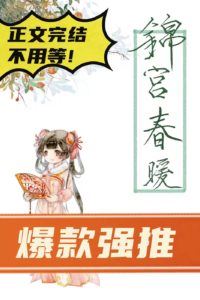
Warm Spring in the Brocade Palace
+Add to Custom List
Novel Info

Summary

... Read More

Xijin is the only daughter of the wealthy Ning family in Rucheng, a prominent merchant clan known locally as "Half of Rucheng" due to its vast estate. Raised as a pampered and willful young lady, she harbored a childhood love for Huo Erlang, a gentle scholar from a declining intellectual family. However, their engagement was abruptly broken when Huo Erlang’s mother accused Xijin of bewitching her son, a scandal that ruined their prospects. With her parents insisting on a suitable match and the Ning family’s status requiring a heir, Xijin was arranged into a male matrilineal marriage with A Chou. A Chou, the son of a fisherman, had been taken in by Xijin’s father as a shop assistant at age ten. Though initially poor and unremarkable, he possessed a striking, almost ethereal beauty that drew lingering gazes from others. Xijin married him out of duty rather than desire, finding him handsome but lacking in ambition, social standing, and the scholarly grace of her first love.

Three years into their marriage, Xijin and A Chou live with their young son, Mang Er. The household dynamic is complex; Xijin holds the authority as the matriarch, while A Chou occupies the subordinate role of a male matrilineal husband. Despite her initial reluctance, Xijin finds herself attracted to A Chou’s physical appearance, though she remains frustrated by his perceived laziness and lack of business acumen. She frequently compares him unfavorably to Huo Erlang, resenting his refusal to pursue the imperial examinations or seize business opportunities that arise. A Chou, in turn, is reserved and enigmatic, guarding a mysterious jade pendant that he refuses to let anyone, including his wife, see. Tensions rise during New Year celebrations when Xijin’s cousin, Xi Yu, reveals she has been reborn with knowledge of the future. Xi Yu knows that A Chou is actually the long-lost Imperial Grandson, the son of a wrongfully executed Crown Prince, and that he will eventually be discovered by the aging Emperor and ascend the throne. Xi Yu resolves to sabotage Xijin’s happiness and claim A Chou for herself, believing she has the discernment to recognize his true worth.

The core conflict centers on Xijin’s dissatisfaction with her husband’s apparent mediocrity and her own precarious position as a woman managing a household without male protection. She pushes A Chou to engage more actively in the family business, hoping to secure their financial future and social standing. A Chou initially resists but gradually begins to take her advice seriously, starting to manage the shops and explore new business opportunities, such as purchasing discounted silk from the Wuzhou State-Owned Weaving Institute. However, underlying this domestic struggle is the looming political shift in the empire. The Emperor, regretting the execution of his eldest son, is actively searching for his missing grandson. Rumors of this search circulate among the nobility and merchant classes, creating an atmosphere of uncertainty and anticipation. Xijin remains unaware of A Chou’s true identity, viewing him merely as a handsome but unambitious husband she must manage. Meanwhile, A Chou hides his royal lineage, observing the world with a quiet, calculating detachment that Xijin misinterprets as laziness or lack of capability.

As the story progresses, the political landscape begins to intersect with their personal lives. The impending appointment of a new Crown Prince promises economic boons for merchants, which Xijin eagerly anticipates. She encourages A Chou to capitalize on the expected surge in demand for luxury goods and ceremonial items. However, the return of the Imperial Grandson threatens to upend the existing social order. For A Chou, this revelation means reclaiming his birthright and ascending to the throne, a path that will inevitably separate him from his current life as a merchant’s son-in-law. Xi Yu’s interference adds another layer of danger, as she schemes to insert herself into A Chou’s life, exploiting his vulnerability and the secrets he keeps. The narrative moves toward a critical turning point where A Chou’s true identity is likely to be exposed, forcing Xijin to confront the reality of her husband’s lineage and her own role in the imperial future. The story explores themes of identity, duty, and the power dynamics within marriage, set against the backdrop of a changing empire.

The tension between Xijin’s desire for a successful, ambitious husband and A Chou’s hidden destiny creates a dramatic irony that drives the plot. Xijin’s efforts to mold A Chou into a capable businessman are inadvertently preparing him for the responsibilities of leadership, though she does not realize it. Her mother’s Silk Book, a guide to household management and social navigation, serves as a tool for Xijin to maintain control, yet it proves insufficient against the forces of fate and political intrigue. As A Chou begins to shed his passive exterior and engage more seriously with business and social obligations, Xijin’s perception of him starts to shift, though she remains blind to the royal blood running through his veins. The arrival of news regarding the Emperor’s search for the Imperial Grandson serves as a catalyst, bringing the hidden truth closer to the surface. Xijin’s rivalry with Xi Yu intensifies, with the reborn cousin employing manipulative tactics to undermine Xijin’s position and win A Chou’s affection. The story builds toward a climax where the secrets of the past will be revealed, altering the destinies of all involved and forcing Xijin to navigate a new reality where her husband is no longer just a male matrilineal husband, but the Emperor himself.

Latest Release
DateGroupRelease
2026-08-11shanghai fantasy c81
2026-08-11shanghai fantasy c80
2026-08-11shanghai fantasy c79
2026-08-11shanghai fantasy c78
2026-08-11shanghai fantasy c77
2026-08-11shanghai fantasy c76
2026-08-11shanghai fantasy c75
2026-08-11shanghai fantasy c74
2026-08-11shanghai fantasy c73
2026-08-11shanghai fantasy c72
2026-08-11shanghai fantasy c71
2026-08-11shanghai fantasy c70

Community Reviews

Rating(4.3 / 5.0, 13votes)
5 stars
5(38%)
4 stars
7(54%)
3 stars
1(8%)
2 stars
0(0%)
1 stars
0(0%)

Popular reviews

... Read More
Let's talk about stakes, because this novel is quietly building some serious dramatic tension and I need to process it. On the surface level, the conflict is simple: Xijin doesn't trust her husband because he won't let her see his pendant. But that's not really the conflict, is it? The pendant is just the symptom. The disease is that this marriage was built on a foundation of compromise, not choice. Xijin wanted Huo Erlang. She got A Chou because her parents arranged it. A Chou is a Male Matrilineal Marriage—someone who entered this family out of necessity, not desire. He was starving, Father saved him, and now he's expected to play the role of husband to a woman who never chose him. What are the stakes if this secret comes out? I'm guessing more than just marital discord. The pendant has engravings. A Chou has treasured it since before he met Xijin. He was poor, scrawny, on the verge of starvation when the Nings took him in. Whatever that pendant represents—it could be his only connection to a life before the Ning family, a family he may have abandoned or been forced away from. If Xijin discovers what it is, what it means, who it belonged to—does that threaten the legitimacy of their marriage? Does it threaten his position in the household? Does it threaten Mang Er's standing as the heir? And what about Xijin's stakes? She's a spoiled daughter of a wealthy merchant family who got whatever she wanted—until she didn't. She wanted Huo Erlang and couldn't have him. She wants to understand her husband and can't. She wants to feel secure in her marriage and can't, because there's this one small object that represents everything she can't have. The stakes for her aren't just emotional—they're existential. In a society where a woman's identity is tied to her marriage, not knowing your husband is a kind of death. The external conflicts are equally pressurized. Sun Momo is watching, waiting, ready to challenge A Chou's authority at any moment. The ancestral hall rituals remind us that every action is being measured against tradition. The Ning family's wealth and status mean that any scandal would have consequences far beyond the couple themselves. But the real tension—the thing that keeps me turning pages—is the internal conflict. Xijin doesn't just want to know about the pendant. She wants to know if A Chou has ever truly chosen her. The pendant is the physical proof that he has a private self, a history, a set of values that exist entirely outside of this marriage. And that terrifies her more than any scandal ever could. How long can this hold together? Not long. I can feel it. The longer the secret stays hidden, the more it corrodes everything else. And when it finally comes out, it's going to change everything.
... Read More
Let me just say this: the pacing in these first seven chapters is absolutely ruthless and I respect it so much. Chapter 1 opens with firecrackers and a bed scene that's warm, slow, almost sleepy. The prose moves at the pace of someone waking up—lingering on details, on textures, on the way light comes through brocade curtains. Xijin doesn't want to get up. A Chou feeds her lychee. There's this lazy, domestic rhythm that makes you feel like you're lying in that bed with them. It's deliberate. It's comfortable. And then Chapter 2 starts and the pace shifts. Breakfast. The nursemaid brings Mang Er. The conversation about silk clothes versus old clothes—tradition versus modernity, which is a theme the author keeps circling back to. And then: the pendant. In the middle of what should be a tender family moment, the author drops this revelation like a stone into still water. Xijin remembers being humiliated. She's nursed resentment for three years. And A Chou just… acts normal. He coaxes the child. He promises the pendant to Mang Er. He paints Xijin's eyebrows. The scene continues as if nothing happened, which is somehow more disturbing than if he'd snapped at her. What I love about this pacing is that the author never stops to explain. There's no internal monologue where Xijin analyzes her feelings about the pendant. She just feels them—irritation, curiosity, hurt—and the reader feels them too because we're given no context, no backstory, no resolution. We're left in the same position as Xijin: knowing something is wrong but unable to name it. The Sun Momo interlude is also a masterclass in pacing. Right after the tension of the pendant scene, we get this almost comedic beat of an elderly maid nattering about ancestral hall etiquette. It's a breath, a release of tension—but it's also a reminder that the social pressures around Xijin and A Chou's marriage are constant and inescapable. Even in their private moments, there are people watching, judging, managing. And then the chapter ends with Xijin demanding pearl powder from Yanjing City, which is both a genuine desire and a test—a way of reaching for control in a situation where she feels powerless. The author closes on this note of restless dissatisfaction, and I immediately want to turn the page. The structure here is doing so much work: establishing intimacy, disrupting it, showing the social context, and ending on emotional tension. All in two chapters. No wasted movement.
... Read More
I need to sit with this chapter for a minute because the stakes just shifted from 'oh this is a domestic story' to 'oh this is a story about survival and dignity' and I am NOT OK. Let me trace the conflict ladder here. On the surface, it's a couple dealing with intimacy issues and a pendant. But underneath? Xijin is having this whole conversation about what it MEANS to be a woman in their society, and the rice wine incident is the crack in the dam. The Hu family gave wine to the east and west families, PROMISED them some, then left the Nings out. Not even a phone call. Just silence. And Xijin's reaction isn't 'oh that's rude'—it's 'it means we don't even register in their eyes—they don't take us seriously at all!' This is about SOCIAL SURVIVAL. In their world, being ignored by other prominent families isn't an inconvenience—it's a threat to their entire position. And then she goes deeper: 'As a woman, I doubt much of the family fortune will come to me.' THIS is the real conflict. She's a woman in a merchant family where the inheritance won't be hers. She has to work through her husband, navigate the Male Matrilineal Marriage system, build wealth that technically isn't hers, all to secure their son's future. The stakes are literally her child's survival and dignity. A Chou's response is where it gets interesting. He doesn't dismiss her. He doesn't get defensive. He says 'It's my fault. I didn't consider this.' And then he commits: 'I'll put my heart into managing the family shops.' This is a MALE character acknowledging his failure and choosing to do better—not with grand speeches but with specific, practical commitment. The business opportunity with the Crown Prince's wedding procurement? That's the author raising the external stakes while the internal stakes are about marriage, gender, and family survival. Both layers are happening simultaneously and they feed each other. And the chapter ends with Xijin going back to her mother's Silk Book? That's not escapism—that's her seeking the tools she needs to survive in a system that wasn't designed for her. The conflict isn't resolved. It's just... acknowledged. And that's more honest than any neat ending.
... Read More
Okay so I need to talk about THIS scene. The one where everything falls apart in the most devastating way possible. You know how the intimacy is building, they're tangled up together, and then—BAM—he pulls away because of the pendant. I literally gasped out loud. Xijin pushes him off and flips away like a fish on shore, and I was SO THERE. She felt something cold. That one detail—the pendant—went from background prop to emotional landmine in a single sentence. What killed me was the contrast. Right before that, they were this vulnerable, raw version of themselves. He was holding her, they were basking in warmth, and then the pendant appeared like some cursed artifact. It wasn't just physical discomfort—it was a symbol of everything that makes their relationship complicated. The Male Matrilineal Marriage system, the power dynamics, the fact that he's literally wearing something that separates them even in their most intimate moment. And then the aftermath? She's lying there, turned away from him, and the text says 'almost imperceptibly—she felt something cold.' That word 'almost' is doing SO much work. She didn't immediately recoil—she felt it, registered it, and THEN she pushed. The delay made it worse. It meant there was a split second where she was still in it, still connected, and then reality crashed back in. I keep thinking about how A Chou reacts too. He just... rises. Gets up. Goes to the door. His voice is hoarse. He doesn't try to pull her back. There's this quiet devastation in the way he just accepts it and walks away, and I found myself wanting to shake both of them. "She'd just have to quit! Let's see who gives in first!" — this line earlier in the scene shows Xijin's stubborn pride, and the pendant moment is the universe saying 'nope, you don't get to win here.' She can't outmaneuver biology or tradition or whatever the hell that pendant represents. It's the most Xijin thing that could happen—she's fighting a power struggle and literally gets interrupted by her own body's reaction. I love her so much and it hurts.
... Read More
First of all—Xi Yu trying to set up Xijin and getting absolutely dismantled in under twenty lines of dialogue is one of the funniest things I've read all year. Let me walk through this: Xi Yu: *tries to gossip about courtesans* → Xijin: "My husband conducts business outside. Such things are unavoidable." → Xi Yu: *backpedals immediately* → Xijin: "But you? An unmarried young lady, you actually went there?" The pivot! The SPEED at which Xijin turns this from defending her husband to interrogating Xi Yu's reputation! And then Xi Yu's internal monologue: "Xijin's tongue is truly sharp. How does A Chou even put up with her?" BROTHER. SHE'S YOUR WIFE. SHE JUST DEFENDED YOU. And the dialogue between Xijin and A Chou about the chestnut cake—so simple, so sparse, but each line carries so much weight. "I still remember the taste of that chestnut cake—sweet, fragrant, and soft. I'd never had anything so delicious in my life." And her response: "So you'd never had chestnut cake before then!" She misses the profundity entirely and lands on "we need to earn more money!" Which is SO Xijin. The fact that he finds this endearing rather than frustrating tells us everything about their dynamic. Every character has a distinct voice. You could tell who was speaking without name tags.
... Read More
Okay so I need to talk about this jade pendant because honestly it is the single most explosive detail in these first seven chapters and I am already emotionally compromised. Let me set the scene: Xijin and A Chou have been married for three years. On the surface, they seem fine—actually, they seem pretty sweet in a weird, domestic way. He helps her dress, he paints her eyebrows, he plays with their son. But then Mang Er grabs that pendant, and everything shifts. Xijin remembers the first time she ever tried to look at it. She felt the engravings by candlelight and A Chou snatched it away abruptly. After that, he never let her see it again. And her reaction? She called it a "worthless trinket" out loud but nursed quiet resentment for years. That is such a specific, human contradiction, right? She tells herself she doesn't care, but she clearly does. And now three years later, her son is holding it and A Chou is making promises about leaving it to Mang Er, and I am SCREAMING. What does the pendant represent? Obviously something from before he came to the Ning family. Before Father saved him from starvation. The fact that he treasured it even in bed, even pressed against Xijin's skin, and yet she was never allowed to see what was carved on it—that's not just secrecy, that's a wall he built between them from day one. And here's what really gets me: the plot is structured so that every tender moment between Xijin and A Chou is undercut by this one hidden object. The morning scene is warm, almost cozy. He tucks her in, feeds her lychee, eats the tangerines she won't touch. It's domestic bliss. But then the pendant appears and the whole mood curdles. That's masterful plotting—the author doesn't need a dramatic confrontation to create tension, they just need one small, silent object that neither character will acknowledge directly. I also love how the Huo Erlang backstory is woven in. Xijin wanted to marry him, chose A Chou only because her parents insisted. This isn't just about a pendant—it's about a woman who never got what she wanted, married to a man she doesn't fully trust, and the pendant is the physical manifestation of everything she's missing. Every time A Chou is sweet to her, there's this tiny voice in the back of my head going: but what is he hiding? The plot is building this slow-burn mystery that's completely integrated into the relationship drama. It's not a separate "mystery subplot"—it IS the relationship. And I am so here for it.
See all reviews

Characters

See all characters

Custom lists

See all custom Lists