Villain Siblings, But Solving Cases in Hong Kong - Reviews

Villain Siblings, But Solving Cases in Hong Kong
+Add to Custom List
Sort
Add review
... Read More
Let me just say this—the pacing in these chapters is absolutely masterful and I have no idea how the author does it. You start with Shen Zhicheng in near-silence, alone in an attic, trying to fix a music box. It's slow. Intimate. Almost meditative. The prose lingers on details—the faded photograph, the stiff winding key, the glass globe casting moonlight. You're in a completely different emotional register here. Then—bam—cut to the police station, sunlight, noise, Old You and Lin Jiacong bickering, Pan Liqin breathing down everyone's neck. The energy shifts instantly but seamlessly. The investigation scenes move at a deliberate pace. You're given the pieces one by one: the false testimony about Zhang Fengying, the surveillance footage, the neighbor's account of an abusive father. Each revelation is small, almost mundane, but they accumulate. The author never rushes. Even when Fang Zhishan finally spots Liang Wei in the grainy footage, it doesn't feel like a cheap climax—it feels earned. Decades of frame-by-frame review paying off. Then the chase sequence. Li Heng following Zhang Huijing through Cheung Sha Wan, the tension building with every step, Shen Zhicheng's near-exposure, the whistle, the catcall cover. And then—the phone call. Ten minutes of dialogue that could have been a scene break but instead becomes the emotional peak of the entire chapter. The pacing slows right when it needs to, letting that conversation breathe, letting Li Heng's backstory echo in the background. And it ends on "a smile still lingered at the corners of her mouth." Not a cliffhanger. Not a revelation. Just that smile. And you're left sitting there wondering what it means.
... Read More
The dialogue in this chapter is genuinely excellent, and I want to highlight how each character has a completely distinct voice. Maggie/Cai Meiqi sounds like someone who's rebuilt herself from scratch and is fiercely protective of the new version. Her dialogue is sharp, dismissive, almost performative: 'Fishing for a rich husband? If Amin were that smart...' and 'Amin and I are no longer in the same world. I don't want my husband knowing about that past.' She's telling the police everything but also making sure they understand she's not that girl anymore. The diamond ring flash at the end is basically dialogue without words. Shen Zhicheng's voice is this perfect mix of deflection and vulnerability. He starts with 'I'm not your chauffeur' and 'you don't know how to drive a luxury car?'—classic deflection. But then he says 'Twins have a connection' in this barely audible voice, and you know he's not talking about Amin and her sister at all. The way he immediately covers it up afterward is so characteristic. Granny Zhou's dialogue is heartbreaking in its simplicity. 'This person... looks like my grandson.' The pause, the uncertainty, the trembling. And later: 'I've thought about it for all these years, and still don't dare.' This woman has carried six years of worst-case scenarios and the author gives her dialogue that matches her age and her grief perfectly—short, careful, weighted. And Li Heng—she barely speaks in this chapter but when she does, it's efficient and sharp. 'What about that twin sister you mentioned?' 'He's not a cop.' The handbrake incident is basically non-verbal dialogue and it says everything.
... Read More
Let me just say—the stakes in this section are absolutely razor-thin and the author knows it. On one thread: Li Heng is trying to connect Liang Wei to Zhang Huijing, and the entire case hinges on whether they had a secret relationship. If they didn't, then Zhang Fengying's false testimony about living overseas is irrelevant, and the police have no reason to dig deeper. The higher-ups are calling multiple times a day. Chief Inspector Pan Liqin has made three trips to the CID room that morning alone. The pressure is mounting, and Li Heng is holding the line—shutting her door, having her team cover for her, refusing to close the case until she has answers. On another thread: Zhang Huijing is performing this elaborate fiction. She's lying about her mother, she's meeting someone secretly (or pretending to), and she's doing it all with this terrifying calm. The surveillance footage shows Liang Wei at the exact time the police were taking her statement. He was watching her. Or protecting her. The ambiguity itself is the tension. And then the chase. Li Heng following Zhang Huijing through a narrow alley, heart in her throat, knowing that if she loses her—or if Zhang Huijing realizes she's being followed—the lead is gone forever. Shen Zhicheng nearly blows their cover with a single syllable. One word. That's how close it was. But the real stakes aren't professional or procedural. They're personal. Li Heng listening to Zhang Huijing's phone call, hearing a twenty-nine-year-old woman sound like a child, and suddenly remembering her own childhood—shuffled between foster families, sent back to the orphanage, stopping hope because it hurt too much. The case isn't just about solving a murder anymore. It's about two women who understand loss in different languages, standing in the same alley, separated by profession but connected by something far deeper. And that's what makes every frame of tension here hit so much harder.
... Read More
This book smells like Hong Kong. Not the postcard version, but the real one — the narrow hallways with musty air in Yuen Long, the old buildings where lighting is terrible and layouts are stuffy, the maze of alleys between Cheung Sha Wan and Sham Shui Po where you can cut through and be somewhere completely different in five minutes. The landlord scene gave me chills. She's just a middle-aged auntie in slippers, carrying a ring of keys, rambling about how no one's wanted to rent that place for years. And then she produces this plastic bag — Ah Min's leftovers after her father's funeral. Old clothes, a small mirror, a worn makeup bag with a powder puff and an old comb. The way the author describes it, you can practically smell that room. 'She didn't even leave a little something for the trouble of cleaning up the place,' the landlord says, and there's this heartbreaking implication that Ah Min came back one last time, looked around, and left again with nothing. Then you cut to Li Heng's rented room, past ten at night, neon lights flickering outside the window. She's sitting cross-legged on her bed with a calculator, running down payment numbers. The contrast between the grimy evidence room where the archivist dreams of evidence talking to her, and this cramped private space where a police inspector is calculating how close she is to owning a home — it's such a vivid portrait of this city's underbelly and its dreams. And Shen Zhicheng's villa on the hillside, that spiral staircase, the attic room where starlight falls on an old crib with two small folded blankets. The silence inside versus the 'relentless noise and malice of childhood' outside. Two completely different worlds separated by a door.
... Read More
I need to talk about the rooftop scene because the author absolutely cooked. The whole setup—old tenement buildings about to be demolished, the debris scattered around, sirens blaring below, the old neighbors murmuring like ghosts of the neighborhood itself. It feels so specific to Hong Kong, this sense of a place that's being erased. And then Liang Wei standing at the edge, his feet already hanging over the void, glasses off, unshaven, thinner than in the missing person posters. The visual of him turning his head slowly with bloodshot eyes—chilling. But what really sold it for me was the moment of the fall. Li Heng watching from below, her heart doing that familiar palpitation thing, the two figures tangled together dangling from the fourth-floor window, sliding down the railing until they crash onto the inflatable cushion. It reads like a film sequence. Every beat timed perfectly. The crowd screaming, someone covering a child's eyes, the dull thud of impact. And then the aftermath—Shen Zhicheng lying there dazed, confirming Liang Wei is alive before doing anything else. That small detail. He doesn't check his own injuries first. He checks if the guy he just saved is breathing. The hospital scene afterward has this weird liminal quality too—fluorescent lights, corridor benches, the afternoon sunlight through tree branches casting dappled shadows on Liang Wei's gaunt face. Six years of running catching up to him in that room. The contrast between the chaotic rooftop and the sterile hospital quiet is so well done.
... Read More
The confession scene at the end of this batch is where everything converges and I was NOT prepared. Liang Wei finally opens up about what really happened with Zhang Pingxuan and the author makes you understand him in the worst possible way. He wasn't some cold-blooded murderer. He was a good student, someone everyone said was born to be a scholar, whose mother was dying in a hospital and who saw a path to save her through a man stupid enough to trust him. The detail about the fake passbook—how he forged it so Zhang Pingxuan's grandmother would never know—shows how calculated he was, even then. But then the murder itself... Zhang Pingxuan came with the money, he didn't need to die, but he was clinging to Liang Wei, pestering him, and something snapped. Six years of replaying that moment. Every time he closes his eyes, he sees it. The stakes here are enormous because we're not just dealing with a murder mystery anymore. We're dealing with a person who has been carrying this guilt for half a decade, who tried to end it all on that rooftop, and who is now sitting in a hospital bed finally ready to talk. Li Heng's reaction is so controlled—pulling out her notepad, asking him to tell her about his crime like she's just starting a routine interview. But underneath that professionalism, you can feel the weight of six years of an unsolved case finally cracking open. And Shen Zhicheng's role in all of this? He went from being this annoying spoiled heir to the person who physically prevented a second death at the same building. The tension between all these threads—past and present, guilt and redemption, duty and compassion—is what makes this novel absolutely unputdownable. I stayed up way too late reading this batch.
... Read More
The opening of this section—Shen Zhicheng in that attic room, the faded fabric, the old photograph of two infants in red sweaters. The author describes it so quietly, so matter-of-factly, but it's devastating. "It was the only family portrait this house had ever known." Only one. One photograph. Year after year, staring at it, committing it to memory, not because he wants to but because he has to—because without it, he'd forget the faces of his parents and sister entirely. And then the music box. All his life, this music box had been his solace. On countless nights, lying on the floor, staring up at the sloped attic ceiling, listening to its soft melody until he could finally fall asleep. But now—it's silent. Dead. He winds it frantically, nearly losing control, swaps in new batteries, and still nothing. The image of him slumping to the floor in defeat, staring at this broken keepsake while the glass globe above the crib casts shifting colors in the moonlight—this is cinema-level writing. I could see every frame. Then you cut to the police station, warm sunlight across Li Heng's face, the whiteboard tangled with clues, the audio-visual room with its drawn curtains and sliver of sunlight on the floor. The grainy VCR footage. The narrow alley in Cheung Sha Wan, old buildings flanking both sides, Zhang Huijing's uneven gait. The author builds these worlds so completely that you don't just read about them—you inhabit them. The contrast between Shen Zhicheng's cold, silent attic and the cramped, noisy police station is deliberate, and it works.
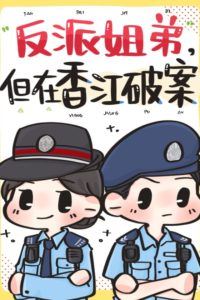
... Read More
I started reading this batch at 11 PM and it is now 2 AM and I have no regrets. The pacing in these chapters is absolutely ruthless. You get the Yuen Long investigation — methodical, almost procedural — and then Old You makes that Du Shiniang joke and Li Heng's eyes literally light up at the geographic connection. One sentence: 'Cheung Sha Wan—is it close to Sham Shui Po?' And just like that, the entire case flips. Six years of assumptions undone in a car ride. What I love is how the author doesn't rush the reveal. They let you sit with it. Li Heng ponders, Old You processes, and then we cut to the police station where the whole team is already huddled around the whiteboard. The younger officers are connecting dots — Ah Min in Yuen Long, Liang Wei in Mong Kok with Zhang Huijing. The timeline clicks into place almost painfully fast once you see it. But then — and this is where the pacing gets really clever — the author deliberately slows down. Li Heng goes to the evidence room. There's this almost mundane conversation with the archivist and Xu Le'er about DNA degradation and powder puffs. It feels like a breather, right? Wrong. Because that coffee bribe becomes the potential key to everything. The author is playing 4D chess with your attention span. And then the dream sequence. The lullaby, the car crash, those slender arms shoving her through the window, the explosion. It hits you like a physical blow after all that procedural calm. Back to reality, old scar throbbing, and then — cut to Shen Zhicheng unable to sleep, winding up the spiral staircase to the attic. The chapter doesn't end, it just... dissolves into silence. I had to keep going.
... Read More
Let me just say this pacing is absolutely ruthless and I love it. The chapter opens with a phone call—Old You dropping information like it's nothing, and within three paragraphs we're already learning that a key witness is landing on a red-eye flight. No exposition, no setup, just: she's coming, we need to move NOW. Then you get this gorgeous lull in the car ride. Li Heng falling asleep, the neon lights, the dream sequence. It's a breath of fresh air after the information overload, and it serves double duty—gives us character depth AND foreshadows something we don't yet understand. Then BOOM, car horn, she's awake, and they're at the airport. The interrogation scene with Maggie is where the pacing really shines. It starts almost casual—Maggie laughing about Amin's romantic foolishness—but then it pivots hard when she drops the twin sister information. The shift from 'fishing for a rich husband' to 'congenital bone deformity, favoritism, abandonment at twelve' happens so smoothly you barely notice the tonal change until you're already emotionally devastated. And then Shen Zhicheng's backstory revelation comes at the perfect moment—right after the Maggie scene, when both characters (and readers) need a moment to process. His quiet 'Twins have a connection' followed by the story of his sister is the emotional climax of the chapter, and it's delivered in barely twenty lines. No fanfare, no melodrama, just this kid who's never talked about his family suddenly unloading six years of grief. The chapter ends on Granny Zhou's scene, which is both a quiet moment and a ticking clock—'What did Pingxuan do to offend someone?'—propelling us into the next chapter like a freight train.
... Read More
"Can't live right, can't die right either." Liang Wei says this after being pulled back from the edge and I've been stuck on it ever since. It's such a devastating line because it captures everything about his character arc in one breath. This guy spent six years living like a rat, hiding in shadows, unable to even visit his mother's grave. He was always one step away from disaster, always making the wrong choices for what he thought were the right reasons. The mother's illness, the hundred thousand dollars, the desperation—that's the tragedy. He wasn't born evil. He was born into a situation where evil felt like the only option. And now he can't even die properly. Shen Zhicheng literally won't let him go. There's something almost poetic about that. The man he was trying to steal from, the man whose money he needed to save his mother—ends up being the one who saves his life. The irony is brutal. I also keep thinking about the setting itself. The old tenement buildings scheduled for demolition. Liang Wei choosing to stand on the roof of Desheng Building—the same place where his story began six years ago. He literally says 'Where it started... That's where it ends.' The building is going to be torn down anyway, just like his life has been. And Shen Zhicheng, who was worried about how another death would affect the 'assessment of the old site'—he's connected to this place in a completely different way. One man trying to preserve it, the other trying to end it there. The symbolism writes itself.
... Read More
There's a three-year-old boy in an attic whispering 'I'm sorry' to empty air, and that sentence is the KEY to everything. Shen Zhicheng has carried this guilt for twenty-something years and it has shaped every decision he's made. The family assets, the shares, his second uncle's scheme — he was too young to understand the mechanics, but he understood the RESULT. He killed his parents and his sister. Not with his hands, maybe, but with his existence. His presence in that family set off a chain of greed and betrayal that ended in blood. The pencils as incense sticks — that image is DEVASTATING. A child trying to perform rituals of atonement with the only objects he has available. He didn't know HOW to apologize, so he just kept saying it. And then there's Amin — or whatever her real name was. She had a second face. The innocent girl who spoke softly and hardly dared to look anyone in the eye became the nightclub woman with bright red lips and a flashy smile. Is this about identity? About survival? About the way trauma reshapes you until you can't remember who you were before? Vivi's line — 'How innocent could Amin really be? She just wanted to get out of the life' — suggests that Amin's transformation wasn't just performance, it was STRATEGY. She learned from Maggie, who 'went from the life to a rich wife.' The nightclub is a factory for reinvention. The bones in the cement are also deeply symbolic. Six years underground. Trapped in a 'cruel game of hide-and-seek.' The victim was buried alive in the foundation of a building that now houses a nightclub — a place of noise, light, and forgetting. The contrast between what's hidden below and what's displayed above is the whole novel in miniature. And Liang Wei — was he dead or alive? His father's question hangs in the air like smoke: 'If the dead person isn't Xiao Wei... then is he still alive?' The ambiguity itself is the point. Some people in this story are so thoroughly erased that even death can't confirm their fate.
... Read More
I need to talk about the ATMOSPHERE in this novel because it is INSANE. The opening image of young Shen Zhicheng — three years old, climbing a spiral staircase to the attic, using pencils as incense sticks, whispering 'I'm sorry' to a family photo of four — is one of the most haunting pieces of imagery I've read in a long time. A toddler performing a mourning ritual for parents he 'killed.' The author doesn't explain anything. We just SEE this tiny boy and feel the weight of it immediately. That's masterful worldbuilding through emotional atmosphere rather than exposition. Then you have Jinxiao Nightclub — 'thick with the sticky haze of money and indulgence.' That ONE phrase tells you everything about this world. It's not just a nightclub; it's an ecosystem where people go to disappear, to transform, to become someone else. Amin's 'second face' exists because this place ALLOW her to have one. The club is a character in itself. The night school in Mong Kok is another gem. The principal remembering Liang Wei's hopeful eyes, the class directory with dozens of faces, the staff wall with photos — it's so ordinary, so mundane, and yet it's where the entire investigation pivots. The contrast between that quiet, dusty classroom and the neon-drenched underworld of Tsim Sha Tsui East is deliberate. These are two different Hong Kongs, and the characters move between them like ghosts. And Shen Zhicheng's club opening — luxury cars lining the entrance, champagne being handed out, people desperate to bask in his reflected glory — it's a portrait of wealth as performance. 'That's how the rich circles always supported each other.' The author drops this line like it's nothing, but it's actually a devastating observation about power. The forensic department scenes are clinical and cold, which works perfectly as a counterpoint to all the emotional heat elsewhere. Dr. Chen adjusting his glasses, the hum of equipment, the three-day wait for skull reconstruction — it's the bureaucracy of truth, slow and methodical.

Leave a comment

You must be logged in to leave comments. or
