Villain Siblings, But Solving Cases in Hong Kong - Reviews

Villain Siblings, But Solving Cases in Hong Kong
+Add to Custom List
Sort
Add review
... Read More
"I miss you so much." "Of course—I've listened to you." "I've been eating well every day, going to bed early and waking up early." I need a minute. I literally need to put the book down. Zhang Huijing is twenty-nine years old. She's a suspect in a murder investigation. She's lying to the police, fabricating her entire life story, and yet when she picks up that phone, she sounds like a little girl telling her mom about the roast goose leg she added to dinner and the flowers blooming on her windowsill. The mundane details. The daily updates. The desperate need to be seen as good, as obedient, as worthy of love. And then Li Heng's perspective cuts in—this orphan who was shuffled between foster families, sent back to the orphanage time and again, who stopped hoping for warmth that wasn't hers. She's standing in that alley listening to a conversation she'll never have, and the author doesn't even need to spell it out. You feel it in the silence between the lines. "Next time you come back, I'll leave with you." That line. That line absolutely destroyed me. It's not just a lie to the police—it's a genuine, aching wish. Zhang Huijing doesn't actually have a mother waiting overseas. She has nothing. And yet she performs this entire fantasy with such conviction that for ten minutes, she almost believes it herself. The smile still lingering at the corners of her mouth when she hangs up—was that genuine? Or was it the smile of someone who just pretended to have something and felt the emptiness hit even harder? I can't stop thinking about it. I can't.
... Read More
Okay so I need to talk about Shen Zhicheng because this guy is genuinely one of the most interesting characters to watch evolve. Remember how he used to just barge in with his mocking "Police Madam" routine? And now—now he's literally shielding Li Heng during a stakeout, whistling to cover his own slip, playing along with the whole operation like he's part of the team. That moment when he catches her warning look and immediately pivots to catcalling instead of blowing her cover? Chef's kiss. The author didn't even need to write a single internal monologue for him. Just action, and suddenly you understand everything about what this relationship has become. And Li Heng—she didn't chase him off either. She just... accepted it. Tacitly. After everything, she lets this wealthy young master who's been poking his nose into police business trail alongside her through a back alley. That's not nothing. That's a whole conversation without a single word being spoken between them. Then there's Zhang Huijing on the phone. The way her voice shifts from reserved and controlled to this almost childlike coyness when she says "Mom, it's me"—it's chilling because you know she's lying, but the performance is so convincing. Who is she actually talking to? And more importantly, why does she sound like a little girl seeking approval from someone who, according to the police, doesn't even exist outside the country? The mother-daughter dynamic here is twisted in the best way. It makes you want to keep turning pages just to find out the truth behind that phone call.
... Read More
Let me just say this: the stakes in this book are NOT subtle and I am here for it. On the surface, it's a murder case. Six years old, a skeleton in cement, a suspect who jumped off a rooftop. But underneath? Everyone in this story is fighting for something terrifyingly personal. Ah Min gave up everything — her belongings, her voice, her very existence in the narrative. She's described as someone who 'had nothing, that no one truly cared for her.' And yet she's the one who's disappeared. What happened to her? The text never tells us directly, and that silence is louder than any scream. Liang Wei? He confesses to a murder he may not have even committed, takes the ultimate risk because he's trying to protect someone. Six years of scraping by, living with the weight of a lie, and then one afternoon he stages his most dramatic suicide attempt possible — right when the police are walking into Zhang Huijing's company. Was it guilt? Or was it a signal? And Li Heng — oh, Li Heng. She's not just chasing truth. She's chasing a home. A place that won't send her back. Her nightly ritual of calculating down payments while neon lights flicker outside her window, dreaming of stability while her case threatens to upend everything... the personal and professional stakes are braided together so tightly. The higher-ups want the case closed. The public wants answers. But Li Heng says 'give me two more days' and the reader thinks: YES. Because we all know what happens when cases get wrapped up carelessly. The truth stays buried, and the people who should have been heard stay silent. What I'm most anxious about? That powder puff. Xu Le'er said it herself — bet on the powder puff instead of the hair. If that DNA test comes back, everything changes. And if it doesn't... what happens to Zhang Huijing's performance of innocence? To Ah Min's ghost?
... Read More
Okay so let me just say—this chapter is a masterclass in how to drip-feed backstory without it feeling like an info dump. The Amin reveal is staggeringly well-constructed. You start with this vague mention of a 'twin sister' from Maggie, and suddenly the whole case gets this new dimension. Amin wasn't just some nightclub girl who disappeared; she had a whole tragic backstory—abusive father, favoritism, being left behind at twelve, dropping out of school. And then BAM, her twin sister Zhang Huijing shows up as the victim. That connection hit me like a truck. But what really got me is how the plot threads are braiding. Six years ago: Amin quits the nightclub, Liang Wei disappears, Typhoon Signal No. 8 hits, and Zhang Pingxuan vanishes. All these events happening in the same month, and the police are only now connecting them. The skull reconstruction scene with Granny Zhou—this old woman clutching her grandson's photo, pointing at a reconstructed face she barely recognizes—this is the kind of plot moment that makes you put the book down and just stare at the wall. And Shen Zhicheng's revelation about his own sister? That's not just character development; that's the plot using his personal trauma to deepen the mystery. The author is basically saying: this case isn't just about solving a crime, it's about two people whose family histories mirror each other. I'm obsessed with where this is going.
... Read More
I need to talk about Amin and Liang Wei because this subplot absolutely wrecked me. Maggie's account of how they met—Amin buying chips, finding the wrong flavor, offering them to this poor student because 'he was pure'—this sounds so casual but it's actually devastating. She was a nightclub girl who'd learned to treat men as transactions, and here was this kid who actually showed up every day, rain or shine, just to pick her up. The line that killed me: 'That student was the first person who'd ever been genuinely kind to Amin. So even though she knew she should weigh the pros and cons, she still threw herself in headfirst.' This woman who'd spent her whole life calculating, who Maggie tried to teach as a business strategy, completely abandoned her own playbook for someone who couldn't even afford rent. And then Liang Wei disappears. Just vanishes. And then there's Shen Zhicheng, who opens up about his own sister for the first time. He's this arrogant rich kid who's been dodging every personal question, and suddenly he's talking about being alone at great-grandmother's birthday banquet while his parents and sister died. The parallel between his loss and Amin's loss—it's not stated outright but it's screaming between the lines. These two broken people are driving a sports car to an airport at midnight and neither of them can talk about what just happened. Li Heng smacking his head with the handbrake was the only emotional release either of them could manage.
... Read More
Okay so let me just say this out loud because I need to process it: Shen Zhicheng is NOT the character I thought he was. Like, we've been getting these little hints—this spoiled heir energy, the dismissive attitude toward the case, the whole 'why am I stuck here' vibe—but then BAM, he literally throws himself off a rooftop to save a stranger. And not just any stranger, someone he barely knows. The author did something really clever here though. Instead of making it some noble, heroic moment, Shen Zhicheng's first reaction is basically cursing under his breath like he's annoyed. He doesn't even think about it—he just acts. That's the thing that got me. It's not calculated bravery. It's instinct. And then afterward, when Li Heng praises him and his grandfather ends up whacking him with a cane? I was wheezing. The dynamic between these three—Shen Zhicheng, his grandfather Shen Chongnian, and Li Heng—is absolutely delicious. Shen Chongnian goes from furious to terrified in two seconds flat when Li Heng describes what happened. And Shen Zhicheng's little side-eye at Li Heng when he realizes she deliberately painted him as brave to get his grandfather mad at him? Chef's kiss. Also, Liang Wei's confession scene with Li Heng—her line 'That's not confessing. That's getting caught' is so cold and perfect. She doesn't give him the dignity of a voluntary confession. She strips that away immediately. These character dynamics are everything.
... Read More
The music box. That's the symbol that's been haunting me since I finished these chapters. Shen Zhicheng's music box was his solace—on countless nights, lying on the attic floor, listening to its melody until he could sleep. It was the one constant in a life defined by absence. And now it's broken. Silent. He winds it frantically, desperately, but the familiar melody never comes. What is he really trying to wind back to life? The music? Or the memory of the people who used to hear it with him? The photograph above it tells the same story. Two infants in red sweaters. The only family portrait this house has ever known. He doesn't remember his parents and sister's faces—he relies on this single image, staring at it year after year, committing it to memory. Memory as preservation. Memory as survival. But what happens when the thing you're preserving breaks? When the photograph fades? When the music stops? And then Zhang Huijing, constructing an entirely false mother-daughter relationship. She calls someone at night, speaking in a childlike voice, talking about roast goose and flowers and promising to leave with her mother next time. But Zhang Fengying has no exit records. She never left. So who is Zhang Huijing performing this fantasy for? And more importantly—what does that say about her? About the things we invent when reality fails us? Both characters are trying to hold onto something that's already gone. One through memory, one through fabrication. The music box is broken, but Shen Zhicheng winds it anyway. Zhang Huijing's mother doesn't exist overseas, but she calls her anyway. Is there a difference between these two kinds of desperation? I don't think so. And I think that's exactly what the author wants you to sit with.
... Read More
Okay so I need to talk about this reveal because my brain is still spinning. Li Heng connecting Cheung Sha Wan and Sham Shui Po being basically next door to each other? That moment when it all clicked for her — I literally sat up in bed reading this. The whole case had been built on the assumption that Liang Wei saw the skull reconstruction on TV and cracked, but what if he was watching them walk into Zhang Huijing's company instead? That changes EVERYTHING. Think about it. He didn't just confess to take the blame — he confessed to SHIELD Zhang Huijing. All those tears she cried, all that trembling innocence she performed in her statement... Lin Jiacong literally called her a Best Actress candidate. And Old You's joke about flipping the Du Shiniang story — what if Ah Min was the devoted one and Liang Wei the faithless? That line hit me like a truck because it reframes the entire relationship dynamic. The evidence bag scene was also genius storytelling. That childhood photo of the two sisters — one carefree, one quiet and delicate, Zhang Huijing seated because of her legs — it's such a small detail but it tells you everything about their dynamic. Ah Min gave way on EVERYTHING. Food, toys, drinks, even her mother. No wonder she fell for Liang Wei so hard when he was the first person who seemed to choose her. And then there's the hair in the clothing fibers that's too corroded to test, but Xu Le'er casually drops that the powder puff might actually work for DNA preservation. Li Heng immediately pivoting and buying her coffee to get it tested — that's the kind of detail that makes you trust the author. Nothing is wasted here.
... Read More
There's a scene in this chapter that I've been unable to shake. Li Heng falling asleep in the car, the neon lights of Tsim Sha Tsui flickering past the window 'like scattered stars,' and her dreaming about that golden place with the glass globe and music box. The imagery is so vivid I could feel the warmth of the blanket and hear the ticking. And then the dream shifts—there's movement beside her, tiny hands and feet, and the crib that was meant for one person suddenly feels like it was always meant for two. I don't even know what this dream symbolizes exactly but it feels important. A crib for two? Twins? A baby that never was? The dream is so lush and sensory—resplendent and golden, soft blanket, clear distant music—then SHATTERED by a car horn. The contrast between that warm, dreamlike safety and the cold reality of the airport arrival hall is brutal. The airport scene itself is also brilliantly rendered. Maggie sitting there in her wealthy wife clothes, 'voluminous curls and dripping in jewelry,' telling police about her old life like she's reading from someone else's biography. The diamond ring flash at the end when she says 'Amin and I are no longer in the same world'—this image of two women who were once inseparable, now separated by class and choice and tragedy, is haunting. And Granny Zhou at the police station entrance, hair completely white, trembling hands gripping the doorframe, pulling a newspaper from her bosom like it's a sacred text. The visual of this old woman crying over a reconstructed skull image of her grandson is something I'll carry with me.
... Read More
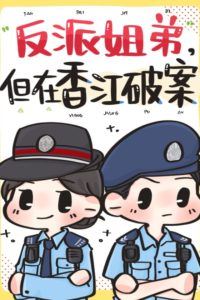
Okay I need to talk about the atmosphere in these first seven chapters because WOW. The author really knows how to paint a picture of 1995 Hong Kong without ever stopping the story to give me a history lecture. You feel the heat, the humidity, the grime of Sham Shui Po just from the prose. The electrical shop with the TV broadcasting live news, the yellowed police tape, the neighbors packed tight like sardines — it's all so vivid. But the scene that absolutely wrecked me was the stairwell. A mother covering her child's eyes, the kid complaining about the stuffiness, and then that nursery rhyme drifting up from somewhere. 'One, two, three, hurry and hide. Four, five, six, can't be found. Seven, eight, nine...' and then Li Heng turns to the skeleton and whispers 'Caught you now.' I literally got goosebumps. The way the author uses that innocent children's game as a framing device for a corpse buried under cement for six years — that's not just clever, that's genuinely haunting. The tenement building itself feels like a character. Dust-covered furniture, the rusted broom on the balcony, the withered flowers in neat little pots. Someone took care of this place once. Someone lived here. And now it's just... a tomb. The golden evening sunlight filtering through dust particles — that image stuck with me for hours after reading. The world feels lived-in and real. Not some glossy detective fantasy. This is Hong Kong, and you can smell it.
... Read More
The stakes in this chapter keep escalating and I need to process this because it's intense on multiple levels. On the surface, it's a murder investigation. A skull reconstruction identifies a victim, a grandmother comes forward with six years of grief, and the police are connecting disappearances from six years ago. Standard procedural stakes—catch the killer, find the truth, deliver justice. But underneath that, there are personal stakes that hit way harder. Amin's entire life was a struggle against her family's abandonment, her father's violence, her mother's favoritism. She found love with Liang Wei and then lost him. Her twin sister Zhang Huijing is now dead. The question isn't just 'who killed her'—it's 'does Amin's sister feel what Amin felt when she disappeared six years ago?' Maggie asks this literally: 'Twins share a psychic bond. Do you think her sister feels it too?' Whether you believe in that or not, the emotional truth is there—these two women's fates are entangled in a way that transcends logic. Shen Zhicheng's stakes are even more personal. He's helping investigate partly to appease his grandfather, partly because he's bored, but mostly because something in him recognizes this case. When he talks about his sister, you can see it—the boy who stayed home from the birthday banquet because of a fever, the one who survived when his whole family didn't. He's not just driving the car; he's searching for something. Maybe answers. Maybe closure. Maybe just someone who understands what it means to lose a sibling. And Li Heng—what's her stake here? She's the professional, the one asking the questions, but there's something in the way she listens to Shen Zhicheng's story, the way she smacks his head with the handbrake instead of responding verbally, that suggests she's not as detached as she pretends. The case is personal for her too. I just don't know how yet.
... Read More
I know this is supposed to be a crime novel and I'm not going to pretend it's a romance, but I need to talk about the emotional current running underneath everything because it's there and it's powerful. Li Heng's dreams. That golden place with the sunlight-smelling blanket and the music box and the mosaic glass globe — it keeps appearing, fragment by fragment, and it breaks my heart a little every time. It's a home she can't remember but desperately misses. And then she tells us, almost offhandedly, that she was 'born' in an orphanage but never really grew up there. That she's been rootless her entire life. That the concept of 'home' means less to her than a case does. That's not just a character detail. That's a wound. The victim, Xiao Wei, also haunts me. He was gentle — he helped an old woman carry rice up the stairs. He had a girlfriend who came and went at all hours, high heels clicking through the night, but he never complained. He lived in that flat for two years and then disappeared, and no one came looking. Not his family. Not his friends. Just an old neighbor who remembered him because he was kind enough to help her with a bag of rice. There's a scene where Li Heng stands over the skeleton — curled up, trapped, preserved in the position it was forced into — and she whispers 'Caught you now' like she's playing a game. But underneath that clinical delivery, I think she's also speaking to every forgotten person she's ever encountered. The rootless. The erased. The ones who had no one left to tell their story. I'm not sure if this novel is going to give Li Heng a family or a home, but I desperately hope she finds something that makes her dreams feel less like ghosts and more like memories she's allowed to keep.

Leave a comment

You must be logged in to leave comments. or
