Transmigrated in the '90s as a Little Dumpling - Reviews

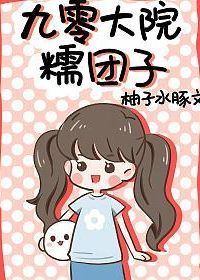
Transmigrated in the '90s as a Little Dumpling
+Add to Custom List
Sort
Add review
... Read More
I'm not even going to pretend I'm being objective about this—Song Qiaoxi's dialogue is the best thing about this entire passage. The author has given her this incredibly distinct voice that you can hear the moment she opens her mouth. She's hungry, she's impatient, she's completely unfiltered, and she has zero shame about it. When she's negotiating with Jiang Qisheng, she's just thinking about sticky bean buns and sweet and sour ribs. That's not a plot detail, that's CHARACTER. She's a kid who cares about food above all else, and the author makes that feel so natural. And then there's the crispy rice line. I literally laughed out loud. "It's just like pressing rice into crispy rice; with a 'pop,' it turns all flat and dry!" She's comparing herself to cooked rice. In a serious moment. This kid has no filter, no self-awareness, and I love her for it. Chu Jin's dialogue is the perfect counterpoint. He says almost nothing. "Let her go." "Are you okay?" "Okay." Three sentences in the entire confrontation, and each one hits differently. His silence speaks volumes, especially after the shoulder throw when he immediately shifts to checking her knee. The narrative voice itself is also doing a lot of work here. It's warm, slightly ironic, never judgmental. When it describes Jiang Qisheng's yellow belt drooping "like a limp pickle," that's not just funny—that's the narrator having fun with us. The author trusts the reader to get the humor without explaining it. The moms calling their kids home for dinner is another dialogue highlight. It's background noise that somehow becomes the most grounding moment in the scene. Those snippets of conversation—"Qiuqiu, what time is it?" "Song Niannian, hurry back!"—they create this entire world without a single exposition paragraph.
... Read More
This chapter is a masterclass in emotional pacing and I need to break down why it works so well. It starts at MAXIMUM chaos—Song Qiaoxi vomiting in public, Wang Junyang trying and failing to help, Chu Jin grabbing the kid's wrist like a bodyguard, Uncle Wang dragging his son away by the ear. It's loud and frantic and almost comedic. Then it transitions into the warm, domestic dinner scene where we get the backstory through overheard conversation. The kitchen sounds—chopping board, faucet clattering, range hood roaring—create this cozy but slightly tense atmosphere because we're eavesdropping on something serious. Then BEDTIME. The pace drops to a whisper. Fan swinging, soft breathing, a lullaby, darkness. And right when you think it's going to stay peaceful, Chu Jin's nightmare hits. The sobbing wakes everything back up, but it's a different kind of tension—emotional rather than physical. Then morning comes and it's all routine again: hair braiding, breakfast, dad leaving for his night shift. The chapter moves from external chaos to internal intimacy and back out to daily life, and each transition feels completely natural. No rushed moments, no dragging. The author knows exactly when to speed up and when to let the reader breathe.
... Read More
Okay so Jiang Qisheng is out here flexing his yellow belt like it's some big deal, right? And Song Qiaoxi just wants to go home for dinner. Classic setup. But then Jiang Qisheng goes and grabs her collar and calls Chu Jin an orphan to her face, and THAT's when everything changes. Chu Jin's reaction is wild. Like, he just... loses it. The text says his eyes turned "a deep, terrifying black"—and I'm not even being dramatic, that line gave me chills. This kid has been through something, and you can feel it radiating off the page. He doesn't even throw a punch. Just grabs Jiang Qisheng's wrist and says "Let her go" in the coldest voice possible. Then executes a shoulder throw so fast Song Qiaoxi barely sees it happen. What I love about this scene is how the plot uses Jiang Qisheng's childishness as a catalyst. He's so obsessed with proving himself stronger than Chu Jin that he completely forgets he's dealing with someone who literally survived trauma. The irony is delicious. And the fact that Chu Jin immediately checks on Song Qiaoxi's knee afterward? That contrast between violence and tenderness is such a good character beat. Also—plot twist within a twist? Jiang Qisheng's yellow belt was bought with his mom bribing the coach, while Chu Jin earned his red and blue belt through actual talent and hard work. The author is basically screaming "don't judge a book by its belt color" through the narrative. Classic underdog setup, but executed with such restraint. No monologue, no dramatic speech, just a kid who's been through hell protecting someone else. The scene ends with them walking home in the sunset, which is such a soft, almost cinematic moment after all that tension. It's like the author is saying: this kid can throw someone across the yard, but he's still just a boy walking a girl home.
... Read More
There's so much going on beneath the surface of these chapters that I want to unpack. The sunlight is a recurring motif. The sunset casting a warm golden hue over the rooftops, Song Qiaoxi's golden hair catching the light, Chu Jin thinking she looks like a little sun. Light is safety here. It's warmth. It's everything Chu Jin has been missing. And Song Qiaoxi—this chaotic, loud, food-obsessed child—is the source of it. That's not accidental. Food is another huge theme. The sticky bean buns, the sweet and sour ribs, the braised fish, the five-spice soup. All of this represents the family Chu Jin has lost. Song Qiaoxi's mother cooking these meals is a quiet reminder of what he's been without. When she offers him food at the end—asking if he likes sweet and sour ribs, noting that he doesn't eat enough meat—she's not just being a hungry kid. She's extending care in the only language she fully understands. The taekwondo belts are symbolic too. Jiang Qisheng's yellow belt was bought with bribery. Chu Jin's red and blue belt was earned through genuine skill and suffering. The author is making a statement about merit versus privilege, but doing it through children's playground dynamics. That's sophisticated writing disguised as a kids' story. And Chu Jin's sleeping habits—the way he startles awake, the perfect posture even in sleep—these are trauma responses. The author doesn't diagnose him or make a big deal about it. They just show us. A boy who can't relax, can't sleep deeply, is learning to feel safe because a little girl talks his ear off on a walk home. The compound itself feels like a microcosm of society. There are hierarchy and competition (Jiang Qisheng wanting to prove his era has begun), but also community and warmth (the moms calling kids home, the kids watching out for each other). It's a world that's both harsh and tender, and the story lives in that tension.
... Read More
"Mom, if Chu Jin's uncle bullies him too, can we...can we bring him back home?" I need a minute. This six-year-old girl is hugging her mother's legs, face buried in her waist, and she's literally begging to take in another child because she can't bear the thought of Chu Jin suffering alone. The stakes here are so small and so enormous at the same time. To Xixi, Chu Jin being taken away isn't just a friendship ending — it's a threat to his survival, and she's already positioning her family as his rescue party. And her mom's response! "Chu Jin will live with us, our family won't be missing a pair of chopsticks." She doesn't even hesitate. She immediately envisions feeding another person at their table. This is a woman who spent a year patiently rebuilding trust with a child who came back spoiled and unruly, and now she's offering that same unconditional hospitality to a boy she barely knows. But what gets me is Xixi's fear. She's not worried about herself — she's worried about Chu Jin. The orphanage trauma has already taught her what it means to be powerless, and she's projecting that onto him. Every time she calls his uncle's house and gets no answer or hears that he's "unwilling to speak," that anxiety builds. She's terrified he's being punished for ignoring her calls. The tension between her desire to protect him and her complete inability to actually do anything — that's the real stakes here. She can wait until September. She can hope they're in the same class. But she can't fix this right now, and that helplessness is killing her.
... Read More
Okay, so this one scene about food absolutely wrecked me and I need to talk about it. Xixi is sitting there with her half-finished soup, clutching that enamel bowl like her life depends on it, and she blurts out 'But that would be a waste of food!' and her mom just... takes it away and says something that changed how I think about everything. "Silly daughter, leaving behind what you can't finish isn't wasteful. Forcing yourself to eat what you can't stomach, now that's wasteful." I literally stopped reading and just sat with that. This girl came from an orphanage where teachers literally forced kids to finish their plates. She developed this deep, bone-level habit of equating her own comfort with morality — if she's hungry, she's being bad. Her mom's words are so simple but they're basically dismantling years of conditioning. The mother isn't just talking about soup, she's teaching her daughter that taking care of yourself isn't selfish. And then the pillow scene! Xixi folding the quilt like a tofu block because Chu Jin folded it, keeping it untouched so she can still smell his scent. That faint unfamiliar fragrance — is that really just about smell? Or is it about holding onto something real when everything around her is shifting? Chu Jin gets taken away by his uncle, the summer feels impossibly long, and this little girl is clinging to the last trace of him on her pillow. The whole chapter is soaked in this theme of what we're willing to force ourselves to endure versus what actually nourishes us. Whether it's food, love, or stability — the question keeps coming back.
... Read More
I keep thinking about what the original book said versus what's happening now. The text literally tells us that in the original timeline, the family moved in 1998 after a series of unlucky incidents caused by the original owner's behavior, and the family eventually fell apart more than ten years later. Song Qiaoxi's internal monologue here is chilling in its determination: 'She made up her mind to help her family avoid all bad luck. And guarding a family's good life starts with her.' This is the stakes right here. The entire emotional weight of the story rests on whether this little girl can actually change fate. And Chu Jin's situation adds another layer—if the family falls apart, where does he go? Back to the orphanage? Back to an uncle who stole his parents' money? The father's voice trailing off when he says 'I'm afraid Xixi's… difficult to handle' without finishing the sentence—that unspoken terror that Chu Jin might have died if he hadn't called the police is hanging over every scene. What happens if the original owner's bad luck spreads to Chu Jin too? What happens if Song Qiaoxi fails? The book hasn't even properly started and I'm already terrified for all of them. Also the detail about Chu Jin being a year behind in school because his education was disrupted—that's a concrete, measurable loss that makes the stakes feel real and not abstract.
... Read More
The sensory details in this passage are unreal. Let me just list some things because I can't pick a favorite: the green paint on the wall that feels 'cool and smooth to the touch,' the wang-wang stickers crookedly pasted on the refrigerator, the 20-inch color TV playing some children's show with a chubby kid releasing pigeons, the Compass wall clock ticking toward 7:30 for the variety show. And the LULLABY. 'The moon is bright and the wind is quiet, the leaves cover the window lattice, and the crickets would zheng zheng just like the sound of the zither.' I need this as a text message from my mom immediately. The bead curtains clattering, the enamel spittoon with the red mandarin duck, the bamboo mat on the bed, the blue enamel bowl Chu Jin drinks mung bean soup from—every single object grounds us in this specific time and place so completely that I can practically smell the scallion pancakes and fried sausage. Even the father's pager hanging on his belt and the hollowed-out leather shoes. This isn't just background decoration; the world itself feels like a character. The summer night of '96 with insects having a carnival under the dim courtyard lights while the three of them walk home, reflections stretching long on the ground—that image alone is worth the whole book.
... Read More
Okay so I need to talk about how the author reveals Chu Jin's backstory here because honestly this is peak storytelling and I'm still recovering. Instead of dumping it all at once through exposition, we get it through OVERHEARD CONVERSATIONS between the parents. That's so smart. Song Qiaoxi is sitting on that tiny stool by the kitchen door, eavesdropping, and we learn that his uncle stole the money and abandoned him at an orphanage. The way it's woven into a casual kitchen chat about 'what a piece of shit' the uncle is—chilling. And then the father says 'The kid called the police and saved our daughter, if he hadn't alarmed the police… I'm afraid Xixi's… difficult to handle…' which also ties back to the earlier scene where Chu Jin saved her. The plot threads are literally crossing each other in real time. It makes me wonder—does the author plan all these little connections beforehand, or is this organic? Because the way the car-sick incident from earlier chapters loops back into why they're taking him in feels so deliberate and satisfying.
... Read More
Let me just say — Xixi got a 99 in Chinese and 100 in math. NINE-NINE. What did she miss?! And her parents were OVERJOYED. This kid came back from the orphanage and basically aced first grade while also emotionally supporting her friend through a family crisis and learning to cope with her own trauma. The girl is a machine. But the real plot movement here is subtle. Chu Jin is now living with his uncle, Xixi is adjusting to family life, and the September school start is looming like a deadline. The author is building a quiet but real narrative arc — this isn't just a cute kid story, it's about two kids navigating a world that keeps trying to pull them apart. The phone calls are the subplot that keeps the Chu Jin thread alive. Each unanswered call is a small beat of rising anxiety. 'Either no one answered or his uncle said Chu Jin was unwilling to speak to her.' UNWILLING. Not can't — unwilling. That word choice is doing heavy lifting. Is Chu Jin actually being punished? Is he angry? Or is the uncle lying to keep Xixi away? And then there's the KFC reward system — 'if our Xixi does well in the final exam, Mom will reward you.' This is the first time we see Xixi internalizing that her good behavior has consequences her mother notices and rewards. At the orphanage, survival was the only metric. Now she's learning that excellence opens doors. The plot isn't exploding, but it's moving. And every small movement feels earned.
... Read More
Let me just say this: the pacing in these chapters is absolutely impeccable. You've got the confrontation with Jiang Qisheng—fast, sharp, violent in its intensity. Chu Jin throws the kid, there's crying and embarrassment and all the kids gossiping. It's a whirlwind. And then immediately after, the author does something brilliant: they just... slow everything down. The sunset, the locust trees making that "sala sala" sound, the moms calling their kids home for dinner, the smell of stir-fry in the air. It's like the author takes a deep breath and makes the reader breathe with them. After all that tension, you're suddenly walking alongside these two kids through a golden evening, and it feels so earned. The transition from the fight to the walk home is seamless. No chapter break, no dramatic pause—just Chu Jin walking toward Song Qiaoxi, checking her knee, and then the whole scene dissolves into this quiet, almost dreamlike sequence. The author doesn't rush to the next plot point. They let you sit in the moment. And then—just when you're fully relaxed, fully immersed in this cozy compound life—the author drops this line about Song Qiaoxi watching Chu Jin sleep every morning, and his eyes snapping open in a startle. BOOM. Back to the tension. Back to the trauma. The pacing here is like a heartbeat: fast, slow, fast, slow. It keeps you engaged without exhausting you. This is how you write a coming-of-age story. You don't just stack drama after drama. You give the reader room to feel things. And the author clearly understands that the quiet moments are often more powerful than the loud ones.
... Read More
"Don't be afraid. I'm here, don't be afraid…" and I am SOFT. I am absolutely destroyed. This moment where six-year-old Song Qiaoxi hears Chu Jin sobbing in his sleep and just… rolls over to his tiny bed and pats his arm like she's the one comforting him? The role reversal is everything. Here's this kid who's been through hell, who had parents that disappeared into the sky in his nightmare, and it's the girl who just met him who becomes his anchor. And then the next morning she's the one falling asleep in her mom's arms while humming that lullaby about crickets and moonlight. The book keeps showing us that these two children are each other's safe place, and I cannot handle how tender it is. Chu Jin's nightmare where his parents walk away and he cries 'I don't want to be by myself'—I literally gasped. And Song Qiaoxi's response wasn't even words, just her small hand patting his arm. Sometimes the quietest gestures hit the hardest. Also can we talk about how Chu Jin avoids her gaze after she vomits because he thinks she's ugly and he's disgusted? That insecurity is so painfully childlike and it made me want to shake him gently.

Leave a comment

You must be logged in to leave comments. or
