There’s a Prince Living in Our Attic! - Reviews

There’s a Prince Living in Our Attic!
+Add to Custom List
Sort
Add review
... Read More
"These cowardly tears. Look at them, only surfacing now that it seemed Eden wasn't going to leave right away." Alisa calling herself cowardly for crying because the immediate danger has passed—that line captured something so true about how grief actually works. We don't always cry when things are worst. We cry when we finally feel safe enough to. And Eden noticing this, offering her a scone without saying anything about it, that's the kind of quiet care that hits different. I also need to address the physical proximity shift in this chapter. They start a hand's width apart. By the end, she's grabbed his collar, they've jumped into a river together, and he's carrying her out. The intimacy isn't romanticized or sexualized—it's desperate and practical and somehow more intimate than any touchy-feely scene ever could be. The moment that really got me though was when Eden sees the wound on his arm and immediately changes the subject. He won't let her see him hurt. And Alisa notices anyway but doesn't push. She just... waits. Lets him redirect. That restraint is everything. And then later, walking back toward the estate in the rain, he's furious at himself for bringing her into this mess. "The sweet in your mouth is sweet, but it's only ever a fleeting sweetness." He's already preparing to lose her, already calculating the distance. But she's still there, still pointing at things, still trying to make him smile. God, I love this pairing.
... Read More
There's this one line that won't leave my head: 'His eyes were like the sea. In shadow they looked like the deep ocean floor, and when the lantern light touched them they shimmered like sunlight on the water's surface.' What does that even MEAN on a thematic level? Think about it—Alisa has spent her whole life being looked AT with suspicion, with cruelty. Hannah yanks her ears, Mary locks her away, everyone assumes she's lying. But this boy? He looks at her. Really looks. His eyes are vast and ancient and alive, and for the first time someone sees HER, not the 'thief' or the 'maid' they assume she is. That's not accidental. The author is screaming about recognition, about being witnessed. And then there's the attic itself—this forgotten space where old things go to gather dust. But it's also where two lost souls find each other across centuries. The drawing on the wall, half-hidden, waiting for someone to notice it again. The radio playing news about a theatre company while Alisa dreams of fame—'If word of me reaches my mother's ears, she'll surely come back.' She wants to be seen by the world because the people who should see her don't. The boy offers that seeing, and I'm not okay with how much that moved me.
... Read More
This batch delivers one of the most satisfying plot developments in the series. The time-stop ability that Alisa accidentally unlocks is brilliantly woven into the narrative. What I love is how the mechanics feel earned rather than convenient - she doesn't just discover it, she stumbles into it while emotionally overwhelmed, which mirrors classic magical realism traditions. The sequence where she flips the vase and water droplets freeze mid-air is pure cinematic storytelling, and the immediate consequence of random rainfall ties the supernatural element to tangible world effects. The subplot threads are converging beautifully here. The mysterious man who takes her in remains appropriately shadowy - we get details like the childlike blanket preparation and elaborate dinner, but nothing concrete about his identity or motives. Meanwhile, Alisa's escape from the abusive household creates a ticking clock: she has nowhere safe to go, which forces her toward Eden and the attic. The parallel structure of two young people hiding wounded interiors - Alisa running from violence, Eden running from political arranged marriage - gives the plot its emotional backbone. The footbridge encounter with the black top hat man is a masterful callback that recontextualizes everything. Alisa recalls "that strange sensation" and how she "needed to cross that bridge and face the man in the black top hat" - this suggests the time-stop wasn't random but fateful, tying her choices to larger cosmic mechanics. The author isn't just writing a coming-of-age fantasy; they're building a puzzle where character psychology and magical systems are inseparable. My only mild critique is that Eden's confession about his betrothal lands slightly melodramatic, but it's earned through the preceding tension of their starlit picnic. The plot rewards careful readers who noticed earlier hints about royal arrangements.
... Read More
This chapter is a masterclass in pacing variation. It starts almost painfully slow—Alisa crying quietly, Eden eating a scone in silence, the conversation drifting like they're both afraid to touch anything real. Then the instructor story drops, and suddenly we're in the middle of a violent flashback told through memory gaps. After that comes the river scene, which is pure kinetic energy: jumping, falling, drowning, grabbing, swimming. And then the aftermath—wet, shivering, walking through a dark village with Alisa getting distracted by straw roofs like nothing catastrophic just happened. The author knows exactly when to accelerate and when to let the reader breathe. My favorite pacing choice is the ten-second pause. Eden tells Alisa to stand still for ten seconds while he has an internal crisis about her face. Ten seconds of narrative time that contains an entire emotional avalanche. And the chapter ends not with a bang but with a guard shouting and Eden's sharp internal click of his tongue—a tiny sound that signals the next crisis is already loading. What really works is that the chapter never lets you settle into one emotional register. You go from tender to horrifying to adventurous to funny to worried in the span of a few pages, and it never feels chaotic because each beat earns its place. The hunting story establishes why Eden can't stay. The river jump establishes why he can't leave Alisa behind. The estate arrival establishes the new stakes. Three movements, one chapter, zero fat.
... Read More
'You will be happy, without fail.' I need a minute. That's it. That's the line. That's the whole chapter. Roben says this in response to Alisa begging him not to leave her, and it's the most heartbreaking thing I've ever read. Not because it's a promise—because it isn't. He never actually says yes. He deflects, he dodges, he talks about his name being a pseudonym and points across the street like the answer is in Madame Marigold's sign. But then he says those words, and they sound like a vow and like a eulogy at the same time. Like he's seen this play out before and he knows how it ends, and he's trying to give her something real even though he can't give her himself. And Alisa—god, Alisa—she hears it and she bows her head because she's afraid if she looks at him she'll cry. She's thirteen and she already knows what it feels like to lose things after they're gone. This time she held on. This time she didn't lose it. And Roben's answer to her asking for a guarantee of his presence is 'you will be happy'? What is he protecting her from? What does he know that she doesn't? I'm not okay with this and I need the next chapter immediately.
... Read More
I've been thinking about this exchange for like twenty minutes and I keep coming back to it. Eden says "Don't smile." Alisa, bewildered, stops mid-smile and asks "Like this?" with this devastated expression. And Eden internally screams because she looks unbearably endearing and he has to say "Ten more seconds" just to buy himself time to process his own feelings. This is peak dialogue writing because it accomplishes three things in barely twenty lines: (1) it reveals Eden's emotional incapacity—he can't handle genuine warmth without panic, (2) it shows Alisa's empathy through her immediate compliance and willingness to adjust, and (3) it creates this incredibly tender, awkward moment that feels nothing like typical romance novel banter. Their voices are so distinct too. Eden's internal voice is sharp, self-deprecating, full of rhetorical questions and dashes. Alisa's dialogue is direct, practical, occasionally giddy. When she says things like "I'm really good at finding my way, Eden!" with the fist pump—that's a kid who's genuinely excited about the adventure. Eden's response is always deflection. "On bad days I used to get annoyed just watching Mary eat a baguette. I completely understand." He's trying to explain why he told her not to smile, and instead he's talking about his sister eating bread. Of course he is. The humor in this scene is also worth noting—the author doesn't take themselves seriously even during heavy moments. The picnic basket, the hard scone, the whole absurdity of two people in soaked clothes discussing whether she should keep making that face. It's funny without undermining the emotion. That balance is rare.
... Read More
Okay, so let me just start by saying I have SCREAMED into a pillow about this scene multiple times. You have Hannah dragging Alisa by the ears, throwing her into the attic like absolute trash—this is just so brutally unfair it makes my chest hurt. And then, like right when you think it can't get weirder, BAM. A guy falls from the sky. But not just any guy. A GUY IN FANCY PRINCE CLOTHES who claims he drew the scribbles on the wall centuries ago. What?? The way the story pivots from domestic abuse to historical fantasy in the span of one thunderstorm is chef's kiss. But here's what really got me: Alisa's entire identity crisis peaks when she cries and shouts 'I'm not a maid! I'm not a thief!' And the boy—he doesn't mock her. He literally just sits there and pats her head awkwardly like 'uh, okay, honey, I'm sorry?' The contrast between Hannah's violence and this stranger's clumsy tenderness hit me like a truck. And then the reveal drops: he's from 150 years ago. The estate was once HIS family's home. The house literally remembers him. That connection between the drawing on the wall and his origin? So much symbolism packed into one plot twist. I'm already obsessed with where this goes.
... Read More
Let's talk about what Alisa is carrying. A box. Of clothes. The ones Roben bought her three years ago when they first met. She's been clutching this box through rain, through desperation, through two weeks of searching, and when she drops it on the ground soaked and mortified—her undergarments visible through a thin dress, people staring—it's the most vulnerable image in the entire book. She's a child holding onto proof that someone once cared about her, and everyone around her treats it like a spectacle. The stakes here aren't about world-ending drama or battles. They're quieter and infinitely more dangerous. If Roben leaves, Alisa loses the one person who saw her. The text makes this devastatingly clear when she whispers 'don't leave me behind' and her fingers tighten around her skirt. She knows she has nothing to offer—no money, no age, no status—and she's asking for something she can't possibly secure. And yet she asks anyway. That's the real conflict: not whether Roben will leave (we already know he might), but whether Alisa will survive it if he does. The chapter ends on 'I'll resent you for the rest of my life' and I swear to god if this kid grows up bitter I'm going to destroy the author.
... Read More
Let me just say this: the hunting competition flashback is probably the most important plot revelation in the entire arc so far, and it's delivered in what, three paragraphs? Eden's instructor led him outside the designated area. Eden noticed but followed anyway because he wanted to believe it was a mistake. The instructor drew his sword or charged on horseback. Eden killed him in self-defense but can't even remember how. Do you understand how much that tells us about Eden? This is a person who has been carrying the guilt of killing someone who was basically his father figure, and he's never told anyone. Not his family, not his court, nobody. And he just laid it out for a thirteen-year-old girl he met twice. From a structural standpoint, this is brilliant foreshadowing. It establishes that Eden has enemies within his own circle—people close to him who would try to kill him. Which recontextualizes everything: why he's guarded, why he can't trust easily, why the political situation is so precarious. But the real plot twist here isn't the assassination attempt itself. It's that Alisa immediately connects this to the time-travel mechanics and decides to use them. She doesn't try to comfort him with words—she offers action. Jump into a river, go back, prevent it. The stakes just went from "Eden has trauma" to "we might be able to change history" in one move. And the cliffhanger with the guards discovering them at the estate? Perfect. Now they're trapped in the past with no clear way back, and Eden has to face whoever he's running from. I am NOT ready.
... Read More
The stakes in this chapter are so layered I don't even know where to start. On the surface: Alisa is physically threatened. Locked in an attic. Told she might starve for a week. Called a thief on her birthday. That's survival-level tension. But then enter Eden. He's disoriented, probably injured, holding a dagger to her throat before he even knows she's real. Immediate danger, right? But watch how quickly the power dynamic shifts. He offers her his handkerchief. He apologizes. He asks for her name with actual respect. The external threat melts into something else entirely. And internally? Alisa is fighting this war inside herself—wanting to trust this incredible boy but also terrified that maybe she's not worthy of kindness. That's the real stakes here. Will she let someone see her pain without crumbling? Will he stay long enough to actually help her? The author keeps both questions alive at once. Every time I thought we were safe, something else tugged at my chest—the radio silence about her mother, the empty promise of becoming famous to bring her back, the fact that this prince doesn't belong in her world at all. I'm sweating just thinking about what's coming next.
... Read More
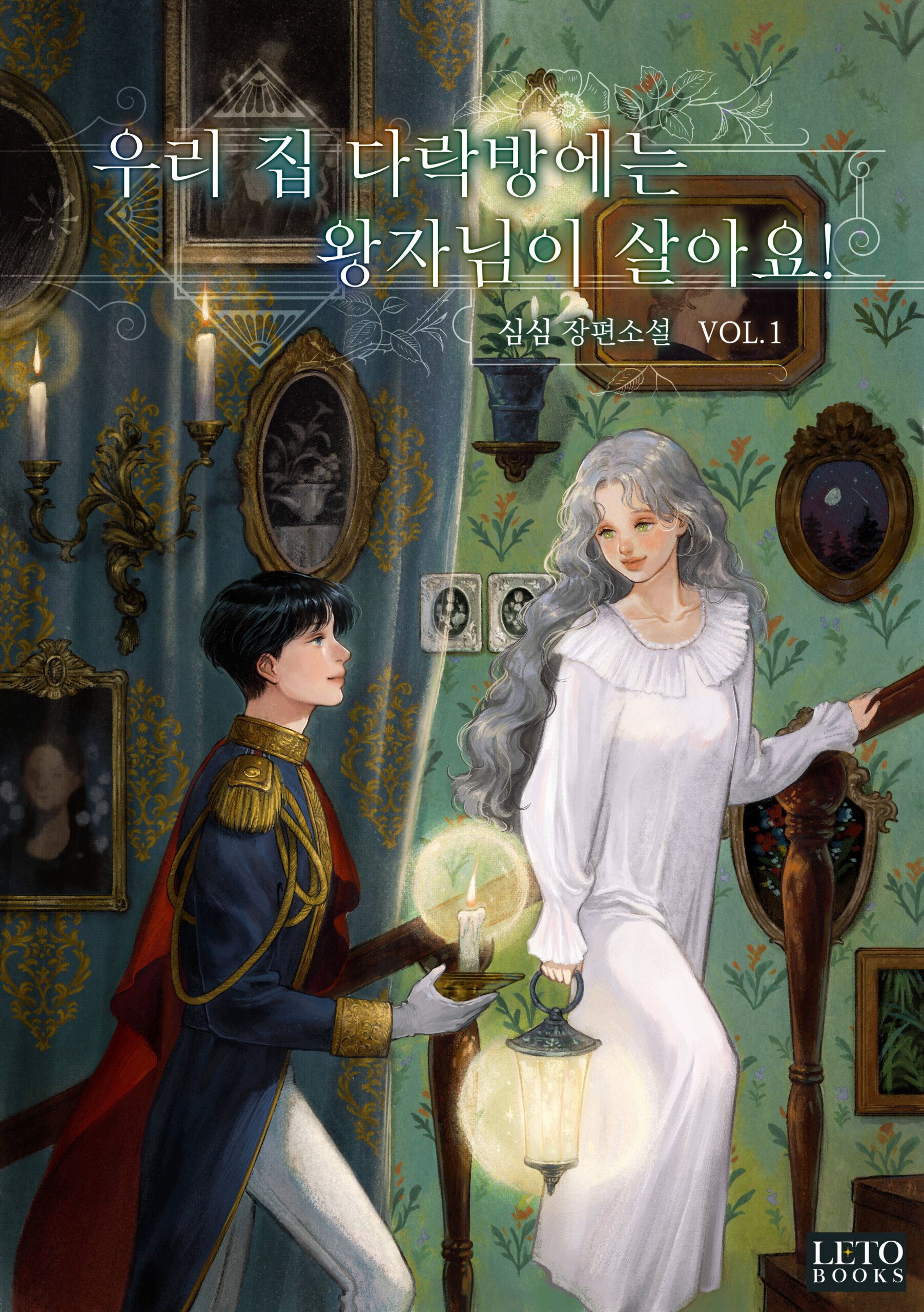
I just finished reading the first seven chapters and my brain is properly blown. This isn't your typical orphan drama with a happy ending — it's a layered historical fiction that threads two separate timelines together like braided rope, and the way it's been done is genuinely masterful. The structure immediately grabs you: Alisa in 1902, marking her calendar with X's as she counts the days since her mother Roxia vanished. Then BAM — a hard pivot to 1655, where twelve-year-old Eden is being dragged away from his own mother's funeral in a carriage. Two children. Two lost mothers. And somehow, the same weather seems to respond to both of them. The most striking plot device I've noticed is the repeated wish for rain. Alisa whispers "I wish it would rain harder" to stop her mother from leaving, and that night Montrau gets record-breaking torrential rain. Three years later, in 1655, Eden makes the exact same wish during his drugged ride away from the palace, and the carriage nearly plunges into a collapsing bridge. Is this coincidence? Prophecy? Something else entirely? The author hasn't resolved this yet, and it's already hooked me into wanting to keep reading. The backstory weaving is excellent too. The Ludendorff family's fall from prosperity — the sunken wedding-day vessel, the crashed shipping routes, the slow erosion of maids and silverware — it's shown through concrete details rather than exposition dumps. Alisa remembering the Christmas Eve confrontation, overhearing her father scream about bankruptcy while hiding behind the stair railing... that single memory does so much heavy lifting. And then there's the Royal Globe theatre company threat — Roxia leaving behind a breach of contract situation. This feels like a future plot bomb waiting to go off. What happened to a stage queen who walks out mid-career? Why did she leave if all her warm coats are still in the closet? The dual-timeline setup promises a payoff. I just hope the author connects these threads satisfactorily. So far, every chapter ends with a door slightly ajar, and I can't help but keep turning the pages.
... Read More
I need to talk about the dialogue in this novel because it does something unusual — it weaponizes what characters don't say. Alisa's father is a perfect example. His lines are sparse and cracked: "...Alisa, are you asleep?" followed by the performative reassurance, "Everything's going to be all right. It will, it..." That trailing off is everything. He doesn't finish the thought because he doesn't believe it himself. The reader hears what he's afraid to say: I don't know what's going to happen. I'm scared too. The great-aunt's dialogue switches between two registers — the vacant elderly woman and the suddenly lucid noblewoman. When she snaps to attention about silver polishing, the dialogue accelerates: "Is everything prepared? Have the silver pieces been polished in advance?" Then immediately drops: "...But who are you? Where is my maid, Marie?" This whiplash between eras within a single conversation is the novel's most distinctive voice choice, and it works because the great-aunt herself seems confused about which timeline she inhabits. Eden's internal dialogue contrasts sharply with his external silence. Outwardly, he says almost nothing to the servant. Inwardly, he's running full calculations: What did I drink? Who gave it to me? Was it the Fenton household? The narrator never states these questions explicitly — they're embedded in action: pressing his thumbnail into his palm, digging until blood comes. This is showing-through-doing rather than showing-through-thinking, and it creates a more visceral reading experience. The narrative voice itself deserves praise. It's close third-person but occasionally slips into poetic compression — "A crack of weeping out of a clear sky" to describe the sound from her mother's empty room. This isn't the kind of language that calls attention to itself; it's the kind that settles into your memory without announcing its presence. One line that perfectly captures the novel's tonal balance: "Her throat stung like she'd swallowed a fish bone." Simple simile, specific physical sensation, emotionally loaded context. This is the author's signature move — grounding abstract grief in concrete bodily experience.

Leave a comment

You must be logged in to leave comments. or
