There is No Key to His Cage - Reviews

There is No Key to His Cage
+Add to Custom List
Sort
Add review
... Read More
The dialogue in this passage is absolutely razor-edged. What makes it work is how differently these two people use language—one weaponizes it, the other survives with it. Elena's lines are all performance and panic. "I'll love you too" is delivered like a theater audition, and the narration even tells us she draws on her college theater club experience. Her voice shifts from bitter mockery ("You crazy bastard") to desperate bargaining to full breakdown. Notice how her sentences fragment as she loses control: "Stop! I said stop!!!" becomes just "Save me." The dialogue architecture mirrors her psychological collapse in real time. His dialogue is almost eerily calm. Three-word sentences dominate: "Yes, immeasurably." "Because I love you." "Good girl." "You will stay here with me forever." He rarely raises his voice because he never needs to. Even his cruelty is delivered in gentle registers: "Did you really think I would untie you?" said with what sounds almost like affectionate teasing. The most devastating exchange is the negotiation scene. She offers love; he asks what she'll give. She thinks she's outsmarted him. The dialogue here has this awful dramatic irony—we watch her construct an elaborate strategy while he watches with the patient amusement of someone who already knows the ending. His final line before tightening the ropes: "May our love be eternal." After KISSING HER HAND. The juxtaposition is so grotesque it loops back around to being brilliant writing. The maids' dialogue is almost comically deferential: "My lady, please… If we don't assist you, we'll be killed." Their voices sound nothing like his. They're victims too, just ones who've learned to survive by being useful. That single line reveals his entire power structure in three words.
... Read More
Can we just take a moment to appreciate the absolute ENERGY of this dynamic? He keeps patting her head and calling her cute and comparing her to a well-behaved puppy and she responds by SPITTING in his face. That is the kind of couple energy I live for. Like, most heroines in these situations are either crying or being weak. Not Elena. She's got claws. Even when she's starving and weakened, she's still cursing him out and trying to threaten him with the police bureau. And his reaction? He just... finds it adorable. "You're still mischievous." "Lovingly." Sir, she JUST SATANIC-SPIRITED YOU. But here's the thing that actually disturbed me — there ARE moments where his behavior isn't purely evil. When she's crying and he says "When you cry, it makes my heart weak" and actually wipes her tears away... that wasn't performative. That was raw. And then he leaves with the food anyway. "This won't do. I'll come back tomorrow." He's withholding food as punishment/control but he ALSO can't stand seeing her suffer. This man is a walking contradiction and I am obsessed. Their power dynamic is so beautifully toxic — he holds all the cards physically and politically, but she holds something he doesn't expect: genuine defiance that he seems to find irresistible rather than threatening.
... Read More
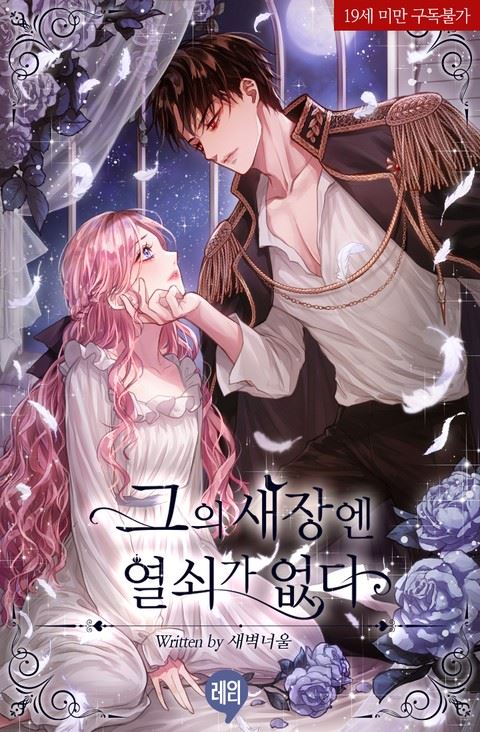
I've been thinking about the symbols here. There's so much about ownership. Elena is basically a prized possession. The phrase "bride bought with money" sums up the theme of the story so far. She isn't a partner; she's an acquisition. Decarus keeps using language of value and ownership. He calls her "precious," he treats her like a doll, he inspects her like merchandise. But there's also the theme of hunger. Not just food hunger, but a spiritual or emotional hunger. He says he wants to "eat" her. It's a vampire trope, obviously, but it's also about consumption. He wants to consume her life, her autonomy, her very self. He wants to absorb her into his world. And the red eyes—the "burning like the sun." It suggests something supernatural, something dangerous. The color red is associated with danger, blood, and passion. It's everywhere in his description. Meanwhile, Elena is associated with blue ("blue eyes, like lakes"). Water vs. Fire. He is the destructive force; she is the thing he tries to drown or boil. The setting also plays a part. The large mansion, the locked doors, the view of the servants from the window. It's a cage. She watches them pass by, unable to join them. She is separated from the normal world. The painting on the ceiling she stares at is a symbol of her stagnation. She is lying still, looking up, trapped. The "bet" itself is a symbol of the arbitrary nature of their conflict. To her, it was a joke. To him, it was fate. This highlights the disconnect between them. He lives in a world where rules and deals matter; she is just trying to survive. It's a clash of worldviews. I think the story is exploring how love can become a form of imprisonment. Decarus thinks he is loving her by keeping her, by marrying her. He thinks this is romance. Elena knows it's captivity. The tragedy is that he genuinely believes he is doing right by her. That makes him scarier than a villain who just wants to hurt her. He's a villain who wants to worship her, and that's a lot harder to escape from. What do you think? Is there any chance she can change his mind, or is he too far gone?
... Read More
I have to talk about the plot progression here because this batch is essentially Elena realizing there is no way out. We have been building up this mystery of where she is and who Decarus is, and now it just hits her in the face—literally. The scene where he corners her against the wall and talks about the "bet" is the turning point. Up until now, the plot has felt like a slow burn of confusion for Elena, but this moment crystallizes everything. She thinks she made a joke about whether he was the Grand Duke, and he treats it as a binding contract. That is such a classic, twisted plot device. It forces the narrative into a box: she can't just leave because now there's a "wager" involved. It raises the stakes massively. If she refuses him, she isn't just defying a captor; she's breaking a promise in his eyes. I love how the author uses the dialogue about the wedding to shift the genre from a captivity thriller to a forced marriage romance in one sentence. "The wedding. Yours and mine." Just drop that and see what happens. It recontextualizes every previous interaction. He wasn't just keeping her locked up; he was preparing for this. It makes the whole backstory feel more sinister. Did he plan this the whole time? Or is he just this delusional? I really hope the plot isn't just going to be a loop of "he kidnaps, she resists." We need some external conflict soon, or Elena needs to start finding cracks in his armor. Otherwise, it's just two people in a room forever. Is there an actual escape plan forming, or is she just going to wait him out?
... Read More
"You smell nice. Makes me want to eat you." Oh my god, Decarus is such a menace. I need to talk about the dynamic between him and Elena because it is absolutely suffocating, and I mean that in the best way. The relationship here is so unbalanced. He is towering over her, physically and metaphorically. Look at the physical descriptions—he compares his skin to silk and flour, while she is trembling like a kitten. The power differential is huge. But what I find fascinating is his behavior. He is cruel, yes, he invades her space, he forces the kiss, he ignores her pleas. But there is this weird undertone where he actually *wants* her to want him. When he says, "You'll soon come to like it too," it's creepy, but it reveals his own desperation. He needs her approval. He trapped her, but he can't just treat her like an object because he keeps saying she's his "angel" and his "precious bride." He is trying to mold this relationship into something romantic on his terms, while she just wants to survive. And Elena! I feel so bad for her, but she's also showing some spine. She slapped him. Can we appreciate that? After he kisses her forcefully and tries to move her to the bed, she slaps him and calls him trash. That is a moment of defiance. It's not a lot, but it's something. It shows she hasn't broken completely. Their dynamic is this dance of violence and twisted affection. He pushes, she pulls away, he gets amused, she gets scared. It's toxic as hell, but I can't look away. What kind of person does she have to become to get out of this situation?
... Read More
This passage is a masterclass in tension escalation, isn't it? On the surface, it's a captivity story. But peel back one layer and you find something far more devastating: the entire narrative is structured around manipulation operating on multiple levels simultaneously. Elena attempts to manipulate him into untying her by offering love. The plot lets us believe she might actually succeed for about three seconds—his hands move behind her chair, the ropes loosen—and then WHAM. He tightens them again. That moment when he asks, "Did you really think I would untie you?" is one of those gut-punch reveals that recontextualizes everything that came before. We thought we were reading a hostage negotiation; turns out we were watching a predator let the prey think it had found an exit. But then the real twist hits: her breakdown isn't a defeat—it's exactly what he engineered. When she sobs "save me," his cold reply is "You should have begged like this from the beginning." He didn't fall in love with her; he studied her. Every iteration of her resistance—defiance, negotiation, feigned submission, full breakdown—was a variable he accounted for. The plot isn't about captivity at all. It's about the systematic dismantling of a person's autonomy through psychological conditioning disguised as romance. And the structure doesn't stop there. The next chapter shifts location entirely—from the chain-linked chair to the bedroom, from ropes to his physical embrace—and the power dynamic remains identical. He catches her attempting to flee the bed the same way he caught her earlier tactics. The narrative is a series of closing doors. Every escape route leads deeper into his control. That is remarkably tight plotting.
... Read More
Okay so this opening sequence is basically a masterclass in establishing a dark, obsessive romance premise without holding back. You get kidnapped, you're thrown into a slave auction, some psycho nobility buys you for a ridiculous amount of money, and then he literally tells you you're his bride. Like... bold strategy, really. The plot moves fast but it never feels rushed because every scene is stacked with information. First we learn she's an isekai protagonist (lived 30 years in a previous life too, which adds weight), then we discover the slave trade backstory, then BAM — Grand Duke Scylla reveal that flips everything. The line "What if that noble Grand Duke is me?" hit me like a truck. Because obviously it IS him, right? But the genius is how the narrative makes you sit in Elena's shoes where this sounds absolutely impossible. A beloved, perfect Grand Duke who feeds street beggars is a kidnapper who starves his bride? The cognitive dissonance is delicious. And that ending cliffhanger where she's about to say something but gets cut off — classic author move. I needed to know what she was gonna say immediately.
... Read More
I need to talk about Aiden because WOW. The author barely gives him any dialogue in this whole chapter and yet I am completely devastated for him. Let me just replay the scene where they meet. She's escaping the orphanage, starving, sleeping anywhere, and then Aiden shows up. He's nine, already somehow both childish and mature at the same time. The line about him being "sometimes like a mom and dad, sometimes like a comrade" absolutely wrecked me. This kid became her anchor in a world that kept trying to crush her. And then—"As long as she was with him, it didn't matter if it was a stone path, a forest path, or anywhere else." BRO. I am not okay. She was living in absolute hell before, and he was the one thing that made it bearable. They were gypsies together, performing plays, singing on streets, surviving on almost nothing but each other's company. That's not just friendship, that's devotion. Then they get captured. The image of them holding hands tightly before being dragged apart at the auction house—my chest actually hurts. And now Elena is in a luxurious bath, crying into rose-scented water, wondering if someone is beating him right now. She says it directly: "I wonder what happened to Aiden. I hope he's not being beaten by someone like I am." What kills me is that she has no way to reach him. She's in a Grand Duke's mansion, surrounded by people who won't tell her anything, and her only friend is potentially suffering somewhere. The loneliness here is palpable even though she's surrounded by opulence. All that gold and those expensive books—they mean nothing to her right now. The emotional whiplash of going from "maybe God gave me a second chance" to realizing she's trapped again, possibly forever, with Aiden gone... this is devastating writing. I haven't felt this worried about characters since way earlier in other novels.
... Read More
The stakes in this section are brutal and I want to talk about WHY they work so well. On the surface, Elena's conflict is simple: she wants to escape, Decarus won't let her. But the real conflict here is so much darker because it's about knowledge. Elena enters the basement thinking she's going to find leverage — secrets, weaknesses, something she can use to bargain for her freedom. Instead she finds something she can't use at all: a painting of herself that proves Decarus knew her before the possession, which means he knows something she doesn't, which means the power dynamic is completely skewed. "If I had known this would happen, I should have tied you up again." That line is the entire thesis of this chapter in one sentence. Decarus isn't just imprisoning her body — he's demonstrating that every move she makes to gain freedom actually plays into his hands. Her curiosity, her resourcefulness, her desperation — they're not weapons against him, they're vulnerabilities he can exploit. And the stakes keep escalating because each time Elena thinks she has an advantage, it gets taken away. She thinks escaping the room gives her freedom → she's stopped at the door. She thinks picking the lock gives her access → she finds nothing. She thinks the secret passage is her breakthrough → it's just more proof she's trapped. The final image of her waking up still bound isn't just cruel for dramatic effect — it's the logical endpoint of a conflict where one side controls the environment, the information, and the narrative. Elena is fighting a war against someone who already won it, and she doesn't even know when it started.
... Read More
Okay so this part where Elena finds those paintings in the basement?? I genuinely stopped mid-scroll because my brain couldn't process what was happening. She's been trying to escape this whole time and the secret isn't some escape route—it's a whole wall of paintings of HER. From before the possession. That's the kind of plot twist that makes you immediately want to flip to the next chapter even though you know it's going to hurt. And then Decarus catches her. The pacing of that scene is insane. First it's just quiet footsteps, then "Come out, Elena Helios" — she uses her full name, which in my experience as a reader is ALWAYS the moment things go from tense to catastrophic. You know you're about to get wrecked emotionally. What I love is how the author uses Elena's own initiative as the engine of the plot here. She's not waiting to be rescued. She's not passively suffering — she picks the lock, she pushes the bookshelf, she discovers the truth. And yet that same agency is exactly what brings the danger down on her head. That's really smart storytelling because it means her character growth and the plot progression are locked together. Every move she makes to save herself also moves the mystery forward. The only thing that bothered me slightly was how smooth she opened that locked door — like, she just happened to have an iron rod and knew how to pick a lock? But then again, she's a gypsy who sneaked into empty houses as a kid, so I guess it tracks. Just felt a tiny bit convenient.
... Read More
The dialogue in this thing is absolutely unhinged in the best way. His voice is this weird mix of soft and poisonous — he says the most terrifying things with the gentlest tone. "You shouldn't bare your claws at me like that." Like she's a kitten scratching furniture, not a woman being held captive. And then he follows up with "Or is this what you want?" while moving his lips toward hers. The man has NO awareness of how monstrous he sounds and that's what makes him so compelling. Her voice is completely different — sharp, sarcastic, profane. "Screw you." "You crazy bastard." "How many am I... dolls brought in as brides, played with to their heart's content until they wore out on their own, then discarded." That last monologue was delivered while trembling and starving and she still managed to be the most vicious person in the room. The contrast between their voices is what makes every exchange electric. He speaks in caresses and she speaks in daggers, and somehow they keep finishing each other's sentences like they've been doing this dance forever. Which raises the question — have they?
... Read More
Okay so let's talk about this one moment where Decarus calls Elena a serval. A wildcat that grew up without human warmth, always showing claws, but actually wanting to be loved. Holy crap. That line hit me like a truck. I've been trying to figure out what's going on between these two for chapters now, and this comparison says it all. Elena isn't just stubborn or angry — she's a scared animal in a corner, hissing because that's the only defense mechanism she's ever learned. Every time she pushes him away, every time she threatens to jump out the window, it's not genuine hatred. It's terror. And Decarus? The man sees right through it. He doesn't get mad when she punches him. He doesn't yell back. He just... holds her. Pet her head like she's some wounded creature. When he says "Someone who can cherish you" and "Someone who will love you forever," he's not being smooth or manipulative — at least not entirely. He's saying things he's apparently said before, because he recognizes something familiar about her personality. "You haven't changed at all. That personality of yours that can't say you're hurt even when you are." Wait, what does that mean??? Who is this man, and why does he act like he knows her from another lifetime? The power dynamic is messed up — she's literally imprisoned here — but the emotional truth underneath is real, and that's what makes it so complicated. I hate that I'm starting to feel bad for him even though he's the captor. And I hate that I understand why she broke down crying in his arms despite hating every second of it. Who else is there for her? Aiden is mentioned but we don't know if he's alive or not. Larsa is clearly the villain from her past. And Decarus is... something else entirely.

Leave a comment

You must be logged in to leave comments. or
