The Young Lady Sold to an Old Noble - Reviews

The Young Lady Sold to an Old Noble
+Add to Custom List
Sort
Add review
... Read More
The conflict structure in these first three chapters is built on layers and the stakes keep rising even when you think they've peaked. On the surface, the conflict is obvious: Rosaline vs. her parents, Rosaline vs. Earl Balzac, Rosaline vs. her own body. But the deeper conflict is something else entirely—it's Rosaline's EXPECTATIONS vs. reality. She braced herself for a fat, perverted old noble who would treat her like an object. What she got is... a skilled, disciplined man who happens to be physically overwhelming but seemingly respectful in his own brutal way. The Earl even asks "Are you curious about other men too?" which is such an unexpected moment of vulnerability from someone who has every reason to be purely dominant. The stakes escalate beautifully. In Chapter 1, the stakes are her emotional survival—will she break under this forced marriage? In Chapter 2, the stakes become physical and psychological simultaneously—she's being penetrated by a stranger and her body is reacting in ways she can't control. And in Chapter 3, the stakes shift again: will she lose herself completely to this pleasure, or will she find something more? What makes the tension work is that the author NEVER lets us fully trust either character. Earl Balzac is described as having lost two wives before. Two. That's not nothing. Is he dangerous? Is he cursed? Is he just unlucky? And Rosaline—she starts Chapter 1 absolutely certain she despises this situation, but by Chapter 3 she's reaching his chest muscles to steady herself and realizing sex feels GOOD. That internal conflict between who she thought she was and who she's becoming is the real story here, and it's gripping.
... Read More
I am not okay with the dialogue writing in this book because it is genuinely excellent and I didn't expect that from a romance novel opening. Let's start with Earl Balzac's voice. When he says "You received sex education at home, right? It's essential for producing an heir," that's not just exposition—that's CHARACTER. This is a man who views marriage as duty, who approaches intimacy with practicality, who doesn't sugarcoat anything. His dialogue is direct, commanding, almost clinical. But then he follows it up with "Let's start calling each other 'Honey' now. We're married, after all" and suddenly there's this weird warmth underneath all the commands. And the handprint threat? "Every time you call me 'Earl,' I'll leave a handprint on your bottom." That's not just dominance—that's FLIRTING disguised as discipline. The man is playing a game and he KNOWS he's playing a game. Rosaline's dialogue on the other hand is mostly fragmented. Gasps, stutters, incomplete sentences. "I-I don't know, hng…!" This is intentional—the author is showing us a woman who has LOST the ability to form coherent thoughts because her body is taking over. Her speech patterns literally dissolve as the chapters progress. By the end of Chapter 3, she's not even pretending to resist verbally. The supporting characters' voices are even more interesting. Her mother Madame Mier speaks in this enthusiastic, almost manic tone—"Being admitted into Earl Balzac's Earldom is a blessing, a blessing!" She genuinely believes she's doing her daughter a favor. That disconnect between her optimism and the reality of what she's selling is horrifying and darkly comic at the same time. The author never mocks her outright; she just lets her words hang there and the reader does the judgment.
... Read More
I need to sit with this for a moment because the emotional layering in these first chapters is actually insane and I didn't see it coming. "She felt as if she were a brothel worker, so shameless. But the more she thought herself shameless, the more her body responded, releasing clear fluids." This line. This single line. It captures the entire tragedy and beauty of Rosaline's situation in one sentence. She's being sold like merchandise, forced into a marriage with a stranger old enough to be her father, and her OWN BODY is betraying every thought she has about resisting. That's not just physical—it's psychological destruction layered on top of physical experience. And the worst part? She's not wrong to feel shame. The narrative makes you FEEL her internal conflict. She hates that she's responding. She hates that her husband is doing this to her. But she also can't stop. Then there's Earl Balzac's perspective, which the author barely gives us directly but we can infer. He's a widower who lost two wives, has grown sons, has been abstinent. He chose a YOUNG virgin wife deliberately. Is he a villain? Is he a predator? Or is he just a man who followed the brutal social rules of his world and is now trying to do his duty while discovering something unexpected? The most emotionally devastating moment has to be when Rosaline reaches his chest to steady herself during climax and suddenly realizes—"Sex felt so good." After everything. After the trauma, the forced marriage, the shame. Her body found joy anyway. That's both heartbreaking and kind of revolutionary for a character like her.
... Read More
There's something deeply moving about watching Rosaline discover herself. Not just physically — though the text is unapologetic about that — but emotionally. She starts this chapter unsure, almost ashamed of her own reactions. "Rosaline forgot her shame" — that line hit me. She HAD shame, and then she FORGOT it. That's the entire emotional journey in six words. The Earl doesn't break her down; he helps her forget the conditioning that made her feel guilty for feeling pleasure. And when he whispers "I'm looking forward to it. Our child," and she responds with this barely-conscious "Hehe, yes... That's right, Honey..." — that's not submission, that's trust. She's letting go. The ending where she talks about keeping a toy shaped like his member inside her all day? That's not just horny writing, that's a woman who has found something that makes her feel complete. She literally says "Her heart felt as full as the seed inside her. It truly was a happy marriage." Happy. Not just satisfied. Not just surviving. Happy. And that emotional payoff — earned through an entire chapter of physical intimacy — is what makes this more than just smut.
... Read More
'You're supposed to receive my seed, not pull away.' That line. Simple. Commanding. No flowery language, no pretending. The Earl speaks in short, direct sentences that leave no room for negotiation. And yet, moments later he's calling her "cute" and planning to commission a replica of his member as a toy because she wants it so badly. The contrast between his harsh commands and his sweet actions is what gives him voice. Rosaline's dialogue follows a similar pattern — she starts with fragmented breaths and apologies, gradually forming actual sentences as she gains confidence. "I love it, your thick member feels so good" — that's a character who has learned to vocalize pleasure, and watching that happen across one chapter is genuinely satisfying. The stableboy Edward barely gets any dialogue beyond stammering excuses, which makes sense — he's a side character, a device, not a fully realized person. But the Earl and Rosaline? Their banter is natural. You can hear their voices in your head. The author knows how to write dialogue that reveals power dynamics without needing exposition.
... Read More
Let me just say this outright: the opening of this novel is a masterclass in misdirection and the pacing is absolutely ruthless in the best way. Chapter 1 opens with this EXTREMELY dark, almost documentarian tone—explaining how noble daughters are treated as commodities, how arranged marriages work, how girls get sold to men old enough to be their fathers. It reads like a history lecture. Then it drops Rosaline's name and we get this visceral, explicit scene of her already married and experiencing pleasure with Earl Balzac in a STABLE. A STABLE. Not a bedroom, not somewhere romantic—straw, horses whinnying nearby, animals. The contrast between the cold exposition and the raw physicality of that scene hit me like a truck. Then Chapter 2 completely rewinds us. We go back to Rosaline's POV, her parents forcing her into this marriage, her despair, her running to her room. The narrative structure here is doing something really clever—it shows us the DESTINATION first (she ends up enjoying this), then takes us on the journey of HOW she gets there. By the time we reach Chapter 3's wedding night, we already know from the prologue scene that Rosaline will survive and even THRIVE physically, which changes how we read every moment of her anxiety and trembling. The pacing between scenes is also worth noting. We go from the stable scene → flashback to her childhood/home life → wedding ceremony blur → townhouse arrival → bath scene → waiting in the bedroom → the Earl's entrance. Each transition is clean, each scene serves a purpose. No filler. The author could have spent three more chapters on the wedding preparations but chose not to. Instead, we get straight to the confrontation between these two characters, and the tension builds from the very first step on the hallway floor.
... Read More
Okay so I need to talk about the plot structure here because honestly? The first half of this arc hits differently than the second half. The wedding night scene with the Earl — that's a proper narrative beat. You've got Rosaline going from nervous bride to someone completely consumed by passion, and the author doesn't shy away from showing her transformation. The scene where he makes her look in the mirror and say "see whose wife you are now" — that's a power dynamic moment that tells you everything about how this relationship is structured. But then immediately after, we cut to her sneaking off with a stableboy?? And it's not even framed as forbidden or dangerous, it's like... she just goes do it casually? And then the Earl walks in ON THEM and doesn't even get mad, he just joins in? Like, plot-wise this is either incredibly bold or it completely throws out any tension the story was building. I love bold choices but this pivot felt jarring. One minute you're reading a sensual dominant-submissive romance and the next you're in completely different territory. I kept re-reading that transition because my brain couldn't process the shift. The Earl literally says "I permitted her to sleep with other men" — so the rules of this story just changed mid-chapter? That's a structural gamble that either works or it doesn't, and I'm still not sure where I land.
... Read More
'Look closely, see whose wife you are now.' That single line when the Earl positions Rosaline in front of the mirror and makes her watch herself being taken — I physically got chills. The author wrote this scene like a camera is rolling. You have the candlelight, the tousled red hair, the torn chemise, the mature Earl looming behind his young wife. It's not just sexually charged, it's VISUAL in a way that elevates the whole scene. Then later, the stable scene in daylight with the straw piles and neighing horses — that's a completely different texture. The contrast between the dim candlelit bedroom and the bright open stable creates two distinct atmospheres within the same chapter. I appreciate how the author uses environment to tell us something about the relationship. The bedroom is intimate, enclosed, theirs. The stable is exposed, public (well, semi-public), with horses whinnying around them. When the Earl teases her about the horses, it's almost as if the setting itself is commenting on their dynamic. "Should I bring in the horses and let you be handled by them?" — the author is using the environment as dialogue. That's craft.
... Read More
Okay so I have to talk about Earl Balzac because honestly I was NOT ready for this character. We meet Rosaline in full victim mode—her parents literally SOLD her to a man old enough to be her father, she's crying, refusing food, feels like the ground is collapsing under her. Classic arranged marriage trauma setup, right? So then THE NEXT CHAPTER hits and Earl Balzac shows up and... he's not what I expected at all. He's this big, muscular, gladiator-type guy who's been ABSTINENT until marriage. Not some perverted old noble, but someone who takes this seriously. The way he talks to her—"You received sex education at home, right? It's essential for producing an heir." Cold? Sure. But also practical, almost clinical, like he's approaching this duty with a completely different mindset than the lecherous nobles Rosaline feared. And Rosaline's own evolution in these first three chapters is wild. She goes from screaming "I don't want to!" to literally moaning his name three chapters later. There's this scene where she's crying during sex—not just from pleasure but from the overwhelming mix of shame and arousal—and yet her body betrays her completely. That contradiction between her mind and body tells you SO much about her character. She's proud, she's traumatized, but she's also a living human being with real physical responses. The power dynamic here is so heavy and complicated. He's commanding, she's submitting, but there's also this weird tenderness in how he touches her. Like, he notices she's nervous, he checks if it feels good, he even laughs when she slips up and calls him "Earl" instead of "Honey." He's dominant but not cruel. That's the part that's got me hooked—will this shift from duty into something real?
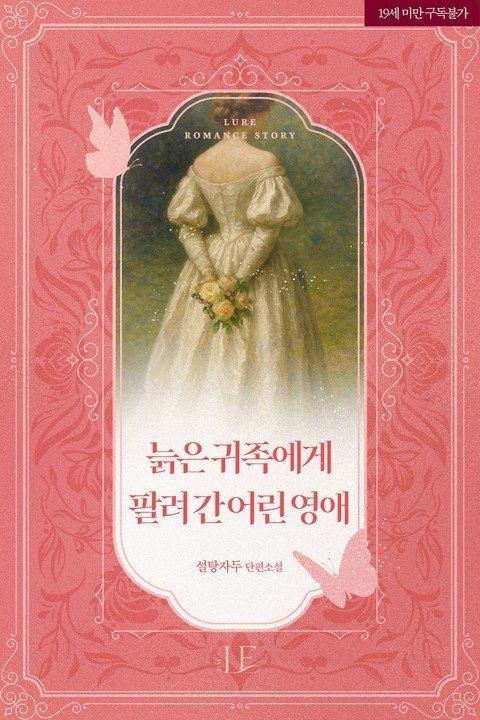
... Read More
I went into this chapter expecting romantic tension, obstacles, maybe some external conflict threatening the marriage. What I got was... the complete opposite? The conflict is entirely internal and consensual. Rosaline is discovering her sexuality. The Earl is managing his desire for his new wife. There's no one fighting them, no secret threatening to tear them apart. Instead, the stakes are about how much pleasure they can safely explore. And honestly? That's a riskier narrative choice than a typical enemies-to-lovers arc. You're asking readers to care about characters who already want each other. The tension comes from intensity, not from separation. The closest thing to real stakes is the social danger — the stableboy scene could get them all killed if discovered. But the Earl just... lets it happen? Or knows about it? That actually raises more questions than it answers. Who are these people, exactly, and what rules govern their world? I want to know more about the society they live in, the expectations placed on a Countess, what would happen if anyone found out. Right now the stakes feel low because everything goes their way, but maybe that's intentional — maybe the real conflict hasn't started yet.
... Read More
I have been thinking about this relationship long after I finished reading. The Earl is clearly the dominant one — physically, emotionally, he sets every boundary. But what surprised me is how Rosaline evolves from someone who's almost ashamed of her own body into someone who openly owns her desire. That arc happens in real time. Watch her shift: at first she's apologetic, saying sorry for climaxes, asking him to stop. By the end, she's begging for more,主动 reaching for him, calling him Honey. That's not just physical awakening, that's a psychological transformation. And the Earl? He's not a villain here. He's firm, commanding, maybe a little rough, but there's genuine care underneath. When he pushes her body back and they share those quiet moments afterward — him touching her breasts, calling her cute — you see he's not just using her. He's invested. The most interesting part for me though is how the stableboy scene reframes everything. Is Rosaline just exploring? Is she testing boundaries? Or is the Earl letting her have this freedom because he's secure enough in their dynamic? I keep coming back to the line where he says "To think you'd become such a lustful kitten. I didn't expect I wouldn't be enough for you." There's no jealousy there. Just... acceptance. That makes him a more complex character than the typical dominant male archetype in these kinds of stories.

Leave a comment

You must be logged in to leave comments. or
