The Whole Entertainment Industry Hears Me Go Crazy - Reviews

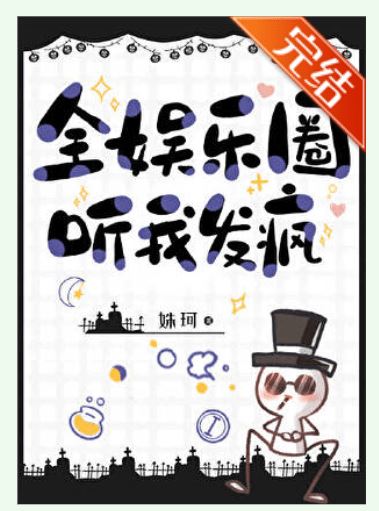
The Whole Entertainment Industry Hears Me Go Crazy
+Add to Custom List
Sort
Add review
... Read More
This chapter is a masterclass in dramatic irony, and I have never been more delighted to be on the side of the truth. The entire scene unfolds like a pressure cooker where Ning Yang is the sole occupant, unknowingly being roasted by the voice in his head. From a structural standpoint, the author has built a trap for Ning Yang so perfectly that every move he makes to 'protect' his brother is actually laying the bricks for his own emotional undoing. The plot mechanism here is brilliant: we, the readers, have access to the raw, unfiltered truth via Ning Luo's inner monologue, while Ning Yang is forced to interpret the world through the heavily edited, emotionally manipulative lens that Ning Xibai projects. Every time Ning Yang feels a flicker of doubt—like when he avoids Xibai's touch or questions why he's so harsh with him—the plot instantly cuts to Ning Luo laughing that 'Puhahahahaha' laugh, which shatters the illusion. It's infuriating! But it's also so satisfying because we see the gears turning. The tension isn't about whether something bad will happen; it's about the agonizing wait for Ning Yang to realize he's been played. The cliffhanger where he asks for his heart pills is the perfect comedic punctuation to a scene that is, on the surface, a family reconciliation but in reality a psychological dismantling. I am genuinely invested in seeing how much longer this charade can hold before the whole facade collapses under the weight of Ning Yang's own awakening conscience.
... Read More
I have to give credit where it's due: the dialogue here is razor-sharp. Ning Luo's voice is distinctively manic and playful, while Ning Yang's lines are clipped, sharp, and incredibly dry. But the real standout is how the supporting characters are written. Take the driver. He's not just background noise; he's a comic relief device that gets absolutely dismantled. When the absurdity of the 598 university joke finally breaks him, his laughter is met with a single, devastating line from Ning Yang: "Your bonus for next month is gone too." It's hilarious because it's so bureaucratic. Ning Yang isn't yelling; he's just stating facts. It establishes his character instantly—he's not just a brooding hero, he's a boss who enforces order even in absurd situations. And then his retort to the driver's weak defense, "You are disturbing my eyes. Is there a problem?" is pure ice. The dialogue does so much heavy lifting here. It moves the plot forward while simultaneously showing us the power dynamics in the car. Ning Luo is the chaos agent, the driver is the audience surrogate getting punished for breaking the tension, and Ning Yang is the controller who enforces silence. Every line serves a purpose, whether it's to make us laugh or to remind us that Ning Yang is dangerous when he's annoyed. The natural flow of their interactions feels unscripted yet perfectly choreographed, which is exactly what good fiction dialogue should be.
... Read More
The way Ning Luo handles Lin Zhanpeng is everything. Like, everyone in that room has been subjected to this guy's nonsense for years and they just take it. Mother Ning clams up, Father Ning laughs it off like it's nothing, and then Ning Luo walks in and just... annihilates him verbally. But what struck me more than the roast session was the silence from Ning Yang. He doesn't jump in to defend his brother or calm things down — he just watches, files it away, and when Lin Zhanpeng tries to play the sibling card, Ning Yang hits him with the coldest line: "Are you teaching my brother how to do things?" That's possessive. That's protective. And that's the kind of thing that changes the entire relationship map between these two. Also can we talk about how Ning Luo winks at Mother Ning and mouths "Leave it to me" like he's running some kind of underground defense operation? This kid has been planning his entrance since day one. Meanwhile Mother Ning grabbing his hand and squeezing it firmly — she's not just grateful, she's realizing for the first time that someone in this house actually fights for her.
... Read More
I went into this expecting Qiao Zichen to be a simple villain side character — the ugly little minion who exists to make our protagonist look good. But the author kept giving him these devastating moments that somehow also made me laugh, which is a really uncomfortable place to be as a reader. Let me start with the earliest hint: his deep red birthmark, right at the corner of his eye. The author noticed this detail and then remembered it later when Ning Luo's inner voice identified him. That's subtle character design — giving someone a physical marker so memorable that recognition becomes a plot point. But the real moment that changed how I see him was when he said "Xiangyang, your coccyx is not fully healed yet, don't get excited" with complete sincerity. He genuinely believes he's being caring. He genuinely believes his stalking is protectiveness. And the narrator's response — "Why did you say such a shameful thing out loud!" — perfectly captures how absurd this entire relationship is. Then he hugs Cui Xiangyang and confesses his love. Not quietly. Not romantically. In front of everyone. "I did this because I like you! But you fell in love with that bitch Ning Xibai. What else am I inferior to him in except for my face?" This is the tragicomic peak of the entire passage. He thinks his face is his only disadvantage. He has no idea how deeply wrong he is. And he's also completely genuine — this isn't manipulation, this is someone who has built their entire identity around loving someone who views them as beneath contempt. Cui Xiangyang's reaction tells us everything about their dynamic. He doesn't just push him away — he orders his own men to force-feed Qiao Zichen the medicine as punishment. That's not just rejection, that's using intimacy as a weapon. And then Qiao Zichen actually has a physiological reaction to the drug and Cui Xiangyang faints from the horror of it all. The author clearly enjoys writing this relationship the way someone enjoys watching a car crash in slow motion — you can't look away, you know it's terrible, but the details are fascinating. And I suspect we haven't seen the end of Qiao Zichen's arc yet. Characters this写得 this unhinged don't just disappear. [Protect what? Protect the coccyx? How ridiculous, I should have just let him rot in the dirt back then.] — Ning Luo's inner thought about this moment is the perfect counterpoint to everything. He sees the whole pathetic display and feels nothing but satisfaction, which tells us how far he's come from wherever he was before.
... Read More
"Ah~ The fragrance of money is like the April in the world." I need to talk about this poem for a second because it's doing so much work. On the surface it's just Ning Luo being agreedily funny in his head—this guy got dragged back into a wealthy family and his first thought is literally just M O N E Y. Cute. Memorable, but cute. But then I keep coming back to it and realizing it might be the most honest line in the entire chapter. Everyone around him is performing: the servants with their warm welcome, Ning Xibai with his fake sweetness, Ning Yang trying to maintain some dignity. Only Ning Luo is willing to say out loud what everyone else is pretending not to want. The villa itself is another symbol I can't shake. European-style gates, cold gray marble, a stream gurgling artificially through the courtyard. It's a holiday resort, which means it was designed for appearance—beauty without warmth. Ning Luo, fresh from the outside world with his DNA test and his big dreams, walks into a place that looks like paradise and functions like a courtroom. Every inch of that marble is someone else's taste, someone else's money, someone else's rules. Then there's the ice. "Beginning of Winter? No, it's time to erect a gravestone." The Chinese term referenced here carries connotations of emotional burning, of a cold season that's also devastating heat. Ning Luo just entered a family where affection is transactional and loyalty is conditional. The gravestone isn't about dying—it's about the death of his illusions. He came in thinking he'd won. He hasn't. The winter is already here. And the pose by the gate—arms wrapped around himself like Jack and Rose from Titanic. It's such a specific, cinematic image. He's both embracing the luxury he always wanted and shivering because he doesn't know if he belongs in it.
... Read More
The scene where Ning Luo arrives at the hotel dinner is genuinely cinematic. He's wearing a well-tailored white suit, light smile, a little dimple, looking uncomfortable and nervous in crowded settings. Wang Lin notices the difference immediately—you can tell from the narration that Ning Luo's appearance 'is very recognizable even in the entire entertainment industry.' This isn't just fashion description, it's a transformation moment. Meanwhile Wang Lin dressed up too but feels overshadowed, which says something about how far Ning Luo has come in just a few days. The buffet table detail is brilliant worldbuilding—ten meters of food stretching before them, the champagne flowing, people recognizing Ning Luo as a famous beautiful loser and being politely superficial. It paints this entire glitzy but hollow entertainment industry backdrop in one paragraph. The corridor collision at the end shifts the mood instantly from glamorous to tense. One sentence—'who is blind? It's not su'—and you're already hooked wondering who cuts him off and what happens next.
... Read More
There's something quietly devastating underneath all this comedy about money. The Ning family doesn't know how to express affection except through transactions. Ning Yang transfers five million and then feels confused about his own feelings. Ning's father offers 6.66 million monthly pocket money and demands to be loved more than his own son. The whole family operates on a currency system where love has to be proven through financial generosity. And Ning Luo—he's the most honest about it. "I love them all. Buddha is merciful, and all beings are equal." His money-lust is presented as genuine, almost spiritual. But underneath that, there's this character who just got returned to his birth family and is trying to figure out where he belongs. The money might be literal, but it's also symbolic: this is the only dialect the family speaks fluently. The uterine transplant question Ning Yang asks at the end—that's not random. It's the moment everything pivots from comedy back to something heavier. The body, reproduction, what makes a family... these are the themes simmering under the surface, waiting to boil over. And Lu Tingzhou's introduction with that detached, golden-light scene feels like the author whispering: "there's a whole other layer to this world, and it's about to intersect." I keep coming back to that line: "The new brother... seems to be pretty good." In a family where everyone communicates through money and manipulation, that simple observation feels almost tender.
... Read More
The setting details in this passage are doing a lot of heavy lifting. We open with Ning Luo blocking the door of a men's restroom — immediately absurd, immediately funny, and it tells us everything about his character. He's comfortable being weird in public. Then he pushes into the private room and gets choked by smoke. The description of that smoky atmosphere immediately signals: this is a business dinner, not a friendly gathering. Wang Lin's cold attitude, the obscure looks from investors, the way Li Zhigang sizes Ning Luo up as "the easiest to handle" — the room itself feels claustrophobic and hostile. Sun Shaoyi's high heels clicking louder and louder as she walks away, wanting to poke a hole in the ground, adds this great visual detail that shows her frustration without a single word of dialogue. And then there's the contract signing moment where Wang Lin's "materialistic view collapsed instantly" — the author paints this entire world of the Chinese entertainment industry where money talks, directors are vulnerable, and actors can be interchangeable pawns. Ning Luo sees the signature and recognizes the name, and suddenly the room transforms from just an uncomfortable dinner into a life-or-death situation for the whole crew. The environment itself becomes a character.
... Read More
The opening image of Ning Xibai in just a bathrobe with red eyes is so cinematic. You can picture the lighting, the way Cui's anger just collapses when he sees him like that. It's the first scene and already the whole vibe is set—this world runs on appearance, on reading vulnerability as an opportunity. Ning Xibai knew exactly what he was doing. Then there's the hotel room scene with Ning Luo. The producer who wants to strangle Ning Xibai but has to beg instead. The screenwriter furious about the script being rewritten for one person. All of this happens in the background while Ning Luo is literally starving himself and writing characters on the floor to keep from eating his own hand off. The world feels suffocating in the best way. "My body thought I was going to die." And Wang Lin pats him and says losing weight is trivial. Trivial. Five pounds lost from eating a piece of beef and two eggs and then working a full day, and the response is a pat on the back. This is the texture of the entertainment industry in this book—it doesn't just exploit you financially, it expects you to disappear yourself physically. The online bullying section is also devastating because it's so mundane. People selling fake scandal groups for 0.99. Someone making an account just to say Ning Luo is a rat dropping in their porridge. The internet in this world isn't a place, it's an ecosystem of cruelty that just... operates. Nobody questions it.
... Read More
I need to unpack how the author constructed this entire confrontation because honestly it's a masterclass in scene architecture. Let me trace the beats: Beat one: Cui Xiangyang arrives and immediately tries to establish dominance. Standard opening. Beat two: Ning Luo drops a single calm line about mutual feelings and slaps. Shen Wenyu laughs. Wang Lin feels better. The energy shifts. Beat three: Sun Shaoyi enters and absolutely annihilates Cui Xiangyang with dialogue. The crowd turns. He's now the one being laughed at. Beat four: The body search demand. Everyone leans in. Tension spikes. Beat five: The medicine box reveal. Qiao Zichen's panicked denial. Cui Xiangyang forcing him to take it. The crowd is eating this up. Beat six: Qiao Zichen's confession and hug. Cui Xiangyang's horror. The drug takes effect. He faints. Complete narrative collapse. Each beat doesn't just add to the previous one — it actively undermines it. Cui Xiangyang enters as the aggressor and leaves unconscious. The medicine meant to humiliate Ning Luo's crew becomes the weapon that destroys Cui Xiangyang instead. What was supposed to be a bullying visit becomes a public spectacle where everyone but Cui Xiangyang is entertained. The pacing is relentless because there are no downtime moments. No pauses for reflection. No scene transitions that let you exhale. Every paragraph pushes forward, and the humor compounds with each escalation. The author understands that comedy and tension share the same engine — they both run on surprise and escalation. And then the chapter ends on this absolutely perfect cliffhanger: Cui Xiangyang wakes up, remembers everything, storms to Ning Xibai's door. The structure here is doing something really smart — it's taking the resolution of one conflict (Cui Xiangyang's humiliation) and immediately creating the setup for the next (his desperation leading him to Ning Xibai). The phrase about emotions being "pulled into threads" like melted sugar stuck in my head after reading this. That's exactly what the author did — took one emotional thread (Cui Xiangyang's toxic dominance) and pulled it until the whole thing unraveled into something completely different.
... Read More
Okay so the tension in these chapters is doing some serious double-duty. On one hand, you've got Wang Lin sitting across from Li Zhigang at this dinner, and every move Li Zhigang makes screams 'too eager to push this contract through.' Wang Lin can actually hear Ning Luo's inner voice warning him, and honestly? That's the kind of supernatural element that raises the stakes because it's not just intuition anymore—it's direct intelligence. The contract signing could make or break the production, and if Li Zhigang's company is shady (which it absolutely seems to be), Wang Lin's entire career is on the line. But then the second layer of stakes hits when we get to the set. Ning Luo is worried about balancing his actual talent with the expectation that he's a terrible actor. If he acts too well, people will suspect something is off. If he acts too badly, he ruins the production. That's genuinely stressful to watch unfold. Wang Lin pulling his hair over Ning Luo's 'terrible acting skills' while secretly hoping this script doesn't tank his show—I could feel that anxiety radiating off the page. And then BAM, the first take happens and Ning Luo absolutely NAILS it. The reversal from 'he's going to ruin this' to 'who IS this person' is so satisfying. The whole morning of shooting being flawless? That's where the stakes pay off.
... Read More
'If I scold you, just think of it as me scolding a dog, it's the same, uncle.' This line alone justifies every chapter I've read leading up to this moment. Ning Luo has a voice that is immediately recognizable and it's absolutely vicious in the best possible way. He doesn't just insult people — he constructs entire rhetorical architectures to dismantle them. The gaming metaphor when Lin Zhanpeng takes off his coat ('Increase your attack and reduce your defense. Are you preparing to use your ultimate?') is not just funny, it's character-revealing. This is someone who processes the world through systems and strategies, and even verbal combat is just another puzzle to solve. But the genius is that his dialogue never sounds the same as anyone else's. Ning Yang is all cold glares and short commands. Father Ning laughs and deflects. Mother Ning is quiet until she isn't. And Lin Zhanpeng — oh god, Lin Zhanpeng — his dialogue is so specifically irritating that you forget he's a human being by page two. 'You damn brat with that filthy mouth of yours—' and then he gets cut off because honestly he's out of material.

Leave a comment

You must be logged in to leave comments. or
