The Whole Entertainment Industry Hears Me Go Crazy - Reviews

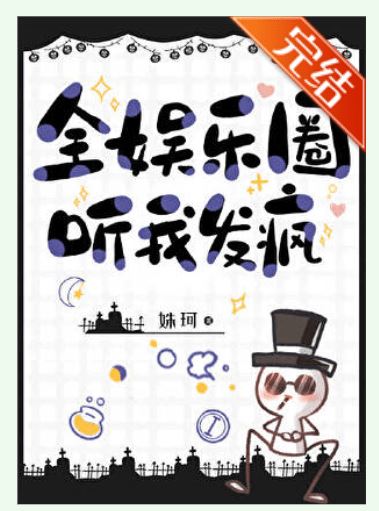
The Whole Entertainment Industry Hears Me Go Crazy
+Add to Custom List
Sort
Add review
... Read More
"His gaze fell on the place where their hands were joined under the wide sleeves, the tips of his ears reddening slightly as his eyes dodged away." That single sentence. That's it. That's the whole note. The man is conducting an entire symphony of romantic tension with ONE physical detail and I am DOWN ON MY KNEES. What I love about this moment is how perfectly it captures Ning Luo's dual nature. Online he's absolutely wild — all those inner monologues in brackets where he's screaming and making unhinged jokes. But in reality? Pure innocent little boy energy. When Lu Tingzhou actually touches him, when there's real physical contact, ALL of that bravado disappears and he's just... blushing and dodging eye contact. And Lu Tingzhou — the man doesn't even acknowledge it. He just walks beside him, hand on his forearm, giving practical advice like 'look up and look forward, you won't be so scared.' Like he's completely unaware that his mere presence is short-circuiting Ning Luo's brain. Or maybe he IS aware and that's what makes the smile in his eyes so telling. The slow dawdling across that bridge, the warmth of a hand through clothing, the almost-conversational intimacy — this is peak slow-burn energy and I am UNWELL.
... Read More
The pacing in these chapters is a TOTAL rollercoaster and I am loving every second of it. You start with this ridiculous film crew confrontation—embezzlement! Forced transactions!—and it's building this whole tension about who's guilty and who's innocent. Then Wang Lin shuts it all down by calling the police and the crew gets sent home for the day. Boom. Problem solved. Then you think OK great everyone's going home and Ning Luo can finally relax—and then Lu Tingzhou calls. Then Xiaobai calls. Then the FATHER calls. Like, who gives this man this much stress in one sitting? It's insane. And the way the chapter just spirals from 'great new development in the plot' to 'existential dread in the car' is masterful storytelling. The author doesn't even let you catch your breath. One minute you're laughing at Fu Gangqun getting taken away, the next minute Ning Luo is asking his driver to murder them both off a bridge because he can't handle the social pressure. And the transition from the crew scene to the hotel to the car to... wherever they're going now (Ning family villa?!) is so seamless it's almost unfair. The chapter basically goes from action-comedy to emotional crisis to absurdist humor in like three acts. My face went through more emotions than a soap opera audience.
... Read More
The author really loves contrasting settings and I'm here for it. You have the chaotic energy of the film set where Ning Luo is squatting on the curb hugging his knees like a kicked puppy while Taozi suggests running ten laps around the crew. It's almost slapstick. Then it cuts to Lu Tingzhou in a sleek bank office, leaning on a sofa, drinking coffee, making grown financial advisors tremble. The visual of Manager Yao being served warm water and then subsequently terrified into compliance is almost cinematic. There's also this small but vivid detail of Ning Xibai blocking Cui Xiangyang's view of Ning Luo with his own body—like a physical barrier against the nuisance. And the milk tea scene! Full sugar milk tea that burns the throat, paired with an offer to eat snail noodle hotpot right after. The sensory overload of that sequence—too sweet, too heavy, too much—is honestly a masterclass in using food and drink to reflect emotional states. These scenes don't just exist; they feel textured and alive.
... Read More
I keep coming back to the mango peel and I think it's the most important symbol in these chapters. Let me explain why this apparently random comedic prop is doing so much heavy lifting. First, consider what the mango peel represents in Ning Luo's hands. It starts as food waste — something discarded, hollowed out, useless. But he transforms it into footwear, into performance art, into a costume that lets him quote classical Chinese poetry with complete sincerity. There's something deeply melancholic about a character who finds joy in trash, who turns rejection into creativity. He's literally wearing something everyone else threw away and making it beautiful. Then the peel becomes a weapon. In that split second when Ning Luo sees the horror in Wang Lin's eyes, the mango shoe flies through the air like a projectile. It goes from being a symbol of artistic freedom to an instrument of accidental violence. The parabola it traces through the air is described so precisely — this is not random comedy, this is tragedy wearing a comedy mask. The mango peel hits Wang Lin's chin and ruins everything. It's a small object that carries enormous consequence. And what about the poetry itself? Both Ning Luo and Wang Lin are warping classical Chinese verses — Su Shi's carefree wandering poet, the famous lines about life and death, proverbs about the value of time. They're taking words that carry centuries of meaning and twisting them into something ridiculous, something hollow. Isn't that exactly what's happening to their relationship? Something deep and genuine being twisted into something performative and absurd? The corruption of language mirrors the corruption of their trust. The live broadcast format adds another layer — the entire world is watching them perform this comedy while the real drama plays out in silence. What we see on the surface (laughter, mango shoes, funny poetry) vs. what's actually happening (horror, cover-ups, unspeakable secrets). The mango peel is everything this story is about: something seemingly worthless and funny that conceals something devastating.
... Read More
There's a profound symbolic moment hidden in what could easily be dismissed as pure comedy. When Ning Luo declares himself a “chrysanthemum” instead of “green tea,” he's accidentally tapping into something deeper about his character arc. In Chinese literary tradition, the chrysanthemum represents resilience, quiet dignity, and the ability to bloom in autumn's harsh conditions. It's the flower of the hermit, the lone walker who refuses to compete with spring's brighter blooms. Meanwhile, “green tea” (a term for someone who appears innocent but is actually calculating) is exactly what the entertainment industry demands. Shen Wenyu calls him a “little green tea” not as an insult, but as an observation—the industry has already started shaping him. But Ning Luo chooses the chrysanthemum. “I am as quiet as a chrysanthemum. Don't cue or disturb me.” He wants to be left alone to bloom in his own time, on his own terms. This is the same man who wants to be a movie emperor—not a viral sensation, but a respected artist. The boxing gym scene reinforces this symbolism. Ning Luo's character is supposed to see the female lead as “the first ray of sunshine shining in his dark corner” and “the beginning of his fall into a darker abyss.” These lines aren't just dialogue—they mirror Ning Luo's own journey. He's been the dark corner, waiting for his ray of sunshine (recognition, success, love), but every step toward that light pulls him deeper into the absurd abyss of internet fame. The emoji package warfare itself becomes a symbol of how modern media strips away nuance. Ning Luo's genuine moments—crying, laughing awkwardly, holding a book—are flattened into consumable images. The chrysanthemum cannot bloom in a meme. It can only endure.
... Read More
"He suddenly felt suffocated, as if he had lived in a transparent water tank for the first half of his life, with his every move being seen through by others." This line absolutely wrecked me. You have to understand the isolation Ning Yang is dealing with here. It's not just that his brother is annoying; it's that Ning Yang is fundamentally alone in his secret ability. Everyone else is playing 4D chess, and he's the only one hearing the pieces click. When Miss Chen Er leaves the room after being hired, Ning Yang doesn't feel triumphant. He feels exposed. Her relentless pursuit of him—her words about fertility, about being his secretary, about his health—those aren't just plot points; they are triggers. They force him to confront the fact that he cannot have a normal relationship. He is paralyzed by the knowledge of everyone's hidden agendas. The emotional core of this section isn't the romance; it's the horror of having no private self. Ning Luo tries to break the tension with humor, sending those brain-dead audio recordings, but Ning Yang's silence in the car tells you everything. He isn't laughing; he's calculating. He's terrified that if he lets his guard down, everyone will realize he's just as vulnerable as they are. The tragedy is that he hired Miss Chen Er *because* he couldn't refuse her, trapped by social contract and his own secret knowledge, and he hates that he has no choice.
... Read More
I want to sit with the image of those two coins for a while. They're such a small prop, literally worthless—two yuan, maybe enough for a bus ride or a cheap snack—but they carry the entire thematic weight of this section. Ning Luo offers them as payment for “repentance,” which immediately frames money as transactional spiritual currency. The idea that you can kneel, apologize, and then be SETTLED with physical change is almost sacramental in its absurdity. It's like he's running a pop-up confessional booth and the indulgence costs exactly two dollars. But Zhou Wenyu refuses the coins. That rejection is where the symbolism deepens—he's not interested in being bought off, which makes him either nobler or more stubborn than Ning Luo can compute. And Ning Luo CAN'T compute it. His whole worldview seems to run on transaction logic: you do thing, you get coin, transaction complete. When someoneoptse OUT of that system, his programming glitches. “There are actually people in this world who don't love money.” That's not just surprise—it's existential disorientation. The billboard image is another symbol I can't stop thinking about. The eight-pack abs, the protein powder, the smiling facade—it's all performance. Ning Luo stares at it with this hungry, confused admiration (“standard bullfrog!”) while Xu Ling watches him watching it. She sees his distraction; he sees dinner. Both are reading the same image completely wrong, and that asymmetry IS the theme. People in this story are constantly misreading each other because they're operating from different value systems, different survival strategies, different definitions of what “real” means. The hate comments online represent another layer—the commodification of persona. Ning Luo's original body owner was Ning Xibai, a star who got replaced, and now Ning Luo is inheriting all that digital hatred meant for someone else. The comments are savage but also strangely poetic in their creativity: “cut one more today, Ning Luo will retire one day earlier, do good deeds and accumulate virtue, Amen.” These aren't just insults—they're mini performance pieces, little rituals of collective hostility. And Ning Luo's response? Turn it into advertising copy. He absorbs the hostility and converts it into product placement. It's almost shamanic—he's transmuting poison into brand messaging through sheer refusal to engage with it on its own terms. The “youngest brother turn evil” magazine theme is also suspiciously on-the-nose given the story's actual events. Transmigration, replacement, inherited hatred, performing loyalty to a system that didn't choose you—it's all echoing in that shooting concept. The story keeps folding its own themes back on themselves like origami.
... Read More
The description of the ancient village and especially that wooden plank bridge is so vivid I can literally HEAR it creaking. Under the spotlight, Lu Tingzhou in flowing white ancient costume — 'like a cold moon reflected in a still, icy pond' — and then suddenly we're dropping him into this decaying wooden bridge over a mountain valley that groans like an old lady. The contrast between the polished filming scene and the real environment is such a smart move by the author. You've got the artificial lighting, the costume drama aesthetic, and then BAM — Ning Luo has to navigate actual danger while trying to keep his composure. His inner monologue during the bridge crossing is comedy gold though: "You are a brave eagle, a fierce tiger, a wise wolf. You have changed. You are no longer a rice bucket, a black sheep, a drum for retreat, or a grass on the wall." And then immediately follows it with: "The first push is strong, the second is weak, the third is exhausted..." I NEED to sit down. This man is out here giving himself a pep talk AND losing it simultaneously. The imagery of the bridge swaying, his eyelashes trembling, hands clenched into fists pinching his sleeves — every physical detail paints the panic without once saying 'he was scared.' Pure show, no tell.
... Read More
Let's talk about what's actually at stake here, because it's escalating fast. On the surface, this is a blind date. Benign. Mundane. But Ning Luo just revealed that Miss Chen Er is an illegitimate daughter whose biological mother's life is held hostage by the legal wife, making her a pawn. She's been sent to pretend to love Ning Yang to death — literally romantic trap — with the endgame being: steal his official seal, his documents, his trade secrets, sabotage his next investment, and push Ning Xibai into power. This isn't a romantic comedy setup. This is corporate espionage wrapped in courtship. And the stakes for Ning Yang? If he falls for it, he doesn't just lose a girl. He loses his position, his father's trust, possibly his company. The text frames it as 'the price of being a love-brain,' which sounds flippant but describes something genuinely catastrophic. Ning Luo even imagines the crudest version — CEO's body-scented briefs on sale — because at this point the humiliation feels as real as the financial ruin. But here's what makes the tension unbearable: Ning Yang doesn't know any of this. He's sitting across from his brother, who just launched into this accusation, and he can't tell if it's genuine intel or another manipulation. The uncertainty IS the suspense. Every time he looks at Ning Xibai now, every time someone mentions Chen Chuan'ang, he'll be second-guessing. The trap has already been sprung — not on Ning Yang himself, but on his trust in everyone around him. Meanwhile, Ning Luo is in the weirdest position: he knows the plot, he's trying to warn people, but his credibility is shot because he literally fell off his bed singing the night before. How do you convince your brother that a corporate conspiracy is real when you look like a maniac? That dramatic irony is going to be *chef's kiss* to watch unfold.
... Read More
Okay, can we talk about how stressful this chapter is for Ning Yang? I was literally holding my breath. The emotional whiplash he's experiencing is palpable. One minute he's feeling protective and moral superiority, the next he's being told he's an idiot for believing the lies, and then he's hit with the realization that his kindness is being exploited. The line 'My heart hurts' is such a double entendre, isn't it? Physically, he might be stressed, but emotionally, he's being crushed by the dissonance between what he sees and what he hears. And Ning Xibai? He's playing the victim so well it makes me sick. 'If I'm not here, I won't be an eyesore...' Please. That is not humility; that is a hostage negotiation. He's holding Ning Yang's affection hostage and demanding tribute in the form of attention and protection. The emotional climax here is when Ning Luo laughs 'Puhahahahaha' and crushes the 'softness' Ning Yang felt. That moment where the manipulation breaks through because the truth is too loud to ignore? Chilling. It leaves Ning Yang floundering, unsure of who to trust. I found myself yelling at the page, not at Ning Xibai, but at Ning Yang for even entertaining the doubts. 'Just believe the voice in your head!' But then again, that's the tragedy of it all. The people closest to us are often the best liars because they know exactly which buttons to push. This chapter made me feel a deep, visceral frustration, which is a testament to how well the author is crafting the emotional stakes.
... Read More
The relationship between Wang Lin and Ning Luo is honestly one of the most interesting dynamics I've encountered. Here's a director who can hear the inner thoughts of the actor he's working with, and instead of exploiting it or going to the media, he's quietly trying to protect both of them. He doesn't tell Ning Luo that he knows about the shady contract because he doesn't want to spook him. He doesn't tell anyone about the voice-reading ability. He just... trusts Ning Luo's instincts and acts on them. And then Ning Luo, meanwhile, is completely unaware that his inner monologues are being broadcast, so he's giving Wang Lin these priceless reactions like the sweet and sour pork eating while mentally roasting Li Zhigang. The power imbalance is huge—Wang Lin knows everything about Ning Luo's thoughts but Ning Luo knows nothing about what Wang Lin knows. Yet there's a genuine respect forming here. Wang Lin going from frustrated about Ning Luo's 'terrible acting' to stunned admiration is a complete 180, and the way he keeps pulling that playback clip shows he can't quite believe what he's seeing. It's the kind of relationship where both parties are protecting something the other doesn't know exists, and that dramatic irony is delicious.
... Read More
Everything in these chapters is about performance and what it costs you. Ning Luo is performing as a terrible actor when he's actually brilliant. Wang Lin is performing as a confident director while internally panicking about contracts and his hairline. Li Zhigang is performing warmth and hospitality while clearly scheming. The story keeps asking: when do you reveal your true self, and what happens if you do? There's this recurring image of Ning Luo being small and vulnerable—the bullied schoolboy in the script, the thin figure shivering in autumn cold—but also fiercely capable underneath. His inner monologue about growing his hair, losing weight, and making people see him differently isn't just comedic; it's the raw ambition of someone who knows they have something to prove. The contract subplot mirrors this thematically too. Li Zhigang wants to sign quickly because speed hides weakness. Wang Lin delaying the signing is an act of defiance, of trusting his instincts over pressure. And Ning Luo's acting breakthrough? That's the ultimate expression of hiding in plain sight—he performs mediocrity so well that when he finally performs excellence, nobody can explain it. The story seems to be saying that true talent can't be contained, no matter how hard you try to disguise it.

Leave a comment

You must be logged in to leave comments. or
