The Villain Is Too Cute - Reviews

The Villain Is Too Cute
+Add to Custom List
Sort
Add review
... Read More
The worldbuilding in these chapters is doing some serious heavy lifting without the author even having to try hard. Let me walk through this. You've got a rural village setting — the kind where celebrities normally have to boil their own water and bargain with locals for vegetables. It's meant to be humble, grounded, 'back to nature' reality show energy. But then BOOM, the richest man in the room (and I mean literally the Chairman of Yinshi Group, ranked third on the global Chinese wealthy list) moves into the only three-story villa next door. The contrast is almost comedic. One male artist is darkening from sun exposure on mountain roads while Chu Run 'didn't have to work in the fields' and comes back with 'fair and radiant' skin. Another female cast member bites into a cantaloupe that costs more than her daily budget and just... loses her mind. 'It's the best cantaloupe I've ever had in my life.' This is peak 'rich people problems' humor and I love it. But there's something interesting happening beneath the surface. The village isn't just a generic rural backdrop — it's a social pressure cooker. The production team, the artists, the assistants — they're all reading the room, doing Baidu searches, calculating what this connection means for Chu Run's career. 'He might even break through national boundaries and go international.' The rural setting becomes a stage where power dynamics are quietly negotiated through fruit and vegetables.
... Read More
Can we talk about how the author uses dialogue to build tension without anyone actually saying the important things? Let me count. The grandfather says 'Hmph.' Two letters. That's it. But you feel his entire attitude—disapproval, distance, reluctant generosity—all compressed into one syllable. Then he offers three hundred thousand like it's pocket change. 'It's not much, just three hundred thousand. Use it as you like.' The casualness of it is so loaded. He's buying affection he can't earn. An Meijun's internal monologue is pure gold too—'The Yin family is indeed generous... At the very least, it should be two or three million.' That's not a thought, that's a calculation. She's already doing math on how to extract more value from this family. And Yin Jiyu! He comes downstairs with such warmth, asking about 'younger brother,' and the reader's heart goes to place—until the memory hits. 'What qualifications do you have to come back?' Those seven words destroy a lifetime of trust. The girl's confession under the tree is nearly too much to read—'You're my good brother for life' and then immediately 'we have no other relationship' and then 'Don't blame Minglu.' She's begging for forgiveness from a boy who's already turned to ice. The dialogue here is sparse but every line carries the weight of an ocean. The author doesn't over-explain. They let the silence between words do the work, and it's devastating.
... Read More
The imagery in these chapters is so deliberate it almost hurts. That red hand—Minglu's palm swollen and sore from the iron brush—is repeated like a motif, and it represents everything wrong in this family. It's a physical mark of neglect, a visible symbol of the violence wrapped in the language of discipline. An Meijun uses a MAKEUP TOOL to beat a child, which is almost poetic in its cruelty. Beauty instruments weaponized against the most vulnerable person in the room. The contrast between her careful lipstick application and her violent dismissal of her son says everything about where her priorities lie. Then there's the coldness versus warmth binary that runs through the entire passage. An Meijun is all cold surfaces—cold makeup, cold eyes, cold dismissals. Yin Yunqiu starts cold too, but his transformation is about warmth returning. The way he melts from an indifferent expression to holding his son close, the tears wetting his coat—that's the theme right there. Warmth reclaiming what was stolen. The empty room from the previous night echoes through these chapters too. It's a recurring image of absence, of a father who was physically present but emotionally nowhere. Minglu sitting at the gate waiting for someone who actually shows up—that's the resolution of that earlier emptiness. The courtyard becomes a space of waiting and then fulfillment, which is kind of beautiful when you think about it. And underneath all of this is the theme of performative versus actual motherhood. An Meijun uses Minglu as a prop—hiding his age to protect her reputation, threatening him to keep him away from his father, squandering money while neglecting her child. She performs the role but abandons the substance. The story seems deeply concerned with this distinction, with what it truly means to care for someone versus simply occupying the title of caregiver. It's a theme that'll probably recur throughout the novel, and I'm here for it.
... Read More
I have to talk about how the plot shifts gears so dramatically in these chapters. We start with what feels like a sitcom situation—Yin Minglu vomiting on the tractor, Luo Cuihua's 'inertia' scheme falling apart because she literally cannot stomach pretending to bump into people near the puddle of vomit. The internet calling her 'Inertia Sister' is such a sharp comedic beat. It's funny, it's light, it's reality TV drama. Then the bus station hits and the whole tone pivots. This isn't just a backdrop—it becomes a pressure cooker. The chaos of the place: the stench, the scalpers, the hotel aunts surrounding Yin Minglu like sharks, the motorcycle thug telling him 'you won't find anyone.' It builds this sense of unease that the safe bubble of the show is cracking. And then—bam—a robbery happens right there. Not just any robbery. A woman gets pickpocketed at a chestnut stall, and the thief comes running right toward the group. Here's what I found brilliant about the plot construction: Luo Cuihua actively tries to stop Yuan Feng from helping. She says 'we shouldn't care too much or the fight will be bloody. People from the police bureaus are responsible.' This isn't just a character moment—it's a major plot turning point. She's still playing the game, still thinking about cameras and optics, even in a situation that demands real action. And yet Yuan Feng, who we know is a fighter, who's been described as someone who's 'fought more than a hundred times,' can't just stand by. He pushes her off, goes after the thief, and takes him down in what the text describes almost choreographically—'a sharp side-space elbow,' 'a beautiful kick to that thief's leg bones.' The 'paa' sound is everything. But what haunted me was the ending of the excerpt. The wallet is thrown down. The thief is down. And then... nothing resolved. No cleanup, no acknowledgment, just the camera still rolling. Where does this go? How does Yuan Feng's violence affect his relationship with Luo Cuihua afterward? And what happens to Yin Minglu, who was clearly targeted by those motorcycle guys? The narrative keeps pulling between comedy and danger, between performance and authenticity, and I'm not sure I've ever read a show-style novel that commits this hard to both tones at once.
... Read More
The pacing in this chapter is relentless in the best way. It opens with chaos—tickets sold out, parents waiting, scalpers useless, passengers already inside the venue. The writer compresses all of this into rapid-fire problem after problem, creating a suffocating sense of dread. We need to feel trapped before Xia Ming frees us, and the author delivers exactly that. Then the hotel scene—pure comedic relief, but structurally essential. The aunts hawking 1% discounts and claiming their bare-bones rooms are "five-star" gives us a breath. But notice how quickly the relief turns to horror: no hot water, dirty sheets, noise, and the assistant's unspoken observation about couples doing "live actions" outside. The humor escalates until we're desperate for a solution. Xia Ming's moment comes like a released exhale. He doesn't dramatically declare a plan—he asks for a map, stares at it for a minute, closes his eyes, and walks calmly to the director. The structure here is perfect: panic (bus) → failed attempt (hotels) → quiet competence (map) → action (packed bags). No melodrama, no speeches, just the boy who actually solved it while the adults were still panicking. The journey itself is paced in time markers: "an hour later," "two hours," "five o'clock in the afternoon." Each transition builds exhaustion and doubt. Luo Cuihua's constant questioning—"What's the use?" "Impossible"—acts as a pacing valve, releasing tension right before the next move. By the time the photographer says "It should be possible" and Cuihua rolls her eyes, we've earned that final note of uncertainty. The chapter doesn't resolve; it propels us forward.
... Read More
I need to talk about Luo Cuihua because this girl is a emotional time bomb and I am here for it. The moment she walked in and screamed, I actually felt it—the sheer panic of having walked into a situation your brain hasn't processed yet, followed by the immediate, crushing realization of what you've just exposed yourself to. Her face flushed, her ears went red, and she stood there head lowered like she wanted the floor to swallow her whole. That's not acting. That's the authentic physical response of someone who has accidentally torn down a wall between propriety and intimacy. And Yuan Feng—he's supposed to be the domineering one, the one who yells and asserts control. But look at what happens when he sees her expression. The swear words block in his throat. He just... stops. For a guy who "has become accustomed to being domineering since he was a child," that pause is enormous. It's the first crack in his armor, the moment where his anger loses its target because her embarrassment is too genuine to fight against. Xia Ming's internal monologue about how he "lost from the beginning" because he tried to be gentlemanly and she didn't appreciate it—it's heartbreaking in its honesty. He did everything right by the old scripts, kept distance, was respectful, and still ended up second place. Meanwhile Yuan Feng was sloppy and careless and somehow closer to winning. The tragedy isn't that Yuan Feng is a better man—it's that the girl doesn't want polished. She wants the chaos he brings. The CP chemistry here isn't built on sweet moments or grand gestures. It's built on misunderstanding, accidental exposure, and the electric discomfort of two people who can't stop clashing but also can't stop noticing each other.
... Read More
I need to process what I just read about Han Shihao's internal monologue. The man watches a village girl on TV and his first instinct is to fantasize about manipulating her — and I quote, his exact thoughts involve drug laced juice and "doing whatever he wants" to a CHILD. This is not a man who is fine. I repeat, NOT FINE. And yet the author writes him with such charm and presence that you can't help but be drawn in even while being deeply concerned. His relationship with his stepson Yin Minglu is its own whole tragedy — he's attracted to the kid's beauty, he's conflicted about killing him, he's enjoying the moment before the end. The dynamics between all these characters are so toxic it's like a spiderweb and everyone's stuck in it. Lin Shuwu seeing the name "niece" and her pupils shrinking — that detail alone tells you there is SO MUCH SHIT HAPPENING that we haven't been told about yet. Han Tianyu calling Lin Shuwu "auntie" on the phone while secretly manipulating her uncle is peak performative family harmony. This cast is WILD.
... Read More
I need to talk about Yin Jiyu because this character is layered in ways the text doesn't fully spell out but you can feel underneath everything. Here's this moment where he knocks on his little brother's door, sees this adorable kid in animal-print pajamas, and immediately apologizes like HE did something wrong. But what did he do? We don't know yet. The text says 'I didn't know you were still asleep' but the subtext is screaming that there's a bigger apology coming. And then he gives the kid a coin — except it's not just any coin. It's 'something another child had eaten, who was trying to please him by eating until he vomited.' My stomach dropped. This detail about the coin is doing SO much heavy lifting. Yin Jiyu isn't giving the kid a fresh one-cent coin as a gift. He's passing along something filthy, something connected to another child's suffering, and he's framing it as a gesture of affection or apology. Is he even aware of what the coin represents? Or does he just not care? Meanwhile, the child (Yin Minglu?) notices the germs but accepts it anyway. And his internal monologue reveals he's not interested in this 'small one million' — he's earning real money through some kind of fishing game tied to his phone. This kid is basically running a cash cow operation while playing the role of a cute little brother. The relationship between these two is deeply strange. Yin Jiyu seems to want approval or forgiveness, and he's going about it in the most incompetent way possible. The child sees right through it but plays along. There's a power imbalance that's both economic (the kid has money, the brother doesn't seem to) and emotional (the kid is clearly more mature, more calculating). And contrast this with An Meijun's relationship with her OWN son — she's about to steal from Yumin with zero hesitation. Different kinds of betrayal, same pattern: adults using children as resources.
... Read More
These chapters are quietly obsessed with the question of what we create and why. It's not stated outright, but it runs through everything like a current. Mingqin represents one path — learning piano as utility, as something to acquire rather than something to feel. The teacher initially thought she had 'significant musical talent and a unique sensitivity to music,' but what she actually discovered was a child performing passion rather than living it. 'Her fingers mechanically pressed the piano keys, her gaze seemed distant.' Mechanical. Distant. These are the opposite of artistic engagement. Mingqin wanted the impressive pieces, not the foundations. She wanted the appearance of artistry without the discipline of craft. And when her health couldn't sustain the performance, the whole thing collapsed. Then there's Yin Minglu, who rejects the piano outright and chooses drawing instead. But watch what he draws: a wheat field, a scarecrow, a small wooden house, and a sky divided between reddish sunset and dark blue night. These aren't random child's drawings. They're images of rural simplicity, of structure and shelter, of the boundary between day and night — between light and dark. Even at four, his subconscious is reaching for something. And unlike Mingqin, who pursued piano performatively, Minglu's engagement is authentic. He mixes his own colors. He asks where to hang his work so he can see it daily. He creates because he needs to. The piano itself becomes symbolic — Yin Jiyu plays it not for achievement but for joy, and his brother dances. Music as shared experience rather than individual accomplishment. The teacher is moved to tears by his playing, but the real miracle is the child dancing. Art creating art. Joy creating joy. And the grandfather's complaint about overloading the child with arithmetic, drawing, and game design at age four — is this theme of parental ambition vs. child autonomy. The author seems to be asking: when does support become pressure? When does love become projection? Mingqin's parents chose health over piano. The Yin family chose exposure over restriction. Who's right? The text refuses to answer.
... Read More
Let me just set the scene for you because the contrast here is EVERYTHING. We open with this intimate moment — Yuan Feng squeezing the little guy's face. His skin is 'tender like tofu.' The description is so specific: 'snub nose,' 'pale pink lips,' 'sleepy face, set against wet hair, looked quite affectionate.' This is a character study in visual detail. The author paints Yin Minglu as almost ethereally soft — all smooth skin and delicate features. It's deliberate. After everything that happens in this story, after all the scheming and violence, the author reminds us: this is a CHILD. This is someone vulnerable. And then we CUT to the countryside. Oh man, the countryside. 'The Luo family's bed was small and the quilt was small too. The mosquitoes and flies were too rampant at night and the wooden boards of the bed without mattress underneath were hard.' Princess and the Pea reference, by the way — 'The two young masters with delicate skin and tender flesh had a real experience of what Princess Pea must have felt like.' This is LITERALLY a fairy tale reference inserted into a modern drama. I love it. The sensory details are so sharp. You can FEEL the hard wooden boards. You can HEAR the mosquitoes. You can see the contrast between Yuan Feng's tall stature and the tiny bed — 'Coupled with Yuan Feng's tall stature, it was even harder for the two of them to sleep on the same bed.' This isn't just setting; it's CHARACTER. These are young masters used to luxury, now reduced to suffering on a bed that's too small, with quilts that are too thin, surrounded by pests that won't stop buzzing. But the author doesn't just make it miserable — they make it INTIMATE. 'Before going to bed, the two of them held up a pot of hot water like an old woman before going to bed. They continuously complained and cursed those mosquitoes.' Two powerful boys from a wealthy family, reduced to the ritual of soaking feet like grandmothers. The humor here is fantastic. It's absurd. It's also somehow tender — they're doing this TOGETHER. The bathroom scene! 'Luo Cuimiao, who was passing by, fearfully watched Yuan Feng, the great devil king, going out of the room holding his clothes with a fierce expression on his face and stepped into the bathroom.' The door closes with a 'pah.' This is cinema. This is a VISUAL beat. The servant watches in terror as the terrifying eldest master storms into the bathroom. And why? Because the little idiot complained about his SMELL. The stakes are comically low but the emotion is real. And then: 'The eldest master's anger came quickly and disappeared quickly.' He emerges in a good mood, waving enthusiastically, patting the bed he 'specially vacated,' acting like an 'energetic showy guy.' The transformation is instantaneous. From furious devil king to cozy brother in one bathroom break. The author uses the physical space — the small bed, the cramped bathroom, the confined quarters — to FORCE these two characters together. There's no escaping each other. No room for schemes. Just two boys, a hard bed, and cold feet. The mosquito complaint becomes a shared ritual. The hot water becomes a bonding experience. The discomfort becomes the very thing that brings them closer. The worldbuilding here is genius because the author uses ENVIRONMENTAL hardship as relationship catalyst. It's not grand gestures or dramatic confessions — it's sharing a pot of hot water and complaining about bugs together.
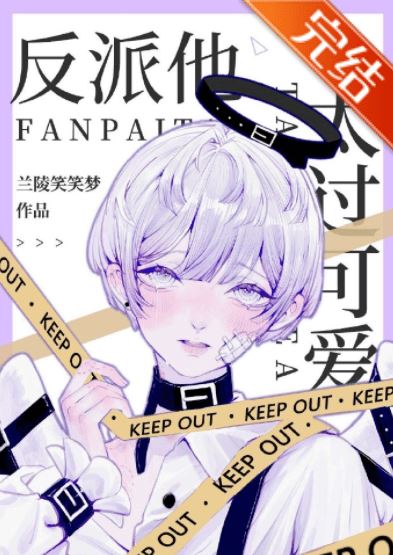
... Read More
I keep coming back to that van. Think about it - it's gray, the windows show mountains and forests passing by, there are posters from the program group and sponsors everywhere. It's a confined space where three people arrive and only one leaves with the boy. The mother and the uncle drive away in a "luxury car worth millions" while the crew keeps the van. Who gets the wealth, who gets left behind. And the cameras. Everywhere. Pointed at Yin Minglu's face, recording every interaction, turning his trauma into content. The staff won't even let the mother bring fruit snacks because "this is a rule of the program team." Rules protecting the show, not the child. The original owner went to a special school for wealthy disabled children - descendants of powerful families sent away when they become inconvenient. This entire system exists to remove unwanted children and make them entertainment. "Little Fool" - that's what the system called him. But look at what he actually is: observant, cautious, rearranging memories while everyone thinks he's just quiet. The real symbol though? Those hands. The boy's pale, pinkish fingernails that haven't done manual labor. The uncle's thick palms with calluses from a life of taking what he wants. One set of hands was made to be protected. The other was made to take. And the story is already asking: who is really the fool here?
... Read More
SOMETIMES PEOPLE COME INTO YOUR LIFE FOR A MOMENT, A DAY, OR A LIFETIME. IT MATTERS NOT THE TIME THEY SPENT WITH YOU BUT HOW THEY IMPACTED YOUR LIFE IN THAT TIME. I need to talk about this line and also the moment Luo Cuimiao and Luo Yusheng looked at each other on the plane. Just a sharp smile. Ten years ago they were rural kids seeing the blue sky for the first time. That's it. That's all the author gave us and I am absolutely wrecked. These two siblings had each other's backs in the city while everyone else was using them. And in that one shared look they don't even need to say anything. The brother-sister bond here is so understated but it's the emotional backbone of everything. Then there's Yuan Jing supporting his mother down the street, talking about his engagement gift while clearly planning his own social climb. Is there genuine love there or just mutual dependency? I keep going back and forth. And the translator's message at the end - YEHHHHH!!!!! - made me laugh out loud because I was literally bouncing on my bed by that point. The first arc ending hit different.

Leave a comment

You must be logged in to leave comments. or
