The Villain Is Too Cute - Reviews

The Villain Is Too Cute
+Add to Custom List
Sort
Add review
... Read More
The pacing in these chapters is honestly masterful and I don't say that lightly. The first act — the public exposure, the variety show humiliation, the family rejections — this moves FAST. Like, it hits you in waves. One moment he's a rich young master, the next he's being grilling by a sharp-tongued host asking if he feels guilty about stealing someone else's life for eighteen years. The host's dialogue alone is relentless, described as "wanting to scrape off the skin of the original owner under the spotlight." That's not just plot progression, that's emotional violence delivered at speed. Then there's this deliberate slowdown. The author spends time on his depression, his isolation, the instant noodles, the counting of money. It's not dragging — it's breathing room. You NEED that breathing room after the intensity of the early chapters, or you'd be completely overwhelmed. And the author knows this. The third act of this chapter — the recovery and the startup — picks back up but with a different energy. It's not the frantic pace of persecution anymore; it's the steady, determined rhythm of someone building something. The transition from recording every yuan earned to launching a game company feels earned because we sat through all those slow days of depression first. If anything, I want MORE of the recovery phase. The descent into hell is thrilling but the climb out is where this story really lives. The structure here basically mirrors the protagonist's journey: fast fall, slow recovery. And I respect that immensely.
... Read More
This chapter is a masterclass in layered storytelling. On the surface, we have a school talent show where Class 5 performs a sketch called Teenage Love, but the real plot lives in the audience reactions. The author sets up an intriguing meta-narrative: a play about students navigating forbidden romance is being watched by real students who already know how strictly their school prohibits dating. What makes this plot work so well is the anticipation engine. Before a single line of dialogue is spoken on stage, the audience in the novel is already predicting the sketch will be anti-romance propaganda meant to please the teachers. When the narrator reveals that Class 1 and Class 2 academic stars are rivals turned lovers, the audience's assumptions shift again. Then comes the real twist: Yin Minglu isn't on stage as a student actor at all but playing the role of a teacher. And when the female lead finally lifts her head, the entire narrative pivots. Chen Gongzi feels something he hasn't felt before. Jiang Mingqin can barely speak. The plot here doesn't rely on action or exposition but on the slow revelation that what we thought was just a school performance is actually mirroring real desires and tensions in the room. That structural echo between fiction and reality is what makes this chapter genuinely compelling.
... Read More
Luo Cuihua is such an interesting character. On the surface she's just the stubborn older sister, arms crossed, glaring at these city kids like they owe her money. But then you read deeper and realize SHE HAS A MANAGER in her head—like, the director literally designed her persona before she even arrived. "Her fake persona was designed by the director team at the beginning." Can you imagine? She's performing authenticity. She wants to be the girl with "a strong sense of justice" so the cameras will love her and her family will get support. It's heartbreaking and kind of brilliant at the same time. And then there's Luo Cuimiao, ten years old, tugging on her sister's clothes like "please don't be mean to them," sweating because she knows her whole family's future depends on these boys being nice. She's playing the sweet one while Cuihua plays the tough one, and neither of them are really being themselves. Two kids wearing masks from day one. Yuan Feng's relationship with both of them is already set up perfectly. He immediately dismisses Cuihua because she gives him cold looks ("when any woman inexplicably gives him cold eyes and cold eyebrows, the young master [YF] hates that"), and he talks down to Yin Minglu like he's talking to furniture. But something tells me this is all going to change. The boy he calls a "little idiot" has been described as having "an indescribable tenderness" in his eyes. Yuan Feng is already projecting everything he thinks he knows onto this kid. I just know that dynamic is going to flip hard.
... Read More
Okay, so Luo Cuihua is genuinely one of those characters who makes you want to throw the book across the room—and that's honestly kind of impressive writing when a villain annoys you this much. Here's the thing: she's not just bad at cooking and getting rejected. No, she actively manipulates the entire situation. She takes the cameras, turns on the tears, and reframes the narrative so that the city teenagers look like ungrateful pigs who ate all the family's precious beef. The audacity. But the plot twist that really got me? It's not just her performance in front of the cameras—it's the reveal that the Xia family (and Yin family) didn't just send the kids over; they gave the Luo family THIRTY TO FORTY THOUSAND YUAN worth of furniture, dried seafood, daily necessities... on top of straight cash allowances. And Luo Cuihua stands there acting like these kids are feasting on their family's limited resources like it's some kind of deprivation tragedy. The dramatic irony is SO thick you could cut it with a knife. And the best part? Her little sister Luo Cuimiao literally tries to give her a hint—"we got these beautiful ballpoint pens from them, remember?"—and the sister IGNORES IT completely. She's so caught up in her own self-preservation that she can't even see the obvious solution. Meanwhile, Xia Ming's internal arc hits this quiet but brutal turning point: "the last bit of feeling towards her died." Ten years of attachment, and one miserable performance on camera wipes it all away. I love a clean break, honestly.
... Read More
So I need to vent about this part where Xia Ming just casually drops his entire tragic backstory while sitting in a car. Like, the author really just went: 'His father regards him as a tool for fame and fortune... his father even scolds him, saying that their divorce was all because he was so smart when he was a child. He could tell the truth of his father's cheating from his tie and beard at a glance. So he told his mother about it, which led to the family split.' I am SCREAMING. This man exposed parental infidelity as a CHILD and was blamed for destroying the family. His own sister lost warmth because of him apparently. In his past life he came back to fight for his mother's rights and she called him 'almost like a beast.' This is not a person who had a normal childhood. This is a person who was treated like a calculator with legs. And what does it say about him that he still tried? He still came back and fought for his mother despite everything. Despite being called a beast. Despite being told his cleverness ruined lives. He spent his entire existence trying to earn love from people who were never going to give it to him, and now he's just... sitting in a car, being held by a child's hand, finally understanding that carrying other people's mistakes on his own body was ridiculous. I just—I need a minute. The emotional whiplash of this chapter is unreal.
... Read More
I need to talk about the pacing in these chapters because it's genuinely masterful and I don't say that lightly. The author starts with something that seems almost slapstick—the cooking competition, the scoring, the teenagers applauding Xia Ming's solution 'again and again and again'—and it reads almost like filler. Light. Fun. Then it pivots HARD into Luo Cuihua's manipulation, and suddenly you're not just watching a competition, you're watching someone weaponize poverty. The structure does something really interesting here: it creates a nested layer of conflict. First layer, the public performance for the cameras. Second layer, the private contract details that the audience doesn't know about. Third layer, the personal betrayal that happens when her own sister tries to warn her. By the time you reach the wedding feast scene, the tension has shifted entirely—from interpersonal drama to something almost cinematic, almost surreal. The teenagers showing up at a random village wedding and becoming incidental characters in someone else's joy is a brilliant structural choice because it breaks the claustrophobia of the main conflict. And that ending? Rolling on a bed, being fed sweets, red envelopes being pressed into his hands while he's completely dazed—that's not a resolution, it's a cliffhanger wrapped in warmth. The author knows exactly when to release tension and when to twist the knife. Three months of forced cohabitation are ahead of these kids, and we just watched the first domino fall. The pacing doesn't rush, but it never lags either. Every scene earns its place.
... Read More
The structure of these chapters does something really clever with time. Chapter 87 gives us the incident itself—the build-up, the confrontation, the online backlash—and it moves fast. Luo Cuihua hears about the guidance opportunity, her eyes light up, she marches in, she delivers her monologue about books, and then Yuan Feng destroys her in one sentence. It's rapid-fire, almost breathless. You read it in one sitting. But then chapter 88—"after a terrible embarrassing incident occurred last night"—the entire pace shifts. The author could have wrapped this up quickly. Apology accepted, everyone moves on. Instead, we get an entire day of aftermath. Luo Cuihua changes strategy. She cooks. She folds her hands. She approaches Minglu at the dinner table in front of cameras. And Yuan Feng shuts it down. Every beat of this second chapter drags out the discomfort. The silence after his rejection. The heat in her face. The way she blushes while pretending shame. This is where the real story lives—not in the explosion but in what happens after, when everyone is forced to sit with what they've done. The pacing choice tells us the author isn't interested in easy resolutions. The online comments are another brilliant structural device. They insert our own cultural moment into the narrative, making the show-within-a-show feel uncomfortably real. By the time Yuan Feng pulls Minglu's hand away and delivers his final line, the tension has built so deliberately that the release feels earned. Not cathartic. Earned.
... Read More
I picked up this chapter expecting a slow domestic scene and what do I get? A full-blown scandal detonation that recontextualizes EVERYTHING. The pacing is insane in the best way. It starts SO soft. Yin Yunqiu tucking in a sleeping child, checking the bedsheets, being gentle. You're breathing easy, right? Then he turns a corner and BAM—drunk brother, hostile dialogue, the word 'green halo' dropped like a bomb. Within three paragraphs the tone has shifted from heartwarming to venomous, and I was not ready. The exposition dump about An Meijun's affairs comes next, and normally I'd roll my eyes at info-dumping, but the author weaponizes it. It's not delivered by a narrator; it's delivered by Yin Zhongyuan, who is literally a scumbag telling his scumbag brother bad news. So it feels organic, even though we're getting pages of backstory about chat records, social media posts, four powerful young masters, and return-of-gifts demands. Then it cuts to Yin Yunqiu's internal response—no anger, no drama, just cold assessment—and ends on An Meijun's POV, preening in front of a mirror, completely unaware that her empire of lies is crumbling. That transition from his quiet disappointment to her calculated performance? That's not just good pacing. That's the author looking at the camera and saying 'I could do this all day.'
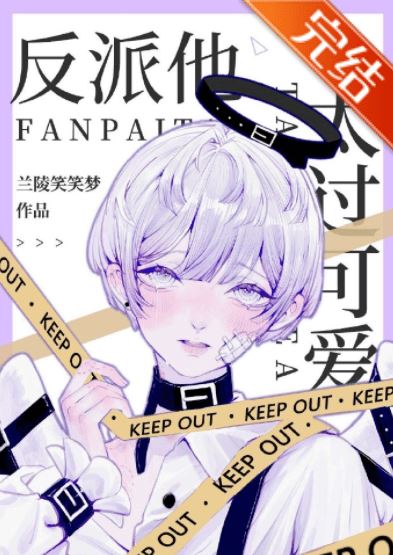
... Read More
I need everyone to understand that the image of that single teardrop hanging on Yin Minglu's slender eyelashes is going to haunt me for days. The camera caught it. The readers caught it. Yuan Feng definitely caught it but pretended not to. Let me walk through why this works so well emotionally. The original owner wasn't just homesick—he was trapped in the worst possible version of home. His mother threw him here. His stepmother threw Yuan Feng here. Both boys are exiled, but only one of them gets called an idiot and a crybaby on national television. The singing is the heartbreak engine here. Yin Minglu knows he should probably be tough, should probably stop being vulnerable, but he can't help it. He sings anyway. 'Sparkling twinkling, the sky is full of little stars...' A child's song, delivered in a voice that hasn't even hit puberty yet, and Yuan Feng—who is clearly struggling with his own displacement, his own addiction to normalcy, his own anger—can't look away. The irony is devastating. Yin Minglu's tears made him seem weak on screen. They made people call him hypocritical and squeamish. But in this private moment, those same tears are the most honest thing in the entire show. 'The tears of homesickness that made this obedient boy look extraordinarily moving at the moment.' Extraordinarily moving. Yes. That's the word. And then the next morning when he's sick and Yuan Feng actually shows up for him? That's not romance, not yet, but it's the beginning of something that could be. A boy who cried himself to sleep now has someone who notices when he's burning up. That's the kind of emotional pay-off I live for.
... Read More
"What's the matter, baby? Why are you wronged?" That line. That absolutely devastating line. Yin Yunqiu saying it with all this awkward tenderness, this man who is described as cold as ice, repelling people thousands of miles away—and yet here he is, squatting down to a crying three-year-old, not knowing what to do with his own hands. The scene where the child stops crying the moment he's picked up? That killed me. The baby wraps his little arms around Yin Yunqiu's neck, adjusts himself spontaneously because he finally feels safe. This child has been starved for real paternal affection his entire life—I can feel it in every line. And now that someone is actually TRYING, even clumsily, even unfamiliarly—he clings like his life depends on it. Then An Meijun walks in and takes him away, and the child goes willingly. Goes. Quietly. Obediently. The narration says he looked "abnormally quiet" afterward, just pressing his face into her neck like nothing happened. But I know what happened. That child just experienced genuine warmth for maybe the first time, and then it was taken from him by the person who's been performing motherhood since day one. There's a line that haunts me: "the gentle look and awkward inquiry were in sharp contrast with the last life's unfeeling feeling of avoiding the original owner and finally coming to the funeral coldly." The original owner died alone, probably, while this man—who is now trying so hard with this child—wasn't even there. The tragedy isn't just in the present. It's layered across lifetimes. I keep thinking about how Yin Yunqiu would rather see the child smiling than crying, and how his heart fills with distress when the boy sobs. He doesn't understand why coaxing isn't working. He lacks experience. But his instinct is RIGHT. That's what makes it hurt.
... Read More
Okay so let me just say — the car ride scene? Chilling. Actual chills. You've got An Meijun in the backseat, plotting her grand emotional restoration like she's preparing for war, and what does she get? A literal toy gun pointed at her face by a toddler. Not even a metaphorical one. This kid pulls out a money gun and starts spraying counterfeit bills everywhere while making biubiubiu sounds and An Meijun's pupils literally CONTRACT. She's one second away from screaming and what comes at her is a pile of paper money with COMICAL facial expressions on it. The author really understood the assignment here — maximum tension, zero actual violence. The stakes are so petty (fake money on a skirt) yet An Meijun's reaction is so visceral. And then the worst part? Yin Yunqiu doesn't even scold the kid. He tells his own son "Baby, don't fidget" but also says he'll personally pick up the money later. Wait — he said DON'T FIDGET but then also said HE'D PICK IT UP? The man is sending mixed signals and An Meijun is sitting there with fake bills on her lap realizing she's completely locked out. The real stake here isn't the money or the car ride — it's that after six months away, An Meijun is watching a father and son share a moment that doesn't include her and she physically cannot intervene. That's the tension the author builds. It's quiet, it's domestic, but oh man is it brutal.
... Read More
I need to talk about the visual contrast in this section because it's STUNNING. The first scene takes place in what sounds like some kind of traditional studio or performance space - “every set of tables and chairs here were of fine pearwood and pure white porcelain.” Can you imagine? This is a place where old actors perform, where tradition lives, and then Luo Cuihua comes in and DESTROYS it all. “The teacups and chopsticks fell to the ground and shattered into fragments.” There's something almost symbolic about peasants destroying refined objects, like she's physically breaking the world she doesn't belong to. The photographer's internal monologue is perfect worldbuilding too - he's calculating the cost of the damage while simultaneously enjoying the spectacle. “The program team can't afford its expenses and won't help her cover them!” This tells us so much about the production, about money being tight, about how rural/ordinary people are viewed by those with resources. Then we cut to - what? A hotel lounge? “After leaving the venue, every family waited in the lounge of the hotel.” The shift from the rustic performance space to a sterile hotel waiting room is jarring, and I think that's intentional. These people are in transition, suspended between worlds. And the image of the little guy - twelve years old but acting like five or six, “swaying his feet” in a high chair, “white milk on his reddish mouth” - it's so vivid I can see it like a photograph. The narrator says “Others shook their heads and had to sigh that this beauty Ms. Lin really had a bad life.” The judgment in that observation is chilling. The world of this story is full of people silently judging each other, and the settings amplify that. The corridor scene where Yin Minglu and the doorman crouch “like spies” is almost cinematic. Two figures in shadow, listening to secrets that could destroy lives. It's the kind of scene that belongs in a film, not just a novel.

Leave a comment

You must be logged in to leave comments. or
