The Vicious Dog - Reviews

The Vicious Dog
+Add to Custom List
Sort
Add review
... Read More
'I think we should change the bedsheets and covers.' 'Didn't you pick these out after spending ages deciding?' 'I suddenly don't like them anymore.' This conversation is only four lines. FOUR LINES. And it contains more subtext than most novels manage in entire chapters. Pei Ruyin's dialogue throughout this chapter is remarkably sparse but incredibly deliberate. 'I'll do it myself.' 'Let's sleep.' 'Mm.' Each response is minimal, clipped, almost robotic. Compare this to his earlier self — the version who gave gradual, spring-rain kisses — and you can hear the ghost of who he used to be in every deleted word. Xu Luling's voice is the opposite — she fills silences, she explains, she deflates tension with humor ('You're so fickle'). Her dialogue is warm and diffuse, like she's trying to keep the atmosphere from collapsing. President Liu's entrance is pure comic relief and character establishment in one: 'sixty is just the right age to be bold and fearless.' This man is clearly the chapter's designated voice of normalcy, the anchor to the real world, and his observation that she 'looks terrible' is the narrative itself admitting what everyone's been avoiding. The cat Nǎiyóu walking off 'with its head held high, full of arrogance' — and the author describes it without any dialogue because honestly, cats don't need it. The writing trusts the image to carry personality.
... Read More
I need to talk about pacing because this chapter is a masterclass in controlled detonation. It opens so quietly. Pei Rujin reading Memento. Just sitting there. While his brother is out causing chaos. The first act is almost domestic—Pei Ruxiao brings snacks to Xu Luling pretending to be his brother, comes back buzzing with excitement, Pei Rujin just laughs this strange laugh and says nothing. It's almost cozy. Almost. Then the phone call. "Frantic and incoherent." The chapter pivots so hard I nearly dropped my phone. One moment we're at Pei Rujin's apartment, the next we're at a river under a bridge with a dead body and a stabbing. But here's what I found brilliant—the investigation beats. Pei Rujin checks the carotid artery. One minute. Closes his eyes. Gives verdict. This man operates on a completely different timeline than everyone else. While his brother is hyperventilating, he's already calculating options. Two choices, laid out coldly, like he's ordering dinner. "The ring is a problem." That line lands like a hammer. Not "where's the ring"—"the ring is a problem." As if the missing ring is already factored into an equation he's been working in his head since he walked onto the scene. And then the twenty-day deadline drops. "To make her completely disgusted with the past five years and the Pei brothers, Pei Rujin needed twenty days to set everything in motion." This is the structural fulcrum of the entire chapter. The author could have padded this out, dragged it through more scenes, but instead they collapse all the tension into a single number: twenty. Days. Not months, not weeks. Twenty days to dismantle five years of someone's life. The ending lands perfectly too. "Clutching his racing heart, Pei Ruxiao sensed that the days ahead would be terrifying. What he didn't know was that he had just invited a truly dangerous beast into his life." That last line—isolation, dread, the sense that we've crossed a point of no return. And then we cut. No resolution. No comfort. Just the image of Pei Rujin walking away, pocketing a broken watch, wearing someone else's jacket, becoming someone else entirely. This is pacing as psychological manipulation. And it works.
... Read More
The atmospheric tension in this chapter is absolutely suffocating in the best way possible. The author builds this claustrophobic world where every shadow hides something, and I was literally holding my breath through the entire study scene. Let's talk about that opening image - the ring catching light, reflecting a faint glow. It's such a small detail but it sets the entire tone. We're immediately in a world where objects tell stories, where evidence is hidden in plain sight. And then there's the umbrella being deliberately put away, methodical movements that suggest a man who controls every aspect of his environment. This is someone who has planned for every contingency. The rainy season backdrop is doing heavy metaphorical lifting here. That first day of the rainy season when the video was filmed - water, rain, drowning, death. The imagery of Ru Xiao dying in a boat accident and then allegedly coming back from the dead creates this watery, ghostly atmosphere throughout. Xu Luling feels plunged into ice after Pei Ruyin leaves. She's surrounded by water imagery but completely isolated. And that study scene at night! The only light is the faint glow of the computer screen. Pale skin, well-defined veins, hands capable of snapping a neck - this description is so visceral I could feel the temperature dropping. The author creates this perfect domestic noir atmosphere where the familiar home becomes a site of danger and surveillance. The ad that pops up - XX Legend: If you're my brother, come slash me! - is such a brilliant intrusion of the supernatural into the mundane. It's like the story itself is reaching out, breaking the fourth wall, daring Xu Luling to investigate. And she plays along, shutters the computer, acts normal. But she lies awake all night. The reader knows she knows something is wrong. What I love most is how the setting mirrors the psychological state. The darkness, the isolation, the domestic spaces turning into places of suspicion - this is noir at its finest. Every room has eyes, every object is evidence, and sleep is impossible.
... Read More
This passage is a masterclass in slow-burn mystery construction. The author plants three seemingly unrelated threads in the first few pages—a charred corpse under Shitong River Bridge, a snake swallowed ring near the airport, and two missing matching rings—and by the end, they're tugging at you from every direction. The inciting incident isn't an explosion; it's a news alert. Xu Luling scrolls through her phone at work and stumbles onto a police appeal for information about a mutilated body found near a river that runs just one kilometer from the airport. The time of death (3 PM to 6 PM yesterday) hangs in the air like a question mark. Then comes the second blow: a villager kills a racer snake and finds a finely crafted men's ring inside its stomach. The photo flickers on screen, and Xu Luling feels a cold recognition. Her own matching ring is gone. What makes the plot work so well is the deliberate pacing of revelation. We don't get answers—we get contradictions. When Pei Ruyin claims his ring fell off after he passed out, it sounds reasonable. But then Xu Luling notices his finger is smooth, unmarked, while hers still bears the faint indent of five years of wear. The plot doesn't need big twists here; it needs the reader to feel the ground shifting under something that looks perfectly normal. The structural brilliance is in what's withheld. We never see Pei Ruyin's past. We never learn what happened to him during those hours. We only see the evidence accumulating like sediment, layer by layer, until the final image of him cooking in the kitchen feels simultaneously domestic and deeply wrong.
... Read More
The pacing in this section is absolutely ruthless and I respect it. Let me walk through the structure here because the author is doing something really clever. We start with discovery mode—Xu Luling finding that hidden handle, the ladder dropping down, the cold air hitting her hair. Normal tension. Mystery pacing. You know, 'oh someone's hiding something up there.' Then she finds the camera. Okay, escalating. Then the cat. Holy shit, now we're in horror territory. Then the bloodstain. Then the watch. Each reveal lands on top of the previous one like a hammer, and by the time she recognizes the watch, the reader is fully committed to the nightmare. "Crunch. She stepped on something. When she picked it up, she nearly threw it away in horror." That single word—crunch. One syllable. And suddenly the pacing shifts from investigation to visceral dread. The author doesn't spend time building atmosphere here because the atmosphere is already there. Every step she takes on that ladder is a beat of rising tension, and the pauses between discoveries are deliberate silence before the next explosion. What's brilliant is the structural pivot after the attic scene. The police arrive, forensics sweep, the information drops in organized chunks—animal specimens, human blood, missing head, confirmed death. This is the 'aftermath' section that gives the reader breathing room, but it's tense breathing. Detective Yang asking about the time, the garbage bag, the briefcase—each question is another thread pulling tight. And then the climax of this section isn't a physical confrontation. It's Detective Yang telling her about the bedroom camera. THAT'S the knife twist. Not the attic at all—the bedroom. The most intimate space in the house, compromised in the most intimate way possible. She learned about a serial killer's museum, but the REAL violation was happening above her pillow. The pacing here refuses to let you settle. Just when you think the attic reveal was the peak, the author drags you back down to the bedroom and shows you the real horror was closer than you thought. That's not good pacing—that's expert pacing. The reader never gets comfortable, and that's exactly the point.
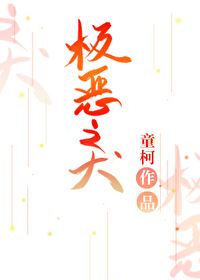
... Read More
There's something about that snake scene that won't leave me. The black-browed viper swallowing a ring, and when they put the two halves together — a deer. A deer. Not the snake, not the predator, but the prey. The image of the deer is just... everywhere in this story, isn't it? Soft, beautiful, vulnerable. That's Xu Luling. That's all of them. And the rain. The rainy season. "Whether it was Pei Ruyin or Pei RuXiao, the memories of the past five years had left a permanent, dark shadow over her." A shadow she never really escapes. Two years later, she's smiling, walking toward a car, getting tiramisu — but Wu Na's words hang there like a ghost. The building her family gave her on her 18th birthday. The floor someone rented. Everything connects back to that rainy season. I keep thinking about what the author is doing with these symbols. The snake — betrayal, danger hidden in plain sight. The deer — innocence consumed. The rain — something that never really stops falling, that seeps into everything. Is this story really about the Pei brothers at all? Or is it about how trauma lives in a person the way rain lives in a city, dampening everything, rusting everything, until one day you just... learn to walk through it anyway? How Jiang Ruosheng cooked for her through her eating disorder, how he learned her favorite dessert — this tiny, domestic tenderness against the backdrop of death and deception. The symbols aren't just decoration. They're the bones of the thing.
... Read More
This chapter is a masterclass in controlled escalation and I have never wanted to throw a book at a ceiling more. Let me break down why this works so well: it starts WITH domestic normalcy. Breakfast, shoes, "stay safe"—all the warmth of a married couple going about their routine. Then it SUBTLY introduces unease. The missing figurines. The wrong hoodies. The hollow cabinet. Each detail lands like a stone in still water, and by the time Xu Luling measures the ceiling, we're already trembling. The author never rushes. Xu Luling takes a day off, waits in the stairwell, calls President Liu—all of this feels real, like someone actually living through dread. But then the genius move: she goes to her neighbor's apartment over a CAT. Not over anything suspicious, over a pet visiting between buildings. And THAT'S when she notices the staircase. That's when the whole architecture of the story shifts. The pacing here mirrors Xu Luling's psychology perfectly—she's NOT panicking, she's methodically collecting evidence because panic feels like losing control. And the final scene with that hollow cabinet sound? "a hollow, muffled so"—cutting off mid-word is one of the most effective cliffhangers I've read because it forces us to sit with the incompleteness. The story refuses to give us closure, just like Xu Luling hasn't found hers.
... Read More
So the buzz-cut officer literally tells her "Young lady, you shouldn't be too caught up in romance" and I lost it. Not because it's funny in a designed way but because it's SO human. This cop has seen everything—strange cases, dramatic people—and he just gives her unsolicited dating advice like she's his niece. It breaks the tension perfectly. And Xu Luling's response of just saying "Go ahead" to "we'll call the police"? Chef's kiss. Short, sharp, completely unlike what he expected. You can hear the author's voice in these exchanges—it's not over-written, not every line a witty quip, but the dialogue has rhythm. Officer Yang's recognition moment is great too: "Hey, aren't you Miss Xu from the case where we found a bunch of hidden cameras in your home?" Casual, conversational, drops huge backstory information without it feeling like exposition. The couple's reunion dialogue is restrained in the best way. No dramatic confessions, no over-the-top declarations. Just "Where did you go?" and "My blood sugar dropped..." and the apology about the damp spot. Natural, understated, credible. The narrative voice itself is clean and unobtrusive—sometimes I forget I'm reading and just experience the scene. One minor gripe: some of the internal thoughts border on telling rather than showing, but honestly it's a small complaint in an otherwise strong dialogue execution.
... Read More
'What was their goal? The unknown is what's most terrifying.' This line — stated outright by the narrator — is the thesis of the entire novel. Everything else is just variations on this theme. The hidden cameras are the most obvious symbol: the destruction of privacy, the violation of domestic space, the idea that home — that sacred, private sanctuary — has become a panopticon. But I keep coming back to the stuffed animal. A CHILD'S toy, something meant to represent comfort and safety, hiding a lens that watches. The author chose a BEAR, of all things. There's something deeply wrong about innocence weaponized. Then there are the bedsheets. 'I suddenly don't like them anymore.' Objects that touched your skin, that witnessed your most vulnerable moments — now contaminated by association with the threat that invaded your home. Changing them is an attempt to sanitize, to rebuild, to pretend the violation never happened. But you can change sheets. You can't change the knowledge that someone was watching. The cat Nǎiyóu appears at a moment of domestic normalcy, strutting along the railing with absolute confidence. Animals sense things humans miss. Or maybe the cat is just a cat and I'm overthinking it. But in a novel about surveillance and hidden watchers, even the neighborhood cat feels like it might be on someone's side. And the recurring image of Pei Ruyin watching Xu Luling sleep — mirrors the cameras but with love instead of malice. Who's watching whom, and why? The novel seems to be asking whether protection and surveillance are fundamentally different acts, or just different versions of the same thing.
... Read More
There's a scene — maybe ten lines long — that haunts me. "Pei Ruyin" stands in the living room of an old house. The first house he bought with stock trading money during college. A place not even Xu Luling knew about. He removes the SIM card with a tool, snaps it in half, and tosses both card and phone into the trash. I can see this so clearly. The lighting, the dust, the silence. This man — or this person — has built an entire alternate life in the cracks of his real one. An old house on the outskirts of town, registered under a friend's name. A phone that exists only for this moment, this performance. The casual way he destroys evidence. The knock at the door that comes seconds later, like clockwork. This isn't someone operating on impulse. This is someone who has been planning, preparing, executing — for years. And then there's the contrast. The police storming into that house, the leap from the building, the cold procedural language of identity confirmation. Then two years later — the CBD office building, the laugh of coworkers, the hazard lights of a car parked on the side of the road. The mundane world carrying on, completely unaware of the blood and lies that shaped its edges. The old house vs. the cosmetic surgery clinic. One is where someone hides. The other is where someone erases. Both are monuments to people who refused to be who they were supposed to be. The setting isn't just backdrop. It's character.
... Read More
The atmosphere in this passage is drenched—literally and figuratively. The rainy season hangs over everything like a wet blanket. Sky is overcast. The air is damp. Even the scents tell the story: Pei Ruyin switches from freesia to velvet roses in the car, and Xu Luling notices immediately, but not because she's suspicious—because she pays attention to him. The domestic scenes are rendered with an intimacy that makes the creeping wrongness all the more effective. The living room, the kitchen, the bathroom sink where she searches for her ring, the decorative cabinet where the vase seems to face a different direction. These aren't set pieces; they're the actual geography of her life, and the fact that she notices when something in that geography shifts is what makes the horror land. The news segment about the charred body is described through Xu Luling's visceral reaction—she retches, her colleagues notice her worsening complexion, and she brushes it off. The contrast between the brutal imagery (kneeling position, severed head, fire destruction) and the banality of her office environment creates a dissonance that lingers. The most haunting image, though, is the final one: Pei Ruyin in the kitchen, back turned, cooking dinner, steam rising from a plate of Qianjiang shredded pork. It's domestic perfection. It's also deeply unsettling because we now know that his finger is smooth where a ring should have left a mark, and he cannot seem to account for what happened to him, and the vase may or may not have been moved, and the rain won't stop falling.
... Read More
Can we talk about how this author uses space like a weapon? Xu Luling's apartment is described as spacious, with floor-to-ceiling windows overlooking a rose garden that Wu Na calls a waste of prime city real estate. On paper this sounds luxurious. In practice it sounds like a fishbowl. There's nowhere to hide, but also nowhere that feels safe. The vastness of the apartment becomes a liability. When she's alone in there, the empty rooms amplify every creak and shift. And then there's the bedroom scene—she wakes up sensing someone standing over her, touching her face, the cold clammy sensation still on her skin later. The sunlight comes pouring through those same windows later and for a moment it feels warm and hopeful, until she goes to the kitchen and sees the shadow moving across the floor. The contrast between the bright blue sky outside and the dark creeping thing inside is genuinely unsettling. The author understood something crucial: horror doesn't need fog and darkness. It needs light, normalcy, and the violation of spaces you thought were yours.

Leave a comment

You must be logged in to leave comments. or
