The Substitute Bride Physician, Banished with Her Space for a Thousand Miles - Reviews

The Substitute Bride Physician, Banished with Her Space for a Thousand Miles
+Add to Custom List
Sort
Add review
... Read More
Okay so let me just say—the opening chapter is absolutely vicious and I love it. A transmigration story where the protagonist doesn't just wake up in a new body with a clean slate, but literally dies from betrayal by someone she trusted with her life? That's not your average Isekai setup. A'Lan pulling a gun on Shang Ruoyi right after the mission goes south, screaming about how Ruoyi didn't save A'Feng first—this is layered. The betrayal isn't just personal, it's ideological. A'Lan represents everything Ruoyi rejected: putting individual emotion above the mission, above duty. And yet here she is, the one who couldn't let it go enough to kill her captain. Then BAM, Ruoyi wakes up as the Prime Minister's second daughter who literally starved to death. The parallel is almost too on the nose—betrayed by a comrade in one life, consumed by a family that treated her like nothing in the next. But the plot doesn't just stop at the setup. Chapter 2 is where it gets really clever. Instead of having Ruoyi brood about her situation, she immediately starts negotiating. The dowry scene? Chef's kiss. She produces a ledger she apparently already memorized from the original host's memories and turns the tables on her father and stepmother. The fact that she knows exactly where they're vulnerable—their obsession with Shang Yufu becoming Empress—shows she's not just reacting, she's strategizing like the agent she was. And the substitution bride premise itself is a classic for a reason. Shang Yufu got cold feet when her betrothed became a cripple, so Ruoyi gets thrown in as a placeholder. But here's what I think is brilliant: the author doesn't make Ruoyi resist this. She accepts the marriage on her own terms, with her mother's dowry in hand. This is a woman who has already died once and been betrayed—she's not going to waste energy being a victim. The plot moves with this urgency, this sense of someone who has nothing left to lose and everything to gain.
... Read More
There's so much layered symbolism in this batch that I want to unpack, because the author is clearly playing a long game. The glass beads. Mu Qingning calls them 'trash' and is disgusted by them. But these glass beads came from Shao Yao, who styled Shang Ruoyi's hair before the wedding. They represent genuine care and connection—something Mu Qingning, for all her jewels and status, will never understand. The fact that Shang Ruoyi tosses them aside without a second thought is actually kind of heartbreaking. She's discarding something precious because the world told her it's worthless. That's the entire theme of the story in one gesture. Then there's the jade pendant. It's the key to her space ability, activated by her blood. Jade in Chinese literature traditionally symbolizes purity, nobility, and enduring value. But here it's something more—a bridge between her past life and her present, between her former self as a special operations team leader and her current situation. The blood activation is significant too; it's not just any key, it's her life force that unlocks this power. She has to literally give of herself to access it. The black robe He Jingheng wears is another powerful symbol. While everyone else is dressed in wedding red, he's dressed for a funeral. Whose funeral? His old self, perhaps. The Heir who was confident, powerful, beloved. The injury has killed that version of him, and he's mourning it publicly while pretending it's just a fashion choice. And the name 'Dingguo' itself—Stabilizing the Nation. The Emperor sees it as a curse because it implies the throne doesn't need him. The title that should honor the Prince Residence instead becomes a source of political tension. Names have power in this story, and the author knows it. The recurring theme of substitution runs through everything: the substitute bride, the substitute heir (since the legitimate daughter won't marry a cripple), the Emperor substituting suspicion for trust. Shang Ruoyi keeps saying she wants to live for herself this time, but the whole world keeps trying to substitute her for someone else's plans.
... Read More
The opening imagery of this batch is SO cinematic. Let me paint this for you. Outside, gongs and drums resound, red silks and satins everywhere—traditional wedding splendor. But inside, He Jingheng is wearing a 'black dark patterned robe with silver trim—hardly the attire of a joyous groom, but more akin to someone attending a funeral.' This single contrast tells you everything about his mental state without a single word of exposition. The author doesn't need to explain his depression or trauma; the clothing does the work. Then there's the wedding procession scene. The commoners gathered outside the Dingguo Prince Residence, some bringing actual gifts, others offering baskets of eggs because they're so excited to see the Heir. This worldbuilding detail is everything—it tells us that the Dingguo Prince Residence isn't just politically powerful, they're genuinely beloved by the people. That's why the Emperor is so threatened. This isn't abstract political maneuvering; it's grounded in how ordinary people experience power. The bridal chamber scene is equally vivid. Shang Ruoyi sitting alone, the heavy wedding crown making her dizzy, overhearing servants gossiping right outside her door about the Second Young Master's potential heir. The author has this amazing ability to make you feel the claustrophobia of the situation—the veil, the cumbersome wedding garment, the weight of the crown, the whispering voices through the wall. And then the space description! The medical laboratory, the Spirit Spring with its 'sweet, fragrant scent,' the hot spring pool, the scaleless white fish, the farmland. It's described with such sensory detail that I could practically smell it. The mechanical voice announcing the spring's properties is a nice touch—blending the cultivation space trope with something that feels almost sci-fi, which makes it stand out from generic transmigration spaces. The visual contrast between the opulent, suffocating wedding world and the clean, open space she discovers is deliberate and powerful. Two worlds, two different kinds of freedom.
... Read More
I've been thinking about this passage all morning and I keep coming back to one idea: in exile, everything becomes symbolic. Food isn't just food—it's power. Shoe pads aren't just comfort—they're survival. And the ability to distribute them is pure, unadulterated authority. Shang Ruoyi holding the buns isn't just a plot point—it's a complete inversion of the family hierarchy. In the capital, the second branch had everything: wealth, status, the ability to bully Madam Qin into submission. But out here on this mountain path, all of that means nothing. What matters is who can find resources, who has skills, who can think strategically. Shang Ruoyi has all three. The second branch has none. The shoe pads are even more interesting. They're small, humble things—padded insoles you'd never notice in a noble household. But here, they're the difference between walking and being carried. And Madam Zhang, who spent years looking down on people from 'lower' backgrounds, is now begging for something she'd never have valued before. The symbolism writes itself. And that line from the Old Princess—'Elders should behave like elders'—that's the thematic core of the whole passage. It's not just about this family. It's about what happens when social structures collapse and people are forced to earn respect instead of demanding it. The exile isn't just punishing their bodies. It's stripping away every illusion they had about their importance.
... Read More
This batch is a masterclass in pacing, and I want to break down why it works so well. It opens at MAXIMUM energy—the wedding is happening, people are gossiping, Mu Qingning is causing scenes, Prince Xiao's heir is throwing shade. The pacing here is fast, almost breathless, with rapid-fire dialogue and overlapping conflicts. You've got the wedding ceremony, the public insult, Shang Ruoyi's legendary 'filthy dog' comeback, the Emperor's tantrum—all in quick succession. It's chaotic in the best way, and it mirrors the overwhelming nature of the situation Shang Ruoyi is in. Then, just when you think it can't get any more intense, the scene shifts to the bridal chamber. The energy drops dramatically. Shang Ruoyi is alone, tired, dizzy. The pacing slows to a crawl. You hear servants whispering through the wall, she removes her heavy crown, her finger gets pricked—and then WHAM, the space reveal. This structure—high intensity, sudden stillness, then a quiet but massive revelation—is exactly the kind of pacing that keeps readers hooked. The author knows when to accelerate and when to let you breathe. The transition from the public chaos of the wedding to the private discovery of the space feels earned because we've just ridden that emotional rollercoaster with Shang Ruoyi. The chapter endings are also perfectly timed. Chapter 4 ends with the Emperor's rage, which raises the political stakes. Chapter 5 ends with Shang Ruoyi discovering her space ability, which raises her personal stakes. Both endings create urgency without feeling rushed. If I'm being honest, the only part that felt slightly rushed was the transition from the wedding hall to the bridal chamber. A few more beats of Shang Ruoyi processing what just happened would have given the pacing even more room to breathe. But honestly? I was too excited to care.
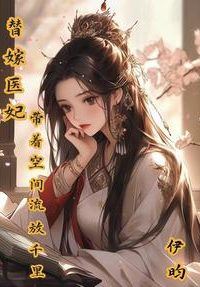
... Read More
Okay so let me just say—the wedding scene in this batch is absolutely BRILLIANT and I need to talk about it immediately. On the surface, it's a arranged marriage plot. Classic setup. But the author completely subverts it by making both leads actively AVOID the wedding ceremony. He Jingheng refuses to show up, wearing black like he's going to a funeral instead of his own wedding. And Shang Ruoyi? She's sitting in that sedan chair waiting, and her internal monologue is literally: 'Why should a woman in the prime of her life throw herself away over a man?' She's already planning her exit strategy before the ceremony even starts. That is such a fresh take on the genre. Then there's the plot twist with the substitution itself—we learn that the Prime Minister never intended his legitimate daughter to marry a cripple. Shang Ruoyi was the backup plan, the concubine-born daughter sent in place of the legitimate heir. And she knows it. She goes in with her eyes wide open. But the real plot masterstroke is the Emperor's reaction at the end. The eunuch reports that commoners are treating the Heir like a 'celestial being,' and the Emperor SLAMS his desk. The political tension here is thick enough to cut with a knife. The Dingguo Prince Residence stabilizes the nation, the people love them, and the Emperor is seething because he can't control that narrative. This isn't just a marriage story—it's a powder keg waiting to explode. And then BAM, Shang Ruoyi discovers her space ability. The jade pendant, the blood drop, the medical lab from her past life—this changes everything about the power dynamics. She's not just a substitute bride anymore, she's walking around with a cheat code. The plot is moving at a FRENETIC pace and I am HERE for it. Every chapter ends on a note that makes me immediately click to the next one.
... Read More
The conflict in this batch is layered on multiple levels, and the stakes keep rising with every chapter. On the personal level, Shang Ruoyi is fighting for survival and autonomy. She's a woman who lived and died for her country in her past life, and this time she's determined to live for herself. But she's walking into a hostile marriage with a man who doesn't want her, in a household where everyone is plotting against each other. The stakes are clear: if she fails, she's trapped in a loveless marriage with no resources and no allies. But then she discovers the space, and suddenly the stakes shift. She now has a secret advantage, but also a new vulnerability. What if someone discovers her ability? What if the space has limitations she hasn't found yet? The uncertainty is what makes it tense. On the political level, the conflict between the Emperor and the Dingguo Prince Residence is the main engine driving the plot. The Emperor is terrified of losing power to a family that the people love more than they love him. He Jingheng's injury isn't just a personal tragedy—it's a political opportunity that his enemies are desperate to exploit. Prince Xiao's heir is already circling like a vulture, making sure everyone knows the Heir is a cripple now. The interpersonal conflicts are equally intense. Mu Qingning's humiliation when she steps on the glass beads and falls—that's not just comedy, it's the beginning of a rivalry. The servants gossiping about the Second Young Master's potential heir while standing right outside Shang Ruoyi's door tells you that this household is a nest of vipers, and everyone is watching. What I love most is how the author makes you care about ALL of these conflicts simultaneously. Shang Ruoyi's personal survival, the political power struggle, the romantic tension with He Jingheng—they're all woven together. When the Emperor slams his desk, it's not just a political moment; it's a threat to Shang Ruoyi's future too, because if the Emperor moves against the Dingguo Prince Residence, she's caught in the middle. The tension is maintained perfectly because no matter what conflict seems resolved, another one immediately takes its place. Just when you think Shang Ruoyi is safe in her space, the servants' gossip reminds you that danger is always outside the door.
... Read More
Let me just start with this scene: Ruoyi is in the bridal sedan, hearing people gossip about her, and she casually kicks pebbles at their teeth. Four pebbles, four people, all front teeth knocked out, and the celebratory music drowns out their screams. This is such a perfect moment because it tells you everything about who she is without a single line of exposition. She's a special agent. Her environment is her weapon. A handful of stones from the ground is just as lethal to her as any firearm was in her previous life. The contrast between the two worlds is also really well done. The tropical rainforest opening—night, gunfire, betrayal, explosion—is all sharp edges and chaos. Then you cut to the Prime Minister's residence, red lanterns, servants with ribbons tied around their waists, the whole festive atmosphere. But underneath that festivity there's rot. The door to Ruoyi's courtyard is described as "already dilapidated," the servants are cruel and arrogant, and the First Wife's courtyard is the one with the power while Ruoyi's is forgotten. The visual contrast between the two women's living spaces tells you more about their status than any dialogue could. I also loved the wedding dress detail—Shang Yufu is described as "plump" and the dress is too loose on Ruoyi. It's a small thing but it grounds the whole thing in physical reality. This isn't some ethereal fantasy, these are bodies and fabrics and the discomfort of being forced into someone else's life, literally and figuratively. And the bronze mirror scene, where Ruoyi watches herself getting made up by a kitchen maid who was banished for having pretty hands—that's worldbuilding through character interaction. You learn about the hierarchy, the cruelty, the petty power struggles, all through one seemingly minor exchange.
... Read More
There's a recurring question underneath all of this that I can't stop thinking about: what does it mean to be valued as a daughter in this world? Shang Ruoyi's mother came from a wealthy merchant family and married into the Prime Minister's household. At first, her dowry was what made her valuable—"she provided him with a steady stream of silver." But once that money dried up, her status collapsed. She went from celebrated bride to depressed woman dying alone in a remote courtyard. Her daughter inherited not her wealth but her position: invisible, dispensable, a tool to be used when convenient. And yet Ruoyi refuses to accept this. When she produces the ledger of her mother's dowry, she's not just securing money—she's reclaiming her mother's legacy, the proof that she existed and mattered and brought something undeniable into this family. The dowry list is a document of truth in a house built on lies. Her father stole it, hid it, tried to erase it, and Ruoyi has it memorized. The marriage itself is another layer of this. Shang Yufu, the beloved legitimate daughter, gets to refuse because she's valuable. Ruoyi, the forgotten concubine-born child, gets sent in her place because she's expendable. But Ruoyi flips the script by making the exchange conditional—she'll go, but on her terms, with her mother's property intact. She's not rejecting the marriage, she's refusing to be a sacrifice without compensation. The jade pendant, the ledger, the silver—these are all symbols of value in a world that told Ruoyi she had none. And her entire arc in these first chapters is about proving that she does, on her own terms. The story isn't just about a woman surviving an arranged marriage. It's about a woman who was treated as nothing in life and decides to become someone undeniable.
... Read More
Okay so let me just say this: the author really understands how to make a satisfying power reversal. Shang Ruoyi isn't just surviving exile—she's weaponizing it. The whole food situation from the very first scene is a masterclass in setup and payoff. She finds buns, she distributes them on HER terms, and when the second branch tries to entitlement-harass her? Boom. She cuts them off completely. And the best part? The Old Princess actually backs her up. That moment when the Old Princess says 'Elders should behave like elders'—I literally gasped. After chapters of Madam Zhang running around like a headless chicken bullying everyone weaker than her, finally someone with actual authority shuts her down. But what really got me is the shoe pad subplot. This is where the plot gets clever. Shang Ruoyi isn't just being petty—she's building a whole micro-economy. The prisoner trading a silver bracelet for four pairs of shoe pads? That's not just flavor text, that's worldbuilding through action. And then Madam Lin deliberately provoking Madam Zhang by offering gold earrings, knowing Shang Ruoyi would be forced to play nice? Two women playing chess while everyone else is still figuring out checkers. The cliffhanger about the food running out though—chef's kiss. They've barely started the mountain section and already supplies are gone. What happens next? I need to know.
... Read More
The stakes in this chapter are EVERYWHERE and I love it. On the surface, it's a survival story—exiled people in the wilderness with guards who will slaughter their families if they're late. But the REAL stakes are in the family dynamics. Madam Zhang vs. Zhao Yiniang fighting like cats and dogs while their hair is coming undone and faces are swollen? That's not just drama, that's two women who have NOTHING left to lose fighting over scraps of dignity. And He Jingheng—oh my god, He Jingheng. He's sitting there with a leg that might never heal and he's watching Shang Ruoyi get close to his brother while simultaneously testing whether his own leg has sensation. The man is playing three chess games at once and he's not even sweating. The moment he flicks that rock at the guard with his Inner Force? That's not just petty jealousy—that's a man who has been reduced to exile and is still trying to assert control over his environment. And the stakes just escalated when the poisoning happened. Someone in that family is actively trying to kill people, and we don't even know who yet. My heart was POUNDING.
... Read More
This is the kind of scene that stays with you. You know those descriptions where you can actually FEEL the pain just reading it? That's what the mountain path sequence does. Let me paint it for you: summer shoes, thin soles, gravel that cuts like knives, blisters forming and then bursting, and a trail of blood behind every prisoner who can still walk. I had to stop reading for a second because my own feet were aching just from imagining it. The visual contrast is brutal. The officials in their thick-soled boots, cracking whips, completely unaffected. Meanwhile the exiled nobles—who probably never walked more than a few blocks without a sedan chair—are reducing themselves to bleeding, limping wrecks. The author doesn't even need to say 'this is cruel.' The imagery does the work. And then there's the chasm. Two meters wide, wooden bridge collapsed from an earthquake, and they have to take a treacherous detour that eats up half a day. This isn't just an obstacle—it's a narrative device that forces the food crisis to happen. Every element of the setting is working overtime. The mountain isn't just scenery; it's an antagonist. One detail that hit me hard: the Old Princess, pale-faced, soles burning, unable to endure much longer. The matriarch of the Dingguo Prince Residence, brought to this. There's something almost poetic about it—the family that once ruled from this mansion now can't even walk a mountain path without suffering.

Leave a comment

You must be logged in to leave comments. or
