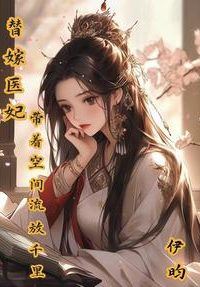
The Substitute Bride Physician, Banished with Her Space for a Thousand Miles
+Add to Custom List
Novel Info
  • Author:
  • 伊昀
  • Status:Ongoing

Summary

... Read More

Shang Ruoyi, a top-tier special agent from Country A, is betrayed and killed by her teammate A'Lan during a secret rescue mission in a tropical rainforest. Upon waking, she discovers she has transmigrated into the body of the Second Miss of the Prime Minister’s residence in the Tianshun Dynasty. The original host, born of a concubine, was starved to death after her wealthy merchant mother’s dowry was confiscated and her family fell into ruin. Shang Ruoyi immediately asserts her dominance, subduing abusive servants and confronting her father, Prime Minister Shang Nian, and his wife, who intend to force her to marry the crippled Heir Apparent of the Dingguo Prince Residence as a substitute for their own legitimate daughter, Shang Yufu.

Shang Ruoyi negotiates the return of her mother’s dowry, securing ten thousand taels of silver and a ledger detailing the family’s ill-gotten gains, which she uses as leverage against the Prime Minister’s fear of scandal. During the wedding procession, she demonstrates her combat skills by knocking out the front teeth of gossiping commoners with pebbles and humiliates the arrogant Mu Qingning by causing her to trip on glass beads. At the Dingguo Prince Residence, she encounters He Jingheng, the wheelchair-bound heir who is cold and aloof. She publicly insults Prince Xiao’s Heir, calling him a rabid dog, which earns her a grudge but also He Jingheng’s curiosity and a grudging respect for her sharp tongue.

On her wedding night, He Jingheng refuses to consummate the marriage or even lift her veil, stating he has no interest in her. Shang Ruoyi, seeking freedom, plans to divorce him and live independently. During this time, she discovers a mystical dimension attached to the jade pendant she wore in her past life. The space contains a medical laboratory, a Spirit Spring that purges impurities and enhances her constitution, and a hot spring. After drinking the Spirit Spring water, she undergoes a painful but transformative marrow cleansing, emerging with improved health and strength. She also learns she can mentally transport items from the dimension into the real world.

Shang Ruoyi returns to her parental home for the customary visit but secretly empties the Prime Minister’s treasury of its gold and jewels into her dimension, leaving the chests empty. When the First Wife discovers the theft, Shang Ruoyi frames it as impossible, causing the First Wife to faint from rage. The next day, Shang Nian presents forged letters to the Emperor, accusing the Dingguo Prince Residence of treason. The Emperor, paranoid about the family’s popularity, issues an edict stripping Prince He Yuwen of his title and exiling the entire household. Shang Ruoyi, rather than seeking divorce, chooses to stay with the family, recognizing that the vulnerable women and injured He Jingheng cannot survive the journey alone.

As the exiled group travels, Shang Ruoyi uses Spirit Spring water to heal He Jingheng’s severe leg wounds and sustain the family’s energy. The Crown Prince, He Lingsheng, who orchestrated the framing, orders the escorting officers to mistreat the prisoners. Along the way, the group faces hostility from other exiles and a deadly wolf attack. Shang Ruoyi directs the family to defend themselves with stones, while He Jingheng, despite his injury, uses his inner force to kill the Wolf King, saving the group. The shared survival experience begins to shift the dynamics among the exiles, though the political threat from the Crown Prince and Prime Minister Shang remains a looming danger as they continue their journey into exile.

Latest Release
DateGroupRelease
2026-08-11shanghai fantasy c100
2026-08-11shanghai fantasy c99
2026-08-11shanghai fantasy c98
2026-08-11shanghai fantasy c97
2026-08-11shanghai fantasy c96
2026-08-11shanghai fantasy c95
2026-08-11shanghai fantasy c94
2026-08-11shanghai fantasy c93
2026-08-11shanghai fantasy c92
2026-08-11shanghai fantasy c91
2026-08-11shanghai fantasy c90
2026-08-11shanghai fantasy c89

Community Reviews

Rating(3.7 / 5.0, 31votes)
5 stars
12(39%)
4 stars
3(10%)
3 stars
11(35%)
2 stars
5(16%)
1 stars
0(0%)

Popular reviews

... Read More
Okay so let me just say—the opening chapter is absolutely vicious and I love it. A transmigration story where the protagonist doesn't just wake up in a new body with a clean slate, but literally dies from betrayal by someone she trusted with her life? That's not your average Isekai setup. A'Lan pulling a gun on Shang Ruoyi right after the mission goes south, screaming about how Ruoyi didn't save A'Feng first—this is layered. The betrayal isn't just personal, it's ideological. A'Lan represents everything Ruoyi rejected: putting individual emotion above the mission, above duty. And yet here she is, the one who couldn't let it go enough to kill her captain. Then BAM, Ruoyi wakes up as the Prime Minister's second daughter who literally starved to death. The parallel is almost too on the nose—betrayed by a comrade in one life, consumed by a family that treated her like nothing in the next. But the plot doesn't just stop at the setup. Chapter 2 is where it gets really clever. Instead of having Ruoyi brood about her situation, she immediately starts negotiating. The dowry scene? Chef's kiss. She produces a ledger she apparently already memorized from the original host's memories and turns the tables on her father and stepmother. The fact that she knows exactly where they're vulnerable—their obsession with Shang Yufu becoming Empress—shows she's not just reacting, she's strategizing like the agent she was. And the substitution bride premise itself is a classic for a reason. Shang Yufu got cold feet when her betrothed became a cripple, so Ruoyi gets thrown in as a placeholder. But here's what I think is brilliant: the author doesn't make Ruoyi resist this. She accepts the marriage on her own terms, with her mother's dowry in hand. This is a woman who has already died once and been betrayed—she's not going to waste energy being a victim. The plot moves with this urgency, this sense of someone who has nothing left to lose and everything to gain.
... Read More
There's so much layered symbolism in this batch that I want to unpack, because the author is clearly playing a long game. The glass beads. Mu Qingning calls them 'trash' and is disgusted by them. But these glass beads came from Shao Yao, who styled Shang Ruoyi's hair before the wedding. They represent genuine care and connection—something Mu Qingning, for all her jewels and status, will never understand. The fact that Shang Ruoyi tosses them aside without a second thought is actually kind of heartbreaking. She's discarding something precious because the world told her it's worthless. That's the entire theme of the story in one gesture. Then there's the jade pendant. It's the key to her space ability, activated by her blood. Jade in Chinese literature traditionally symbolizes purity, nobility, and enduring value. But here it's something more—a bridge between her past life and her present, between her former self as a special operations team leader and her current situation. The blood activation is significant too; it's not just any key, it's her life force that unlocks this power. She has to literally give of herself to access it. The black robe He Jingheng wears is another powerful symbol. While everyone else is dressed in wedding red, he's dressed for a funeral. Whose funeral? His old self, perhaps. The Heir who was confident, powerful, beloved. The injury has killed that version of him, and he's mourning it publicly while pretending it's just a fashion choice. And the name 'Dingguo' itself—Stabilizing the Nation. The Emperor sees it as a curse because it implies the throne doesn't need him. The title that should honor the Prince Residence instead becomes a source of political tension. Names have power in this story, and the author knows it. The recurring theme of substitution runs through everything: the substitute bride, the substitute heir (since the legitimate daughter won't marry a cripple), the Emperor substituting suspicion for trust. Shang Ruoyi keeps saying she wants to live for herself this time, but the whole world keeps trying to substitute her for someone else's plans.
... Read More
The opening imagery of this batch is SO cinematic. Let me paint this for you. Outside, gongs and drums resound, red silks and satins everywhere—traditional wedding splendor. But inside, He Jingheng is wearing a 'black dark patterned robe with silver trim—hardly the attire of a joyous groom, but more akin to someone attending a funeral.' This single contrast tells you everything about his mental state without a single word of exposition. The author doesn't need to explain his depression or trauma; the clothing does the work. Then there's the wedding procession scene. The commoners gathered outside the Dingguo Prince Residence, some bringing actual gifts, others offering baskets of eggs because they're so excited to see the Heir. This worldbuilding detail is everything—it tells us that the Dingguo Prince Residence isn't just politically powerful, they're genuinely beloved by the people. That's why the Emperor is so threatened. This isn't abstract political maneuvering; it's grounded in how ordinary people experience power. The bridal chamber scene is equally vivid. Shang Ruoyi sitting alone, the heavy wedding crown making her dizzy, overhearing servants gossiping right outside her door about the Second Young Master's potential heir. The author has this amazing ability to make you feel the claustrophobia of the situation—the veil, the cumbersome wedding garment, the weight of the crown, the whispering voices through the wall. And then the space description! The medical laboratory, the Spirit Spring with its 'sweet, fragrant scent,' the hot spring pool, the scaleless white fish, the farmland. It's described with such sensory detail that I could practically smell it. The mechanical voice announcing the spring's properties is a nice touch—blending the cultivation space trope with something that feels almost sci-fi, which makes it stand out from generic transmigration spaces. The visual contrast between the opulent, suffocating wedding world and the clean, open space she discovers is deliberate and powerful. Two worlds, two different kinds of freedom.
... Read More
I've been thinking about this passage all morning and I keep coming back to one idea: in exile, everything becomes symbolic. Food isn't just food—it's power. Shoe pads aren't just comfort—they're survival. And the ability to distribute them is pure, unadulterated authority. Shang Ruoyi holding the buns isn't just a plot point—it's a complete inversion of the family hierarchy. In the capital, the second branch had everything: wealth, status, the ability to bully Madam Qin into submission. But out here on this mountain path, all of that means nothing. What matters is who can find resources, who has skills, who can think strategically. Shang Ruoyi has all three. The second branch has none. The shoe pads are even more interesting. They're small, humble things—padded insoles you'd never notice in a noble household. But here, they're the difference between walking and being carried. And Madam Zhang, who spent years looking down on people from 'lower' backgrounds, is now begging for something she'd never have valued before. The symbolism writes itself. And that line from the Old Princess—'Elders should behave like elders'—that's the thematic core of the whole passage. It's not just about this family. It's about what happens when social structures collapse and people are forced to earn respect instead of demanding it. The exile isn't just punishing their bodies. It's stripping away every illusion they had about their importance.
... Read More
This batch is a masterclass in pacing, and I want to break down why it works so well. It opens at MAXIMUM energy—the wedding is happening, people are gossiping, Mu Qingning is causing scenes, Prince Xiao's heir is throwing shade. The pacing here is fast, almost breathless, with rapid-fire dialogue and overlapping conflicts. You've got the wedding ceremony, the public insult, Shang Ruoyi's legendary 'filthy dog' comeback, the Emperor's tantrum—all in quick succession. It's chaotic in the best way, and it mirrors the overwhelming nature of the situation Shang Ruoyi is in. Then, just when you think it can't get any more intense, the scene shifts to the bridal chamber. The energy drops dramatically. Shang Ruoyi is alone, tired, dizzy. The pacing slows to a crawl. You hear servants whispering through the wall, she removes her heavy crown, her finger gets pricked—and then WHAM, the space reveal. This structure—high intensity, sudden stillness, then a quiet but massive revelation—is exactly the kind of pacing that keeps readers hooked. The author knows when to accelerate and when to let you breathe. The transition from the public chaos of the wedding to the private discovery of the space feels earned because we've just ridden that emotional rollercoaster with Shang Ruoyi. The chapter endings are also perfectly timed. Chapter 4 ends with the Emperor's rage, which raises the political stakes. Chapter 5 ends with Shang Ruoyi discovering her space ability, which raises her personal stakes. Both endings create urgency without feeling rushed. If I'm being honest, the only part that felt slightly rushed was the transition from the wedding hall to the bridal chamber. A few more beats of Shang Ruoyi processing what just happened would have given the pacing even more room to breathe. But honestly? I was too excited to care.
... Read More
Okay so let me just say—the wedding scene in this batch is absolutely BRILLIANT and I need to talk about it immediately. On the surface, it's a arranged marriage plot. Classic setup. But the author completely subverts it by making both leads actively AVOID the wedding ceremony. He Jingheng refuses to show up, wearing black like he's going to a funeral instead of his own wedding. And Shang Ruoyi? She's sitting in that sedan chair waiting, and her internal monologue is literally: 'Why should a woman in the prime of her life throw herself away over a man?' She's already planning her exit strategy before the ceremony even starts. That is such a fresh take on the genre. Then there's the plot twist with the substitution itself—we learn that the Prime Minister never intended his legitimate daughter to marry a cripple. Shang Ruoyi was the backup plan, the concubine-born daughter sent in place of the legitimate heir. And she knows it. She goes in with her eyes wide open. But the real plot masterstroke is the Emperor's reaction at the end. The eunuch reports that commoners are treating the Heir like a 'celestial being,' and the Emperor SLAMS his desk. The political tension here is thick enough to cut with a knife. The Dingguo Prince Residence stabilizes the nation, the people love them, and the Emperor is seething because he can't control that narrative. This isn't just a marriage story—it's a powder keg waiting to explode. And then BAM, Shang Ruoyi discovers her space ability. The jade pendant, the blood drop, the medical lab from her past life—this changes everything about the power dynamics. She's not just a substitute bride anymore, she's walking around with a cheat code. The plot is moving at a FRENETIC pace and I am HERE for it. Every chapter ends on a note that makes me immediately click to the next one.
See all reviews

Characters

See all characters

Custom lists

See all custom Lists