The Retired Villainess’s Brunch Cafe - Reviews

The Retired Villainess’s Brunch Cafe
+Add to Custom List
Sort
Add review
... Read More
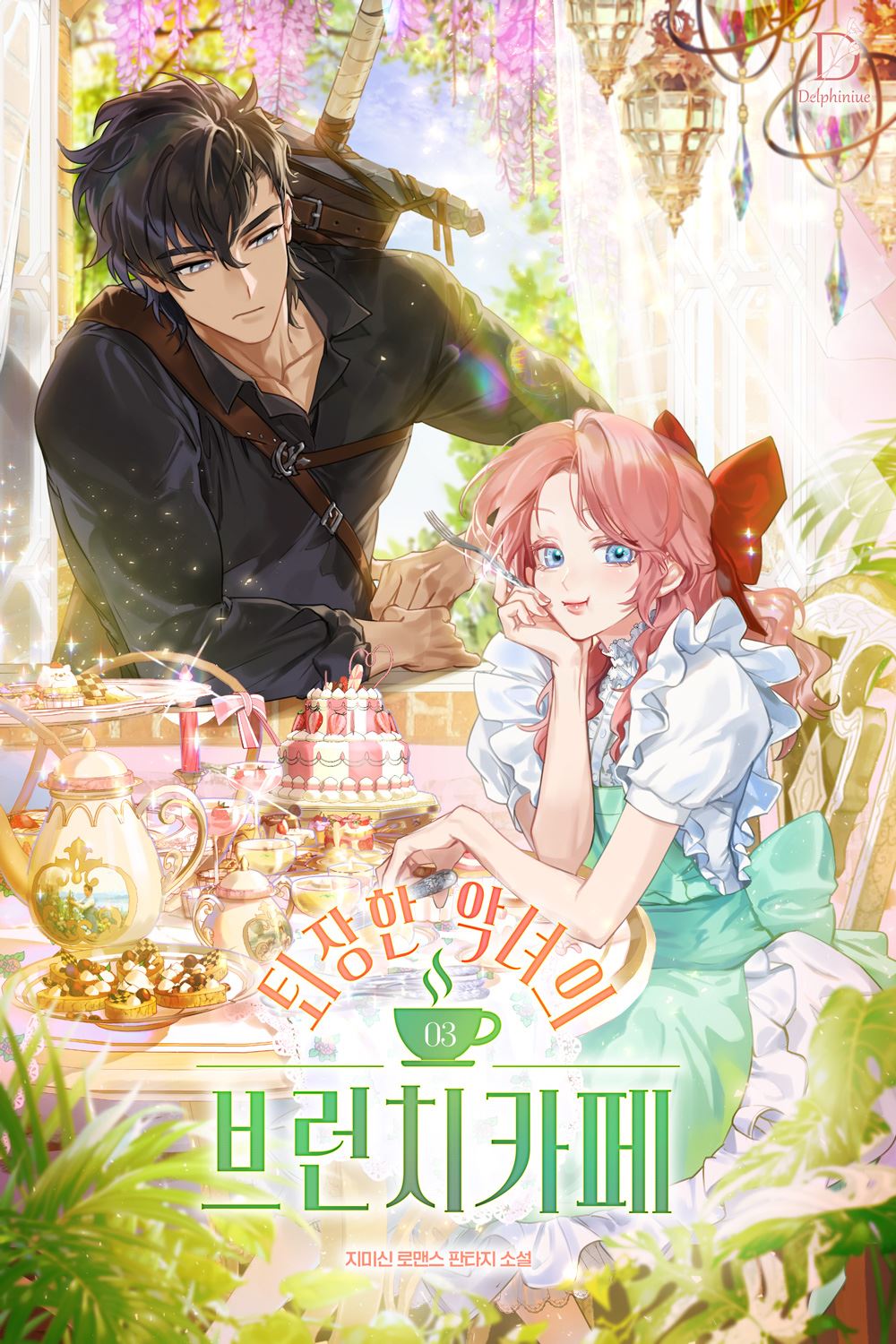
Okay so I need to talk about this one scene that genuinely wrecked me because it is SO subtle but also SO loaded. We've been building this whole thing where Karl just... appears in the countryside and refuses to leave. For weeks, every time Viviana tries to push him away, he just stays. Like a boulder. A dragon-shaped boulder. But this moment? This is the first time he主动 comes to HER. He doesn't ask. He doesn't explain. He just walks over and stirs her cocoa. And she grabs his wrist to compare hands. Think about that. She's touching him. Not accidentally. Not because she fell. She reaches out. And then the heat. His body temperature is above 42 degrees. That's not normal. That's not human. That's the 'swallowed a ball of fire' canon setting coming to life in the most visceral way possible. And Viviana doesn't pull away. She presses her palm against his and stays there, studying him like he's a mystery she's finally solving. Then she asks the question that changes everything: '...Are you in any pain? Anywhere?' And Karl says nothing. His jaw is firmly set. He won't answer. Why? Because admitting pain requires admitting vulnerability, and this man has spent his entire life carrying something no one knows about. But here's what kills me. Right after this scene, the narration cuts to her realizing that sending him back to the capital would be sending him to his death. That Georgiana will refuse him, that Adolf will tell her not to use her holy power to heal him, and that Karl will go berserk. She understands his entire tragic trajectory and now she can't even do the basic human thing of wishing him well and telling him to go home. This is the moment their relationship stops being 'annoying dragon guy lingers around my café' and becomes something she can't name yet but clearly feels. She went from trying to get rid of him to deliberately prolonging his stay. That's not friendship. That's something far more dangerous. And Silvie notices nothing. Of course she notices nothing. She just thinks Karl's become comfortable. 'He turned out to be a pushover of a kind person.' Silvie, you sweet summer child. You have no idea.
... Read More
So the structure of these chapters is genuinely wild when you think about it. We open with what feels like a quiet domestic scene—Viviana eating fruit sandwiches, Karl being mysteriously sullen, Silvie returning from a trip. It's cozy. It's slice-of-life energy. You could be forgiven for thinking this is a book about opening a café in another world. Then. Cut to. Prince Roco at the border. Soldiers gossiping about his crush on Silvie. His internal calculation about rice. His decision to attend the engagement ceremony he was deliberately skipping. In like six paragraphs, the author has introduced a major political player, established his motivations, and set him in motion toward a confrontation that hasn't happened yet. Then back to the café. Business problems. Work overload. Karl bringing cocoa. The hand-comparison scene. The body temperature revelation. The realization that she's sending him to his death if she lets him leave. Ending on a description from the original novel about clean, cool water pouring from deep inside his body. This is not a linear chapter. This is a triptych. Three panels that reflect each other like funhouse mirrors. The border scene and the café scene are IN conversation with each other, even though they take place miles apart. Roco is drawn to the same rice Viviana imported. Roco is about to crash the engagement that binds Georgiana to Adolf. Roco is watching from a distance, calculating, while Viviana is watching Karl from across the room, also calculating, also helpless to change the outcome. The pacing between these threads is what makes the book work. It never lets you settle into one emotional register. One moment you're laughing at Silvie calling Karl a pushover, the next you're sitting with Viviana's devastating realization that she understands his fate better than anyone and can do nothing about it except press her palm against his burning hand and pretend it's curiosity. And that final image—clean, cool water, something Karl has never experienced in his entire life—hitting right at the end of the chapter? That's not a cliffhanger. That's a promise. The author is telling us: comfort is coming. But it's going to cost something.
... Read More
I need to talk about the dialogue in this section because it is doing something really interesting and I want to unpack it. First, Karl Drian. The man has maybe five lines of actual spoken dialogue across these chapters, and every single one lands like a hammer. 'Understood.' 'There is still something I need to do.' That's it. He communicates almost entirely through silence, through physical presence, through the way he flinches when his sister's name is mentioned. Let me repeat that: he flinches. "At my answer, Karl Drian, who had been washing dishes in the distance, flinched as though he had just done a small jump in place." THAT is a sentence that does more character work than pages of exposition. He didn't know she was talking about his sister until he overheard it. And his body betrayed him before his face could catch up. That's not acting. That's not being guarded. That's a person who has buried so much underneath that surface calm that even a casual mention of Nanari cracks the facade for half a second. Then there's Viviana's internal monologue, which is basically a separate narrator living inside her head. The way she comments on things—'Reading it as a novel...', 'More than anything, Georgiana is making her debut in society this season...'—this meta-awareness is what makes her voice so distinctive. She's simultaneously living the story AND analyzing it as a reader would. That dual perspective creates this hilarious, painful, self-aware narration that no other character in the book could replicate. And Silvie's voice! She's the straight woman to Viviana's chaos, but she's not boring about it. 'You obviously compared that idiot to me and once again realized my worth.' This woman is vicious and also the only person in this story who actually sees Viviana clearly. Roco's dialogue is another masterclass in what NOT to say. His entire personality is expressed through what he withholds. 'Something interesting seems to be happening.' That's it. That's all we get from the second prince of the Northern Kingdom, and we know immediately that he is a predator who just spotted movement in the grass. The contrast between Karl's silence and Roco's cold precision is gorgeous. Two very different kinds of dangerous men, and the author never lets us mistake one for the other.
... Read More
Let me count the ways this passage raises the stakes because honestly it's terrifying how efficient the author is at layering threats. Thread one: Karl's fate. We know from the original novel that Georgiana will choose Adolf. We know Adolf will refuse to have Georgiana use her holy power to heal Karl. We know Karl will go berserk and transform into a true dragon. This is not speculation. This is plot. And Viviana knows all of it. The stakes here are absolute—life, death, humanity itself. There is no negotiating with a dragon's transformation. The only question is WHEN, not IF. Thread two: Roco's arrival. He was trying to skip the engagement ceremony. Now he's changing his mind because he noticed Viviana's rice. What does that mean? A prince who personally inspects a trading company's luggage at the border is not going to simply observe. He's going to act. And his interests align with nobody's but his own. The moment he decides to attend is the moment the political landscape shifts under everyone's feet. Thread three: Viviana's business. She's running a café in the countryside while managing trading company divisions from afar. Documents piled 'to roughly the height of a small hill.' Market share being eaten by competitors. Approvals delayed. She's fighting a war on a front she didn't choose, and she's doing it while carrying the knowledge of everyone's tragic futures. That's not a workload. That's a siege. The genius is how these threads converge without the characters knowing it. Viviana is sitting at her desk stressing over paperwork while Karl brings her cocoa and Roco is riding toward the capital and Karl's dragon nature is simmering under his skin and none of them are aware of each other's movements. That's dramatic irony at its finest. We know everything. They know nothing. And the gap between what we know and what they know is where all the tension lives. The chapter ends on a description from the original novel—cool water pouring from deep inside Karl. Not a threat. Not a warning. Just a fact. And the fact is that his salvation and his destruction are the same thing, and they're both coming.
... Read More
I'm obsessed with how this book builds its world without any exposition dumps. You just get these vivid sensory details that make everything feel painfully real. Like the opening letter scene—Nanari's letters are described as being filled wall to wall with "lol"s and "haha"s. That one detail tells you SO much about their friendship and the tone of the whole story. Then when Viviana arrives at her countryside shop, the author goes: "Thud, thud. The creaking of the old wooden floor and the sound of my footsteps tangled together in a disorderly mess." I could literally hear those floorboards. And the Komodo dragon letter-delivery lizard? I died. A palm-sized baby sparrow would be cute, sure, but a KOMODO DRAGON is what the Drians use? It fits Karl's whole aesthetic perfectly and I love it. The Goldworthy estate scene is another masterpiece—crystal chandeliers, antique glass lamps, ornate wallpaper, and servants who can't meet your eyes. It's opulent but also suffocating, which is exactly the feeling Viviana's trapped in. The most striking image though has to be Karl standing outside the window like an ancient tree for a full week. "Because of him, customers had been frightened off before even stepping inside." The fact that his mere presence is an economic threat to her new life? That's worldbuilding as plot device and it's brilliant. The contrast between the gilded cage of the capital and this run-down countryside café with floors that scream every time you walk? It's painting two completely different worlds and making you feel the difference in your bones.
... Read More
"......" Karl's entire personality is just ellipses and I'm here for it. Every time he responds it's either silence or this barely-there sound and somehow it works. When I told him to go home he just went. "Karl's head tilted slightly. My own head tilted in the same direction." The mirrored head tilts gave me chills — two people who clearly don't communicate well matching each other's body language. And then when I started rambling about my whole Viviana backstory to a stranger? "Even at my complaints, which bordered on unreasonable, Karl remained quietly expressionless." This man is a rock. A very tall, sword-carrying rock. The dialogue between me and Cassie at the start was also great — "I said don't treat me like a child!" and then immediately buying two pieces anyway because she's a kid. Classic. Also I love how the protagonist talks to themselves constantly — "What on earth did he come here for?" "An honorable knight would never do something like that." All these internal questions make the narrative voice feel really intimate, like I'm in their head the whole time. And the dream voice? "Do you really think so?" Just two words and it completely shifts the tone. Minimalist but devastating.
... Read More
Okay can we just talk about THIS scene for a second?? Karl Drian completely losing it over touching the heroine's hand and then… then he bowed his head like he was about to kiss her palm?? AND Madeline and Hans walked in at THAT exact moment?? Madeline literally shouting 'What comes after holding hands?!' while cupping her cheeks?? I swear to god if you needed a sign that this author writes romance like they're personally jealous of main characters happiness then here it is. But also… Karl's POV hit me like a truck. The part where he described it as cool water washing away flames that had built up inside him? That IS the same feeling as when he first opened Viviana's letter? What does that even MEAN?? Like he's been carrying this physical pain and she's the antidote but she doesn't even know it?? And then he thought 'there really must be a secret even she doesn't know about, in Viviana Goldworthy'?? I'm not okay. I am genuinely not okay. This man is suffering so beautifully. Also the hand-holding detail — 'Since Benjamin had grown up, this was the first time I had held someone's hand like this.' That right there? That's a whole backstory of loneliness packed into one sentence. She's been running a trading company, raising her brother, surviving on her own, and the simple act of someone interlacing their fingers with hers made her freeze. I needed a minute.
... Read More
The stakes in this section are fascinating because they operate on three completely different levels simultaneously and the novel never lets you forget any of them. On the surface, there's the immediate social conflict: the protagonist has accidentally become the Empire's villainess through a misunderstood joke about whipping people. The Crown Prince was going to be her escort, but now Benjamin is claiming that role, and she's trapped between a political marriage she didn't choose and a younger brother who sees anyone else as a threat. The ball is tomorrow and she has zero control over how this plays out. Classic setup, but what makes it work is that the protagonist KNOWS she's walking into a trap and can't escape it because the trap is made of other people's assumptions. Then there's the meta-level conflict: she's a transmigrator who knows the original story, which means she knows exactly how bad things are going to get. Karl Drian will go berserk. Georgiana will appear and save him. She will probably be destroyed in the process. The horror isn't that she doesn't know what's coming—it's that she knows and still can't change it. Every piece of information she has is also her curse. She saw the ending and it's terrible, and now she has to live through the buildup. But the deepest conflict is the one she hasn't fully acknowledged yet: the friction between who she's becoming and who she wants to be. She's a Goldworthy—driven, workaholic, pragmatic—but she also has moments of genuine warmth (the marshmallow kid, her tenderness toward Benjamin). The villainess role demands she be cruel and cold. Every step into that role is a small death of the person she actually is. And the stakes aren't just social ruin or death—they're the erasure of her own humanity. She's being forced into a narrative that doesn't have room for the parts of herself that matter most. What keeps the tension razor-sharp is that none of this is abstract. The ball is tomorrow. The documents are piling up. Benjamin is already defending her honor like a wounded animal. Every scene has a ticking clock and the protagonist is running out of time on all three fronts.
... Read More
What a delicious tangle of storylines! The way the author weaves together the humble rice gelato business with high-stakes royal politics is masterful. On the surface, this reads like a slice-of-life about someone starting a dessert shop, but beneath that, there is an intricate web of engagement annulments, secret births, and political maneuvering that keeps you turning pages. The main plot thread follows the protagonist transitioning from her former life as a Goldworthy lady to running a coffee shop, while secretly developing a revolutionary gelato recipe. But the brilliance lies in how the narrative bounces between perspectives—our shopkeeper, the Crown Prince Adolf, and even侧面 characters like Karl Drian. Each viewpoint adds a layer of dramatic irony that makes every conversation crackle. The subplots are where this really shines. There is the business subplot about scaling up gelato production while managing unit costs and magic stone expenses. Then there is the royal subplot with Viviana's venomous schemes and Georgiana's precarious position as an adopted commoner thrust into the crown princess role. These two threads literally collide when the festival scene brings everyone together—the shopkeeper distributing free gelato while the Crown Prince deals with political fallout from the annulment. The pacing is exceptional here. The author takes time to let the gelato recipe unfold step by step—the soaking, grinding, boiling, and the crucial scraping-freezing cycle—creating a sense of ritual and anticipation. Just when you think the scene will stay cozy and low-stakes, a visitor arrives and the Crown Prince's headache intensifies. The tension builds naturally rather than feeling forced. What really impressed me was how the plot revelations cascade. Viviana's accusation that Georgiana isn't the duke's biological daughter drops like a bomb, then the Duke's passive acceptance of this rumor, then the Crown Prince's calculations about dowries—all of it unfolds in a way that feels both shocking and inevitable in hindsight. The author plants seeds early (like the mention of holy power atavism) that pay off later in the political analysis. The festival scene serves as a perfect structural pivot. All the disparate threads—the gelato business, the royal drama, the character relationships—converge at this village celebration. The lord's generosity with dark beer and high-proof whiskey creates a festive atmosphere that contrasts sharply with the underlying tensions. And handing out gelato for free becomes both a character moment for our protagonist and a subtle political gesture. If I had any critique, it would be that the Crown Prince's internal monologues occasionally tip toward melodrama. But that's a minor note in what is otherwise a tightly constructed narrative arc that balances domestic warmth with court intrigue.
... Read More
Okay so let's talk about what this passage is actually about beneath the surface, because I think the symbolism here is ridiculously dense and the author is playing 4D chess. Rice first. Viviana imports rice from the Southern Kingdom to a country where rice is a famine food. Why? Because it's who she is. It's her connection to a world that isn't this one. Rice is her signature, her identity, her refusal to assimilate completely. And Roco notices. Of COURSE he notices. A prince who watches borders like a hawk spots the one thing that doesn't fit. Rice becomes a symbol of Viviana's alterity—her fundamental strangeness in this world—and Roco's interest in it is his interest in HER. Then there's Karl's body heat. 'Swallowed a ball of fire.' This isn't just a cool fantasy detail. It's a metaphor for everything he's carrying: his dragon blood, his duty, his isolation, the pain he won't speak of. He is literally burning from the inside while maintaining perfect exterior composure. Every time he smiles (if he ever does), it's a controlled burn. And the water. Oh god, the water. The original novel describes Karl experiencing 'clean, cool water pouring out from the deepest part of his body' for the first time. This is the central image of the entire story, and it's appearing right here, right now. Water = relief. Water = compassion. Water = the opposite of fire. And Viviana, in this moment, becomes the water. Not romantically (yet). Not declaratively. But functionally. Her palm against his burning hand. Her awareness of his suffering. Her decision to keep him close instead of sending him away. She is becoming the cool water in a world that has only ever known fire. The engagement ceremony looming in the background is the flood that will either extinguish him or fuel the fire further. Either way, something is about to burn. And the café? The café is neither fire nor water. It's something else entirely. A space where a transmigrator who knows the future and a doomed dragon who doesn't can exist, briefly, without the weight of their destinies pressing down. That's not incidental worldbuilding. That's thematic architecture.
... Read More
Okay let's be real — this protagonist is dealing with SO MUCH. First there's the original story trauma where everyone condemns Viviana, then escaping to run a coffee shop, then Karl showing up who clearly has his own agenda, and NOW robbers trying to kidnap them? "Fortunately, I was fairly confident in my bare-handed combat. Not because I had particularly wanted to learn it, but because I lived in Goldworthy, where wealth was piled high, and had no choice." I had to learn martial arts just to survive in my own city. And the stakes keep escalating — the dream about burning alive, then actual robbers with clubs, and I'm fighting them off one-hit KO style because apparently I'm trained. "One hit and the man's body lurched heavily. Not missing the opening, I lightly pushed off the floor, swept a half-arc, and kicked him in the head again." This is the kind of casual violence that shows how desperate this world is. And through all of it, Karl is just... there. Watching. Helping when I collapse from PTSD flashbacks. "He simply looked down at me steadily." What is this man's deal and why does he keep showing up at the worst moments? The tension between wanting safety and knowing it's impossible is what makes this story so gripping. Also the robbery scene had actual danger because "the fire spread in an instant" and I couldn't breathe. Real stakes.
... Read More
The dialogue in this passage is a masterclass in character voice—I can identify who's speaking just from the rhythm of their words. Our protagonist's internal monologue has this particular cadence: practical, slightly self-deprecating, with occasional bursts of genuine enthusiasm. “Strange, isn't it?” when Karl calls her out for preferring work to him. “Either way, I had left the capital, and now I was living with a proper balance”—there's a conversational authenticity here that never feels performed. When she says “I hunched my shoulders and laughed” after Silvie's comment about procuring more ingredients, the physical action accompanying the dialogue reveals character without exposition. Silvie's voice is distinct—practical business-minded but with warmth underneath. “When you first said you were making a rice flavor, I thought, ‘there she goes with another peculiar attempt,' but it's unexpectedly genuinely delicious.” That progression from skepticism to enthusiastic approval, ending with the subtle “I will procure some next time” as code for “I want this again,” is such clever dialogue writing. Every line reveals relationship dynamics. Karl Drian's speech pattern is leisurely, confident, with this tilted-head quality that suggests amusement rather than pressure. “Ahaha, I've found it fun since I was young to predict things like this and calculate unit costs. Strange, isn't it?” The “aha” laughter, the invitation to share in her peculiarity, the rhetorical question that demands no answer—he's creating intimacy through conversation, not declaration. The Crown Prince Adolf's dialogue is clipped, frustrated, often interrupted by his own thoughts. “What on earth has she been doing to have a headache? My head feels like it's splitting.” The parallel between Georgiana's headache and his own is devastating in its brevity. His internal monologues in brackets [like this] contrast sharply with his spoken words, creating this delicious dramatic irony where we know more than the characters. Viviana's voice—though mostly absent, present only through reported speech—cuts like glass. “The Georgiana beside you is not my biological younger sister!” The bluntness, the timing, the cruel precision of dropping this “just before making her exit at the engagement annulment.” Even in absence, her voice dominates. Madeline's banter is rapid-fire, teasing but affectionate. “Good heavens! What did you do? Are you secretly a mage?” followed by “You're really out of your mind, aren't you?” The rhythm accelerates, then pauses for impact. When she delivers “Ah, so you were born with a poor palate? Nothing to be done about that then,” it's both brutal and loving—the kind of insult only true friends exchange. Cassie's formal, slightly archaic speech (“I shall graciously accept your kindness”) contrasts with her childlike pouting at “old-fashioned.” The dialogue reveals her position as both a Sister (formal, blessed) and a child (easily distracted by chocolate). The narrative voice itself shifts perspective seamlessly—from our shopkeeper to Crown Prince Adolf to embedded commentary—without ever losing coherence. Each voice maintains distinct syntax, vocabulary, and emotional temperature.

Leave a comment

You must be logged in to leave comments. or