The Only Human in the World - Reviews

The Only Human in the World
+Add to Custom List
Sort
Add review
... Read More
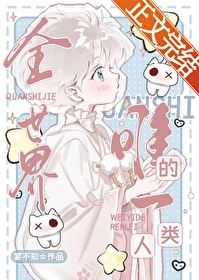
I've been thinking about this book way too hard and I need to get it out. The flour sack pajamas. Let me just say it: this is the single most important symbolic object in the entire passage and I will die on this hill. You Mi is wearing a literal flour sack—something that says [Delicious Flour, Three Yuan Star Coins per Jin], [Ultra-White, Ultra-Fragrant, Ultra-Chewy!]—and Anshus, this towering monster with golden eyes, sees it and wants it. Not just wants it. He initiates an exchange, carefully smooths it out, places it in a safe, and then at night, when everyone is asleep, he gets up again just to look at it. His lips curl slightly. Slightly. What does this mean? On one level, it's adorable—this scary creature finds comfort in something soft and familiar. But dig deeper and it's about *recognition*. You Mi is a Sina Star Person, made of flour, and his entire existence in this world is probably marked by being seen as lesser, as food-adjacent, as something to be consumed. And yet the Crown Prince of this entire civilization treasures what he wears. The pajamas that say [Net Weight: 10kg] on the back—his very identity becomes something precious to the most powerful person in the room. Then there's the duck soup. Anshus, who presumably has servants to cook for him, personally ladles soup and brings it upstairs. The cook is terrified he's dissatisfied, but he's not—he's *caring*. He's communicating in the only language he has. The soup, the figs, the silk pajamas, the safe, the sleeping robe with the matching flame emblem—he's building a whole vocabulary of devotion. And the dream sequence! You Mi dreaming of his parents, of drawing his ideal family while they laugh softly in the living room. It's brief but it reframes everything. This tiny person who built his life from scratch, who works at a furniture factory, who dreams of buying a house with his best friend—he's also someone who remembers what it felt like to be loved unconditionally. The story keeps asking: what does it mean to be seen? What does it mean to be chosen? The flour sack pajamas are the answer.
... Read More
Okay so let me just say—the worldbuilding in this book is quietly incredible and I need to talk about it. You have this whole alternate universe where people are made of different materials, where there are star people and humanoid skin suits and drilling competitions held in abandoned bases that were once tourist spots. The level of detail the author drops without making it feel like an info-dump is just *chef's kiss*. But the scene that absolutely wrecked me was the bedroom at night. You Mi in his flour sack pajamas, the pink castle, the moonlight coming through the window, and Anshus outside in his blue sleeping robe with the flame emblem, tiptoeing to the safe to look at those pajamas again. The image of this terrifying monster carefully handling a worn-out sleepshirt like it's the most precious thing in the universe—set against this gentle moonlight—gave me actual chills. It's so cinematic. And then you cut to the competition venue, this abandoned base turned event space, hovercars arriving, crowds of amateur enthusiasts, the whole atmosphere of a weekend hobby competition that somehow feels like a real place. The author doesn't over-explain the world, they just let you *inhabit* it through specific sensory details: the smell of duck soup, the texture of silk pajamas, the bright lights of the bedroom, the distant starship disappearing into the crowd. This is how you build a world. Not through exposition dumps but through lived-in details that make you forget you're reading fiction. The pink castle alone could be a whole visual motif—soft, domestic, almost fairy-tale adjacent, which contrasts so beautifully with the monster outside it. What a setting.
... Read More
I need to talk about how the author controls the rhythm of this story because it is absolutely masterful and I am not okay. Let's trace it: you start with a quiet domestic scene—Anshus cooking duck soup, You Mi offering figs, the whole flour sack pajama exchange. It's slow, intimate, almost meditative. Then you get the dream sequence—childhood, parents, the drawing of an ideal family—and it's brief but it hits like a truck. And then—BOOM—the next morning you're printing competition forms, Carl brings in a crew to build You Mi an office, and suddenly there are burly men saluting a tiny person in a window and I was NOT prepared for that tonal shift. The chapter then moves to Saturday, the competition day, and the pacing accelerates. Hovercars, starships, crowds, disguises, covert guards in the stands. The author knows exactly when to slow down (the horn-checking moment before You Mi heads backstage—god, that detail) and when to pick up the tempo. What really impressed me is how the Lin En subplot is woven in. You Mi is filling out the companion section, thinks about Lin En, we cut to Lin En getting this random promotion opportunity, they have this incredibly sweet phone call about buying a house someday, and then You Mi happily skips the companion line. Meanwhile Anshus is listening and declares he'll go. The structure here is doing so much work—setup, misdirection, emotional payoff, all in the span of a few paragraphs. And the chapter ends on this quiet but loaded line: "I'll accompany Mi Mi to the competition." After all that buildup, that single sentence carries so much weight. The author doesn't need a cliffhanger with explosions. Sometimes the best tension is just a promise whispered in a study.
... Read More
Okay I need to vent about the stakes in this book because they're doing something really clever and I want to unpack it. On the surface, this is a drilling competition. Amateur enthusiasts, weekend event, preliminary rounds. It sounds low-stakes. And yet—AND YET—the author has layered so much underneath that every scene crackles with tension. First layer: You Mi entering a competition as a tiny Sina Star Person in a world that probably isn't built for him. The stakes are personal—proving himself, maybe winning something that changes his life. He's already fantasizing with Lin En about affording a house in the capital. This isn't just a hobby; it's a ladder. Second layer: Anshus attending in disguise. The Crown Prince showing up at an amateur competition is a political minefield. Carl's earlier expression—"icy"—tells us this isn't a casual decision. Guards are infiltrating the stands covertly. If someone recognizes him, if there's a scandal, if there's an incident... the stakes escalate from personal to royal in a heartbeat. And the author never lets you forget this. You Mi keeps glancing back, worried someone will recognize Anshus. The tension is ambient, always present. Third layer: the relationship itself. Anshus is a monster. You Mi is... well, he's flour. They are fundamentally incompatible in every way this world has ever seen, and yet here they are, sharing duck soup and exchanging pajamas and planning to attend a competition together. The external world hasn't even started pushing back on this yet, and the internal stakes are already enormous. What happens when the truth comes out? What happens when the empire finds out its Crown Prince is... what, exactly, attached to a person made of flour? And the most brilliant part? The author wraps all this tension in scenes that feel domestic and warm. A shopping cart at a competition entrance. A horn-checking ritual. A monster carefully smoothing out pajamas in the moonlight. The contrast between the cozy surface and the volatile undercurrent is what makes every chapter feel like a tightly wound spring. I'm not ready for what happens next and I can't stop reading.

Leave a comment

You must be logged in to leave comments. or
