The Greatest Astrologist - Reviews

The Greatest Astrologist
+Add to Custom List
Sort
Add review
... Read More
Okay I need to talk about this one moment because honestly it wrecked me. Yu Shen comes home vibrating with excitement for her long-lost daughter—she's pacing like a trapped animal, asking Aunt Li if the soup and lobsters are ready, literally unable to sit still. And then she sees He Shichen on the sofa. The text says her excitement "instantly faded, her heart pricked by the sight." Just like that. She goes from electric anticipation to this quiet, careful tenderness. And then the way she takes HIS hand. Not his birth daughter's hand—his. The adopted son. The one who's been sitting alone. "Both you and Qianli are our most important children. We can't do without either of you." This sentence is doing SO much work. She's trying so hard. He squeezes her hand back and says "I understand, Mom. Don't worry"—but internally he's spiraling. The contrast between his calm exterior and the explosion inside is devastating. And the worst part? Yu Shen doesn't see it. She literally leaves to go check on soup while he's falling apart. Then Chu Qianli walks in and gets mobbed with tears and hugs. The scene ends mid-hug where Chu Qianli nearly gets choked. I am NOT okay with this emotional imbalance.
... Read More
"Are you saying I don't have a genuine heart?" — this line absolutely destroyed me. Let me explain why. Throughout the series, Qi Yan has been this unshakeable force. Cold, decisive, always in control. But here, in front of her grandfather, the armor slips. And then she goes even further—she SELF-MOCKERIES. "Because I was born into such a family, people often say I don't have a genuine heart. It's normal for you to dislike me." This is the most vulnerable Qi Yan has ever been, and the author delivers it almost casually. No dramatic music, no inner monologue paragraphs. Just a flat statement that hits like a truck. And Chu Qianli's response is perfect too. She doesn't comfort her with soft words—she ANALYZES her. "You're afraid that I'll predict you accurately. Having someone else do the divination means you won't expose yourself." This is their whole dynamic in one sentence. Chu Qianli sees through Qi Yan the way no one else does, and that's both their conflict and their connection. The friendship between them is developing in such a nuanced way. It's not instant besties. It's tension, misunderstanding, then gradual trust. And that moment when Chu Qianli sighs "I didn't know you could feel like this too" — she's not mocking her, she's genuinely surprised to find humanity under all that steel.
... Read More
"People like Qi Yan, who were strong and had good luck, were like ancient emperors, whose thoughts were far more complicated than one could imagine." This line hit me like a truck. It's everything. Qi Yan projects this aura of unshakable control—she arranges meetings, she reads Tarot, she teases Chu Qianli like she's in charge. But the narrator immediately undercuts it: she's afraid. Terrified, even. She avoids Chu Qianli not because she's aloof but because being seen is dangerous. And then Chu Qianli? Oh man, Chu Qianli. She plays the clumsy, apologetic little sister who stumbles over her words, but she's already three steps ahead with her divinations. The dynamic between them is this gorgeous push-pull where neither one can fully trust the other, yet neither can walk away. The scene where Qi Yan tear up the paper with her birth details—that's not cruelty, that's protection. She doesn't want Chu Qianli carrying that knowledge. And Chu Qianli's flustered denial about being 'interested' in Qi Yan? The reader knows exactly what's happening. Someone is invested. Someone is keeping tabs. The subtext is so thick you could cut it with a knife.
... Read More
Let's get serious for a second. The stakes in these chapters are escalating in ways that make my heart race. On the surface, it's about a painting. But beneath that? It's about knowledge, power, and survival. Chu Qianli isn't just craving art; she's pursuing something 'astrologers wanted to pass down.' That implies forbidden, possibly dangerous, knowledge. If she gets it, what happens? If she doesn't, what does she lose? The conflict is both external and internal. Externally, she's up against a private collection, a controlling uncle, and a family history of power struggles. Qi Yan's offer to 'make my uncle disappear' isn't just edgy humor; it's a glimpse into a world where family members are real threats. Internally, Chu Qianli wrestles with obsession versus practicality. She knows the timing isn't right, that the 'original female lead's story hasn't officially begun,' but she can't stop. That tension is agonizing. Then there's the friendship stakes. Tan Muxing's loyalty is tested when he has to choose between supporting his friend and avoiding He Shichen's wrath. He Shichen's own conflict? He's wary of Chu Qianli's influence on Tan Muxing, yet he's clearly protective. The scene with the heavy box is a metaphor for all these unspoken burdens they're carrying. How much are they willing to risk for this painting? For each other? The suspense is masterfully built because every character has something to lose: Chu Qianli her chance at hidden knowledge, Qi Yan her fragile autonomy, Tan Muxing his peace of mind. The author makes us care deeply about the outcome because the emotional wounds are real.
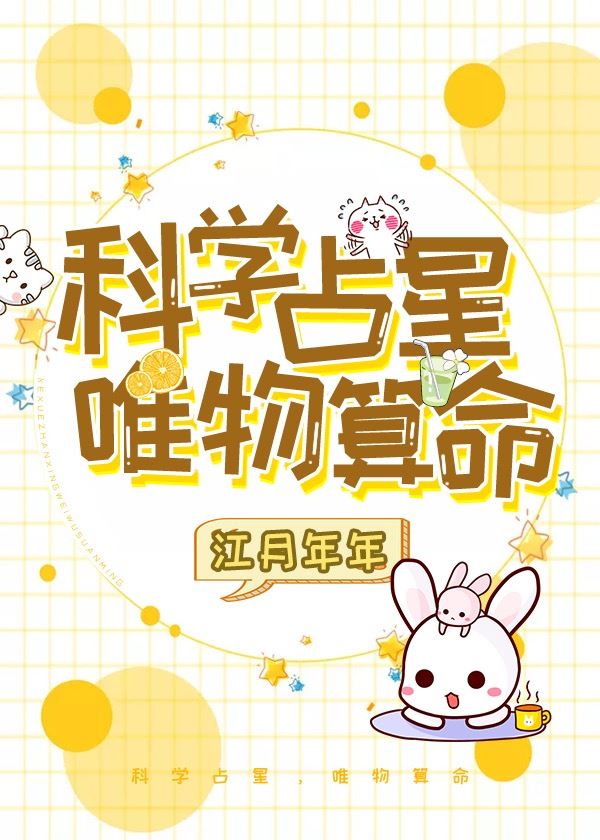
... Read More
I keep coming back to the space between Chu Qianli and Qi Yan — it's not romantic exactly, but it's intimate in a way that feels rare in fiction. Look at how Qi Yan reads her. She notices immediately that something is off, not because Chu Qianli is bad at hiding things (she's genuinely terrible at it), but because she KNOWS what Chu Qianli wants and has been calculating this moment herself. The fact that Qi Yan planned to give her the painting and only needed an excuse shows she'd been thinking about this too. There's this one line that got me: "Even though He Shichen always tried to prevent them from meeting, Qi Yan knew that if Chu Qianli truly wanted to see her, she would find a way—it was just that she didn't want to." That's devastating when you think about it. It implies that there was a time when Chu Qianli DID want to see her, and now she doesn't. Or maybe it means she does, but she's choosing not to. The ambiguity is killing me. And then Chu Qianli's behavior around Qi Yan's family — she goes completely quiet, becomes "like a little shadow," following Qi Yan obediently. There's something almost vulnerable about that. She's usually so sharp and self-assured, but in this environment she shrinks into herself. Qi Yan notices and makes sure to tell her "you don't need to look at them. You're here to get the painting. Just follow me." That's protective. That's someone making sure their friend doesn't feel lost in a room full of strangers. The grandmother figure Aunt San who greets them with "a hint of sorrow" in her smile but warmth toward Qi Yan — she clearly knows more than she's saying. Something happened with Liyang, and the grandfather's current obsession with this "master" is connected to it. The family emotional landscape is crumbling and none of these characters are handling it well.
... Read More
That ending line cut deep. 'My grandfather got tired of it and moved to the m...' and then it stops. Just stops. Right when the stakes just went from zero to ten. What we get is enough to worry. A middle-aged man with sparse hair and a large belly — clearly someone with money and power given the designer clothes — is begging a Taoist priest on behalf of his family. 'This is a matter of life and death. You can't let my family die!' The language is heavy. Not 'I want to,' not 'I hope to.' Life and death. Multiple people. And this man has come to Mount Qian before, multiple times, and now the situation is worse. But here's what makes this genuinely tense: Tan Muxing recognizes him. Not just vaguely, but enough to know the person and enough to immediately want to avoid the situation. He says 'I'm not sure if he remembers me' — which implies either this person has forgotten him before, or there's something about their encounter that makes Tan Muxing want to stay hidden. His family isn't close with the Taoist temple, but they're still the go-to people when desperate folk need to reach the masters. That's a lot of pressure to put on a family that supposedly just wants a quiet life. The stakes feel personal now. Whatever this man is dealing with, it's connected to Tan Muxing's world, and Tan Muxing is trying to shield his friends from it. Classic setup, but executed well because we care about these characters and we know bad things happen when families get dragged into supernatural trouble.
... Read More
I need to talk about Tan Muxing for a moment because this boy is doing the emotional heavy lifting of the entire chapter and nobody is giving him enough credit. Consider the teacup scene. Three people walk into a house. Tan Muxing brings over tea. He places cups in front of everyone. He has absolutely no idea what he is doing — he is just being polite, just hosting someone he likes, just existing in his own home as if it were normal. And yet this single act of casual hospitality becomes the centerpiece of Chu Qianli's entire online persona. The viewers see the cup and construct an entire mythology around her wealth and background. Meanwhile, Tan Muxing sits there looking awkward, saying 'they brought it here, I am not really sure.' This is the most quietly devastating character moment in the entire passage. He does not understand why this matters. He does not understand why people are looking at him differently now. He simply wanted to be a good host. And Chu Qianli — god, Chu Qianli. The way she processes this information is absolutely hilarious and deeply revealing. She goes from stunned silence to quiet calculation to full strategic planning in approximately thirty seconds. She realizes she can compete with Yahui not through skill alone but through environmental advantages she never asked for. The mountain, the teacups, the house itself — all weaponized unintentionally by someone who just wanted to serve tea. Then there is Qiu Qingkong, the third wheel in this dynamic, examining the cup with genuine aesthetic appreciation while completely missing the social implications. She sees beauty. The viewers see status. Chu Qianli sees a competitive advantage. Three different readings of the same object. That is three distinct character voices operating in a single scene. The rivalry with Yahui is also fascinating because it operates entirely through proxy. Nobody in this story actually confronts anybody directly. They fight through comment sections, through fans, through public challenges. This feels oddly accurate to how modern conflict actually works. Even Chu Qianli acknowledges it — 'I really cannot compete directly with other fortune tellers.' And yet she finds a way: she changes the battlefield entirely, introducing birth time rectification as a challenge that cannot be dismissed as marketing or personality.
... Read More
On paper, this is a story about a girl selling astrology readings to her classmates. But the author keeps finding ways to make it feel like actual drama, and I think that's because the social stakes in a school setting are genuinely high for teenagers. The most interesting conflict I spotted isn't external—it's Tan Muxing's quiet moment of shame when his family's wealth gets revealed. He apologizes to Chu Qianli like he's betrayed her ideological class. "Sorry." Two words and suddenly you realize this kid carries his privilege like a guilt he hasn't processed. That's layered writing for something that could've been a one-joke rich guy character. Then there's the structural tension of the scam itself. Qiu Qingkong's "palanquin bearer" strategy—lure people in with free simple readings, then refer them to the "master" for a fee—is essentially a con, and the characters know it. Chu Qianli even says it out loud: "Aren't we scamming?" The fact that they proceed anyway while maintaining this self-aware humor about it creates this delightful tension. Are they cute little entrepreneurs or frauds? The book seems to enjoy keeping that question alive. And underneath everything, there's the question of whether astrology actually works. If it doesn't, what are they really selling? That uncertainty is the engine running under the comedy.
... Read More
I am not okay with this scene and I love it. So the dinner gets tense because of the birthday thing — already a loaded topic since He Shichen learned he's not biologically a He — and then the adults leave them alone and the atmosphere is literally frozen. Two siblings who share parents but nothing else, sitting at opposite ends of a sofa, and Chu Qianli pulls out a worn deck of cards from her faded pocket. And then SHE ACCIDENTALLY KNOCKS THEM OVER. Every single card scatters across the floor. This girl who maintained perfect composure through a traumatic family reunion suddenly can't even manage her own belongings without causing chaos. And He Shichen — who was judging her every move — silently picks up some cards and hands them to her. The politeness between them is SO awkward it hurt to read. Then she looks at the cards THEY TOUCHED and drops this line: your luck isn't great today. And proceeds to demonstrate exactly what she means with this theatrical fireworks gesture — destroy world explode universe — and He Shichen is sitting there thinking she needs a brain check. The contrast between his internal judgment and her literal performance is comedy gold. But underneath all this there's REAL stakes. He Shichen doesn't know he's adopted. Chu Qianli knows her birth chart belongs to her biological parents. The cards become this weird third space where their conflict plays out without words. She's reading fortune teller signs while he's reading her as a threat. Both of them are trying to figure out who holds power in this house and neither has the full picture yet. The tension is immaculate.
... Read More
Okay so let me just say—Boss Zhang is such a fun character to watch unravel here. The man is literally sweating over his problems, flipping through this thick booklet like it's the Holy Grail, and Chu Qianli couldn't care less. Like her line: "Uncle Zhang, either you believe in this, or you don't. Honestly, writing out so many solutions for you has been exhausting." And that's it? That's all she says? She hands him the manual, tells him to pay up, and is basically ushering him out the door. Meanwhile he's getting all flustered about pipelines in Province T and renaming companies. The power dynamic between them is so deliciously one-sided. But then—AND THIS IS THE PART THAT HAUNTS ME—there's that flashback to the fortune-teller. Boss Zhang's backstory with him? It completely reframes everything we think we know about him. This guy who now begs for Chu Qianli's help used to MOCK a fortune-teller for not being rich. "If you were so skilled, why haven't you made it big yourself?" And that fortune-teller's last words before dying at a gambling table: "Good fortune, bad fortune, regret, and shame all arise from movement." Which is basically the entire thesis of this novel compressed into one sentence. Boss Zhang is literally repeating his past mistakes by coming to another mystic when he could've just been honest about his charity scandals in the first place. And Chu Qianli warned him—literally said so to his face—about not making money for the next few years. But I have a feeling he won't listen. He never listens.
... Read More
Xu Zaiyuan is easily the most fascinating character reveal in this batch. The master-servant framing around his inability to leave the mountain — “Sometimes I feel like a bird trapped in a cage” — is quietly devastating. What makes him compelling is the gap between his apparent docility and his sharp inner life. He asks “Why won't you let me meet them?” not with rebellion but with genuine confusion, as if he genuinely doesn't understand why his master is protecting him. And the line “Your name is Zaiyuan, but there will always come a time for you to leap” hits like a hammer — his very name foretells a breaking point he hasn't reached yet. Then there's Chu Qianli's relationship web, which the author renders almost comically. Qi Yan's transparent scheme to bump into Chu Qianli at the art gallery, only to be sabotaged by He Shichen's blunt homework threat — “If you're willing to finish the art project you've been dragging your feet on after seeing the exhibition, then sure” — is hilarious and painfully realistic. Meanwhile Tan Muxing's desperate, blushing denial about the “couple avatars” with Chu Qianli, followed by that quietly heartbreaking self-comparison to Tomoyo from Cardcaptor Sakura — “She doesn't have magic” — reveals a depth of insecurity I didn't expect from what reads like casual classroom banter. What ties these threads together is the recurring motif of people who can't quite reach what they want: Xu Zaiyuan can't leave the mountain, Qi Yan can't approach Chu Qianli naturally, Tan Muxing can't admit his feelings. Each relationship dynamic is a different flavor of longing.
... Read More
Okay so I need to talk about how this whole subplot about Teacher Liu and her mysterious true match unfolds, because honestly it is THE perfect mini-arc in these chapters. It starts seemingly as a side quest — she's just sitting there getting her chart read, minding her own business — and then suddenly Chu Qianli is pulling threads and the whole thing becomes this ticking clock of will-they-won't-they that's been simmering since way back. The setup is brilliant: Teacher Liu claims she doesn't remember "him" anymore, which is clearly a lie, and then she has to go ask for his birth chart like some kind of awkward romantic spy mission. And the payoff? He literally just gives it to her. No questions. Then immediately invites her to dinner after Chu Qianli rolls those dice. The timing is comedic gold. What I love most is how the plot uses astrology not as a gimmick but as actual narrative engine — it's the thing that PUSHES Teacher Liu forward, that forces her to confront feelings she's been avoiding. And Chu Qianli is basically the plot accelerator herself. One chapter she's reluctant, the next she's being invited to dinner by the guy she hasn't spoken to in years. The arc is tight, it has a beginning (hesitation), middle (gathering the data), and punchline (the WeChat notification). I literally gasped when the phone lit up.

Leave a comment

You must be logged in to leave comments. or
