The Fallen Night - Reviews

The Fallen Night
+Add to Custom List
Sort
Add review
... Read More
The stakes escalation in these chapters is relentless and I'm here for it. We start with Wonhyo already uncomfortable in a crowded café, being stared at by unknown people, then immediately escalate to: he steps into a government building and his body reacts to something invisible. Ghostly energy at 58.9% and climbing. The author never lets us forget the number. Every time the scene cuts back to Wonhyo, the percentage has gone up—64.1%, 69.4%, 75.3%, 83.2%, 95.2%—and that final number comes with a warning: unlike other beasts, this one could kill him. The stakes just went from embarrassing transformation to actual mortal danger, and the author communicates this through the status window's clinical language rather than dramatic exposition. Meanwhile, the external pressure mounts: teammates are knocking on the bathroom door, getting closer, asking if he's in there. Wonhyo can't open the door because the person who knocked is the source of the ghostly energy, and explaining that to people who already think he's weird won't work. So he's trapped—literally and figuratively. The conflict operates on three simultaneous levels: the supernatural threat inside his body, the social threat of being discovered outside the door, and the deeper conflict of him having to trust Cheongmun with something he's never trusted anyone with. And the resolution? A mouth-to-mouth purification that works but leaves everything fundamentally changed. The energy drops, yes, but Wonhyo is left with the horrifying realization that he'll need to do this again if the cause isn't found. The chapter ends with him looking at Cheongmun not as a stranger but as an emergency kit—and that shift in power dynamics is where the real stakes lie now.
... Read More
Okay so the worldbuilding in these chapters is quietly brilliant and I need to talk about the office interior because it is doing SO MUCH work. You have this government agency building with transparent glass walls where everyone can see each other working, and Wonhyo—who literally only feels safe with opaque walls sealed on all sides—is forced to walk through it. The author describes it perfectly: "For someone who felt safe only with opaque walls sealed on all sides, it was, without doubt, an interior he loathed to step into." This isn't just set dressing. This is character revelation through architecture. Then Cheongmun explains the illusion ward that makes it look open but functionally private depending on your visitor level. Brilliant touch. And the status windows that float in Wonhyo's vision—"Exposed to powerful ghostly energy. In progress… 64.1%"—giving us a constant visual countdown that turns every scene into a ticking clock. The bathroom itself becomes this claustrophobic pressure cooker: locked door, approaching footsteps, ghostly energy climbing, and two guys who have never been this close to each other suddenly sharing the most intimate space possible. The water temperature debate—whether tap water would work for a carp or lizard transformation—gives us this almost comedic beat right before the kiss, which I think is intentional tonal whiplash. Also the opening café scene with those private guild affiliates staring at Wonhyo? The way the atmosphere shifts from mundane to threatening just through the weight of people's gazes? Chef's kiss. The author builds dread through social pressure before introducing any supernatural element.
... Read More
Okay so I need to talk about this scene where Cheongmun picks up Wonhyo, because it broke me in the best way. This man is literally a monster—he lifts a car with one hand like it's tissue paper, he has nine layered barriers, he could kill a tiger cub with a single trigger pull, and yet he asks permission. "May I touch you?" He peels off his own sealed glove item, shows his bare hands, approaches slowly, gives the cub time to freeze or bolt or whatever, and when Wonhyo finally stills from the sheer overwhelm, Cheongmun notices. "Is the holding position uncomfortable?" That's it. That's the line. In a world where people transform into beasts and get hunted, the most terrifying character in the book shows the most care. And then—the quest penalty stuff. "Ghostly energy has been blocked." Wonhyo touches Cheongmun and suddenly his curse-related debuff stops? I kept going back to that childhood quote: "Born as a vessel without substance; able to touch gods but unable to form ties with humans—thus severed from parents from birth. Unable to tie fates with others, you must have brought misfortune to those around you." This man has been cursed his whole life to be untouchable, and the first person whose skin he connects with is someone who doesn't flinch. Who lifts him out from under a car like he's something precious instead of a threat. My chest actually hurt reading that part. This isn't romance yet—I don't think it will be straightforward romance either—but it's something deeper and more dangerous. The kind of connection where one person's existence literally counteracts another person's curse, and that changes everything about how they see each other. I can't stop thinking about it.
... Read More
Okay so I need to talk about the time-rewind sequence because this is legitimately one of the most creative investigative techniques I've ever seen in a novel. Wonhyo sets up this whole sanctifying rope apparatus—jujube wood, three years of devotion, all of it—and then just rewinds time in a limited area to watch ghostly memories play out backwards. Like, this is not something you see every day. The way he carefully tracks the ghost-load climbing with each rewind is chef's kiss. But what really got me was how the plot uses this method to reveal that the grudge had been WATCHING the victim while alive. That's the twist. It wasn't stalking with intent to kill—it was just... observing. And then at some point, it realized someone had died and the murder instinct just switched on. The realization that a newly-formed grudge could be this immediately dangerous hit me hard. The author built up this mystery across multiple chapters and then solved it with a single visual reveal: a gaunt twisted shape slowly becoming more human-shaped as time rewound. Also the subplot with the talisman selling out overnight because someone saw it used on a live crime scene broadcast? Brilliant worldbuilding. It shows how the supernatural and modern world intersect in this setting. Wonhyo's frustration at profiting from misfortune while still needing money is such a relatable conflict. And the five-direction banner divination pushing him to go out when he literally just wanted to stay in bed? This is how you build narrative momentum without forcing it.
... Read More
Okay so this whole investigation thread had me genuinely hooked because it plays with the genre rules in such a satisfying way. On the surface it's a straight murder mystery—hunter gets killed on livestream, police and Special Agency swarm the scene—but then the author keeps pulling the rug out. The scene investigation itself is genuinely clever: Cheongmun doing a methodical walkthrough of the building, checking cameras, testing the balcony glass, ruling out every logical angle. He even uses that spatial-compression skill to step up to the floor like it's nothing. The procedural detail here is sharp—you can tell the author actually put thought into how an investigation of this kind would work in a world with superpowers. But then the real pivot happens with the Three Questions skill. This is where I sat up straight. The system literally confirms: not a skill, not a monster, not a human. And the forensic team's reaction is so perfectly written—everybody just loses their collective minds. You've got professional investigators who are used to thinking in terms of ranked threats and registered abilities, and now they're staring at a case that doesn't fit any box. The tension between them wanting to call in a 'shaman' and Cheongmun's visible skepticism is gold. Then we cut to Wonhyo and—okay, the introduction here is brilliant because we don't get the exposition dump. We get him doing talisman work, feeling that premonition, getting the call, checking his zodiac clock, and worrying about changing forms before midnight. The piece about turning into a pig after contact with a ghost on a mountain? That's the kind of detail that makes you laugh out loud while also being genuinely concerned for the guy. And the zodiac transformation system—it's not just a cool power, it's a ticking clock in the narrative. If he's stuck as a tiger after midnight and happens to encounter something, that's stakes built into his very ability. The plot threads are weaving together nicely: the killer on the stream, the unregistered threat, the shaman being brought in, and Wonhyo's personal risk. I have a feeling the talisman he made from that stream footage is going to be central, not just a cool reveal moment.
... Read More
What the author does here with stakes is genuinely clever. You've got Wonhyo in full survival mode—transformed, panicked, trying to grab his phone, worrying about his sister—and the very first thing he encounters is a top-rank hunter who can physically lift cars. The power gap isn't just big, it's cosmic. But then the reporters show up and suddenly there's a whole second layer of conflict: legal, social, institutional. Cheongmun has to deal with them while also monitoring a magical tiger cub hiding under his car. Three separate threats circling at once and he handles all of them without breaking a sweat. But what really kept me up at night is the penalty system. Wonhyo failed a class quest and now he's cursed into beast form, and every time he contacts powerful ghostly energy, the duration gets worse. His entire future as a hunter is on the line. And then Cheongmun touches him and the ghostly energy blocks. The stakes just mutated. Is this a cure? A loophole? Something worse? The author doesn't tell us, which is both frustrating and brilliant. There's also the quiet dread underneath everything—that report about Hunter Kim Jeong-hee being killed by a villain. We don't know what happened, we don't know who Wonhyo is right now in the larger scheme, and Cheongmun is clearly someone important enough that reporters are already speculating about major incidents. The world feels alive and dangerous in a way that makes every scene feel like it could go sideways at any moment.
... Read More
Chapter 9 opens at full sprint. Wonhyo crashes through a door, lands on four legs, smells blood, buries himself in clothes—and Cheongmun finds him within paragraphs. No warmup. No breathing room. The author just drops you into the terror and doesn't let go. Wonhyo tries to flee, hits a barrier, summons his Gimyeong, breaks through, hits another barrier, hides under a car, and then Cheongmun LIFTS THE CAR. All of this happens before we even finish the first chapter and my heart was not ready. Then—chapter 10 starts with Wonhyo's internal screaming. The pacing shifts from external action to internal chaos, and that contrast is where the scene lives. He's trying to use talismans, charging at barriers, getting shot at non-lethally, getting picked up, getting put in a cube. It's chaos choreographed. Every action gets answered before the reader catches their breath. But the real structural masterstroke is the ending. After all that noise—the gun, the barriers, the car lifting, the talisman firing—all of it collapses into this tiny status window: "The more you contact powerful ghostly energy, the longer the penalty duration. Leave the area." And then Wonhyo remembers a childhood memory about being cursed. The entire emotional weight of the scene lands not on the action, but on this one quiet realization. The author knows exactly when to speed up and when to hit the brakes, and that final beat left me staring at the screen way too long.
... Read More
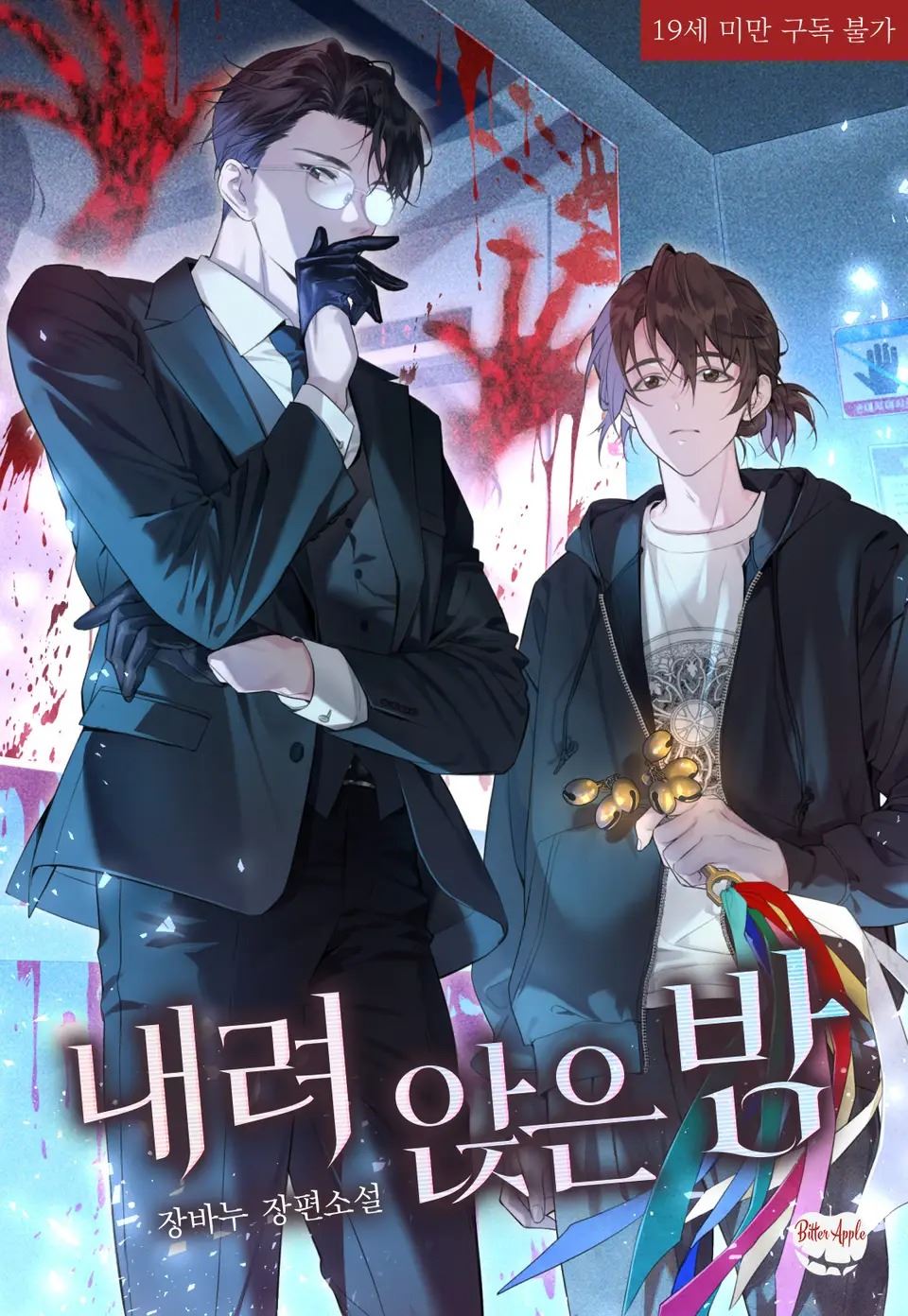
There's a symbol running through this entire sequence that I can't stop circling back to: the barrier. Cheongmun builds cubes—literal transparent barriers—to contain, to protect, to define space. Wonhyo breaks through one with his deity-knife, then gets trapped inside another. But the most important barrier in this passage isn't made of mana. It's the one Cheongmun describes in Wonhyo's own childhood curse: "Unable to form ties with humans... Unable to tie fates with others." Wonhyo is described as a vessel without substance. A container that gods can inhabit but people cannot connect with. He's been isolated, marked as dangerous to everyone around him, told his entire life that proximity to him brings misfortune. And then Cheongmun—an actual top-tier hunter surrounded by literal walls of protective skill—reaches out and touches him anyway. The car scene hits hard on this level too. Wonhyo is hiding under a vehicle, curled small, trying to be invisible. Cheongmun lifts the entire car and finds him. You can't hide from someone who removes your shelter entirely. But he doesn't crush the car. He lifts it gently. Finds the creature beneath. Offers bare hands instead of gloved weapons. And the ghostly energy blocking on contact—that's the thematic payoff. The curse that was supposed to keep him forever untouchable, forever isolated, gets neutralized by the one person who actively chooses to bridge the gap. The title "The Fallen Night" itself feels like it's about surviving in darkness, and this scene captures that perfectly: two broken things finding that their broken edges might actually fit together.
... Read More
'Payment upfront. Photos are 5,000 won per shot; video is 500,000 won per minute.' This line absolutely cracked me open. Wonhyo doesn't just refuse to be exploited—he weaponizes greed against the people trying to exploit him. He turns their own demand for documentation into a transaction they can't afford. And he says it while his survival bar is at 90% and rising. That's not confidence—that's survival instinct masquerading as audacity. The dialogue throughout these chapters is remarkably sharp because everyone is speaking at cross-purposes. The camera person wants evidence. Wonhyo wants to leave. The uncle wants compliance. The scary man wants... something unreadable. And the dead woman's voice at the end cuts through all of it with a proverb that makes no literal sense but carries enormous weight. What's striking is how little Wonhyo actually explains. 'Not a skill, right?' 'No mana reaction.' 'A trace.' Three words that do the work of paragraphs. He's notperforming expertise for an audience—he's communicating in shorthand with people who already know what he's doing. The dialogue trusts the reader to keep up. And the side characters! The forensics team banter at the end—'Sounded like he said the ankle was caught' 'What can I do but go see an ENT?'—this is gold. It grounds the supernatural in mundane workplace humor. They're professionals who just witnessed something inexplicable and their brains auto-correct to jokes because that's what humans do when they're processing shock.
... Read More
Okay so this talisman scene had me genuinely unsettled because the author makes you believe it actually matters. The item description says it blocks ONE strike within one meter, and you think okay that's useful, tank insurance, whatever, and then the monster knows the talisman is gone before it strikes again. That is just cold. It's not even a dramatic reveal—the monster just reacts like it understood exactly what happened. The pacing of the attack is what gets me. First it thumps above her head, she raises her shield, then there's the scream, then the hand passes through the shield like paper, then the jaw twist, then the tongue tearing out. Three hits in rapid succession and each one escalates worse than the last. The first one she could've blocked. The second bypassed her defense entirely. The third ended her. And what haunts me most is her final thought: "Ah, I'm supposed to go in tomorrow—this is bad." Not fear. Not pain. Just the mundane concern about her training schedule. That's the kind of detail that tells you exactly who this character was before she died, and it lands like a gut punch because it's so human. Then we cut to the Special Agency guy on a rooftop eating a cigarette like none of this phases him. The tonal shift is jarring in the best way—dead streamer to calm bureaucrat in one paragraph break. Makes you wonder what the fuck kind of world this is where a hunter's death is just a ticket to pull someone off an hour of leave.
... Read More
I keep coming back to that image. Footprints on the ceiling, above the dead woman, traced in something dark and heavy. Let me sit with what that means. First: inversion. Footprints belong on the ground. When they appear on the ceiling, the natural order is broken. This isn't just a ghost story device—it's a symbolic declaration that whatever killed this woman operated outside the rules of normal physics, normal causality, normal decency. She didn't just die. She was *unmade* according to the wrong geometry. Second: surveillance from above. Someone was watching her from the ceiling. Not hiding—*positioning*. This implies intent, patience, and a complete disregard for the sanctity of private space. The fact that nobody in the room noticed until Wonhyo pointed it out speaks to how invisible certain kinds of violation can be. Third: the ankle metaphor. 'Once you've got your ankle caught by a fiend like that, it'll be an eternity to the next world.' Ankle capture is such a specific image. Not a full body grab, not a throat grip—an ankle. This is about being held back, restrained, prevented from moving forward. The afterlife becomes a place you can't reach because something is literally holding you in place. And the word 'eternity' suggests this isn't temporary. Whatever caught her ankle is still holding it. The talismans, the salt, the bells—all of these are tools of boundary-making. Wonhyo is constantly drawing lines between safe and contaminated, living and dead, inside and outside. The ceiling footprints violate every single one of those boundaries at once.
... Read More
I need to address the narrative voice in these chapters because it is absolutely distinct and I love it. Wonhyo's internal monologue has this wonderful rhythm of spiraling pessimism breaking into sudden bursts of practical panic and then back into self-deprecating humor. Look at this exchange: "Can it be postponed?" "If there were a way, he would have—" Grumbling, Wonhyo lifted his head... He starts to say something hopeful, catches himself mid-thought, and pivots. That's how his brain actually works. And the dialogue between him and Cheongmun is perfectly calibrated—Cheongmun's lines are always short, functional, almost clinical, while Wonhyo's spoken words tend to be fragmented and breathless. The contrast creates this beautiful asymmetry. But what really sells it is the humor that comes from nowhere. When Wonhyo is trying to decide between becoming a carp or a lizard and thinks "The odds were fifty-fifty, after all," I literally laughed out loud. He's about to potentially transform into a fish in a government bathroom and his brain goes: let's consider the statistical probability. And then Cheongmun's deadpan response to everything—"Emergency measure, achieved." "Good."—is comically flat. The author never lets the scene become too melodramatic because Wonhyo's voice keeps pulling it back into relatable, slightly absurd territory. One line that stands out: "Words like first kiss and first mouth-touch thrashed at the bottom, but he shoved them back beyond the unconscious." That's not just humor. That's the narrative voice telling us exactly what Wonhyo is refusing to acknowledge, which is infinitely more interesting than if he'd just admitted it outright.

Leave a comment

You must be logged in to leave comments. or
