The Fallen Night - Reviews

The Fallen Night
+Add to Custom List
Sort
Add review
... Read More
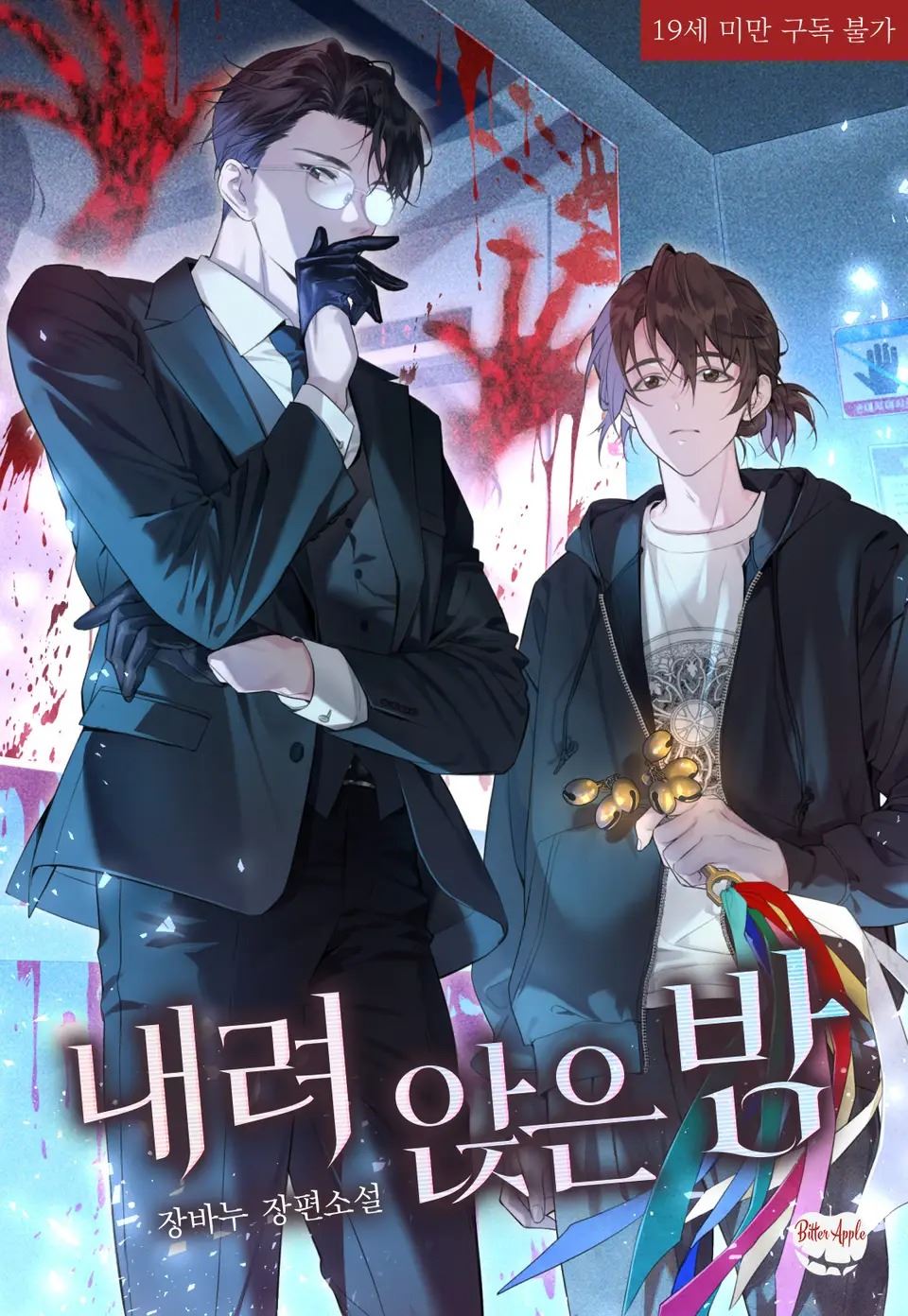
I need to talk about Cheongmun's voice because it is perfectly, beautifully deadpan. This man just asked a caged tiger cub for permission to touch it, and three paragraphs later he's dismantling a group of invasive reporters like he's doing laundry. The reporter tries to play tough: "Are you concealing the truth?" "Don't do this—tell the people the truth…!" And Cheongmun's response? "Incidentally, Special Agency staff can't be filmed without a court-cleared consent order." Then he flicks black current and the guy's eyeglass frames POP. Not a threat. Not a warning. Just a factual statement delivered while casually destroying illegal recording equipment. The humor here is devastating because it's so understated. And Wonhyo's internal monologue is a completely different flavor entirely—frantic, animalistic, full of broken thoughts and "Kyaong! Kyaooo!" sounds that somehow communicate pure panic. When he thinks "Right now—does this look like it's because of posture!" I actually laughed out loud. The contrast between Cheongmun's ice-cold economy of words and Wonhyo's spinning disaster-brain is comedy gold, but it also tells you everything about who these people are. One line that stuck with me: "The long-ailing headache abated for a moment." Cheongmun doesn't say he feels better. He states it like a weather report. Even his pain is reported with clinical detachment. That's a character who has processed every emotion into data points and I find that both heartbreaking and incredibly cool.
... Read More
The stakes in these chapters are layered like an onion made of glass—each layer is transparent, sharp, and cuts you when you touch it. Layer one: physical survival. The ghostly energy bar is at 97.1% with no clear endpoint. Wonhyo's counter-charm buys nothing. He's chewing rice packets and praying the elevator arrives fast enough. This isn't heroic tension—it's desperate, animal-level panic masked by professional composure. Layer two: social danger. The man with the sharp eye. He smiled when Wonhyo accused him of walking on the ceiling. That smile wasn't defensive—it was predatory. And Wonhyo *felt* it. His instinct was to look away, to shrink, to survive. The power dynamic in that elevator is terrifying because the reader understands that Wonhyo, despite his skills, is outmatched by whatever this man is. Layer three: karmic consequence. Wonhyo explicitly thinks about this: if he leaves the energy unpurified, it creates karmic entanglement that rebounds on him. He's not just risking his life—he's risking his spiritual integrity. The salt he gives his uncle isn't charity; it's damage control for people who are now contaminated by proximity. And then there's Cheongmun. Why did he follow? The text refuses to answer, which is the highest-stakes move of all. We don't know if Cheongmun is ally, threat, or something in between. But the fact that he moved *before thinking* suggests an instinctive pull—toward Wonhyo, toward danger, toward a conflict that hasn't been named yet. The deepest conflict here isn't man vs. ghost. It's the question of who gets to decide what's safe, and what happens when the person best equipped to judge is the one standing closest to the edge.
... Read More
There's this moment where Wonhyo checks his almanac and realizes today is a dragon day. The text says: "Just out from tiger and already dragon. Truth be told, he had no sense for what he'd become on such days; he had deliberately holed up at home whenever the date corresponded to 'dragon.'" And then he's forced out anyway. This is such a dense symbolic moment. The dragon represents transformation, destiny, something untamable. He's spent all this time trying to control his environment—setting up barriers, calculating ghost-load, avoiding certain dates, rationing his talismans—and the universe just laughs in his face. The five-direction banner gives him a quest that can't be satisfied by staying home. The fairy's tie pulls him toward someone he wants to avoid. His own body reacts to the dragon day with this physical tickling in his throat when he tries to refuse. It's like the narrative is saying: you can prepare all you want, you can lay out your talismans and calculate your boundaries, but some forces operate on a level beyond your control. The dragon doesn't care about your plans. And then there's the saner interpretation—the entire novel seems to be built around this tension between human agency and cosmic determinism. Wonhyo is constantly making choices (going south instead of east, calling his uncle, deciding who to contact) but every choice seems to be funneled toward the same destinations. Is he truly free, or is he just dancing to music he can't hear? The ghost-load itself is another symbol I can't stop thinking about. It represents accumulated harm, unresolved grief, the physical weight of unfinished business. And the fact that it accumulates differently in different spots—some places where it climbs fast, others slow—suggests that trauma leaves patterns, that you can map where the hurt concentrates.
... Read More
There's something deeply significant about a talisman—a piece of yellow paper, folk magic, shamanic tradition—functioning as a status-window-item in a world dominated by Towers and mana and skill systems. The author doesn't explain why this talisman exists, who made it, or how ancient Korean spiritual objects fit into a LitRPG framework. And that absence of explanation is the point, I think. The world has these categories: items that display descriptions, items that consume mana, items only awakeners can use. But the talisman operates on a different logic. It detects 'killing intent' (살기)—a concept rooted in East Asian spiritual traditions, not in game mechanics. The monster bypasses it not by being stronger, but by understanding it. Knowledge beats system. The recurring symbol of names and identities is everywhere. CandyCandy is a nickname, a brand, a stream persona. The No. 1 ranked person has a name that cannot be spoken, auto-filtered by AI. Wonhyo is defined by what he isn't—production-type, no offensive skills, first-floor stumbling block. Cheongmun's title (Deputy Manager, Special Agency) is given but his personal information is redacted even from us, the readers. Identity in this world is either performance or erasure. The talisman itself is anonymous—no maker listed, no origin. It just is. And in the end, CandyCandy's body is unidentifiable except through the clips her chat preserved. She becomes content. Her death is data. That's the novel's quietly devastating thesis about what happens when everything—including death—gets absorbed into systems.
... Read More
I have never in my entire reading life expected a protagonist to be saved from supernatural transformation by a kiss, yet here we are and I am not even mad about it. The scene in that bathroom was absolutely electric, and not just because Wonhyo was on the verge of turning into some kind of reptilian fish monster. Cheongmun just... calmly slides down his mask, presses his mouth to Wonhyo's, and suddenly the ghostly energy gauge drops from 95% to safe levels. The author didn't even give us a dramatic pause or a blush. Just: "An unknown force has partially purified ghostly energy. In progress… 66%." And Wonhyo's entire internal monologue is just pure unadulterated chaos. He's thinking about how nobody has ever touched him this directly, whether this is somehow cursed for Cheongmun, and then—right when you'd expect some romantic beat—he immediately starts worrying about thanking the guy without sounding suspicious. That's peak Wonhyo. And Cheongmun's reaction? Absolutely composed face, one pace step back, completely unreadable. The contrast between what just happened and how casually he treats it is everything. The physical proximity, the urgency, the fact that this was purely practical but felt like the most intimate thing either of them has experienced—that tension is loaded. I kept re-reading that passage where Wonhyo's body heat response kicks in and his knees buckle. The author wrote: "As it faded, his knees buckled. The hand at his waist steadied him upright." That single detail says so much. One moment they're in emergency mode, the next there's this quiet physical awareness between them that neither of them can ignore anymore. I need to know what happens when they have to do this again. Because let's be honest, it can't just be a one-time thing, and the fact that neither of them is bringing up the obvious is making me absolutely lose my mind.
... Read More
I need to talk about how the author uses that status window. Every time Wonhyo does something—steps outside, enters the apartment, summons the trace—the bar climbs. 43.7%. 44.1%. 49.3%. 63.77%. 77.1%. 90%+. 97.1%. This isn't filler. This is a ticking clock embedded in the narration. Each number is a pulse, and each pulse gets faster. By the time he's in the elevator at 97.1%, you're not reading—you're counting. The structure *is* the anxiety. What's clever is how the author withholds resolution. Wonhyo tries a counter-charm. It vanishes without buying him even a brief delay. The elevator arrives and the scene cuts. No release. Just the bar, still climbing, and the man still staring. Compare this to the earlier chapters where the pacing felt more relaxed—taxi rides, internal monologue, casual complaints about fate. The shift from introspective to urgent happens gradually but unmistakably. By Chapter 7, every paragraph feels like it's trying to escape the page. And the chapter break itself—that moment where the dead woman's voice finally speaks, followed by Cheongmun *moving before thinking* and chasing after Wonhyo—is a perfect cliffhanger structure. The action shifts from Wonhyo's perspective to the observer's perspective mid-scene, which creates this weird disorientation. You're left wondering: why did Cheongmun follow? What was so urgent that he abandoned the scene?
... Read More
What strikes me most about these chapters is how the worldbuilding just... exists. It's not lectured at you. You're reading along, and suddenly you've absorbed an entire infrastructure of hunter management, building safety ratings, system-certified skills, and the bureaucratic reality of cross-jurisdiction investigations—all without the author stopping to explain anything. The apartment complex scene is where this really shines. IBLS level-2 facilities, auto-lock doors triggered by rift detection, motion sensors on the roof and exterior walls. These details matter because they establish that the world has standards, protocols, and limitations. This isn't a world where everyone just handles monsters hand-to-hand—there's infrastructure trying to keep people safe, and it's aging, and it's barely adequate for B-rank and above. The fact that Cheongmun notices all this and mentally files it away tells us he's the kind of protagonist who sees the environment as part of the puzzle. And then there's the contrast when we shift to Wonhyo's world. His talisman workspace, the incense, the spiritual invocation—'Ilbongtucheonjeong, Ilseogwisinyeong, Taesanghwasamcheong. Geupgeup ye yullyeong.'—this reads like someone who actually knows the tradition. The smoke being drawn into the characters is such a vivid image. But then it's immediately undercut by the mundane reality: labor law protections for production-type awakeners, mana depletion being a genuine health risk, freelancers having no such protections. This is a world where the mystical and the bureaucratic coexist, which feels far more interesting than a world that's purely one or the other. The unmanned taxi, the phone alarm set for zodiac shifts, the legal uncle whose name displays as 'Do Not Answer'—these details accumulate into a portrait of a society that has adapted to supernatural threats in ways both practical and deeply strange. It doesn't feel like a game world dressed up as reality. It feels like reality that happened to also get magic.
... Read More
Let me just say this: the imagery in these chapters is brutal. Not in a gore way, but in the sense that every frame feels like a horror movie still. The Tower's blackish-red glow shimmering like a lure outside the taxi window—that alone tells you everything about this world. There's a monolith of some kind that people want to climb, and it *pulls* at you visually even through prose. But the apartment scene is where it really lands. Wonhyo steps in and the energy jumps five percent just from crossing the threshold. Five percent. That's not background atmosphere—that's an active contamination event. And then the stench: blood, metallic, layered with something else. The prose doesn't tell us what the other smells are, which is brilliant. It forces you to imagine worse than what's described. The ceiling footprints are the standout image. Across pristine white ceiling paper, scattered like someone walked through black paint, stopping directly above the dead woman. It's such a simple visual but it inverts the entire sense of safety in a room. Floors are safe. Ceilings aren't supposed to have footprints. And the elevator. Wonhyo chewing that rice talisman while the man stares at him, the bar at 97.1%, the doors slowly closing—that's a horror scene disguised as a transit moment. The claustrophobia of a metal box with someone who's clearly dangerous, with no escape, with his life literally measured in percentages... that's the kind of thing that sticks with you.
... Read More
Let's talk about what's at stake here because the author makes it uncomfortably clear very quickly. CandyCandy is an A-rank capable hunter with a shield skill, a tank build, and enough defensive capability to survive in an A-rank dungeon. She dies from two invisible strikes inside her own supposedly mana-ward-protected apartment. That means the threat isn't just stronger than her—it operates outside the system she relies on. No mana waves detected. No F-grade or above signatures. Just a ghost that exists beyond mechanical detection, or perhaps something that traditional classification can't capture at all. The stakes escalate from personal survival to institutional horror across these chapters. First it's 'can this hunter survive tonight?' Then it's 'what killed her and why can't we detect it?' Then it's 'the Special Agency's top investigator is going to handle this personally because normal procedures don't apply.' And underlying all of it is the question of the Haetae Guild master, the person who climbs solo, who has entered the Tower exactly thirty-six times, whose rank can't be properly evaluated because the ranking system requires team-based clearing. The system itself might be inadequate. What makes the conflict work is that the author never lets you feel safe for more than a paragraph. CandyCandy buys insurance. The insurance burns. The monster appears. She raises her shield. The shield fails. She screams. Her head comes off. Every safety net the narrative provides gets removed one layer at a time until there's nothing left but the cold wind on Cheongmun's rooftop and a man who isn't surprised by any of it.
... Read More
The pacing in this batch is genuinely impressive, and I want to talk about why because it's not accidental. The author has mastered something that a lot of web novel writers struggle with: knowing when to compress and when to linger. Chapter 5 is all investigation. It moves from the outside of the building inward—Cheongmun surveys the perimeter, checks the security systems, ascends to the crime scene, examines the body, and then the investigation pivots from physical evidence to the System's answers. Each step narrows the possibilities further, and the tension comes from the narrowing, not from action. By the time the Three Questions skill returns 'no' to every category, we've been locked in that tightening circle with the investigators. The chapter ends on the division chief's proposal to call a shaman, which is a perfect pivot point—it's both a resolution (we have a plan) and a question mark (who is this person and what will they do?). Chapter 6 shifts to Wonhyo and immediately changes the texture of the narrative. The talisman-crafting scene is slow and ritualistic—you can practically smell the incense. Then the premonition hits, the phone rings, and the pace snaps taut. The journey to the scene is brief, almost functional, but packed with worldbuilding and personal stakes. That line about turning into a pig from a ghost encounter on a mountain is the kind of thing that breaks tension at exactly the right moment—it makes you exhale before the next chapter hits you. Chapter 7 opens with the holographic playback of the stream, which is a brilliant structural choice because it retroactively recontextualizes everything we just read. The yellow talisman burning in midair—that's the payoff the previous chapters were building toward. And the chapter closes with Wonhyo's internal conflict about the zodiac clock, which transforms what could be a clean resolution into a new problem. The author never lets a chapter end on a note of completion. Every section transitions into a new uncertainty. That's how you keep someone up past their bedtime.
... Read More
The stakes in these chapters operate on at least three simultaneous levels, and the brilliance is that they feed each other without the author ever stating them outright. On the surface, there's the murder investigation: someone killed a hunter in a secured apartment, and nobody can figure out how. That's the immediate threat—a killer who can bypass IBLS level-2 facilities, who leaves no mana traces, who operates in a way that defies the System's categories. The victim's wounds suggest vindictive intent; this wasn't random. Someone wanted this person dead in a very specific way, and the extra stab wounds on the hands suggest they wanted something from her beyond her life. But underneath that is Wonhyo's personal stake, and it's ticking. He's already been cursed—he turned into a pig after contact with a ghost. He's rushing to this scene before midnight because after that he becomes a tiger, and neither form is safe to be in around strangers or during an active supernatural incident. Every minute he spends at the crime scene is a minute closer to losing control of his own body. That's intimate, physical stakes that the investigation plot doesn't even know about yet. And then there's the institutional conflict—the tension between the Special Agency, the local police, and whoever or whatever is behind this killing. The division chief pushing to bring in a shaman against the Agency's visible skepticism creates friction that could escalate. If the authorities can't agree on what they're dealing with, they can't coordinate a response. And a killer who operates outside the System's categories doesn't need to defeat them in combat. He just needs them to keep arguing while he strikes again. The scene that hit me hardest wasn't the investigation or the murder description—it was Wonhyo setting his alarm. 'It had been less than a day since he'd returned after turning into a pig from contact with a ghost on the mountain.' He's already injured, already compromised, and he's still going to the scene because the call came in and there's no avoiding it. That's not heroism. That's obligation. And it's far more compelling because of it.
... Read More
CandyCandy is such a vivid character in such a short amount of space and I need to talk about it. The author gives us a streamer persona—greasy hair, pastel pink-and-mint gradient, defensive skills, aggro manipulation—and then strips all of that away in two chapters. The first time we see her, she's roasting her chat, making jokes about her body type, buying items and showing them off like a content creator doing a segment. She feels alive. Then she's dead and the only thing left is what viewers clipped and edited. But here's what actually made me care: the small details. She drank from a tumbler, shook it to hear if there was any liquid left, scraped the straw against the bottom. These are tiny observations that make her feel like a real person with a real apartment and a real routine. And her reaction to the talisman—she immediately thought about buying more stock. That's not bravery, that's just how her brain works. Practical to the end. Then there's Wonhyo, who reads the Tower's unilateral notice and thinks "Good for them" and goes back to sleep. He's a production-type with no offensive skills, stuck at the first floor, and he has this strange acceptance about his position. There's no bitterness in his internal monologue, just a quiet resignation. Meanwhile Cheongmun—Deputy Manager, Special Agency, some identity that can't be spoken—sits on a bench in below-zero weather wearing only a suit jacket, crushes a cigarette into nothingness with a black magical current, and receives news of a death without moving a muscle. Three characters, three completely different relationships to this world. CandyCandy lives in it and dies in it. Wonhyo tolerates it. Cheongmun investigates it. And the No. 1 ranked person exists somewhere above all of them, climbing solo, thirty-six entries rewriting records, their name filtered by AI. That hierarchy is everything.

Leave a comment

You must be logged in to leave comments. or