The Dragon King’s Betrothal - Reviews

The Dragon King’s Betrothal
+Add to Custom List
Sort
Add review
... Read More
Okay so let me just say—this opening is a masterclass in slow-burn dread. The author drops us right into Jingyao's backstory with her birth on Qingming Festival, premature, sickly, and then BOOM, the Chongxi ritual at age ten. That scene with the red rooster and the blood-moon? Chilling. And the way the plot threads are woven together is brilliant. The mother's warnings about men, the jade plaque, the near-misses with death (the truck, the bus crash)—all of it builds this underlying sense that Jingyao is somehow protected but also trapped. And then university hits, and we get Song Lin. The senior who seems perfect on paper but whose car ride takes a wrong turn into nowhere. That moment when Jingyao realizes they're not on the road back to campus? My heart dropped. And those whispers in the KTV about someone sitting in the corner who disappears when looked at? The author is playing with us like a cat with a mouse. The plot has this beautiful dual tension—what happened with the Chongxi husband, and what is Song Lin actually up to? Are they connected? I'm already theorizing that Song Lin might not be entirely human, or at the very least, he's connected to the supernatural world Jingyao was pulled into as a child. The pacing is deliberate but never boring. Every chapter ends on a hook that makes you immediately want the next one.
... Read More
The pacing in these chapters is wild. You go from pure horror — black energy coiling around your neck, a corpse-faced Song Lin floating toward you, thunder splitting the sky — and then literally two pages later you're watching Jingyao threaten to smash a spirit tablet to force her husband to appear. That tonal whiplash is intentional and honestly it works because Jingyao's voice is so grounded. She's terrified one moment and bargaining the next, and the chapter transitions feel natural rather than jarring. Chapter 7 ends with the grandmother reveal and Chapter 8 immediately pivots to Jingyao rushing to see her unconscious father. No breathing room, which is exactly what you want after a shock like that. The author doesn't let you rest. But then within Chapter 8, there's a comedic beat — Jingyao calling celebs 'husband' as an excuse — that gives you a moment to exhale before Yu Qingzhou kicks her off the bed. It's a rollercoaster and I was locked in the whole time. One structural choice I found interesting: the Yu Qingzhou confrontation scenes are short and punchy. He appears, he threatens, he leaves. No drawn-out dialogues. This keeps him mysterious and dangerous, which serves the story well. If he stayed in the room for five pages chatting, he'd lose his edge.
... Read More
Let me just start by saying the ritual chant from Chapter 1 is absolutely gorgeous: 'Hongyue Zhiye, Longwang Quqin. Xuejia marries off a daughter; to betray is to perish.' That's the kind of line that sticks in your head for days. The author clearly understands how to use ceremonial language to create atmosphere, and it contrasts beautifully with the everyday dialogue that follows. Jingyao's conversations with Su Weiwei feel natural and contemporary—'You won't blame me, will you?' 'I really have to thank you for that!'—they sound like real college girls talking. But then you have the mother, whose dialogue shifts dramatically depending on the context. When she's explaining the Chongxi, her words are heavy with emotion: 'Jingyao, don't blame us for making that decision back then. We just wanted you to live.' That's raw and believable. And Song Lin's dialogue is carefully calibrated—he's polite, gentle, almost too perfect. 'I wonder if I have the honor?' That formal, slightly archaic phrasing feels intentional, like the author is subtly signaling that this character isn't entirely ordinary. The narrative voice itself is also worth noting. It's first-person, which puts us directly inside Jingyao's head, and the tone shifts from casual and slightly sarcastic (her internal monologue about Su Weiwei removing the jade plaque) to genuinely frightened (the car scene). The author doesn't over-explain things, which means the dialogue has to carry a lot of subtext. When Jingyao says 'We'll see' about Song Lin, it's not just hesitation—it's the sound of someone torn between years of conditioning and a desperate desire for normalcy. The voice is consistent and distinct, and I can hear Jingyao's personality in every line.
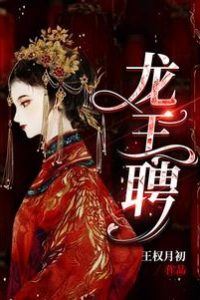
... Read More
Okay so let me just say this — the grandmother reveal in Chapter 7 is genuinely one of those moments where you physically stop reading and just stare at the screen. Jingyao has these warm, vivid memories of her grandmother holding her hand, taking her to visit relatives, the whole thing. And then her mom just drops 'you don't have a grandmother' like it's nothing. My brain immediately started racing: whose memories are these? Did Song Lin plant them? Is this some kind of possession or identity swap situation? The text says 'who was the grandmother in my memories?' and I am NOT okay with this unanswered question. And then on top of that, the father being in a coma? Song Lin escaping as black energy? Yu Qingzhou's identity as the husband on the ancestral tablet? The plot is moving at a furious pace and every chapter ends with a new mystery that makes you immediately open the next one. The only thing I'm slightly confused about is the timeline — did Jingyao actually go back in time or is she in a different body? The text hints at it with 'should aim for a better reincarnation in your next life' but never confirms it outright. That ambiguity is both a strength and a frustration. I want answers but I also kind of love the mystery.
... Read More
I need to talk about Jingyao's mother because WOW. She's one of those characters who is simultaneously loving and deeply controlling, and that contradiction is fascinating. She knelt before the Kanshi Xiansheng to save her daughter's life—that's devotion. But then she raises Jingyao with this constant fear-mongering about men, about loyalty to a husband she's never even met? That's manipulation wrapped in maternal protection. The line 'he is right by your side. He knows your every move' gave me actual chills. Is the mother genuinely scared for her daughter, or is she enforcing some kind of supernatural contract? And Jingyao herself—she's caught between rebellion and obedience. She questions the Chongxi, she wants to live a normal university life, but she's also deeply conditioned by years of her mother's warnings. The scene where she's forced to kneel all night after the boy in high school got into an accident? That's not discipline, that's punishment for existing. I'm also intrigued by Su Weiwei as a character. She's the supportive best friend who pushes Jingyao toward normalcy, but even she accidentally removes the jade plaque—that moment where Jingyao feels the cold spreading from Su Weiwei's hand? Subtle foreshadowing or just narrative coincidence? And then there's Song Lin. On the surface, he's the perfect love interest—handsome, kind, shares interests. But his silence in the car, the way his expression changes, the glance in the rearview mirror... something is OFF. I can't tell if he's a threat or if he's part of the Chongxi husband's story. The relationship dynamics here are layered and I'm here for it.
... Read More
I have to be honest—the sleep paralysis scene in Chapter 2 wrecked me in the best way. Not because it was romantic (though there's something weirdly intimate about it), but because it was so visceral. Jingyao can't move, can't speak, and this figure in red is just... watching her. 'His eyes were icy, and under his stare, I felt as if I had fallen into an ice cellar, my entire body stiffening.' That description is haunting. It's fear and fascination mixed together, and I think that's exactly what the author is going for with the romantic tension here. The Chongxi husband is supposed to be this scary, unknown entity, but there's also this weird sense that he's PROTECTING her. Every time danger comes close, she survives. The truck swerves. The bus crashes. And now this man in red appears in her dorm room. Is he a ghost? A spirit? Something else? The emotional core of this story feels like it's built on this question: can Jingyao ever have a normal life when she's bound to someone she can't see, can't understand, and maybe can't even trust? And then Song Lin enters and offers her something she's been denied—normal romantic attention. But is it real? The tension between the invisible husband and the very present senior creates this emotional push-pull that's incredibly compelling. I found myself wanting to reach through the page and shake Jingyao, telling her to run, but also hoping she'd find some kind of happy ending. That's the mark of good emotional writing—you care about the character even when you're screaming at them to make different choices.
... Read More
'Shameless.' Two words. That's all Yu Qingzhou says after Jingyao tries to explain that calling celebrities 'husband' counts. I literally laughed out loud. The man is ruthless with his comebacks and his tone is consistently this perfect blend of cold, mocking, and secretly intrigued. The dialogue between Jingyao and Yu Qingzhou has this incredible push-and-pull energy. He grabs her by the collar, pins her chin, leans over her — every physical action is paired with dialogue that's equal parts threatening and almost playful. 'Have you called other men that before?' is such a petty, jealous question coming from a guy who literally just crushed someone's head. The contrast is delicious. Song Lin's voice is equally distinct — that sneering, theatrical quality. 'You want to know? But I won't tell you. All you need to know is that you should aim for a better reincarnation in your next life.' Chilling and smug in the same breath. He sounds like someone who enjoys his own voice too much. Jingyao's internal monologue is where the real personality shines though. Her panic, her quick calculations, the way she fawns when she needs to ('I wouldn't dare, I wouldn't dare') — she sounds like a real person trying to survive supernatural idiots. The narrative voice is consistently witty without undermining the tension.
... Read More
There's this recurring question hanging over everything: who is Jingyao, really? The solitary grave she keeps circling — is it Song Lin's grave or something more? The fact that she wakes up beside it suggests a connection, maybe even a destiny she doesn't understand yet. And then the grandmother memories that aren't hers... it all points to this theme of stolen or implanted identity. The Yupai itself is loaded with symbolism. It's a talisman meant to protect her, to bind her to Yu Qingzhou, but it keeps disappearing. First it's around her neck, then it's gone, then Yu Qingzhou presses a cold one into her hand. Each time it vanishes, something bad happens — Song Lin gets her, her father gets hurt. The Yupai isn't just a plot device; it represents her tether to safety and to this strange marriage she never chose. And Yu Qingzhou as the husband on the ancestral tablet — that's deeply symbolic too. She's married to a dead man, or a spirit, or something that exists between worlds. The ancestral tablet is usually for the deceased, yet he's clearly very much present. This blurring of life and death, past and present, memory and reality is the core texture of the story. The grandmother question ties into it perfectly: if your memories aren't yours, who are you? And if your husband is a spirit in a tablet, what kind of marriage is that?

Leave a comment

You must be logged in to leave comments. or
