The Domineering Boss’s Assistant Refuses The Grind - Reviews

The Domineering Boss’s Assistant Refuses The Grind
+Add to Custom List
Sort
Add review
... Read More
The atmosphere in these chapters is absolutely cinematic. Let me paint what I'm seeing: Late autumn, rain falling, neon lights reflecting off wet streets. A convenience store with fluorescent warmth spilling onto the sidewalk. Chi Ke in his thin shirt shivering at the keyboard, fingers hovering before typing out a name. The girl in work clothes sliding a paper cup of steaming milk toward him. Then him walking out into the foggy night, and RIGHT AFTER he leaves, headlights flash — a motorcycle that unknowingly scared away stray dogs. The author is clearly building a world where these small, almost film-scene moments matter. The rain isn't just weather — it's a mood. The convenience store isn't just a location — it's a liminal space where characters cross paths. Ji Qian arriving in a windbreaker and boots, hair and shoulders wet but not disheveled, eyes carrying 'a natural smile' — this is visual storytelling at its finest. And those gold-rimmed glasses making the neon circles blur even more? That's such a specific, intimate detail. You can feel Chi Ke's fatigue, his slight disorientation in this new world, through that simple observation. The contrast between the cold outside and the warm interior of the store is doing a lot of emotional work too. It's almost like the convenience store is the only safe harbor in a city that feels increasingly hostile and unpredictable.
... Read More
There's this one moment that got me. Chi Ke picks up the thick Civil Code book, thinking: 'whether it's Leng, Li, or Sima, or any other domineering CEO, they all need to follow the law.' He literally stuffs the heavy book into his bag like it's a weapon. A legal text as armor against romantic nonsense. I laughed out loud, but also — that's genuinely sad, right? This man woke up in someone else's life with no money, no phone, no identity, and his coping mechanism is threatening to prosecute CEOs with civil law. But strip away the comedy and there's real grief here. 'Someone who had already died once didn't want to die again.' That line hit different. He's wearing someone else's face, borrowing their phone, eating their food, living their entangled web of relationships — and he apologizes to a dead man for taking up space. 'Sorry for borrowing your identity without permission.' He's so polite about his own displacement it broke my heart a little. Then Phoenix Legend plays, and for the first time that night, he smiles. Two worlds overlap. The songs are the same. The basic structure remains. In a moment of total disorientation, music becomes an anchor — a tiny piece of home he can grab onto. It's such a small thing but it carried so much weight. And then Leng Yunting screams about burying the world. The tonal whiplash from intimate grief to unhinged romantic panic is exhausting just reading it. I feel like Chi Ke is carrying the emotional labor of an entire support system while the actual love story hasn't even properly started yet. When does Mianmian get to know the real Chi Ke? When does the boss realize his special assistant isn't just a replacement but someone entirely new? I need answers.
... Read More
So many layers here I want to unpack. The milk. Hot milk in a paper cup passed from a stranger to another stranger in the middle of a cold rainy night. It's such a small thing but it represents something huge — the idea that kindness exists in unexpected places, that you don't have to earn warmth, it can just be given. Chi Ke, who has lost everything and gained nothing in his transmigration, receives this tiny act of care and it literally changes how he experiences the cold. The rain is doing thematic work too. It's always raining in these chapters — the 'pouring foggy night,' wet hair and shoulders, drizzle outside the window. Rain as a boundary between the old life and the new, rain as something you walk through rather than around. Chi Ke walking 'into the pouring foggy night against the cold breeze' and not feeling cold — he's already crossed some internal threshold. The stray dogs being scared away by motorcycle headlights right before Ji Qian arrives. Fate intervening in tiny, unnoticed ways. Two people who will matter enormously to each other touching the same space within minutes, separated by an invisible thread of timing. And the Sunrise memory — Chi Ke watching the river turn red that morning before his death, never expecting to disappear by sunset. Now he's alive in another life, and the sunrise motif returns. What does it mean to survive something you thought would kill you? What does it mean to wake up in a world that doesn't know you yet? The theme of coincidence versus destiny is woven through every scene. Ji Qian himself says it: 'Maybe being late is also good luck.' The author keeps asking the same question — is any of this random, or is something guiding them toward each other?
... Read More
I need to talk about the opening scene with Ji Qian because it hit me in a place I did not expect. Chi Ke is feeling guilty. Guilty about what? About working overtime. About possibly cancelling dinner plans that were never even confirmed. And Ji Qian's response? Understanding. Natural. Like he would say the same thing if the roles were reversed. And that is what makes it hurt so much. Because Ji Qian is being perfectly normal, and yet Chi Ke still feels like he owes him something. The waffle tasted bland. Not because it was bad - because Chi Ke was too distracted by his own guilt to enjoy it. This man cannot just have a casual meal without his brain turning it into some kind of emotional accounting problem. "Next time, it's on me." - Ji Qian says this while watching Chi Ke get into the car, and Chi Ke literally has the words "there won't be a next time" on the tip of his tongue. But he swallows them. He swallows them down like he swallows every uncomfortable feeling. And then Ji Qian tells the driver "he gets carsick" like he knows this already. Like he has paid attention to Chi Ke before. This guy has zero sense of boundaries AND he is quietly observant in the most annoying way possible. Meanwhile, Chi Ke is over at the dance academy dealing with Sima Yichen, and the romantic tension between them is practically vibrating off the page. Sima Yichen smiling through the rejection, Chi Ke's cold shoulder, the flower bouquet collision - it is all so charged. But what really got me was that background moment where Chi Ke just sits there, chin on hand, and sends Sima Yichen a message without words. Sometimes the quiet moments hit hardest.
... Read More
I am still not over the dialogue in this section. Let me just say: the exchange between Chi Ke and Ji Qian reads like two people who are perfectly matched in speed and sardonicism. Chi Ke: "I want compensation." Ji Qian: "What do you want?" Chi Ke: "Dr. Ji." Ji Qian: "Huh?" Chi Ke: "The second thing is, I want you." Like. That's it. That's the scene. No preamble, no romantic buildup, just a man laying out his terms like he's ordering food and then dropping a bomb three seconds later. And Ji Qian's response? "Me?" / "You." / "I'm honored." / "You're worth it." He's playing along, sure, but there's a genuine warmth underneath the banter that makes it land. Then the absolute chef's kiss: Ji Qian: "Why me?" Chi Ke: "Because you're handsome." Ji Qian: "Deal!" I SCREAMED. This is the kind of dialogue that makes you throw your phone across the room because you're laughing and crying at the same time. It's so casually devastating — Chi Ke could have said a hundred honest things, and he says THE ONE THING that lets them both keep walking without having to actually be vulnerable. And Ji Qian? He takes it. He runs with it. "Deal!" Like he's sealing a contract, not deflection so hard it becomes its own kind of truth. The narrator's voice is equally sharp. Lines like "There wasn't a better doctor in the world to swindle than Ji Qian" and "The last person he should've chosen turned out to be the only choice" — these are the kind of sentences that belong on quote cards.
... Read More
I need to just stop and appreciate how Ji Qian sounds in this text because frankly it's rare. "A tiger could've been domesticated, and a rooster could've laid an egg in the time you took—why are you only—ah! Damn! You scared me! Why are you here?!" That is NOT how most novel characters talk. That is how someone actually talks when they're panicked, tired, and holding a sick child. The sentence breaks off mid-rant. The "only—ah!" transition from anger to shock feels unprompted, involuntary, like the brain literally couldn't process the visual information fast enough. And then immediately after, he's softening his voice to give Chi Ke breathing instructions. One paragraph he's cursing at a delayed driver, the next he's coaching someone through hyperventilation. The voice shift is seamless and entirely unforced. Compare that to Chi Ke's dialogue, which is almost entirely functional — short, clipped, practical. "Explain later. No time right now." "Have you seen a little boy?" He doesn't perform emotion, he dispatches it. That contrast between the two characters' speech patterns tells us everything about who they are without a single narrator intrusion. And Teacher Cao! "Well… uh…" scratching his head before delivering the name. The hesitation IS the character. He's walking a tightrope between corporate courtesy and actual concern, and the author lets us hear every wobble.
... Read More
This chapter is a masterclass in controlled pacing. It opens with an explosion - the scandal, the yelling, the desk slamming - but instead of riding that wave, the author immediately deflates it into office mundanity. Clock ticking. Documents being organized. Green tea being consumed. This ebb and flow creates a rhythm where the real drama happens in silence between words. The Yanping assignment gets dropped like a bomb but the emotional payoff is delayed until the very end when we realize Chi Ke has been planning this escape route for weeks. The flower delivery subplot operates on multiple timelines - past actions withSimai Yichen, present consequences with Leng Yunting, future implications for Mianmian - and the author threads them together without ever stopping the forward momentum. What could have been a chapter of exposition becomes a slow reveal where every line of dialogue carries double meaning.
... Read More
The single greatest worldbuilding paragraph in this entire excerpt isn't about magic systems or political intrigue or anything fancy. It's about Chi Ke buying four pieces of clothing for 100 yuan at a street stall because 'the styles were basic, and the fabric was rough, but they were warm and cost-effective.' That's it. That one detail tells you SO MUCH about this character's life, his priorities, his entire relationship with the world around him. He's not pretending to be richer than he is. He's not performing class mobility through fashion. He showed up to meet a billionaire in a bulky jacket and plain jeans and when told to change, his first instinct was to ask whether the cost would be deducted from his paycheck. The man is genuinely, deeply poor and proud of the survival that comes with that honesty. Then Leng Yunting drags him into a high-end suit that's 'nice—simple, elegant, and understated' but 'wasn't warm.' Of course it wasn't warm. Of course it wasn't. The capitalist imagination cannot conceive of cold as a real problem. Chi Ke standing in that restroom, changing into clothes that look right but feel wrong, is such a perfect visual metaphor for what this whole situation is—everything positioned correctly on the surface, nothing actually protecting him from the elements. The hospital scene with the CCU sign, the frosted glass doors, the machines around the bed—these details ground the story in a physical reality that feels lived-in. Not a glossy fantasy world. A real city with street markets and chilly nights and hospital corridors that smell like antiseptic.
... Read More
I'm going to be honest with you, I did not expect to be emotionally wrecked by a hospital scene in a web novel but here we are. The sequence hits in this specific order and I think that's deliberate: First the physical shock — Ji Qian holding a small, feverish, frostbitten body. That image alone is enough to make anyone's chest tighten. Then the temporal pressure — the car isn't here, the driver disappeared, the boy is getting worse by the minute. Then the confrontation — not between the two men (they already sync up beautifully), but with the doctor who absolutely EATS them both alive. "Is this how you take care of a child?" What killed me wasn't the doctor's anger though. It was what happened AFTER she left. Chi Ke pulls his arm free and mutters "taking the blame for no reason" — that tiny gesture of defensiveness, that reflexive pride that won't let him accept a kindness he didn't earn. And Ji Qian, who just got scolded for something he didn't even do, says "Words once spoken are like water spilled" and walks out to give them privacy. He knew exactly what was happening. He chose to remove himself. That's not romance. That's not even friendship in the conventional sense. That's two men who are learning, in real time, how to care about the same fragile thing without stepping on each other's feet. And the text never says "they cared about each other." It shows us through water bottles on a bedside table and excuses to leave rooms. God, I love writing that trusts its readers this much.
... Read More
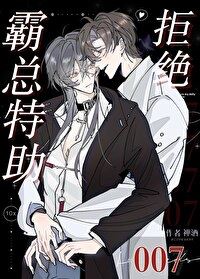
Okay, I need to talk about this setup because it hit me harder than I expected. The protagonist dies from overwork—actual work death—and gets transmigrated into one of those abysmal CEO romance novels. But here's the thing that actually made me sit up straight: he's not the male lead. He's not even the poor substitute lover. He's Chi Ke, the special assistant. The footnote character. The guy who exists purely to fetch coffee, answer 3 a.m. calls, and suffer silently while the main characters do all the dramatic crying. And then the original owner commits suicide. Not in the book, apparently—but in this version, in this body. There's a suicide note found in the pill bottle. 'I wanted to see the grasslands and deserts, watch my younger brother go to college, pay off my debts.' This is the guy's entire death wish, reduced to a three-line note, and nobody in the novel—not Leng Yunting, not the substitute lover, not even the narrator—cares enough to mention him again. The author literally drops him from the story. 'Special Assistant Chi' becomes just 'The Special Assistant' and vanishes. That's a plot choice that actually made me angry on his behalf. It's a meta-commentary on how disposable side characters are, and now our protagonist has to live inside that realization. The narrative structure is basically: someone dies, wakes up, realizes he's in a book, discovers the original version of himself is dead, and now has to figure out what to do. That's a strong opening hook. It raises questions immediately—will he try to change his fate? Will he confront Leng Yunting? What happens when the plot demands the assistant do something terrible for the sake of the main love story?
... Read More
The phrase 'let it go' appears in this chapter like a ghost and it haunts everything. First it's Chi Ke's former colleagues telling him to let his empire go, to move on from the loss. Then it's the dream itself becoming a symbol of everything he couldn't let go of—the ruins, the ice cellar, the setting sun he never outlived. And then there's the medical reality: his heart condition, something he's carried for five or six years, apparently just... letting go on its own. The body releases what the mind cannot. The rain is doing serious thematic work too. Outside the hospital window, it's 'drizzling softly'—gentle, persistent, cleansing. Rain as renewal. But inside Chi Ke's mind, it's the opposite: 'suffocating feeling, like drowning.' Water is both refuge and threat, and that contradiction is basically the thesis of his entire existence. He wants warmth but fears exposure. He wants connection but calculates the cost. Then there's the mask. In the nightmare, the doctor's words are covered by a mask. Chi Ke can't remember what was said, only the cold. The mask becomes a symbol of how trauma sanitizes pain—strip away the specifics and all that remains is the sensation. The face becomes blurred, the voice becomes incomprehensible, but the cold stays. That's how memory works when it hurts. And the most layered symbol of all: the hospital itself. A place of healing that simultaneously triggers nightmares of loss. Chi Ke goes there expecting relief and finds himself face-to-face with his past. The medical records—'black ink on white paper, yet he found it incomprehensible'—represent how truth can be written clearly and still feel unreal. A diagnosis of wellness that feels like a dream. An empire that collapsed in seconds. Both are facts. Neither feels real.
... Read More
There's this line that kept echoing in my head after reading these chapters: "Everyone knew that Old Master Leng's generosity was mostly a calculated move, a long-term investment for the company's future decades down the line." Think about that for a second. Every school, every hospital, every piece of infrastructure in Yanping was built not purely out of kindness but as a strategic investment. And yet—the middle-aged man's response cuts to the heart of it: "The money was real, the projects were real, and the benefits for the people were real! Who cares if the intentions weren't entirely pure?" But then Chi Ke shows up and something unexpected happens. He's supposed to be the functional, controlled assistant executing a business assignment. Instead, he's the one getting distracted. By a boy. By a glance. By the cold wind and the sound of children reading aloud and the inexplicable urge to sit on stone steps and watch teenagers ruin sand sculptures. Isn't that the real theme here? The collision between the calculated and the uncalculated? Between the world of business plans and philanthropy reports and the messy, irrational human moments that slip through the cracks? Leng Yunting is out there staging the most elaborate, publicly visible declaration of love imaginable—rose-covered cars, a parade through the city. Maximum spectacle, maximum calculation. Meanwhile, Chi Ke is sitting quietly in a county school, caught in a moment of genuine, unscripted connection with someone he'll probably never see again. Which is more real? Which is more powerful? The story seems to be asking that question without ever stating it outright. And honestly? I think it's asking us to choose a side, and I'm not sure which side I'm on anymore.

Leave a comment

You must be logged in to leave comments. or
