The Domineering Boss’s Assistant Refuses The Grind - Reviews

The Domineering Boss’s Assistant Refuses The Grind
+Add to Custom List
Sort
Add review
... Read More
Okay so this whole hospital subplot hit me harder than I expected. Like, Chi Ke goes in there all calm and composed, signing forms, telling the doctor he's fine—except we KNOW he spent the entire night clutching heating pads and shaking. The tension isn't coming from some big action scene. It's coming from the fact that he literally cannot let himself believe he might be healthy now. Remember this line: "If he wasn't sick… That idea was too extravagant, too dangerous. Once entertained, it would be impossible to bear the disappointment of having it shattered." That's not just plot setup. That's a character whose entire sense of self is built around suffering. And now he has to face the possibility that maybe—JUST MAYBE—he got out of it. The author is playing this beautifully: every time Chi Ke almost lets himself hope, something pulls him back. The doctor signing off on the tests like it's nothing. The nurse being scared OF HIM instead of the other way around. He walks out of the OR with heavy steps and immediately runs into an old man who says "You're here alone? Got some guts!" And Chi Ke has to perform normalcy while his hand is probably still numb. Meanwhile, Ji Qian spots him in the hallway and just… retreats. "I thought I saw a colleague of mine, but he has no reason to be here. Must've been a mistake." NO REASON TO BE HERE. As if they don't have a whole history. This isn't just a medical check—it's the plot's way of asking: who is Chi Ke when he's not surviving? And that's way more terrifying than any illness.
... Read More
"Almost instinctively, his hand reached out—" THAT. That one sentence ruined my entire week. Like, I was sitting there reading this and just... stopped. Because everything leading up to it is pure tension that nobody acknowledges. Chi Ke making a deal that's half business half something else. Ji Qian saying "You're worth it" like it's nothing when it's literally everything. The way they both pretend they don't know what the other is hiding. And then Chi Ke falls asleep completely vulnerable and Ji Qian is just... watching him. Pulling down the blanket so he doesn't suffocate. Catching his hand so the wound doesn't press. Reaching for his hair. And the cousin's voice cuts through it all like a knife. "Brother. Who exactly are you keeping watch for?" I'm not okay. The fact that Ji Qian doesn't answer that question — the text just moves on — is torture. What WAS he about to do? Would he have touched Chi Ke's hair? Would he have said something? Or would he have just stood there, hand hovering, pretending it was nothing? The line "What Chi Ke wanted was something Ji Qian was willing to give. What Chi Ke was willing to give was something Ji Qian wanted." — this is basically a love confession disguised as a business transaction. They're orbiting each other so carefully and neither will admit it out loud. I literally reread that paragraph four times.
... Read More
There's this moment — and I say moment because it's basically the emotional climax of this entire chapter — where Chi Ke and Ji Qian are standing half a meter apart, their hands touching during that first awkward handshake, and the text says Ji Qian's brown pupils TREMBLED. Trembled. Not widened, not narrowed, TREMBLED. And then simultaneously they BOTH let go. This is such a charged moment and the author doesn't even try to hide it. Chi Ke is already emotionally guarded (germophobia, cold demeanor, the whole 'I don't like lively people' routine), and Ji Qian just... walks right into his personal space with that radiant sun smile and those intense eyes. The push-pull is exhausting and I'm obsessed. What kills me is the contrast between Ji Qian's earlier exhaustion — the slumped shoulders, the voice that sounded like he'd survived seven funerals — and then this burst of energy when he's finally presentable. Is he performing? Or is he genuinely affected by Chi Ke? Because here's the thing: Ji Qian noticed Chi Ke's cold hands. Not his face, not his outfit, his HANDS. He says 'you should dress warmly, your hands are ice-cold' with genuine concern. That's intimate in a way that doesn't feel calculated. Chi Ke's germophobia is interesting too — it's not just about cleanliness, is it? It's about keeping people OUT. Who is he afraid of getting close to? And yet here comes Ji Qian, someone who clearly doesn't respect boundaries, pushing in anyway. This is going to hurt someone. I just know it.
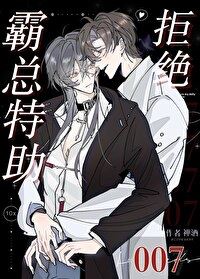
... Read More
Okay so let me just say—Ji Qian is absolutely unhinged and I am HERE FOR IT. The whole dynamic between these two? Chef's kiss. You've got Chi Ke, who is basically the human equivalent of a cat that will bite you but also let you pet him, and Ji Qian, who is out here playing 4D chess while eating a duck wrap from a street vendor.
... Read More
Okay so Chi Ke's avoidance tactics are absolutely legendary here. The man literally hides behind a pillar, pulls his cap down, puts on a mask—like, bro, are you a celebrity or what? And of COURSE Ji Qian spots him immediately. Murphy's Law, baby. But here's the thing that got me: Ji Qian knows. He clearly knows Chi Ke is deliberately keeping distance, and yet he just... doesn't stop. Not even a little. Instead he doubles down with those cutesy text messages and the '/Stunned and tearful.jpg/' reaction. Who does that?! It's almost creepy but also kind of sweet in a deeply unhinged way. The dynamic between Chi Ke and Ji Qian is this weird push-pull where Chi Ke claims he doesn't like associating with people like Ji Qian, but then admits he wouldn't have 'broken his usual rules' to help if he didn't admire him. Admired him enough to tirelessly teach him how to run a hospital. From scratch. The man has been coaching him and he's still showing up with solar-powered dancing sunflowers. I don't know whether to ship it or call someone. And then Ji Qian finds out about Chi Ke's sick leave and loses his absolute mind. 'Why the hell wasn't I informed?!' Like he's the private doctor AND emotionally invested. Both roles are clearly conflicting and he embraces both fully.
... Read More
The stakes in this passage are fascinating because they operate on literally four different levels simultaneously, and the author never lets us forget any of them. Level 1 — The hospital. Ji Qian has no idea how to run it. Chi Ke claims he can fix it with 90% confidence. That's surface-level conflict, almost comedic. Level 2 — Chi Ke's health. In his past life he was sick, gave up, accepted death. Now he's terrified of minor discomfort. He NEEDS Ji Qian as his doctor not just for business, but because his own survival depends on it. That's personal stakes. Level 3 — Trust and surveillance. Chi Ke admits internally that he wants Ji Qian close so he can't dig into his background. What IS Chi Ke hiding? How long can he maintain this fiction before something cracks? Level 4 — The cousin. "Who exactly are you keeping watch for?" This is the nail in the coffin. Someone else is in this room. Someone else is watching. And Ji Qian just stands there without answering. What's brilliant is how the narrative keeps the tension coiled but never releases it. Every scene ends on a note of suspended action — the almost-touch, the unanswered question, the unexplained silence. We're not just reading about characters with secrets; we're experiencing the suffocating pressure of those secrets in real time. The hospital business plot is basically a MacGuffin at this point. The real story is: how long before all these hidden things collide?
... Read More
Everything in this chapter revolves around temperature. The autumn cold that Chi Ke endures outside. The warmth of the manor he's excluded from. His ice-cold hands that Ji Qian notices. And the trench coat — that magnificent white coat that transforms Ji Qian from a sloppy mess into someone presentable. I keep thinking about what these layers represent. The cold isn't just weather; it's Chi Ke's emotional state. He's been working at 2 AM, he's resentful, he's distant. The cold protects him. It gives him a reason to stay outside rather than go into that mansion where he doesn't belong. But Ji Qian? He's all about coverings and reveals. The tank top and shorts underneath the trench coat is such a potent image — the messy, vulnerable self hidden beneath a polished exterior. And then the coat comes OFF (figuratively) when he's ready to engage. There's also the symbolism of the ferry vs. the flip-flops — wealth and tastelessness coexisting in the same person. Ji Qian drives a supercar but dresses like he just rolled out of bed. Is he rejecting pretense? Or is he the kind of person who can do both and choose when to deploy each version? And Butler Wu's line about dressing up for people you want to impress — that's basically the thesis statement for the whole book, isn't it? Everyone is performing here. The question is whether any of them ever stop long enough to be real. Chi Ke is trying. Ji Qian might be too. That's what terrifies me most.
... Read More
I need to talk about the STAKES in this chapter because they are NOT subtle and I am HERE for it. We open with a medical emergency that could have KILLED Chi Yuanfan. Lung infection, potential brain damage, asthma attack — the doctor lists these consequences like a countdown timer. Ji Qian had asthma MEDICATION ON HIM. Not a coincidence. He KNEW this would happen. He came prepared. This means Ji Qian has access to information from the original timeline, which means he knows things that haven't happened yet, which means the entire premise of this transmigration story just got a whole lot more dangerous. Chi Ke's internal monologue about being careless is the kind of paragraph that should come with a warning label. He admits he skimmed the plot, failed to grasp details, called his golden finger a waste. But then he acknowledges Ji Qian saved his brother. So now he owes someone who clearly knows more about this world than he does. That's a power imbalance that will bite someone. The hospital scene crackles with unspoken tension. Chi Ke trying to say something — maybe apologize, maybe thank Ji Qian properly, maybe confront him — and getting interrupted by his brother's whimper every single time. The author is stringing these moments along like a bow and arrow, pulling back further and further. And then the walk outside where Chi Ke systematically dismantles Ji Qian's lie without actually confronting him. Every question is a trap. Every silence is a weapon. "And if I did believe you?" — Chi Ke essentially saying: tell me the truth and I might trust you. But Ji Qian can't. Because the truth is worse. What are they both afraid of? What happens if the original timeline catches up? The tension isn't just romantic — it's existential. These characters are playing with timelines and destinies and somebody is going to get hurt if they keep dancing around the truth.
... Read More
Let me just sit with this for a second. Chi Ke and Ji Qian are BOTH protagonists. Not supporting characters. Not side characters. BOTH of them are the main character of their own stories. And they've both been thrown into a world that wasn't designed for them. The stakes here aren't about saving the world. They're about something far more intimate: survival, identity, connection. Chi Ke's conflict is internal—he was a Stanford double-degree holder, Wall Street executive, top of his industry. Now he's working a "downgrade" job that requires zero effort, and he's using that free time to learn programming because "knowledge was never a burden." His conflict is: what do I do when I've already won? Ji Qian's conflict is different. He's a 25-year-old Harvard Medical School graduate trapped in a world where no one knows he exists. His external conflict is leaving his position at Sixth Hospital to start his own medical empire. But his INTERNAL conflict is far heavier: can he trust anyone with the truth? Should he reveal himself to Chi Ke, who might think he's insane? What happens if he gets hurt again? The original novel set up Chi Ke as depressed. A broken man. But Ji Qian—trained observer, doctor, researcher—looks at him and sees something else entirely. "That guy—where did he look depressed?!" This is the conflict that matters. Not external battles or dramatic confrontations. The conflict between who these men were supposed to be and who they actually are. The tension between the story they were given and the story they're writing for themselves. And the suspense? It's not whether Chi Ke will survive. It's whether he'll find someone who understands. Whether Ji Qian will finally tell the truth to someone who won't call a neurosurgeon. Whether these two lost souls will recognize each other before the novel's plot erases them both.
... Read More
I don't even know how to start with this one. The chapter opens with a philosophical statement about consciousness lingering after death—'After all the organs of the human body cease to function, consciousness does not immediately dissipate'—and then BAM, we're already in the transmigration. No slow build, no extended death scene, just straight into the confusion and investigation. The pacing here is razor-sharp. Chi Ke spends exactly five minutes confirming he's in an unfamiliar room, ten minutes gathering evidence, thirty minutes accepting his new reality. Each time limit creates urgency. The reader isn't allowed to get comfortable—we're moving through discovery phase by phase, and each phase reveals something worse than the last. Room → deed → documents → Leng Yunting's name → the novel itself → the suicide note. What's really clever is how the author uses Chi Ke's professional composure as a pacing device. 'Having experience is great—with sufficient experience, one can also adapt to being transmigrated into novels faster than others.' This line is funny but it also serves a structural purpose: it explains WHY the pacing is so fast. This is a seasoned overworker who has seen too much. He doesn't panic. He processes. And that makes the emotional beats land harder because they come from a place of controlled devastation rather than chaotic screaming. The chapter ends on that suicide note, which is a perfect cliffhanger. We're left wondering: who was this man? Why did he kill himself? And what is our protagonist going to do about it? The structure here is basically a series of increasingly darker revelations, and I couldn't turn the page fast enough.
... Read More
The stakes in this opening are layered in a way that keeps escalating, and I need to break it down because each layer makes the previous one feel smaller. Layer one: Chi Ke is dead and reborn in a strange body. That's already terrifying—existential stakes. Who am I? Where am I? Am I still me? Layer two: He's inside a novel he knows the plot of. This adds dramatic irony stakes—he knows bad things are coming, he knows people will suffer, and he's trapped in a body that has zero power in this world. Layer three: The original owner killed himself. This raises the personal stake enormously. This isn't just any transmigration story—someone GAVE UP, and now our protagonist has to deal with the aftermath of that despair. The sleeping pills are still there. The note is still there. The debt is still there. And then there's the bigger conflict brewing: Leng Yunting. The domineering CEO who treats people as props in his romance drama. The man who called the special assistant at 3 a.m. without a second thought. The man who presumably never knew—or never cared—that his assistant was dying inside. What makes this conflict so compelling is that Chi Ke has knowledge but no power. He knows the plot, he knows the characters, but he's a BODY DOUBLE for a side character who committed suicide. If he tries to change things, what happens? Does the plot correct itself? Does someone else suffer instead? The tension here isn't just 'will he survive'—it's 'what price will others pay if he tries to rewrite destiny?'
... Read More
Let me just say — the opening of this chapter is MASTERCLASS pacing. We start with Chi Ke already established as bitter about his job, already knowing the main couple has a date planned without him (OOF), already resentful of Leng Yunting's mansion. Then the author DOESN'T rush. They make us WAIT with him. The cold wind, the stiff fingers, the gathering mist, the dim streetlights on those quiet suburban roads — it all builds this atmosphere of isolation and anticipation. We're shivering alongside him. And then BAM, the Ferrari tears through the silence and the whole tone shifts from melancholic to comedic chaos. The scene transitions are seamless: cold wait → absurd entrance → awkward handshake → dramatic coat reveal → warm conversation. Each beat escalates the tension between the two leads while also giving us breathing room through humor. The chapter doesn't drag because every paragraph either advances the plot, develops character, or provides comic relief — usually all three at once. Even the exposition about Ji Qian being away for a year is delivered naturally through Butler Wu's dialogue rather than a clumsy info-dump. The only note: the chapter ends mid-conversation with Ji Qian having just noticed Chi Ke looking at his bare legs. Classic cliffhanger. I immediately wanted Chapter 25. No shame.

Leave a comment

You must be logged in to leave comments. or
