The Devil is My White Moonlight - Reviews

The Devil is My White Moonlight
+Add to Custom List
Sort
Add review
... Read More
There's something deeply ironic about the name 'Golden Pavilion' that I can't stop thinking about. Zhang Jinjin names his shop GOLDEN — openly, unapologetically — and Nie Yao admires him for it. 'The word Golden on the sign of this shop was enough to make those hypocrites avoid it, however Nie Yao admired his attitude of rather being a real villain.' In a world where cultivators pretend to transcend worldly desires, here are two men building an empire on commerce and storytelling. The sect's salvation doesn't come from spiritual breakthroughs or heavenly treasures — it comes from gossip, marketing, and audience engagement. The whole 'Legend of Lingshan Mountain' project is essentially about commodifying mystery. The disciples acquire celestial weapons, go through trials, emerge changed — and instead of treating these as sacred experiences, Zhang Jinjin sees them as content. 'Living materials.' The very word is fascinating because it reduces human struggle to raw material for entertainment. And it WORKS. Three years later, the number of applicants doubles. The market responds. The sect thrives. But then there are the Zhu crystals. These objects appear almost casually in the dialogue — 'consumption of Zhu crystals in the past half year was too large' — but they carry enormous symbolic weight. Crystals power arrays. Arrays protect and contain. Arrays are the infrastructure of cultivation society itself. When crystal consumption spikes 30% with no legitimate explanation, it means someone is building something massive outside the system's awareness. The very materials that sustain order are being quietly diverted. The oil lamp bursting at the worst possible moment feels symbolically loaded too. Light breaking in darkness. The fragile illumination of their business empire about to be tested by forces they can barely perceive. And that thunder from Lingshan — the sect's own mountain, the source of their power and identity, making sounds it shouldn't be making. The text keeps asking: what is the foundation of this world, and who's building underneath it?
... Read More
I need to talk about how the author handles the transition from Xiyun's qi deviation to the spirit array inspection discussion, because it's either incredibly bold or incredibly careless and I can't decide which. One moment he's vomiting blood, one moment his body is stiff as stone, one moment Mo Zhiqi is pouring an hour of spiritual energy into a cold jade coffin to keep him alive. And then — next morning, tea, cultivation theory, and suddenly we're discussing bureaucratic scheduling for array inspections. On the surface this feels jarring. Like, bro, your disciple almost DIED and now we're talking about who's going to replenish spiritual stones? But actually, I think it's deliberate. And I think it's brilliant. Because it mirrors exactly how this world operates. In a cultivation world where death is commonplace, where cultivators die and come back, where spiritual wars have slaughtered entire clans and demon invasions nearly ended civilization — personal crisis is just another item on the agenda. The fact that Mo Zhiqi can stabilize Xiyun, have tea with him the next morning, and smoothly pivot to administrative matters shows how normalized this level of danger has become. The pacing also works because of the information dump about the spirit arrays. Right after the intense personal drama of Xiyun's near-death experience, we get a lengthy exposition about the Linmo Abyss War, the five great spirit arrays, the cooperation between sects, the history of territorial disputes. It's a lot of worldbuilding packed into one conversation, and it could easily drag. But it doesn't drag because it's grounded in the immediate plot — this isn't random lore, this is WHY the inspection matters, why Xiyun might be sent away, why the world feels the way it feels. Then the chapter ends on that incomplete sentence about Mo Zhiqi's unsaid reason. No climax. No resolution. Just a door left open and the reader forced to keep turning pages. That's good pacing. Not perfectly smooth, not perfectly balanced — but honestly shaped, like the actual rhythm of reading something that matters.
... Read More
There is a scene in these chapters that I keep going back to and it just DESTROYS me every time. The village. It was there yesterday. Quiet, peaceful, normal village life. And then - gone. Not destroyed, not ruined, GONE. Replaced by a river. A violent, churning river where houses stood hours ago. The text says it plainly: "The village had disappeared without a trace, and the valley where the houses used to be had been replaced by a large river." That's it. Four sentences. No drama. No weeping over lost belongings. Just: the village was here, now it isn't, and a river is where it used to be. But the image is so vivid I can SEE it. Broken branches floating. The hilltop looking like it was "drawn from top to bottom by an immortal expert" - that line is incredible. It's like the mountain itself was carved open. And now there's a waterfall hanging upside down, a "sea of stars" crashing down, and the old creek bed is completely swallowed by a new, monstrous channel. Then Mu Xiyun flies down to look, and sees the sea. Not a lake. Not a reservoir. The SEA. Two hours away, in the Central Plains, surrounded by hills, the nearest water was supposed to be a lake a hundred miles away. And now there's an ocean where a valley was. Qin Le just murmurs "Is that... the sea?" like he's asking about something mundane. Like he's not looking at the complete Erasure of a geographical reality. The scale of this is incomprehensible. This isn't a flood. This is tectonic. Someone or something didn't just break through a dam - they REMAPPED the landscape. The barrier at Lingshan is holding against water that shouldn't exist, and it's losing. The water marks climbing the stone wall inside the barrier - that visual of stagnant water SLOWLY rising, inch by inch, on the foundation of the mountain's protection - gives me actual chills. And the contrast! The opening has disciples laughing, making jokes about jumping into an illusion. Then the sky clears, and the joke becomes a mass grave. The tonal whiplash is intentional and brutal. The barter street scene at the mountain exit is also haunting in its own way. These people - disciples, cultivators, people who presumably can fight monsters and cast spells - they're covered head to toe in mud, barely able to move, tumbling out of the formation one after another like survivors of a shipwreck. The guide boy is annoyed about the mess. That's such a human detail. The world keeps turning even while it's ending. This author understands that the most terrifying moments aren't the ones with screaming and explosions. They're the quiet ones where someone looks at a horizon and realizes the world they knew is gone. "Is that the sea?" is the most devastating question in this entire chapter.
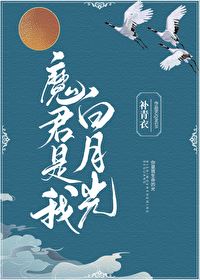
... Read More
Liang Zheng and Su Yanjun are such a good duo and I need everyone to appreciate them more. First of all, Liang Zheng spent half a month in that library before and still came up empty, but then he finds the answer in an hour?? The guy is a machine. But what I love is how he and Su Yanjun bounce off each other. When Su Yanjun spots the drawing and connects it to everything—the lost heart of the child's corpse, the shrine, the white grass, the purple flowers—and then yells "Shit! Brother Mu!" that's the moment where the friendship shines through. He doesn't waste time being dramatic, he just immediately thinks of his friend in danger and bolts. That's true partnership right there. And Mu Xiyun on his own in the corridor—twelve-year-old version of him appearing at the end, carrying a scroll for the medicine hall master, sweating and short-legged—it's such a tender detail. Who was that twelve-year-old exactly? What mission was he on? The text cuts off right there but I already know I need to find out. It makes everything that's happening now feel so much more layered, like his present journey is deeply connected to who he was back then.
... Read More
This chapter is sitting heavy on my chest and I think I know why. It's about love as a force that doesn't care about morality. Hong Yu isn't evil. She's not even particularly cruel. She's loving, and love made her a murderer. The heart pill—taking the literal center of a person's being to sustain someone else's life—feels like the ultimate metaphor for what toxic devotion looks like. You take what makes someone human to keep the person you love breathing. The silver fox keeps calling himself a "body of sin" (罪孽之身). He sees himself as fundamentally unworthy, an obstacle on the path of cultivation that can only be resolved through death. But is that humility or self-indulgence? Is he genuinely accepting karmic debt, or is he performing repentance so he doesn't have to face the fact that he benefited from murder without stopping it? Then there's Mu Xiyun as the counterweight—the immortal who believes in due process, in cause and effect, in the idea that actions have consequences that can't be outsourced. "If anyone can just take the place of another... how can there be a cycle of heaven and justice?" This line echoes the entire moral architecture of the story. The system exists because individuals can't absolve each other. You can't love someone enough to do their karma for them. And the unknown man—who represents? Temptation? Fate? The idea that evil doesn't announce itself as evil but comes dressed as help? He appears in darkness, speaks gently, and sets everything in motion. The classic serpent archetype, but stripped of horns and theatrics. Just a voice in the dark telling a lonely girl how to save the person she loves. The book_id field in my notes is 78825. This is the part where I close the app and stare at the ceiling.
... Read More
I have to address the elephant in the room: this guy breaks through to Qi condensation and establishes a foundation in HALF A MONTH. "As expected of Moyun Mountain's top disciple fifty years ago." Yeah, okay, I get it, he's OP, but the pacing here is something else. The author moves from "you just woke up after seventeen years" to "congratulations, you're basically at peak starter level" so fast that I actually had to reread that passage. Is this intentional? Is the protagonist supposed to be a prodigy or what? Because if so, I respect it—but it does make me wonder where the tension is going to come from if the MC keeps leveling up this quickly. That said, the structure of these chapters is actually really solid. We get exposition (the body backstory), then immediate action (the breakthrough scene), then emotional payoff (the banquet). It's a classic information → action → reward cycle and it works. The transition from the plum tree meditation to Mo Zhiqi appearing and announcing the breakthrough is seamless—no jarring cuts, just natural flow. And the banquet scene serving as a softer ending to this batch of chapters is a smart move. It gives the reader a breather after the intense cultivation scene while also reinforcing the world and relationships. The only thing I'd change is maybe slowing down the cultivation progression slightly, but then again, maybe the real challenge is coming and the author is just setting us up for a fall. Either way, I'm turning the page.
... Read More
I’m jush wondering if this should be a start of a new book?
... Read More
101 chapters 3-13-23
... Read More
suPer love it, hoPe there's another storey for their kuds!
... Read More
I'm about to start reading this book I rehopw I like it.
... Read More
gooooood nice read
... Read More
enjoying but had to stop to do this

Leave a comment

You must be logged in to leave comments. or
