The Devil is My White Moonlight - Reviews

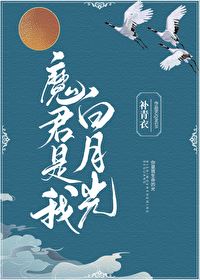
The Devil is My White Moonlight
+Add to Custom List
Sort
Add review
... Read More
Let me just say this: the moment Gu Qingqiao spoke those two words—"Ah Yun"—and then his face went completely white? I have never felt anything like that in a book. It hit me like a punch to the chest. These two. They grew up together. They fought side by side. And somehow, everything changed. What struck me most was Gu Qingqiao's reaction when he saw Mu Xiyun. He didn't immediately attack. He closed his eyes first, like he was steeling himself. Then he smiled. That smile is something I can't get out of my head. Is it desperation? Is it love for his martial brother? Or is it something darker, something the black qi has already begun to twist inside him? And Mu Xiyun—oh, Mu Xiyun. He didn't hesitate. He walked onto that platform with a sword, pale and exhausted, and he pointed it at the person he trusted most. But notice how the text describes him: “His hand holding the blade did not shake in the least, and his face was icy.” That's not the description of someone who wants to kill. That's the description of someone who had to, who was forcing himself to be cold because if he allowed even one crack in that armor, he might have broken down completely. The most devastating part comes later, when Mu Xiyun wakes in the cave and his memory floods back. “The one who played with him and fought alongside him in times of difficulty, whose every word and deed he treasured, and whose smile warmed his heart.” Yet here is that same person, covered in black qi, trying to slash his throat. I keep wondering: did Gu Qingqiao actually want to hurt Mu Xiyun? Or did the black qi take control the moment it touched him? The text says his eyes changed back from blood red to normal after Mu Xiyun pressured him. Does that mean Gu Qingqiao was in there the whole time, trapped inside his own corrupted body, forced to attack the person he loved most? This relationship is everything to me. It's not just master and junior brother. It's childhood friends. It's the kind of bond that makes betrayal feel like a physical wound. And I cannot stop thinking about what happens next when these two are finally alone together. Who will forgive whom? Or will there even be anyone left to do the forgiving?
... Read More
'Lin Xuewu clutched his heart with his hands and fell to the ground.' In six words, the entire scene pivots from procedural to primal. The stakes skyrocket from “solve a mystery” to “stop a man from becoming a monster.” The cyan totem isn't just a clue; it's a threat that bypasses reason and attacks the body. Gu Qingqiao's paralysis isn't cowardice—it's the terror of recognition. He knows this mark. It's linked to a death, to a past he can't outrun. That personal stake raises the tension exponentially. Meanwhile, Mu Xiyun, the closest witness, draws the totem from memory, his hands steady but his mind already racing ahead to a face in a dream. The external conflict—the unknown force behind the possession, the investigation across multiple locations—collides with internal conflict: guilt, fear, the burden of knowledge. Zhang Jinjin's confrontation with Gu Qingqiao on the roof adds another layer: the stakes aren't just about solving the puzzle, but about whether he'll survive the emotional fallout. Every character is Gamblerizing something. Lin Xuewu risks his sanity, Gu Qingqiao risks his silence, Mu Xiyun risks his sleep, Su Yanjun risks his journey. And the reader? We're left hanging on a single line—“It's Li Yao.”—with no resolution, only the dread that the face behind the totem is about to walk out of the past and into the present. The suspense isn't just “what happens next?” It's “who will break first?”
... Read More
This chapter absolutely wrecked me emotionally. The way Gu Qingqiao is sitting there with this massive secret about his Southwest Valley origins, watching Mu Xiyun react to the news of Gu worms with visible fear... and he just can't tell him. That porcelain bottle on the stone table is such a perfect symbol for their entire relationship right now - present, visible, but sealed shut. The author does something devastating here. Mu Xiyun clearly remembers finding out that Li Yao lost his blue dragon pendant. He remembers seeing something flash on the master's face - a blue totem. And now Gu Qingqiao extracts Gu worms using his own blood. These two things are connected. Mu Xiyun is standing right there in the courtyard processing all of this, and Gu Qingqiao is too afraid of losing whatever friendship they've built to connect the dots for him. I love how Mu Xiyun handles it too. When he says he's 'a little afraid of bugs since I was a child,' he's giving Gu Qingqiao an out. He's protecting him even while he's spiraling internally. That's the kind of quiet, desperate loyalty that defines their dynamic. And then Zhang Jinjin just barging in like 'hey cousins, you two go together and take care of each other' while having a toothache? This man is the emotional support character we all need.
... Read More
Okay so this whole Lingshan formation thing is really interesting from a plotting standpoint. On the surface it looks like just another tournament arc, but the way Nie Yao describes it — that it won't let you make judgments easily — is a massive red flag wrapped in a hint. The author keeps dropping breadcrumbs: the formation tests the mind, not the weapons; the ancestor was a blacksmith who saw peace, famine, and prosperity; weapons in the wrong hands become instruments of disaster. All of this is world-building that's also foreshadowing. It's subtle though, not heavy-handed. I love that the author trusts readers to connect the dots instead of spelling it out. "The trial will not let you make judgments easily." That line alone makes me want to turn the page immediately. It's basically telling us: prepare to be wrong about everything. And then there's the Lin Xuewu subplot hanging in the background — a supposed lunatic, a rescued mother and son, and the Lingshan law taking personal interest. Three separate threads that haven't collided yet but are clearly heading toward the same explosion. I'm betting the trial and the Lin Xuewu case are going to intersect in a way nobody expects. The pacing here is masterful — nothing's rushed, but nothing feels idle either.
... Read More
Okay so let me just talk about Gu Qingqiao for a second because THIS MAN occupies so much space in Mu Xiyun's head and I am HERE for it. Like, the entire chapter is basically Xiyun's internal monologue about a guy he saw for five seconds on a bridge twelve years ago. The author does this thing where Xiyun is investigating a bunch of missing children cases, deadpan and efficient, and then suddenly his eyes land on a bridge and the whole world shifts. That transition from detective mode to "oh god it's him" mode is so clean. And the flashback—listen to this: "That smile came and went just as fast, but it was like a dragonfly lightly tapping on the lake's stilled surface, leaving a faint trace in the heart of the twelve-year-old boy." A DRAGONFLY. Not some dramatic lightning bolt, not a tidal wave. A dragonfly. That's so specific and so telling about Xiyun himself, right? He's a cultivator, he deals in massive spiritual forces, but the moment that actually got to him was the lightest possible touch. And he carried it for twelve years. Twelve years. What gets me is how he describes himself in that memory. He's the kid who stays behind to practice while everyone else goes out to play. He's watching other families—the mother helping the child up, the father smiling—and then he looks up and sees THIS boy on the bridge railing, free and uninhibited, like nothing in this world would leave traces in his life. The contrast is almost painful. This kid who can't quite fit into his own world catches a glimpse of someone who seems to belong to no world at all, and that's the moment everything changes. And now the guy's supposedly dead, his soul scattered, and Xiyun is down here solving murders and telling himself it's just about repaying the Tianji Peak elders, but we all know that's not it, right? "What's more, up to this day, he still had not yet been able to confirm what kind of feelings he truly had for the young man who was called a traitor." He can't even figure out his own heart and he's out here solving mysteries for everyone else. Classic.
... Read More
That jade piece. Just look at it for a moment. A deer carved in round, warm jade — 'as warm and moist as congealed fat,' the text says, as if the deer itself is alive underneath the stone. And then the legend: a thousand-year-old deer that transforms into a goddess who prays for rain in the Gobi desert and whose blood keeps souls alive. I keep coming back to this image because it feels like the novel is asking us something fundamental about what the world here actually values. Is it power? Is it compassion? The goddess didn't become powerful through conquest — she became a goddess by *praying for others*. That's a theme this story seems to carry quietly in its pockets. Then there's the bigger question raised by the disciples: if Lingshan is supposed to be a blessed land of immortals, why does a mudslide destroy villages? The word 'illusion' is interesting here. One disciple asks if the disaster was 'an illusion in Lingshan.' That word — illusion — opens up this whole philosophical can of worms. What is real in this world? The mudslide was undeniably physical, devastating, real. But maybe the 'blessed land' reputation of Lingshan is the illusion. Maybe the immortals aren't what they seem. The jade connects to something older, something pre-sect, pre-hierarchy — a goddess who cares about desert rain and human souls, not sect politics or cultivation rankings. Zhu Li shuttling between the two fire camps, linking cultivators and villagers, feels symbolically significant too. She's the thread holding both worlds together.
... Read More
Let me break down what the author just did because this is some serious structural storytelling. Mu Xiyun gets betrayed—accidentally or not—by the person right next to him. Wu Ying's excitement destabilizes the ground, Mu Xiyun falls, and instead of dying or getting rescued by Gu Qingqiao, he lands somewhere from his PAST LIFE. This isn't random. The illusion he entered during his first life—the snake attack, the bamboo forest, the mysterious person who healed him—it's happening AGAIN. But this time, he's different. He remembers. He has a concealment stone. He's watching instead of being helpless. The structure is: reunion → emotional tension with Wu Ying/Gu Qingqiao → accidental fall → injury and self-rescue → discovery of familiar location → memory trigger → parallel past event → present moment of watching from hiding. In roughly 3 chapters, we've gone from daytime drama to life-threatening fall to supernatural mystery to a looming threat (those black shadows). And the fact that Mu Xiyun checks his Qiankun bag and finds it FULL of elixirs—left there presumably by someone who knew he'd need them—means this isn't even the first time this loop has happened or someone has anticipated it. Where is Gu Qingqiao in all of this? He received a summons last night and isn't around when Mu Xiyun gets hurt. The author is setting up distance, separation, and mystery. I am obsessed.
... Read More
Okay can we talk about Guo Qi for a second because that scene where he finally breaks down and tells everyone about his brother? I literally had to put the book down. The way he describes finding that bracelet on the corpse, and how he thought it was his brother, and then realizing it wasn't... man. The image of him digging through that mass grave, seeing the emerald ring, then another arm poking out... my skin literally crawled. What got me though is how this changes everything about how I see him as a character. He was acting suspicious earlier with that horrified expression, right? And we were all like 'who is he hiding from?' But no, he was actually traumatized and trying to process something alone. The fact that he carried those corpses back overnight despite the storm shows he's not some coward — he's been carrying guilt for TEN YEARS. Also the dynamic between Su Yanjun, Mu Xiyun, and Gu Mingshun is fascinating. Su Yanjun with that 'Gentleman' sword described like warm jade... he seems like the steady one. And then there's Gu Mingshun who literally runs off a cliff and gets caught by Xiyun. These three feel like they have a history, but it's not spelled out. I wanna know more about what binds them together.
... Read More
I need to talk about the scene between Mu Xiyun and Gu Qingqiao by the creek because I have been recovering from it for twenty minutes. "You don't have to call me Immortal Master Mu. My name is Mu Yun." He corrects her. He tells her his real name. In a genre where cultivators hide behind titles like it's a survival tactic, this is a huge deal. He's giving her something personal, something vulnerable, and the way the author writes it — so understated, so quiet — makes it hit even harder. And then she asks about the meaning of his name. "Twilight clouds? Sunset clouds in the sky?" And he says no, it's "big wave on the river." Can you feel the weight of that metaphor? The Baishui River from fifty years ago. Something happened there. Something between these two people that the author has been hinting at since chapter one, maybe earlier. The silence after he says it. The sound of running water. The way they just stand there, not needing to fill the space with words. That is emotional writing at its finest. Not dramatic confessions or crying fits — just two people who share a buried history, standing beside a stream, letting the unspoken things hang in the air between them like fog. And Gu Qingqiao's reaction when she sees him? She glances at him across the fire, says hello, and then immediately leaves with him when the wolves attack. Not because she's concerned about the wolves. Because she's concerned about HIM. You can see it in the subtext. Then there's the girl in green. A child — fifteen, sixteen — fighting four wolves to protect her family. Servants, a woman, a baby. She's so tired her hands must be shaking and she still doesn't retreat. When the alpha wolf leaps at her from behind and that mysterious young man in black appears... I felt such a surge of relief AND such sadness. This child has been carrying the world on her shoulders and nobody noticed until now. That's the kind of emotional beat that stays with you. The romance between Su Yanjun and... well, I don't know yet who his romantic interest is, but the author has planted seeds. The way Zhu Yicheng looks at Su Yanjun with that shy, embarrassed smile? The way he talks about his mother being 'laughable'? There's something there brewing. I'm not ready to name it but I'm watching it. These emotional threads are layered so carefully. Every glance, every pause, every unspoken word carries meaning. The author trusts the reader to feel without spelling it out, and that trust is so refreshing.
... Read More
There are some really interesting symbolic threads running through these chapters that I think deserve attention. First — the post house. On the surface it's just a place to sleep. But look at what it really is: an ordinary exterior hiding something magnificent inside. A government-run front that conceals a luxurious manor with lakeside pavilions and pine forests. It's a metaphor for the whole story essentially. Everyone here is hiding something. Gu Qingqiao is hiding his real identity behind the name Gu Xiaobo. The world looks peaceful but wolves are circling. The trial ahead will test people's true abilities beneath the surface. Then there's the Golden Pavilion — three stories, red painted, flying eaves, glazed tiles, shining plaque. It's the most conspicuous building in a city full of spectacle. It sells guidebooks to the Lingshan trial, pre-trial simulations, spiritual tools. It represents opportunity and commercialization of something sacred. The trial isn't just about cultivation — it's become an industry. Rich young masters in brocade clothes, spirit clan merchants, all flocking to buy their way to success. There's a commentary here about how spirituality gets packaged and sold. And Mu Xiyun's Daoxin — the celestial sword he earned fifty years ago that he can no longer summon. A sword that chose him once and now won't respond. What does that mean? Is his power fading? Is he hiding it intentionally? The sword itself means "Dao Heart" or "Path Heart" — the very core of a cultivator's conviction. If that sword is silent, what is the story saying about his current state of mind? Bloodstains at dawn, a name that isn't yours, a sword that won't answer, a hidden manor behind an ordinary door. This story keeps showing us that nothing is what it seems.
... Read More
'The heart is the official of the monarch and the gods come out.' This quote from the Yellow Emperor's Classic is doing SO much heavy lifting in these chapters. It's not just medical theory—it's the thematic backbone of everything. The heart as the seat of spiritual energy, the second sea of consciousness, the warmest organ in the body... and yet in the demon alchemy texts it becomes an ingredient. Human heart, white snake grass, discrete flowers—three components that transform resentment and obsession into cultivation base. There's this horrifying irony that what makes us most human (our heart, our consciousness, our emotions) is exactly what makes us valuable to the very monsters hunting us. And Mu Xiyun walking through that corridor, approaching this hidden knowledge about his own past, feels like a metaphor for confronting how the world's cruelty shaped him. The spiral of lights turning the corridor into a rotating tunnel—could that symbolize the cyclical nature of violence? The hearts keep getting taken, the cycle keeps repeating, and he's walking deeper into it. Or maybe it represents how truth isn't linear but spiraling, you keep coming back to the same core question from different angles. Either way, every scene in these chapters reinforces that theme. What exactly IS a heart worth in this world? The text keeps asking that question without ever giving a straight answer, and that's what makes it haunt you after you finish reading.
... Read More
Okay so let me just say this — Nie Yao is genuinely one of the most interesting cultivator-pragmatists I've ever encountered in xianxia. Most talented disciples in these novels go the obvious route: grind cultivation, get powerful, save the sect. But Nie Yao? He literally walked away from advanced cultivation techniques and chose to put on a deacon's robes. His father was FURIOUS. And you know what? The way he handled it was pure genius. The scene where he talks to his dad is everything. He doesn't argue or rebel dramatically — he just calmly lays out his logic: 'When this son becomes the chief steward, those things will naturally come.' He's essentially telling his father 'I'm not giving up cultivation, I'm just going about it my way.' And then he immediately pivots to the material benefits. It's so clever because it's simultaneously honest and manipulative. His father couldn't refute it because it was true. But what really blew my mind is the friendship with Zhang Jinjin. Two completely different people — a cultivator scion and a merchant — bonding over correcting errors in a pamphlet about Lingshan Taoism. That's the kind of meet-cute that says so much about both characters. Nie Yao has sharp eyes for detail; Zhang Jinjin recognizes talent when he sees it. And that dinner at Taibai Building where they call each other brothers? That's not just socializing, that's the founding of an alliance that will reshape the entire sect's fate. Zhang Jinjin is honestly the unsung MVP here. The guy looks at a declining sect and sees CONTENT. 'The dozens of stories of these dozen people are enough for the cultivators in the Central Plains to discuss for three years.' That's not just business acumen — that's understanding human nature at a fundamental level. People don't want facts, they want stories. He basically invented celebrity culture for cultivators. And the father-son dynamic with Nie Yuanshan? The text says his father had 'hateful eyes' and his face was 'about to choke to death.' But then Nie Yao pulls the strings and becomes general manager with the family's blessing. The old man was wrong about his son, and the text lets that sit there quietly without dramatic confrontation. I love that subtlety.

Leave a comment

You must be logged in to leave comments. or
