The Devil is My White Moonlight - Reviews

The Devil is My White Moonlight
+Add to Custom List
Sort
Add review
... Read More
I need to talk about this moment. Qin Le standing there, pale-faced, with his youngest sister watching him and the villagers depending on him, and suddenly his ancestor's voice rings in his head: 'The Qin family guards the people, and will not hesitate to die!' He closes his eyes and lets tears roll down. Not a single drop of weakness - just water coming down his face as he channels spiritual energy into those jade tablets. That's the most emotionally devastating line in this entire sequence. The author doesn't say 'he was brave' or 'he found his courage.' They show us a young man who has spent the whole book being afraid, finally doing something so fundamental it becomes involuntary. Then there's the friendship dynamic with Deng Xian, Gu Qingqiao, and Mu Xiyun. This is where the author really earns their emotional beats. Deng Xian washing his whisk in the water, covered in blood but acting like it's nothing, asking 'What should we do now?' with this casual tone that completely misses how intense the situation actually is. Gu Qingqiao's exasperated response about how he rushed out without thinking? Perfect character work - it's the kind of thing someone who actually cares would say. And Mu Xiyun. That silent back he presents when he walks away to wash his sword. The other two panicking, trying to comfort him, and he just... does what needs to do. No explanation, no drama. Just action. Deng Xian patting his shoulder and calling him 'a good person' while Mu Xiyun doesn't even look at him - that's the entire emotional subtext of their relationship right there. The cold waterfall they find later, the freezing water that's somehow more chilling than the April weather, the black shadow that falls and disappears before they can see what it is - all of this feels emotionally loaded. Something is down there. Something that makes even a mountain animal flee. The author trusts us to feel the dread without explaining it.
... Read More
There's a moment in this chapter where Zhang Jinjin pulls out a kitten from his sleeve pocket and the entire emotional temperature of the scene shifts. A terrified seven-year-old boy who's been crying uncontrollably stops the second he holds warm fur. It's such a simple image, but it represents something larger about this story's approach to healing and connection. The wolf attack itself is symbolic—nature turning violent, the fragility of human life against indifferent forces. But what follows is about community responding to crisis. People bandage each other. Strangers help strangers. Luo Qingyao saves someone without hesitation. Zhu Yicheng checks on a conscious stranger with genuine concern. The theme here is clear: cultivation worlds are dangerous, but human (and immortal) connection is the real power. The Lingshan formation story also carries thematic weight. Nie Wuya, a blacksmith who ascended through daily labor and devotion, created weapons that bond to their masters' souls. That's essentially a metaphor for the relationships in this chapter—people becoming bound to each other through shared trials. The golden pavilion mention, the failed candidates, the changing illusions—all of it suggests that growth comes through challenge, and that true power isn't about individual strength but about what you carry forward after surviving. Even Gu Qingqiao's silent vigil while watching Mu Xiyun meditate speaks to the theme of unspoken devotion. Not all care needs words.
... Read More
"Fool…" Gu Qingqiao murmured, but he was truly afraid at that time. I keep coming back to this one word. Just one word, thrown out in passing as he walks down the street, and yet it carries the weight of everything between them. He calls him a fool for shielding him from arrows — the same Mu Xiyun who never hesitated, who took every arrow meant for the child on his back. And Gu Qingqiao, who has lived for fifty years as an immortal, who has seen people die and come back, who should be untouchable and detached — he is AFRAID. Truly, genuinely afraid of losing him. The scene where he watches Mu Xiyun sleep is what did me in. He couldn't even bring himself to touch him at first, just stared. Breathing shortened, longing building like a fire inside a cage. And then his hand moves anyway — a child's small hand, trembling, reaching out to brush Mu Xiyun's face. Bitter tears. Not happy tears. Not even sad tears. Bitter tears, because he knows he can never fully have this person, never fully reveal himself, never be anything but a guard dog on a short leash. And then Mu Xiyun wakes up, finds the boy curled against his chest, tucked him in quietly, and goes to practice. Does he feel it? Does he sense anything? The text never says, and that uncertainty is killing me. What I love most is how Gu Qingqiao's love isn't performative. It's in the small things — the way he pretends to yawn to avoid further questions, the way he rolls into Mu Xiyun's arms without thinking, the way he thinks about spending the whole night just staring at him. This is a man who has lived decades but still hasn't learned how to be close to someone without fear. And Mu Xiyun, for all his cold exterior, lets him. Lets him sleep against his chest. Lets him stay. That's the quiet romance here — not grand confessions, but shared warmth in the dark.
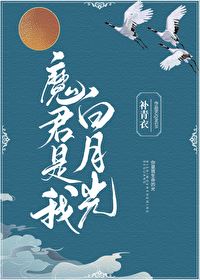
... Read More
There's this one description that stuck with me all afternoon — the Lingshan Illusory Formation being SQUEEZED down by some invisible force from above, and the five-colored spiritual currents churning and boiling like they're trying to escape but getting slapped back down every time. It's such a vivid image. Five colors. Not white, not gold, not any single hue — five. That alone tells you this isn't some normal formation. And then the waterfall itself appearing from nowhere, crashing down with a heavy chill, light refracting through it — the author paints this entire scene without a single info-dump. You just KNOW something ancient and powerful is sleeping up there behind that cave, and you feel it in your bones the same way the characters do. The rock wall description is also incredible: split straight up like a giant knife cleaved it in half, one side acting as a barrier, the other disappearing into clouds. Vegetation in the cracks, vines thick enough to cling to — the whole thing feels tangible, like you could reach out and touch the cold stone. And that white fog at the top, wispy and constantly shifting, hitting Mu Xiyun with that enormous pressure the moment he steps into it — the atmosphere in this book is unreal. It's not just background, it's actively working against the characters at every turn.
... Read More
Okay, let's talk about that moment. "Even if I'm like an ostrich..." — this line hit me so hard. It's not some big dramatic declaration or a life-or-death choice. It's just... admission. Mu Xiyun has spent who knows how long building walls, and one word — "we" — cracks it open. The way the narrative pivots from his cold exterior to this quiet surrender is masterful storytelling. No explosions, no threats, just two people standing in the night wind and something fundamentally shifts. And then the next scene? BAM — Lingshan Mountain opens, the whole town is buzzing, and you're suddenly pulled into this massive communal event. That contrast? Deliberate. The author lets you breathe with the intimate moment before sweeping you into spectacle. It's like a camera pulling back from a close-up to a wide shot. I also appreciate how the stakes are set up without being heavy-handed. The jade plaque detail — teleportation circle, ranking system, option to sell your experiences — it all world-builds while simultaneously raising questions. What's at stake in this mountain? What happened to previous challengers? Why does Gu Qingqiao seem genuinely worried about Mu Xiyun risking himself? The plot is setting pieces in motion and I am HERE for it.
... Read More
Let me just say this—this author understands silence. The dialogue here is incredibly restrained and it works so well because everything important happens BETWEEN the lines. Take this exchange: 'I have no idea what happened back then. I merely followed my Master's orders.' Simple. Plain. But it carries SO much. Mo Zhiqi is basically saying I don't understand why you were put in that bottle, but I'm telling you because you deserve to know I'm not hiding anything out of malice. And Xiyun's response—'He didn't appear surprised. He had suspected it for some time. He didn't say anything and just silently waited'—THIS is where the voice really shines. No dialogue at all, just internal observation, and it tells us everything about Xiyun's personality: cautious, observant, not someone who throws words around. The mirror scene is narrated almost entirely without dialogue, and it's one of the most powerful parts. Xiyun looking at his new face and recognizing it's similar but fundamentally wrong—that internal monologue does more work than any speech could. Also love how each character has a distinct register. Mo Zhiqi speaks formally, carefully, like someone who has spent decades being precise. Xiyun's thoughts are sharper, more immediate, even when he's trying to be polite. The narration itself has this quiet melancholy tone that never gets dramatic—it's always steady, like the mountains in the background. It suits the story perfectly.
... Read More
"There is ice on your back." Mu Xiyun noticed this. Not the wound, not the exhaustion, not the fact that Gu Qingqiao had just fought a centuries-old Snow Demon to pull him out of certain death—but the ice. The frozen water that had formed on Gu Qingqiao's clothes while shielding him from the wind. This is the kind of detail that made me sit there staring at my screen for a full minute. Gu Qingqiao curses him for being careless, calls him dumber as he gets older, acts like he's annoyed—but behind his back (literally), he's applying fire talismans to dry Mu Xiyun's clothes and whispering "I said I'm not..." like he doesn't want credit for anything. The muffled laughter after Mu Xiyun says thank you? That's not embarrassment. That's someone who's been waiting who knows exactly what it feels like to be seen. And Mu Xiyun—seventeen years old, hanging from a cliff by his fingertips, half-delirious from cold and spiritual exhaustion—and his one coherent thought is "I want to see that person again." Not "I want to live." Not "I want to escape." Just... that person. That memory. That connection. The Snow Demon tried to weaponize his longing, and it almost worked, except the longing was pointing in the right direction all along. The dynamic between them when they finally reach the cave interior is everything. Gu Qingqiao rubbing his hands to warm them, checking their Qiankun bags, standing in front of him to block the wind—every action is caretaking disguised as practicality. And Mu Xiyun noticing the ice on his back is the quietest, most devastating confession in the entire passage. Neither of them says it out loud. They don't need to. The snow demon's entire existence is built on false affection and manipulation, and the real thing between these two is shown through a fire talisman applied in silence.
... Read More
The pacing in these chapters is absolutely ruthless and I love it. Let me walk through the structure because it's genuinely impressive. Chapter opens with exposition about the competition format — basically the calm before everything. We get the village arrival, the domestic warmth, the child's gift, the fish soup brewing. By this point I was relaxed. Comfortable even. This felt like a breather chapter. Then Zhu Yicheng goes to the stream. He's joking around. Stepping in water with Qin Le. Two strings of fish caught. And then — WHAM. "What are you doing?" The transition from soup bubbles to sword edges happens so fast that my actual physical reaction was to pause reading. The author doesn't ease us into the conflict. One moment Zhu Yicheng is being his usual easygoing self, the next he's surrounded by five opponents executing a coordinated sword formation. What's clever is that the antagonist introduction follows a very specific escalation pattern: verbal confrontation → implied threat (the stream belongs to us) → unreasonable demand (kowtow) → actual violence (sword flash at Qin Le). Each beat raises the stakes just enough that by the time the other four disciples appear, I wasn't surprised — I was already bracing. And then it cuts to Mu Xiyun and Gu Qingqiao in the kitchen, hearing the whistle and immediately flying out. The parallel editing between the kitchen calm and the outdoor chaos creates this wonderful tension. Soup is still bubbling while swords are still flying. The chapter doesn't resolve anything — it just... stops mid-analysis of the formation. Brilliant cliffhanger.
... Read More
There's a recurring pattern in this chapter that I can't stop thinking about: BLOOD as both weapon and remedy. The dark qi mixed with blood that Gu Qingqiao feeds Mu Xiyun. The black blood from the poisoned knife. The fishy sweetness of blood in Gu Qingqiao's mouth from his earlier injury. Blood connects these people — it's how he saves Xiyun, how Xiyun gets hurt, how their bodies fail and recover. And then there's the CHILD BODY as symbol. Gu Qingqiao is trapped in a form that makes him vulnerable, invisible as a threat, dismissed as harmless. But that disguise is also what allows him to get close to Xiyun, to be held, to whisper in his ear, to be asked "are you afraid?" The adults around them — the swordsmen, the archers, the horse-faced man — they see a child and underestimate him. Meanwhile Xiyun, who should be the powerful cultivator, is the one who gets poisoned and needs saving. Roles flip constantly. The cart of unconscious children is another layer — they're all victims of whatever Huaxing water is, stripped of agency, just lying there. But Gu Qingqiao, in that same child body, is the most ACTIVE person in the entire scene. The symbolism is almost too on-the-nose but it WORKS. And the broken sword — "the Chixia Sword emitted a blinding light" and then "was broken into tiny pieces." Weapons breaking at the moment of maximum spiritual exertion is a classic motif. The tool fails so the person must rely on something else. In Xiyun's case, that something else turns out to be the child he thought he was protecting. Who was protecting whom this whole time?
... Read More
"His ears turn red." Two words. That's all it takes and I'm already writing fanfic in my head. The masked man cuts his sleeve, Xiyun pins him with a sword at his throat, and then the man just... pushes the blade away gently and speaks softly. And Xiyun's intuition tells him there's "closeness" — closeness?! They literally just fought! But that's the thing, isn't it? That intimate instinct that says this person is NOT your enemy, that there's something familiar about them that your body recognizes before your mind catches up. And look how the author handles it — Xiyun gets "quite embarrassed" so he deliberately looks away at the dirt pit. He doesn't want to think about that feeling. He's deflecting. Classic. I love it. Then there's the dynamic between the three guys on the mountain. Gu Mingshun is this seasoned Yamen constable who's been working cases for over ten years, yet he doesn't know about the fox immortal legend. Meanwhile Xiyun drops that entire backstory casually, like he just read it in a book somewhere. Su Yanjun notices this and gives him that look — the one that says "okay, who ARE you, really?" They're all suspicious of each other in the most delicious way. Gu Mingshun is the practical investigator, Su Yanjun is the quiet observer who forms seals and reads energy, and Xiyun is... something else entirely, and they're all slowly figuring that out. Also CAN WE TALK about the masked man calling Gu Mingshun a "profiteer" and the translator note revealing her name is Gu Qingqiao? The author's own little side theater at the bottom: "Gu Qingqiao: I am so happy to finally meet Ah Yun!" WHO IS AH YUN. I need answers.
... Read More
The Gu worms are such a rich symbol here. They're literally inside Lin Xuewu, connected to his heart and blood, controlling him from within - a perfect metaphor for how secrets and hidden identities operate in this story. The person seems normal, but something foreign is directing their actions. But the most powerful image in this chapter is Gu Qingqiao's blood. When his spiritual energy and blood travel through Lin Xuewu's meridians and reach the heart - 'it was blocked' - that blockage represents everything Gu Qingqiao has buried about himself. His heritage, his training, his true nature - it all gets stopped at the heart before it can flow freely. The blue dragon pendant that Li Yao lost, the blue totem that flashed on his face - these are repeating motifs that suggest Gu Qingqiao inherited more than just his master's techniques. The pendant disappeared, and something else emerged in its place. That's the central tragedy: every time something precious is lost, something dangerous takes its place. And that porcelain bottle sitting on the stone table under moonlight, emitting a cold chill - it's beautiful and terrifying at the same time. Contained danger. Hidden threat. The very thing Gu Qingqiao fears revealing about himself.
... Read More
Let me be honest with you: this text has almost no dialogue, and that is absolutely brilliant. The entire opening is built on what people aren't saying. Gu Qingqiao kneels on that platform, bound, accused of murder, and he doesn't speak a single word. He just sneers. That one gesture tells us everything about who he is. He's proud. He's defiant. He knows something the crowd doesn't, or maybe he's just tired of explaining himself to people who have already made up their minds. The crowd itself has a voice, but it's a collective, monstrous voice. “Kill him! Kill him!” is repeated like a chant. The author doesn't give us individual crowd members with distinct perspectives. They're a single organism, driven by blood and outrage. This is effective because it makes Gu Qingqiao's isolation palpable. He's alone against a sea of white robes and furious faces. Then there's Mu Xiyun. When he finally speaks, it's one word: “Why?” Just one word. And it changes everything. It's not an accusation. It's not a threat. It's genuine confusion. This is a man who loved his martial brother and cannot understand why that brother would betray him. The simplicity of that question carries more weight than any monologue ever could. And Gu Qingqiao's response—“Ah Yun”—before he collapses. Again, barely any words. But that name. That nickname. It's intimate, desperate, and tragic. It's the sound of someone reaching for the person they used to know before the corruption took hold. Mo Zhiqi's dialogue when he finds Mu Xiyun in the cave is functional but warm. “Oh my God, you're finally awake!” It's not polished. It's not literary. It's the kind of thing a real person would say when they're relieved and slightly panicked. And that contrast with the poetic, almost ceremonial language of the opening scene is really interesting. The author shifts register deliberately. The narrative voice itself deserves praise too. It's omniscient but intimate. It stays close to Mu Xiyun's experience without fully entering his head. We get physical sensations—“fine beads of sweat were gathering on his brow,” “his lower abdomen was already in a searing pain”—but we don't get his internal monologue until after he's unconscious. That withholding creates suspense. We have to interpret his feelings through his body and his actions, and that's a mature narrative choice. The author's voice feels confident and controlled. There's no purple prose. No over-explanation. Every sentence earns its place. I'd read a thousand pages of this and never get bored.

Leave a comment

You must be logged in to leave comments. or
